


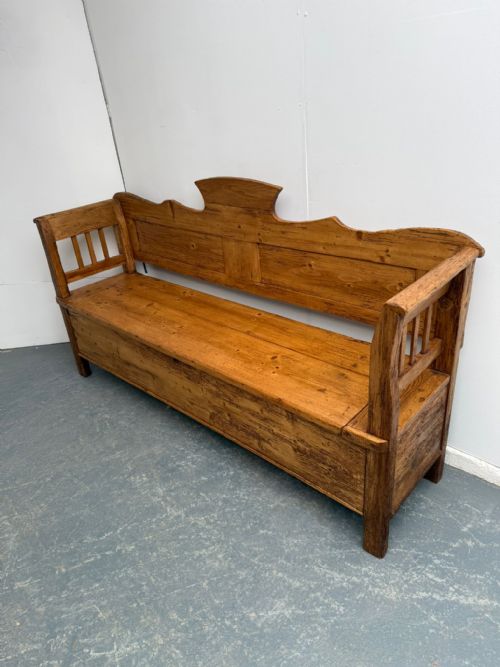


Georgian Box Settle
A georgian box settle anchors a hallway with high-backed privacy and deep under-seat storage built for warmth.
Georgian Box Settle
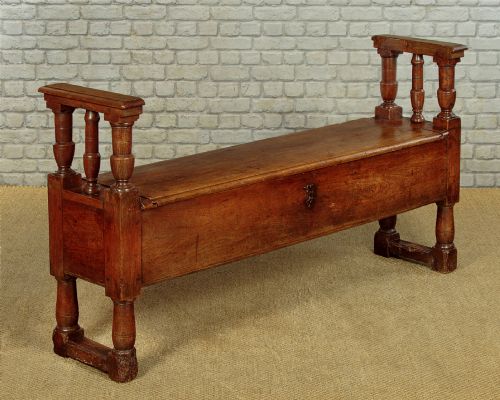
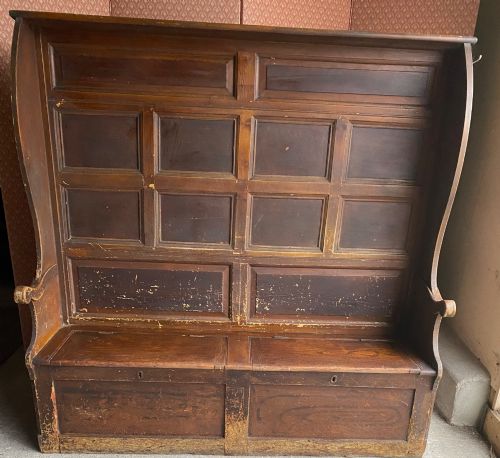
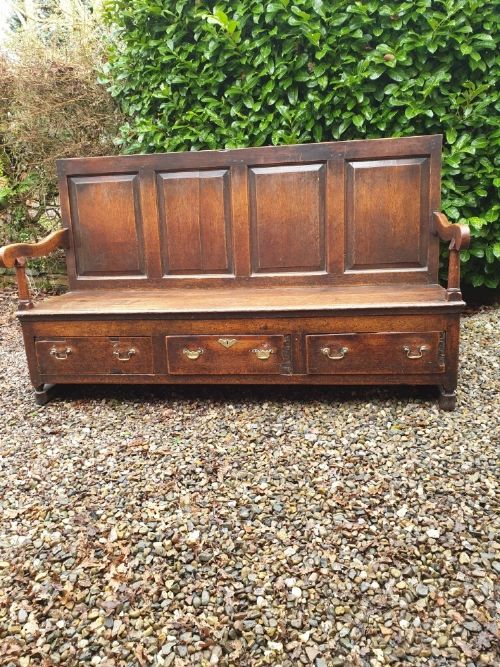
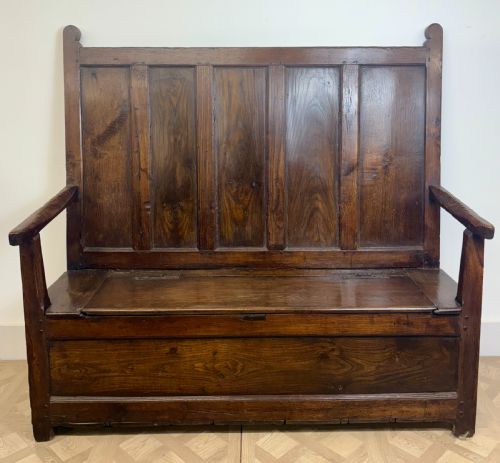
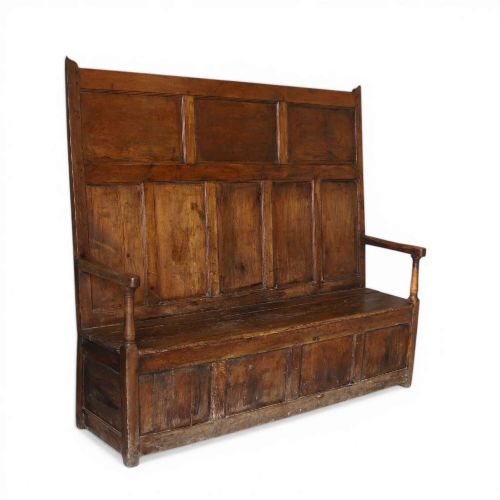
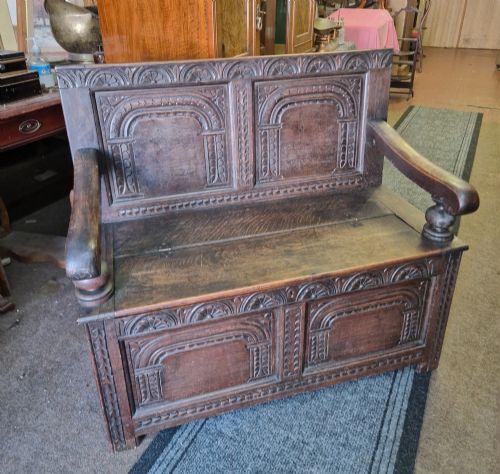
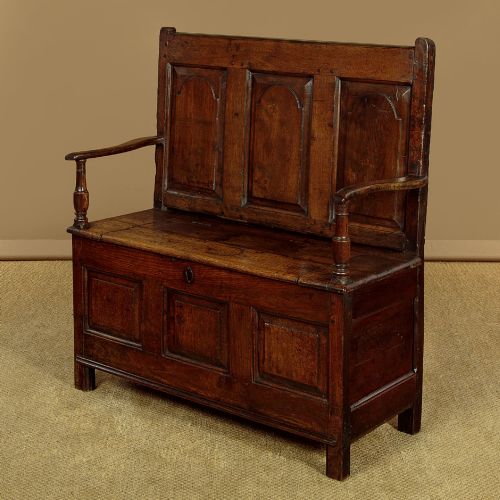
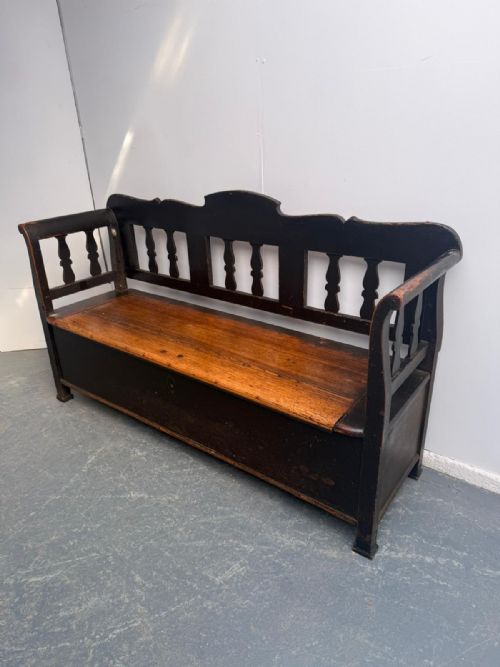
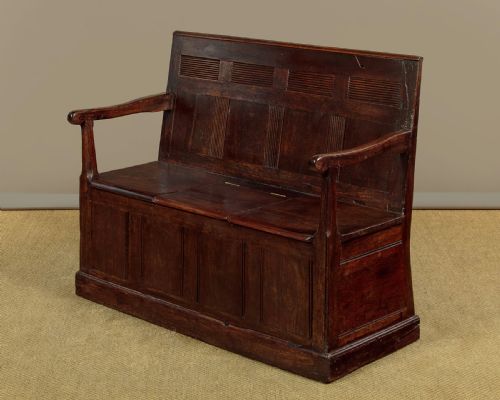
When you search for a georgian box settle, you are looking at substantial wooden seating designed to block draughts in period homes, featuring a solid high back and a hinged seat concealing a storage chest. These seating forms span the eighteenth century and into the nineteenth, appearing in regional variations from English, Welsh, and West Country workshops, alongside imported continental examples.
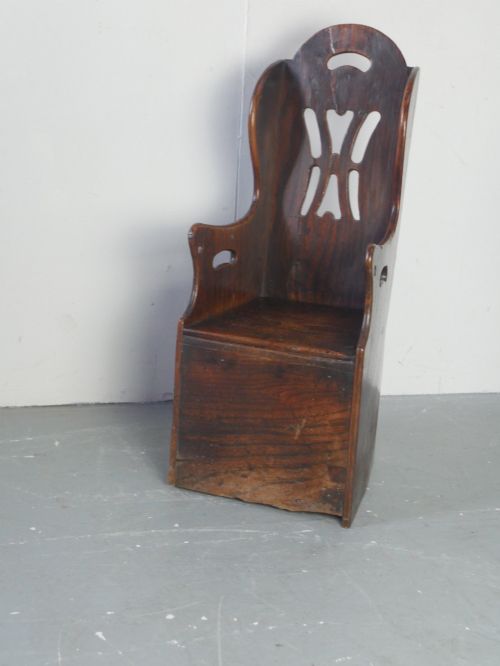
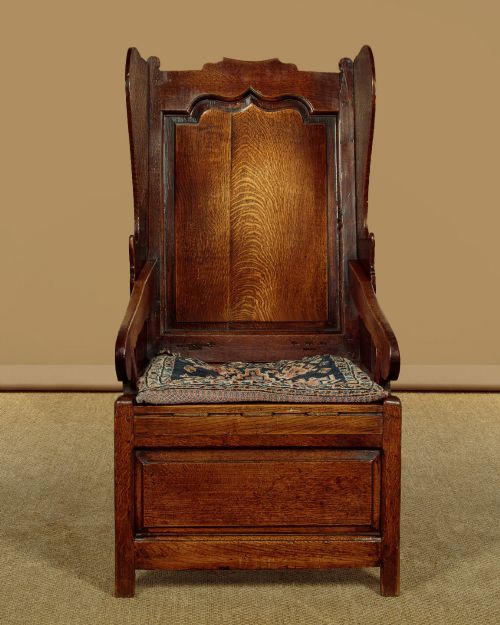
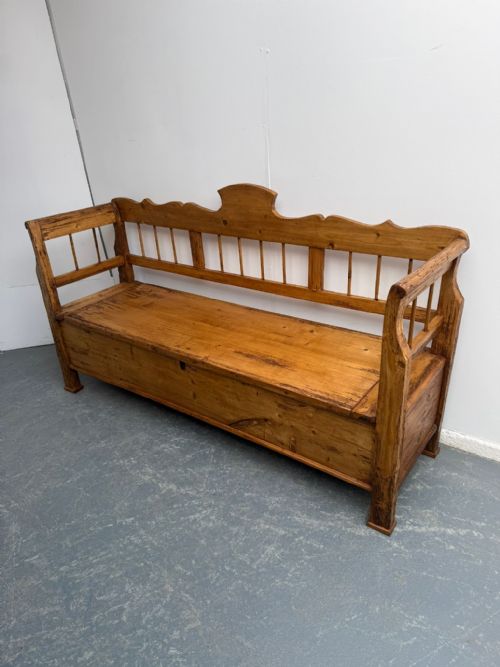
The most common forms on this page include high-back panelled oak benches and pine country pieces. You will also encounter related regional variants like lambing chairs and bacon settles, which share the functional enclosed base and sturdy vernacular build.
Materials and construction
Makers built these pieces primarily from sturdy native hardwoods and softwoods, predominantly oak and pine, often combined with secondary timbers like elm, ash, and iron hardware. Construction relied on traditional joinery, utilising panelled backs and dovetailed or pegged box bases designed to withstand daily domestic use in farmhouse kitchens and halls.
Surfaces show various historic finishes, ranging from waxed natural timber patination to original painted surfaces in black or other regional pigments. Brass hinges and iron latches secure the storage lids, while occasional textile upholstery appears on related nineteenth-century variants.
Georgian Box Settle Retail Price Guide 2026
Typical asking prices for georgian box settle among the pieces listed under this phrase on Sellingantiques today, from the lower quarter to the upper quarter. They describe what is for sale here now, not the wider market.
Some settles include secret under-seat storage once utilised to hide extra tavern tankards from thirsty household visitors.
Assessing quality and proportion
Quality in these vernacular seats rests upon timber selection, structural integrity, and the retention of original surfaces and hardware. Superior examples display dense grain patination in the primary oak or pine, well-balanced proportions in the high panelled back, and undisturbed original box bases.
Pieces that retain their early painted finishes or possess untouched regional proportions command greater interest among collectors than heavily restored or altered examples. The integration of the storage box with the back uprights demonstrates the joiner's skill in creating a rigid, draught-excluding frame.
The Georgian Box Settle Glossary
- Box settle
- A wooden bench featuring a high back to block draughts and a hinged seat providing interior storage space. This form served as primary seating near the hearth in period homes.
- Lambing chair
- An enclosed armchair, often constructed from oak or pine, featuring winged sides designed to shield the sitter from cold air. They belong to the same vernacular tradition as the box settle.
- Bacon settle
- A specialised tall wooden bench equipped with high panelled compartments traditionally used for curing and storing meat above the floor. They represent a larger scale of vernacular storage seating.
- Panel-back
- A method of construction where flat wooden boards are fitted within grooved framing stiles and rails to form a rigid, decorative barrier. This technique prevents warping in large timber surfaces.
- Vernacular
- Architecture and furniture made by local craftsmen using regional materials and traditional methods rather than mengikuti formal academic styles. These pieces reflect local domestic needs.
Georgian Box Settle: Frequently Asked Questions
Where were settles placed?
These benches traditionally stood near hearths in farmhouses and halls where high solid backs protected occupants from cold drafts.
They also occupied entryways and kitchens to provide both seating and concealed storage for household goods.
How do I date a settle?
Dating relies on examining joinery methods, timber species, and panel construction styles characteristic of eighteenth and nineteenth-century cabinetmaking.
Regional traits and the presence of original painted finishes or hardware further help narrow the period of manufacture.
Are storage boxes deep?
The box base beneath the seat provides substantial internal capacity originally used for blankets, winter wear, and household supplies.
Access is gained by lifting the hinged wooden seat top, which remains sturdy enough for daily sitting.
How do I clean the wood?
Maintenance requires gentle dusting and occasional application of traditional wax to preserve the historic surface patination without stripping the finish.
Avoid harsh modern chemical cleaners that can damage aged oak, pine, or original painted surfaces.