
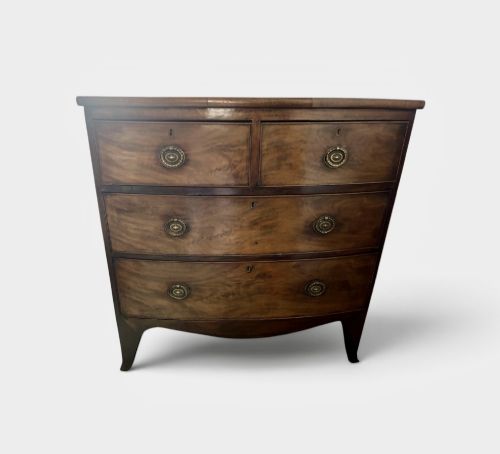
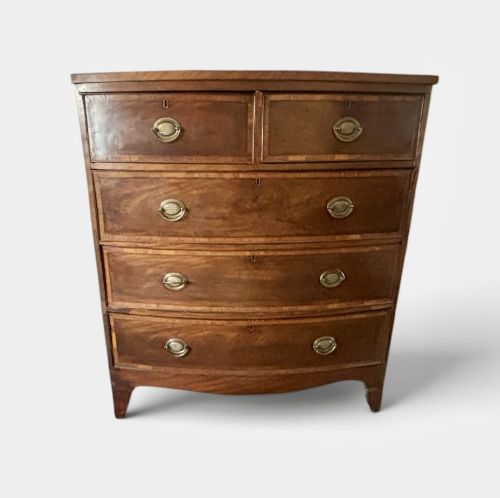
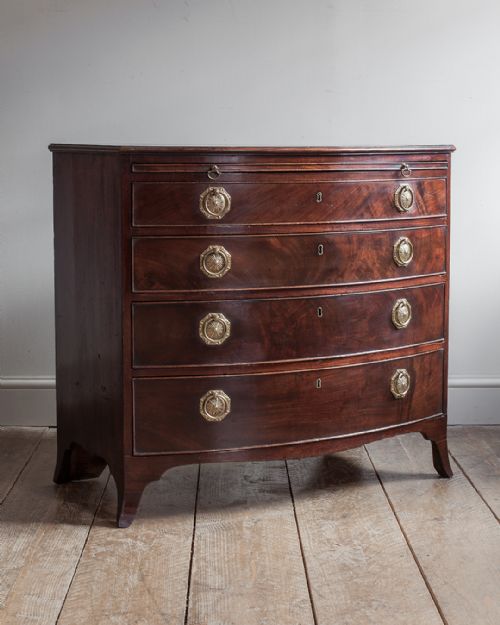
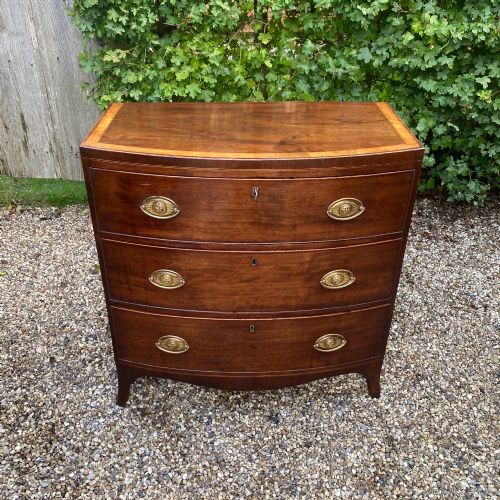
Georgian Bowfront Storage Chest
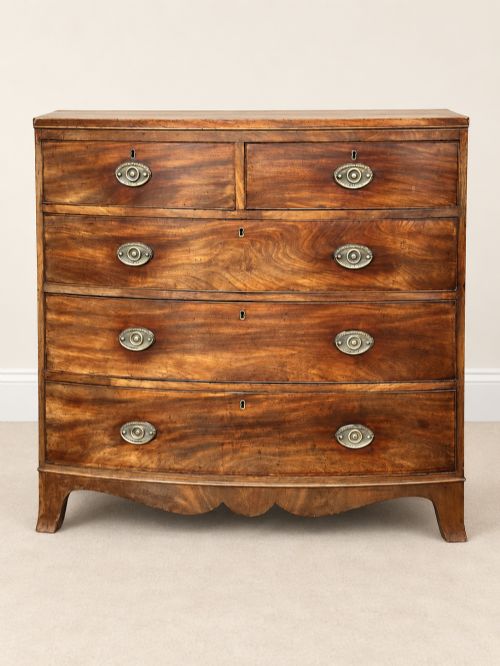
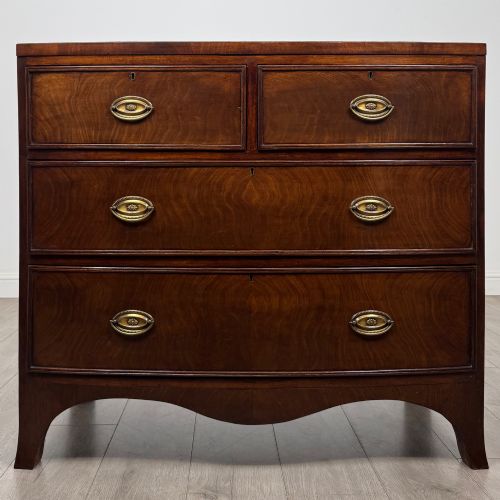
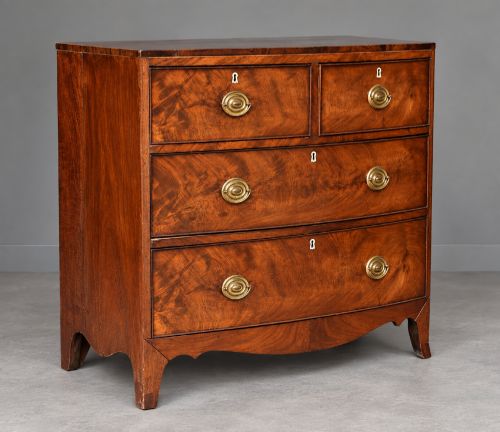
A georgian bowfront storage chest brings curving timber lines and deep room storage into a bedroom.
Georgian Bowfront Storage Chest
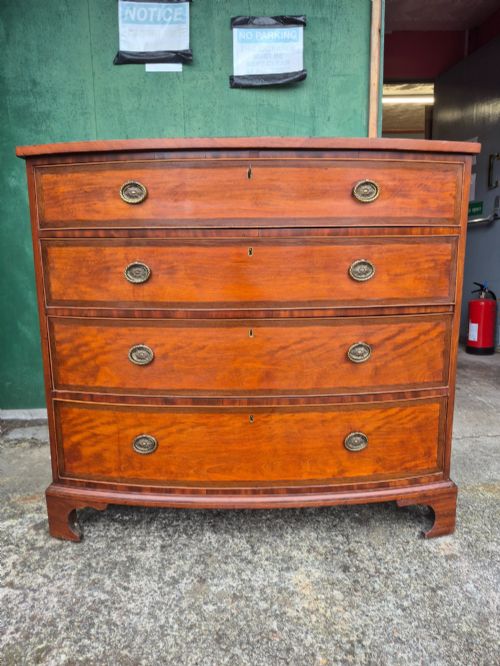
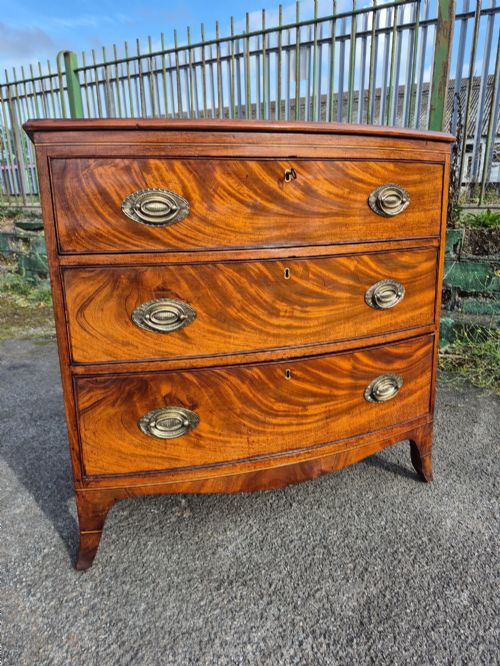
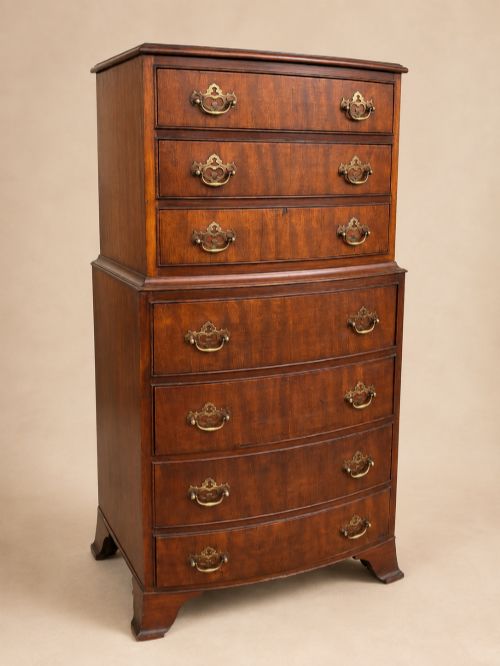
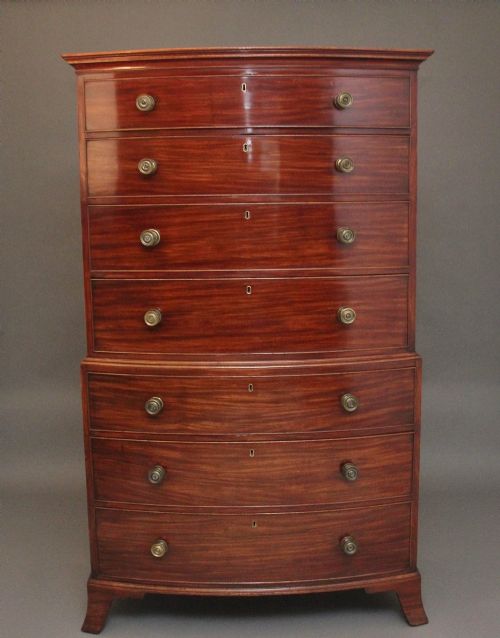
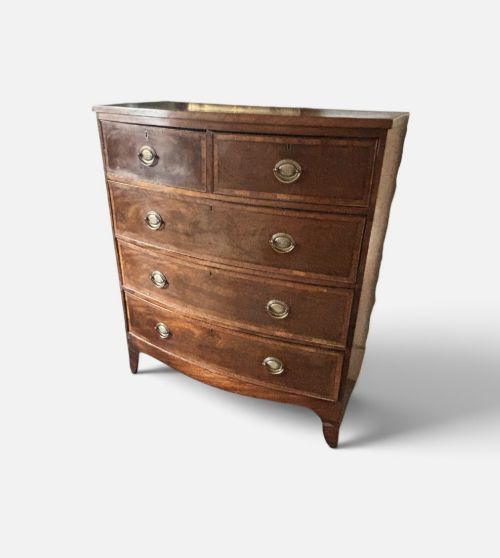
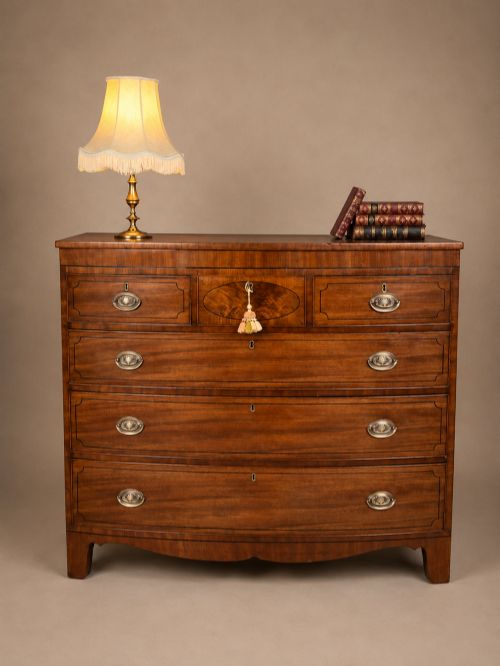
A georgian bowfront storage chest is a case furniture piece designed for domestic storage, featuring a convex curved front facade that projects forward from the wall. The form appears most frequently in mahogany, with examples spanning the eighteenth century through the regency era and into later revival periods.
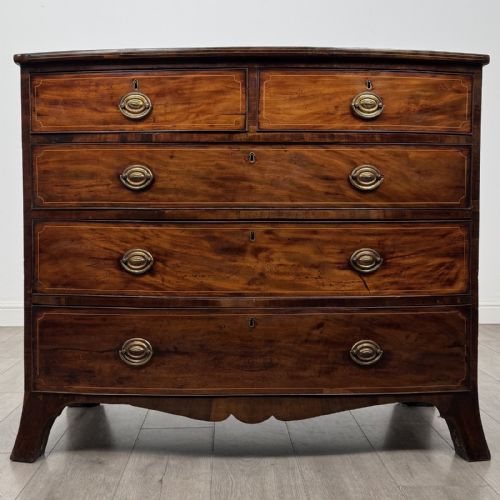
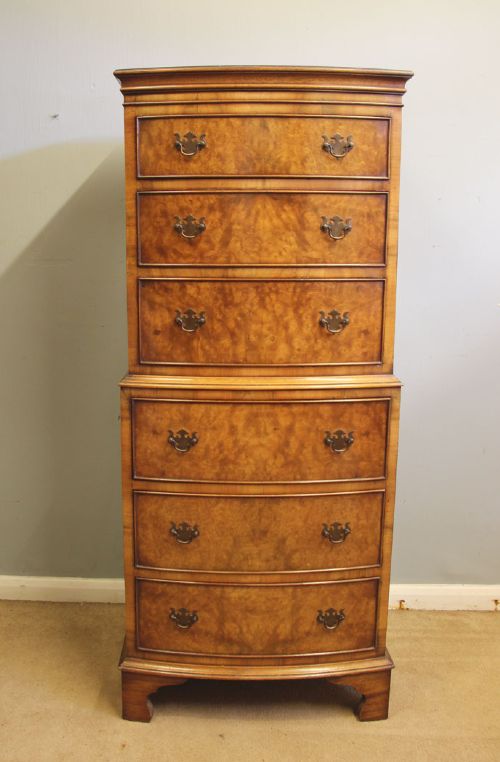
The layout typically consists of stacked graduated drawers within a case, though variations include tallboys, chests on chests, and linen presses. Pieces range from small neat proportions to larger room-anchoring furniture.
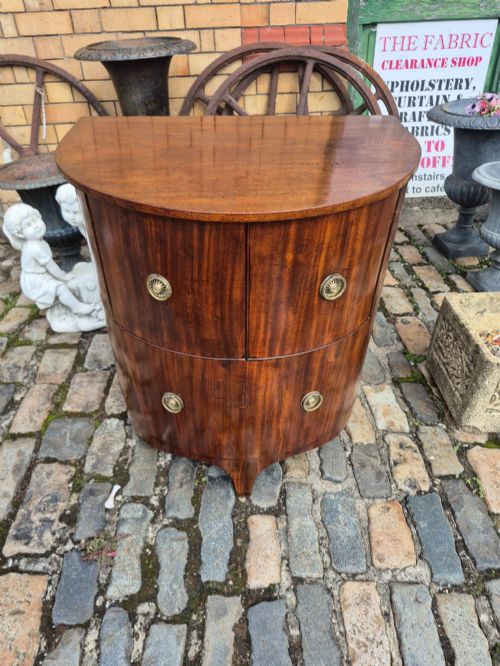
Makers utilised regional workshops across England, Scotland, and Wales, producing standard chests of drawers alongside sideboards and specialised storage forms with distinctive curved lines.
Materials and construction
Cabinet makers built these carcasses primarily using solid timber frameworks faced with premium veneers. Flame mahogany and burr walnut provided decorative grain patterns across the curved drawer fronts, while satinwood supplied contrasting inlay banding and edge details.
The curved bowfront required skilled carpentry to shape structural timbers and apply matching veneers without splitting. Drawer construction relied on hand-cut dovetail joints, and hardware typically incorporated cast brass pulls and escutcheons.
Selected regional pieces arrive equipped with a secret hidden drawer tucked away from plain sight.
Markers of quality
Quality rests on the selection of timber figures, such as matched flame mahogany or burr walnut across the drawer fronts, and the subtlety of satinwood banding or crossbanding. Superior examples show careful grain alignment and precise timber matching.
Proportion and scale distinguish finer pieces, particularly smaller or narrower chests that maintain balanced drawer distributions. The crispness of the dovetail joinery and the original state of the brass hardware further separate standard production from high-grade workshop output.
The Georgian Bowfront Storage Chest Glossary
- Bow front
- A convex curved front facade that projects outward from the centre of the chest. This shape softens the rectilinear profile typical of standard case furniture.
- Crossbanding
- A decorative border of veneer laid around the perimeter of a drawer front, with the wood grain running perpendicular to the surrounding panel. It frames the central timber figure.
- Chest on chest
- A tall storage unit formed by stacking one case of drawers directly on top of a larger base chest. This two-part construction creates substantial vertical storage capacity.
- Linen press
- A tall cabinet featuring upper doors enclosing sliding trays for textiles above a base of lower drawers. These storage pieces combine wardrobe functionality with drawer space.
- Graduated drawers
- A series of drawers arranged vertically from smallest at the top to largest at the bottom. This progressive sizing influences the visual balance of the facade.
Georgian Bowfront Storage Chest: Frequently Asked Questions
What is a bow front chest?
A bow front chest is a drawer unit featuring a rounded, convex facade that curves outward. This design softens the profile of traditional case furniture while offering internal storage.
The form gained popularity during the Georgian and Regency periods, appearing in various timbers such as mahogany and walnut.
How do I date a bow front chest?
Dating relies on examining the construction methods, timber choices, and overall proportions of the piece. Georgian and Regency examples often feature hand-cut dovetails and specific grain patterns like flame mahogany.
Later revival pieces from the twentieth century utilise similar forms but display different internal secondary woods and modern finishing techniques.
Where were these chests used?
These storage pieces functioned primarily in bedrooms and dressing rooms to hold garments and household linens. Their compact footprint allowed them to sit flush against bedroom walls.
Larger variations or sideboard forms also appeared in dining spaces and hallways for general storage.
What woods were used for bow fronts?
Mahogany served as the primary structural and face timber for the majority of these storage pieces. Cabinet makers also incorporated burr walnut, satinwood, and decorative veneers to create contrasting borders and figured surfaces.
Secondary woods like oak or pine typically form the hidden drawer linings and internal framing.