




Georgian Bottle Label
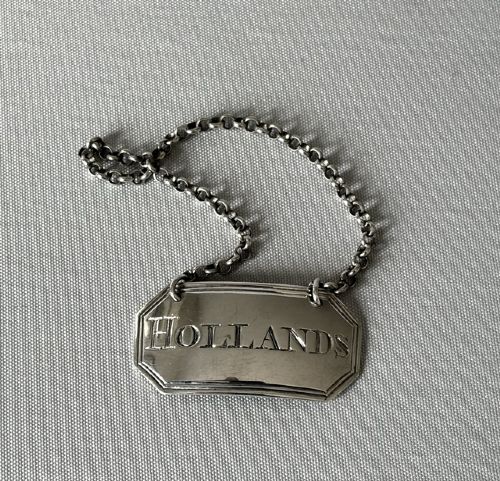
These georgian bottle label pieces are miniature silver markers designed to identify fine wine and spirits on the dining table.
Georgian Bottle Label
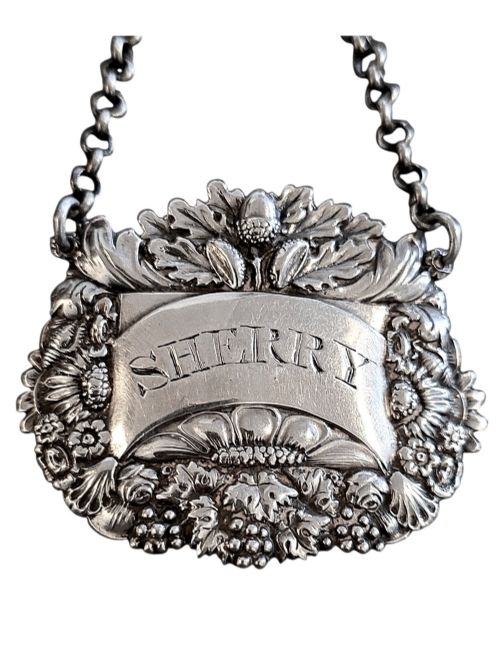
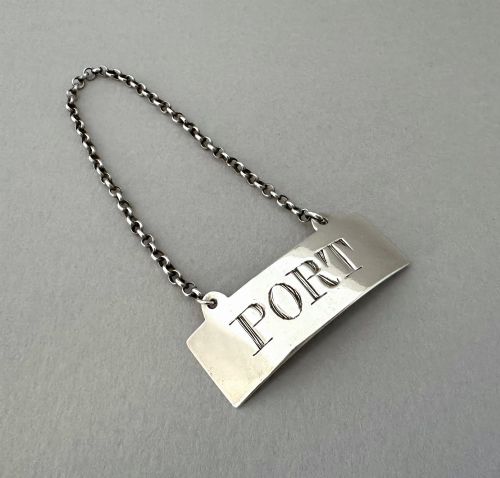
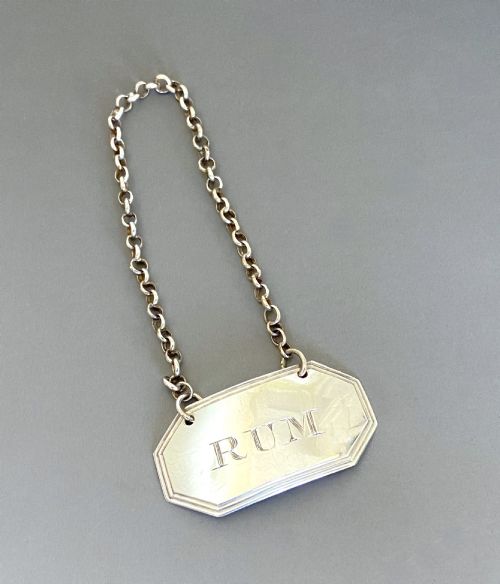
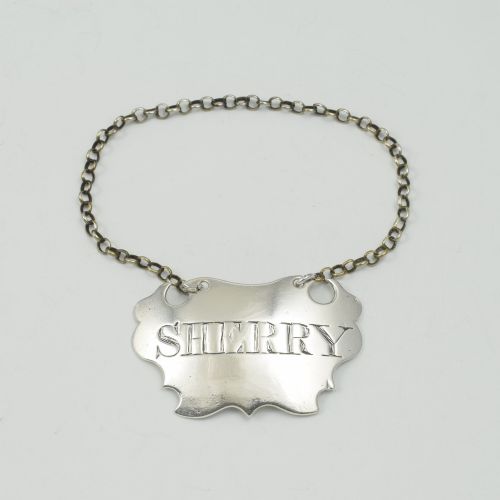
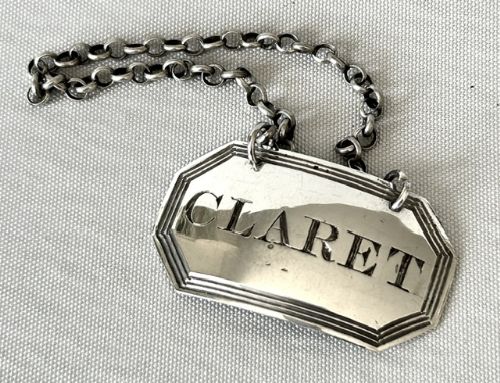
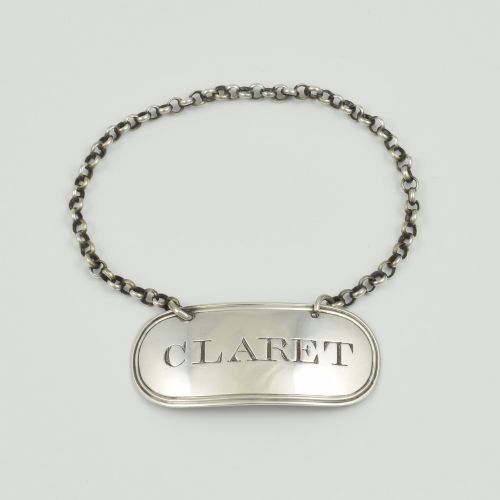
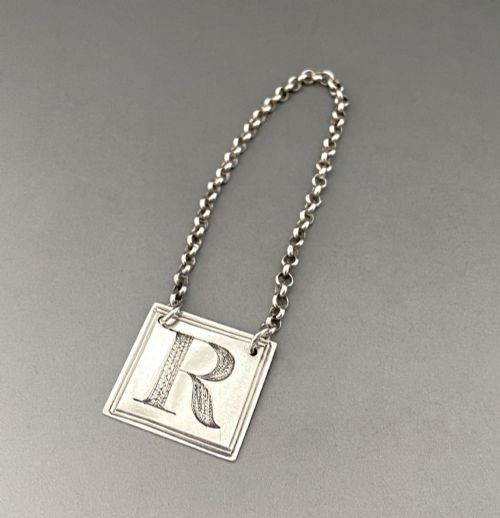
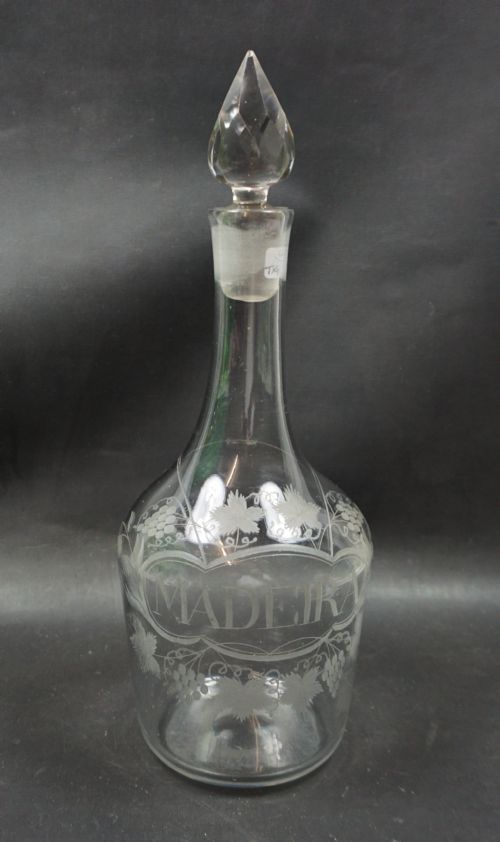
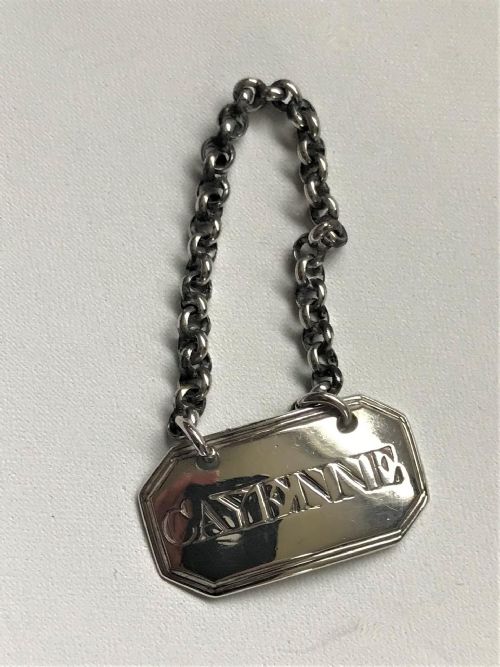
When you search for georgian bottle label, you are looking at small pieces of silver designed to hang around the necks of decanters to name the contents. The examples found here span the eighteenth and nineteenth centuries, taking forms such as escutcheon shapes, vine leaves, and rectangular tickets.
Most pieces you meet on this page date from the Georgian and Regency periods, marked with names for drinks like port, sherry, madeira, claret, rum, gin, hock, moselle, and cayenne. They hang from chains or collars and represent a distinct accessory of historic dining.
Makers working across London, Edinburgh, and Scottish provincial towns produced these items in sterling silver and silver gilt. Collectors will find single labels as well as matched sets intended for multiple decanters.
What varies in quality
Quality in a georgian bottle label lies in the crispness of the piercing, the depth of the engraving, and the presence of clear hallmarks. Superior examples display carefully modeled details, such as naturalistic vine leaves or clean heraldic shields, rather than mass-stamped thin metal.
The reputation of the maker also influences the standing of a piece, with works by known silversmiths or Scottish provincial makers holding particular interest. Survival of the original suspension chain and legible lettering add to the integrity of the object.
Georgian Bottle Label Retail Price Guide 2026
Typical asking prices for georgian bottle label among the pieces listed under this phrase on Sellingantiques today, from the lower quarter to the upper quarter. They describe what is for sale here now, not the wider market.
A few labels identify fiery cayenne pepper rather than wine, proving the Georgians liked spice with their drinks.
William Barrett II·Elizabeth Morley·John Reily·Thomas Wallis II·Peter and Anne Bateman
The Georgian Bottle Label Glossary
- Escutcheon shape
- A shield-shaped form commonly used for heraldry and early wine labels. It provides a central field for engraved names.
- Silver gilt
- Silver covered with a thin layer of gold, giving a rich yellow sheen. This treatment was often applied to vine leaf labels.
- Bottle ticket
- An alternative contemporary term for a decanter label or wine label. These items hung from bottlenecks by chains.
- Scottish provincial
- Silver made and marked in towns outside Edinburgh, such as Peterhead. These pieces often feature local maker marks.
- Hallmark
- Official stamps struck into precious metals to guarantee purity and origin. They show the maker, assay office, and date letter.
Georgian Bottle Label: Frequently Asked Questions
How were bottle labels used?
These pieces hung around the necks of glass decanters using short silver chains. They served to identify the specific wine or spirit held inside before clear glass engraving became common.
Hosts used them on dining tables to help guests distinguish between ports, sherries, and clarets without removing the stoppers.
What drinks are named on labels?
The most frequent names found on these items include port, sherry, madeira, and claret. Less common labels identify spirits like rum and gin, or condiments such as cayenne.
Each label reflects the drinking habits of the Georgian and Regency dining room, where multiple decanters circulated.
How do I date a silver label?
Dating relies heavily on the hallmarks stamped directly onto the silver, which include date letters and duty marks. The style of the piece, from rococo revival scrolls to simple George III shields, also points to a specific decade.
Consulting regional assay records helps pinpoint London or Scottish provincial origins.
How should I display silver labels?
Many collectors display them hanging on miniature stands or mounted in shallow shadow boxes to show both sides. Others prefer to hang them on period glass decanters as they were originally intended.
Keeping them in a stable environment protects the silver from rapid tarnishing.