
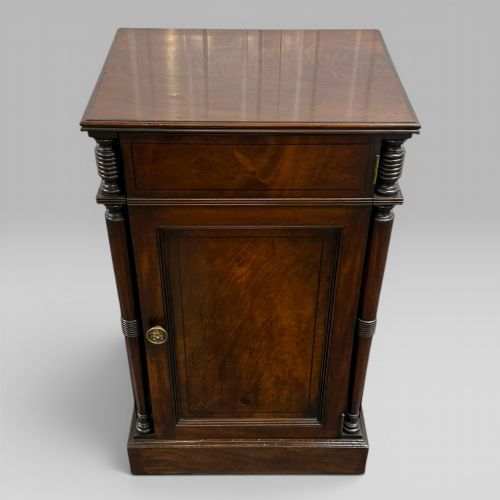

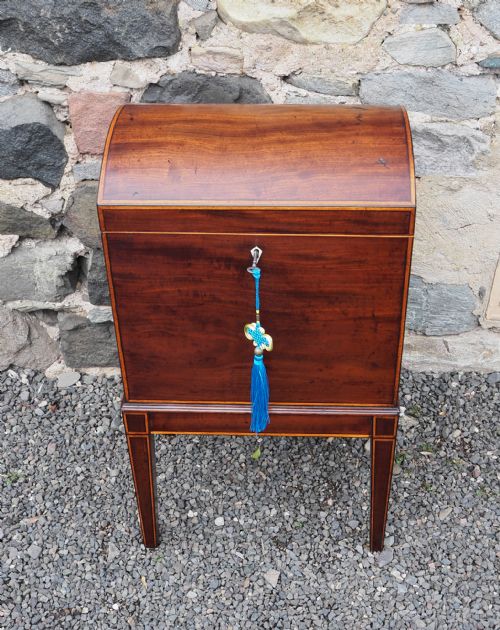


Georgian Bottle Chest
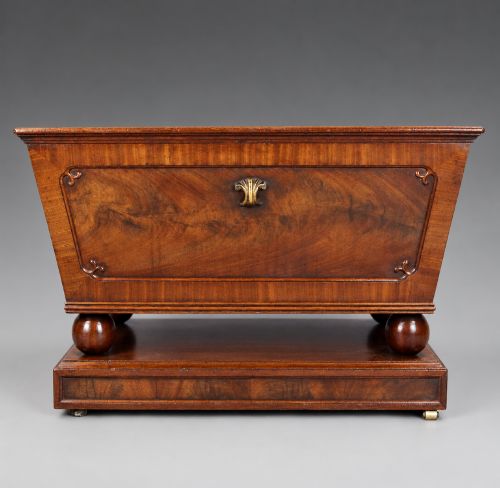
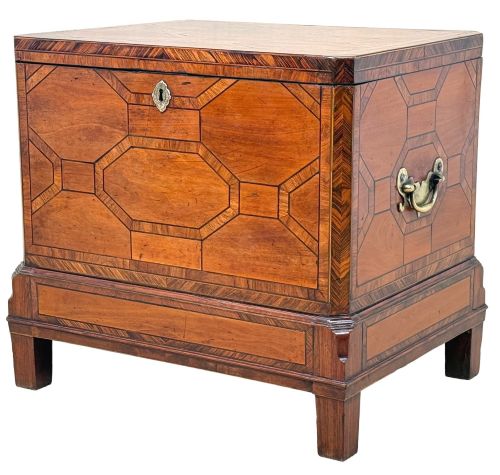
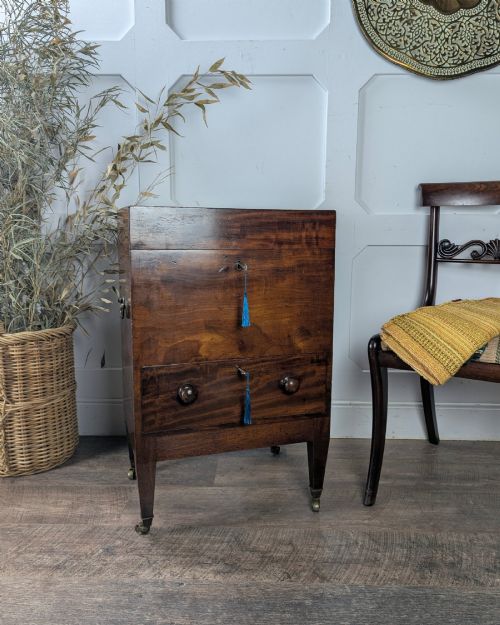
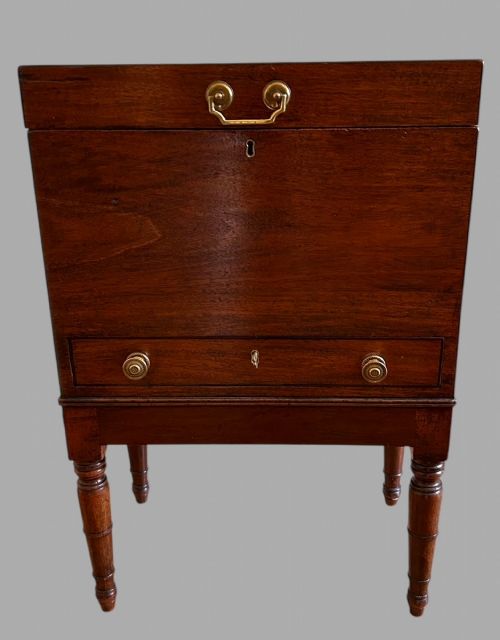
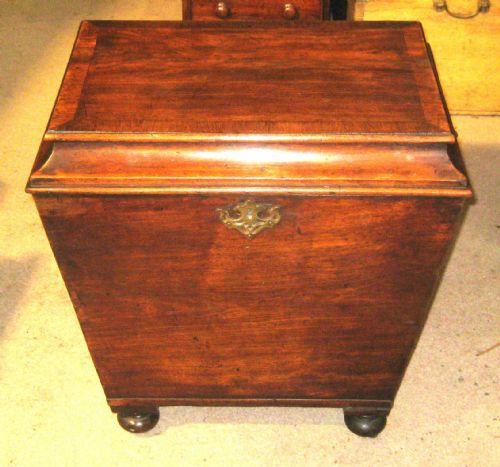
A georgian bottle chest is a sturdy timber cellar vessel designed to hold wine bottles and ice at the dining table.
Materials and Construction
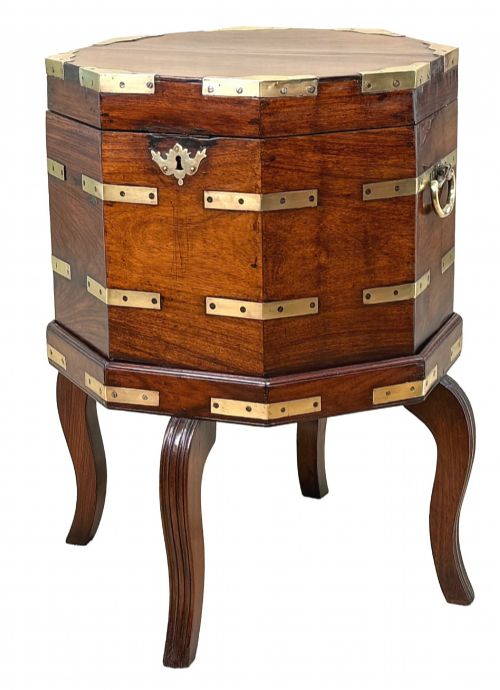
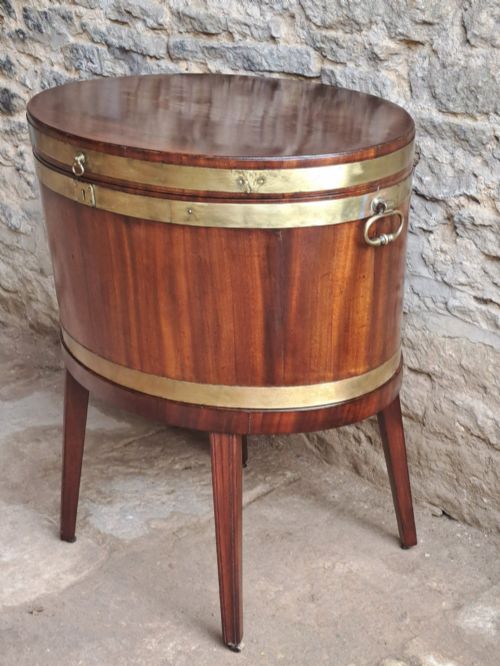
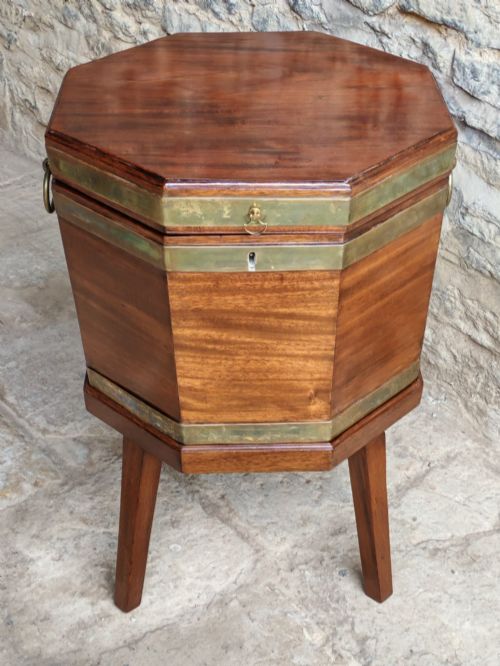
Cabinet makers built these vessels primarily from dense tropical hardwoods like mahogany and padouk, selecting figured grains for visible exterior surfaces. Solid timber construction provided the necessary strength to contain heavy loads of glass bottles and melting ice.
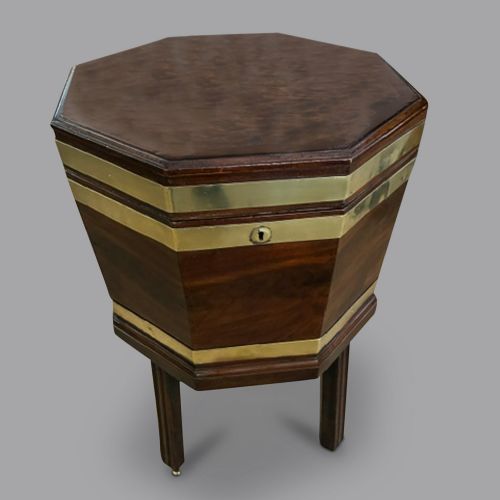
Metalwork played a functional role through brass carrying handles, locking mechanisms, and structural bands. Interior fittings often included lead linings for water retention in wine coolers, or fitted wooden compartments for glass bottles in apothecary boxes.
Evaluating Execution and Timber
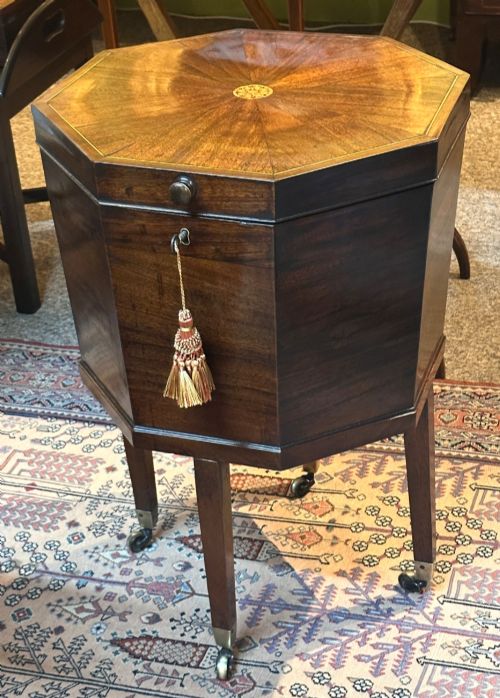
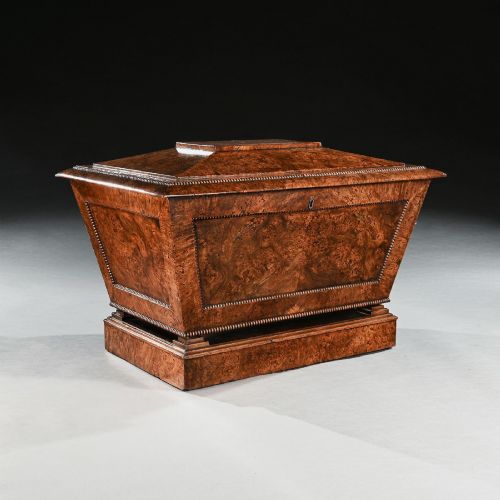
The choice of timber defines the primary tier of execution, distinguishing standard straight-grained mahogany from heavily figured flame mahogany, pollard oak, or contrasting satinwood veneers. Superior examples display careful grain matching across the lid and sides.
The finesse of secondary details marks the difference in standard, from hand-cut boxwood inlay to the crispness of brass mounts and original locking hardware. Original internal bottle dividers or lead linings preserved inside the chest elevate the integrity of the piece.
The inventory includes both dining room wine coolers and compact travelling apothecary chests equipped with original glass bottles.
Gillows
The Georgian Bottle Chest Glossary
- Cellarette
- A lockable container used for storing wine bottles near the dining table. They frequently featured lead linings to hold ice alongside the bottles.
- Sarcophagus
- A monumental chest style with a domed lid and tapered sides, popular during the Regency period. This shape drew inspiration from classical stone tombs.
- Apothecary box
- A compact wooden chest fitted with internal partitions and small glass bottles for medicines. They often included small drawers for scales and mixing powders.
- Padouk
- An exotic hardwood with a reddish hue used in eighteenth-century cabinet making. It provided exceptional durability for overseas transport.
- Flame mahogany
- A decorative veneer cut from timber fork growth to create a rippled, flickering pattern. Makers reserved this material for the most prominent exterior surfaces.
Georgian Bottle Chest: Frequently Asked Questions
What is a georgian bottle chest used for?
These chests served primarily as portable cellars to hold wine bottles and ice in the dining room. Servants kept them near the table to chill beverages without requiring trips to the main cellar.
Smaller variations functioned as apothecary boxes or travelling medicine chests. These held glass bottles filled with liquids and powders for personal medical care.
How do I identify a cellarette?
A cellarette appears as a heavy wooden box or chest, often standing on short legs or feet. The interiors typically feature divided sections sized specifically for wine bottles.
Many examples contain metal linings designed to hold melting ice. Exterior brass handles allowed servants to move the heavy container when filled.
Are apothecary boxes the same as bottle chests?
Apothecary boxes share the same timber construction and box form but serve a medical purpose rather than dining. They contain tightly fitted tiers of small glass bottles instead of wine storage.
Wine cellarettes focus on large exterior presence with heavy brass mounts. Apothecary boxes prioritise compact internal organisation with small drawers and brass carrying hardware.
How do I care for antique mahogany?
Keep wooden chests away from direct heat sources and strong sunlight to prevent the timber from splitting. Maintain stable indoor humidity levels to protect the antique finish.
Apply a microcrystalline wax occasionally to nourish the surface without building up residue. Buff gently with a soft cloth to preserve the natural patina.