
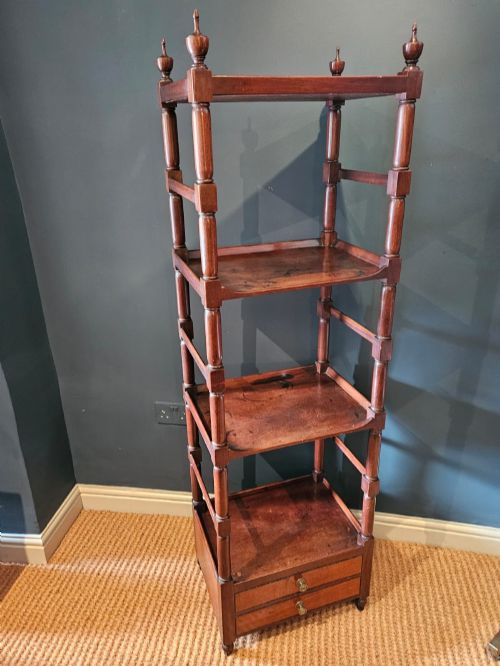
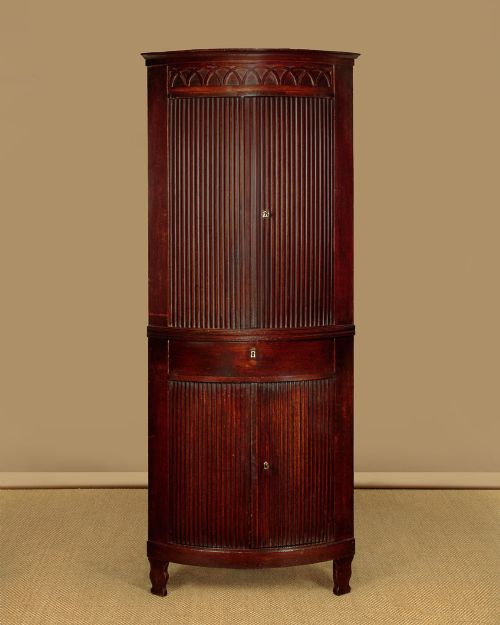
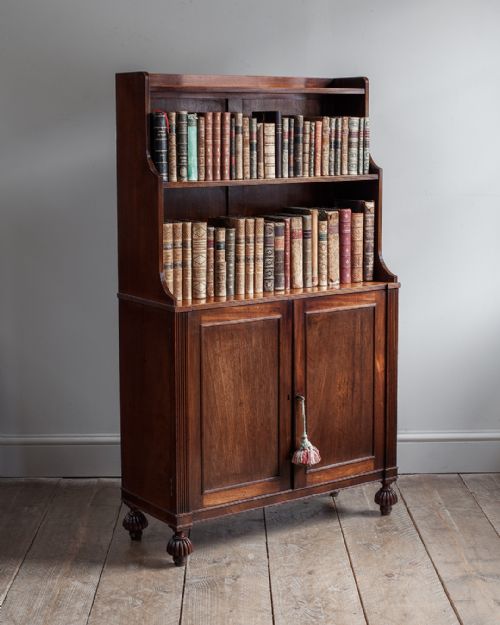
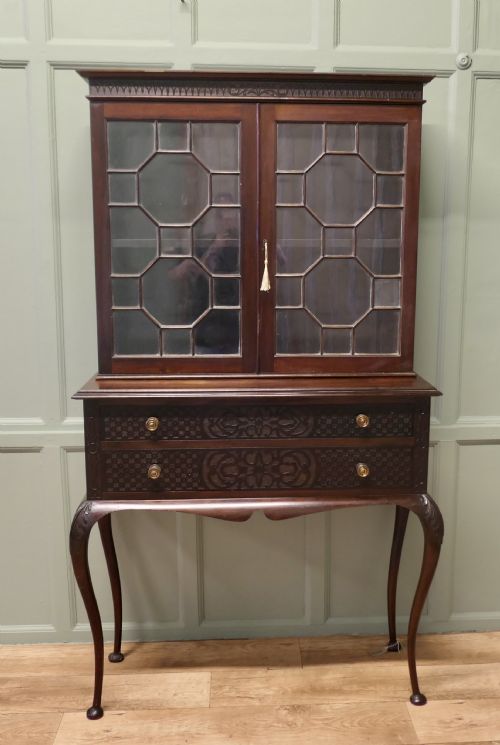
Georgian Bookcase Stand
A georgian bookcase stand brings grounded utility and refined timber architecture to a room, holding volumes while raising them clearly from the floor.
Georgian Bookcase Stand
When you search for a georgian bookcase stand, you encounter pieces designed to display and store bound volumes while elevating the main cabinet or shelves upon legs or a supporting frame. The selection leans heavily toward classic mahogany constructions from the eighteenth and nineteenth centuries, alongside revival pieces from the Edwardian era.
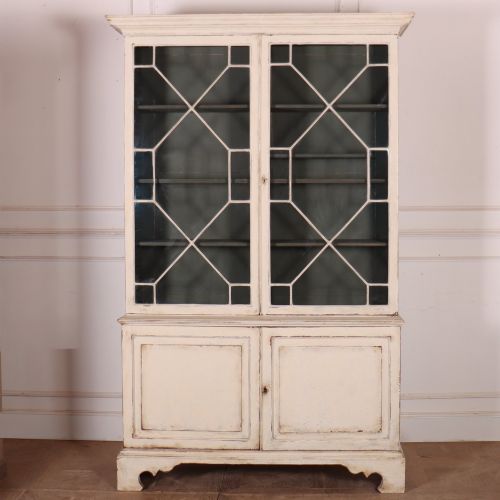
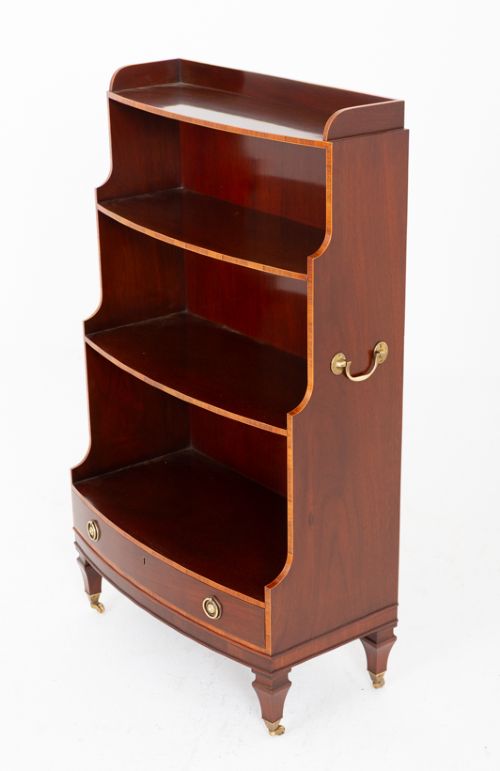
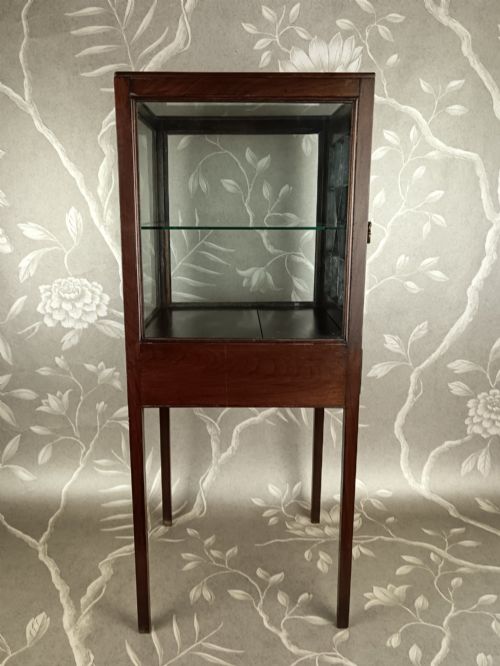
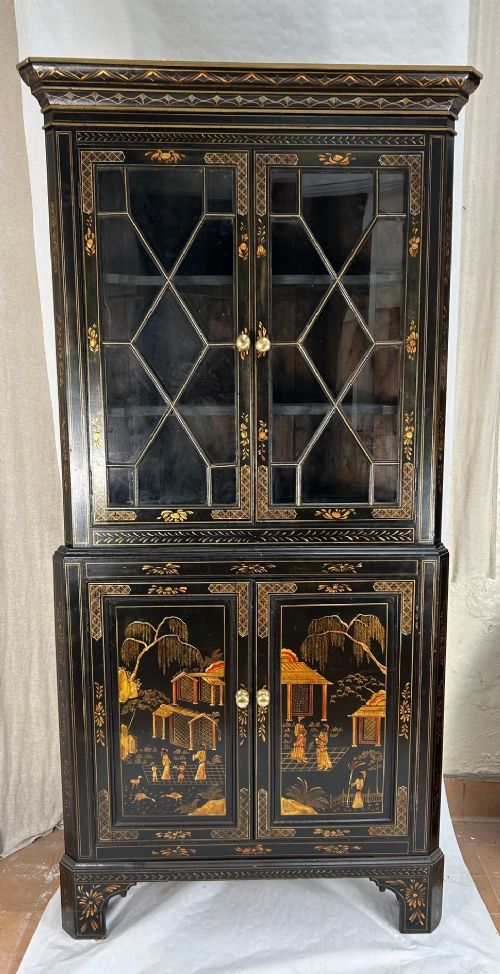
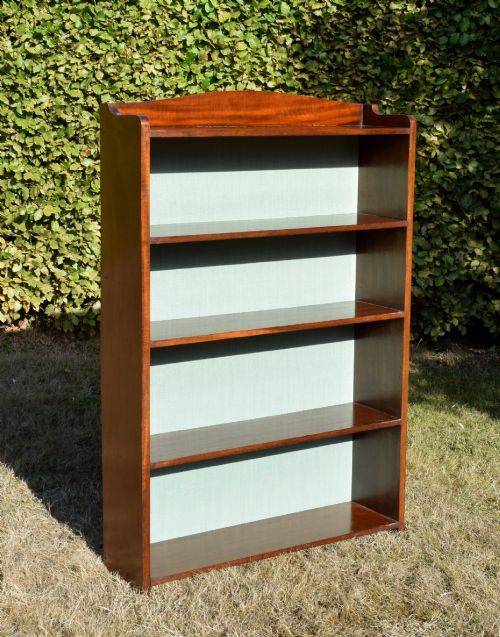
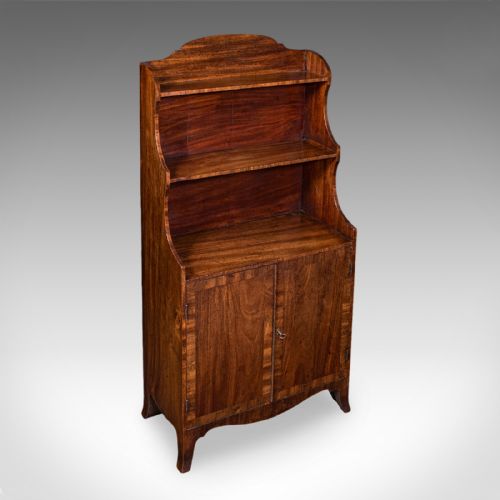
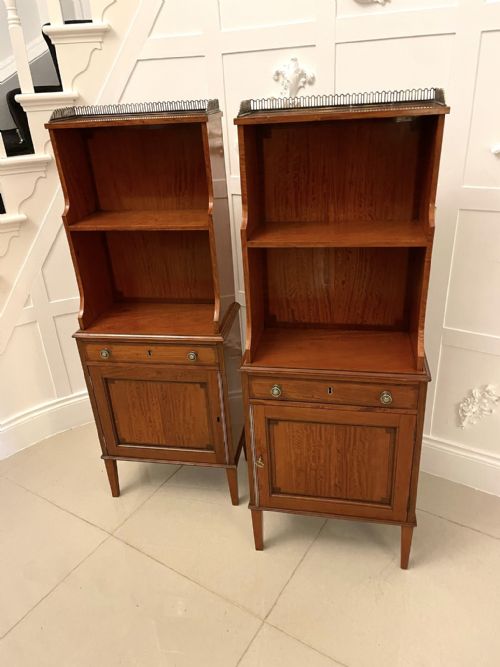
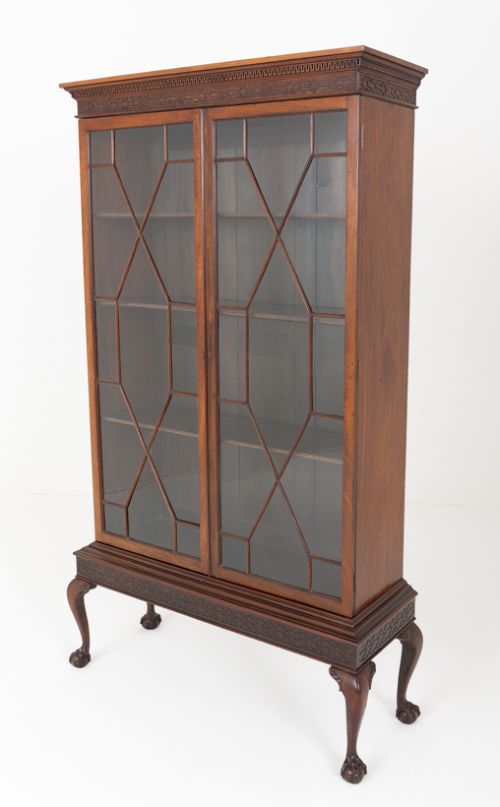
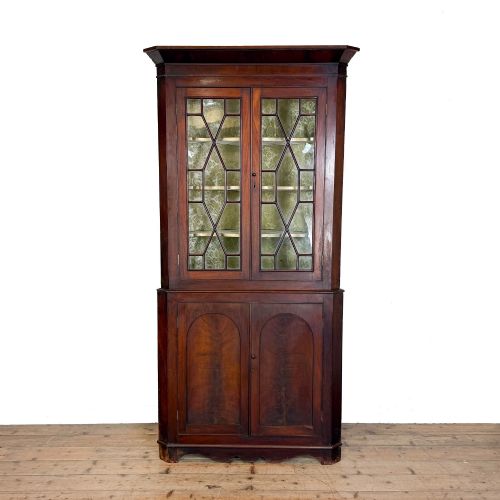
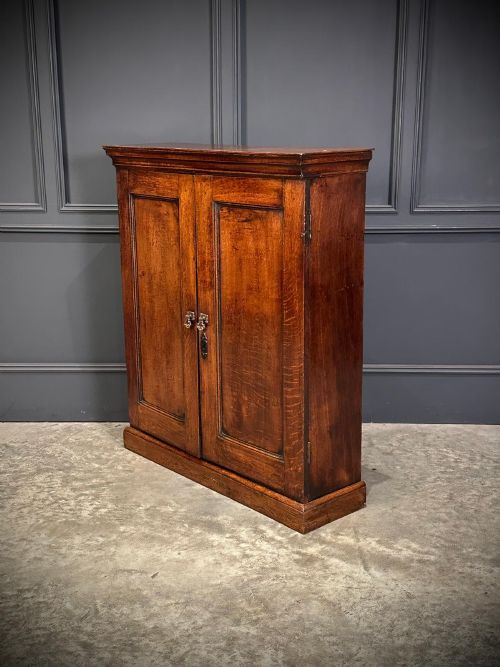
Forms range from compact waterfall tiers and open standing bookshelves to glazed display cabinets and corner cupboards resting upon dedicated stands. These items accommodate personal libraries and collections in domestic settings, offering distinct vertical formats that suit various room proportions.
Materials and Construction
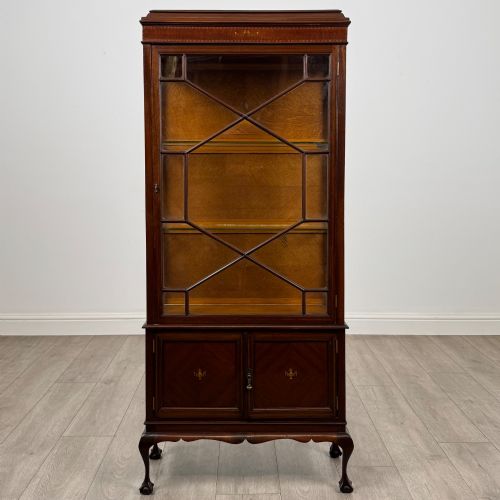
Timbers such as mahogany, oak, and satinwood form the structural core of these pieces, often joined with brass hardware for handles, hinges, or casters. Glazed doors incorporate glass panes held by timber or painted wooden astragals.
Cabinetmakers utilised traditional joinery to build stable housings, applying polished finishes, inlay, or original paint directly to the timber surfaces. Open shelves and tier structures rely on vertical supports secured firmly to lower stands or integrated bases.
Listings feature mahogany, satinwood, and oak alongside painted wood, spanning the Georgian, Regency, and Edwardian periods.
Design and Execution
Distinctions in quality arise from the crispness of carved details, the choice of timber figuring, and the integration of the stand with the upper bookcase. Finer examples display balanced proportions, deliberate inlay work, and robust structural joinery that maintains stability without excessive bulk.
Pieces featuring secondary woods of equal integrity and careful attention to secondary surfaces, such as interior shelving and backboards, separate standard utility items from more accomplished cabinet work.
Gillows·Maple and Co.
The Georgian Bookcase Stand Glossary
- Astragal glazed
- A method of framing glass door panels with narrow wooden bars that create geometric patterns. This technique allows clear visibility of the books within while maintaining structural rigidity.
- Waterfall bookcase
- A set of open shelves featuring sides that step back progressively from bottom to top. The profile resembles cascading tiers.
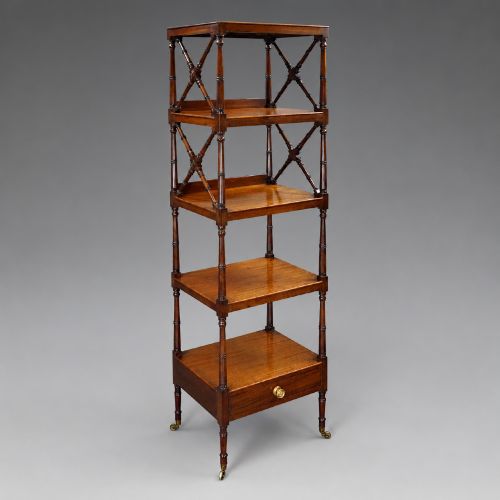
- What-not
- A set of open freestanding shelves supported by slender columns or uprights. It serves to display books or decorative objects.
- Secretaire bookcase
- A tall cabinet incorporating a pull-down writing drawer with internal compartments alongside traditional shelving. It combines a desk workspace with book storage.
- Breakfront
- A large cabinet front where the central section projects forward beyond the flanking wings. This configuration adds architectural depth to the piece.
Georgian Bookcase Stand: Frequently Asked Questions
How are these stands structured?
A bookcase stand typically involves a raised base, legs, or a low cabinet portion that lifts the primary shelving or display compartment clear of the floor.
This elevation prevents dampness from affecting the books and creates a lighter visual footprint in the room.
Where were they placed?
These items were traditionally positioned in libraries, parlours, and studies to keep reference volumes and literature close at hand.
Corner units made efficient use of awkward room junctions, while freestanding models stood against panelled walls.
How do I identify periods?
Period identification relies on observing timber selection, leg styles like bracket or cabriole feet, and the presence of handcrafted joinery.
Earlier eighteenth-century pieces often show dense mahogany and hand-cut dovetails, while Edwardian revivals reflect lighter framing and machine assistance.
How should I care for them?
Maintain stable indoor humidity levels and keep wooden surfaces away from direct heat sources to prevent timber warping.
Apply occasional traditional wax polish to nourish the grain and protect the finish.