
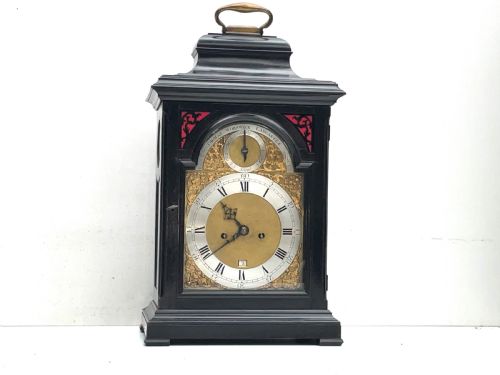


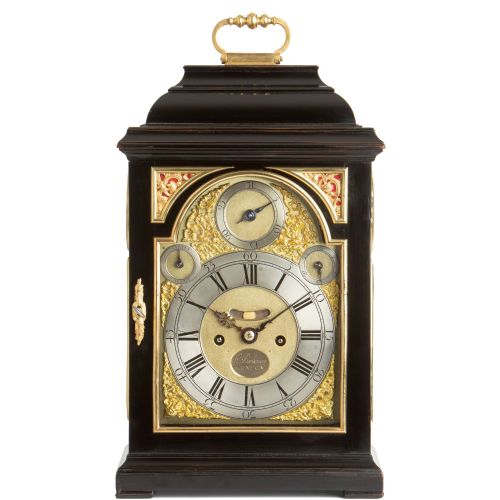


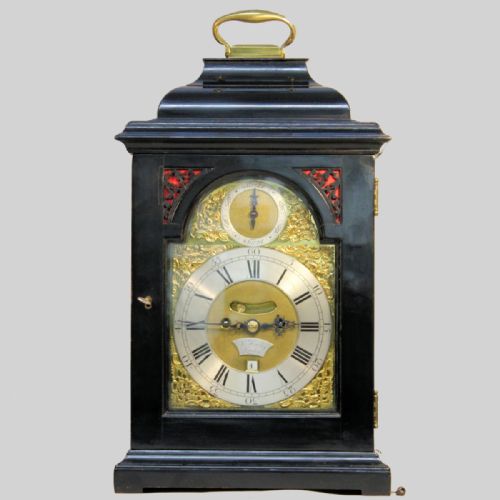


Georgian Bell Top Clock
A georgian bell top clock brings sophisticated mechanical movement and traditional cabinetry together into a striking focal point for any interior.
Georgian Bell Top Clock
A georgian bell top clock is a mechanical timepiece housed within a distinctive architectural wooden case, most frequently found originating from the eighteenth century.
The objects seen here are primarily bracket clocks and table clocks, featuring the characteristic rounded pediment profile that defines the bell top style.
Makers working during the Georgian period and the later nineteenth-century revival produced these pieces using materials like mahogany and ebonised wood.
Materials and construction methods
Cabinet makers utilised dense timbers such as mahogany and ebonised wood to build the structural cases, often incorporating glass panels and brass mounts.
Internal mechanisms rely on brass, steel, and iron components, with silvered metal frequently used for the visible clock dials.
Makers constructed complex movements utilising verge escapements, fusee drives, and striking mechanisms designed to sound on bells.
Many clocks feature strike-silent levers, allowing eighteenth-century owners to silence the bell when they wanted an undisturbed night of sleep.
Distinguishing quality in timepiece construction
The refinement of the internal movement and the originality of its components separate standard examples from finer specimens.
Case carpentry and the crispness of brass or ormolu mounts demonstrate the skill of the original maker.
The integration of quarter-repeating functions or automation elements indicates higher complexity and workshop status.
Grey of Edinburgh·Somersall London·Andrew Marchant·William Withers·John Fletcher·John Taylor·Watson·Benjamin Maud·Richard Peckover·James Evans·Isaac Hurley·Joseph Lum·Robert Brown·John Richardson
The Georgian Bell Top Clock Glossary
- Verge escapement
- An early type of clock escapement mechanism that controls the release of power in the gear train. It is typically paired with a bob pendulum or balance spring.
- Fusee
- A conical pulley used in mechanical clocks to equalise the power of the mainspring as it unwinds. This ensures consistent timekeeping across the duration of the wind.
- Bell top
- A distinctive raised and curved roof style found on eighteenth-century bracket clock cases. The profile resembles the shape of a handbell.
- Quarter repeating
- A complication mechanism that sounds the hours and quarters when a cord or lever is pulled. This allowed owners to tell the time in the dark.
- Double fusee
- A movement design utilising two separate fusee cones to power the timekeeping train and the striking train independently.
Georgian Bell Top Clock: Frequently Asked Questions
What is a bell top clock?
A bell top clock is a type of portable table or bracket timepiece characterised by a stepped, curved wooden top resembling a bell. These pieces were designed to be moved easily between rooms.
Enclosed in cases of mahogany or ebonised wood, they combine brass dialwork with mechanical movements that strike the hours.
How do you wind these clocks?
Winding involves using a specialised key inserted into the dial to tension the internal springs via the fusee mechanism. Care must be taken not to overwind antique movements.
Most examples require regular attention to maintain tension across the brass gear trains and striking systems.
Where were they placed originally?
These timepieces sat upon desks, tables, or specialised wall brackets in principal rooms of eighteenth-century homes. Their portability allowed owners to carry them between chambers.
Because they sounded the hours, placing them in living spaces or hallways ensured the chime could be heard throughout the household.
How do I identify a Georgian movement?
Georgian movements frequently employ verge escapements and chain fusee systems visible behind glass side panels or back doors. Makers often signed their names directly onto the silvered metal dials.
Examining the hand-cut brass gears and engraving styles helps confirm the eighteenth-century origin of the mechanism.