

Georgian Arch Dial Clock
A georgian arch dial clock brings the steady rhythm of the eighteenth century into a room, measured out in brass and polished timber.
Georgian Arch Dial Clock
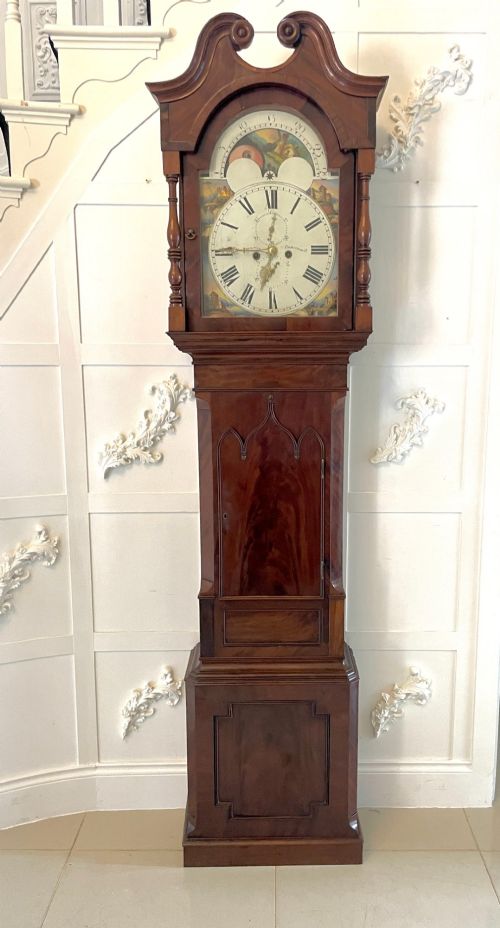
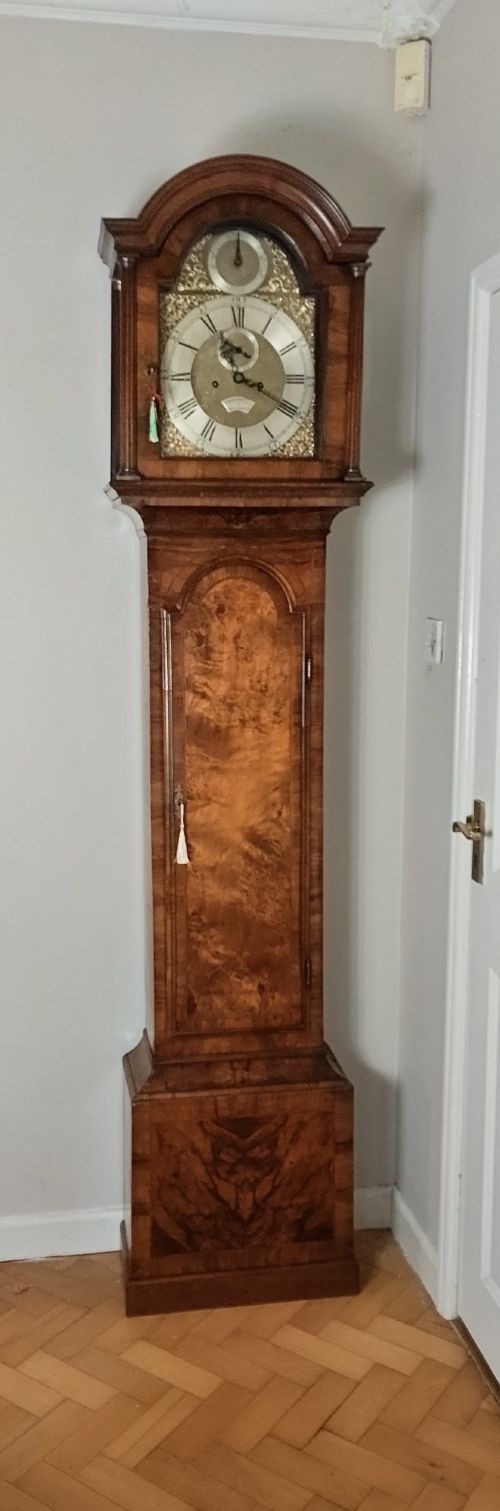
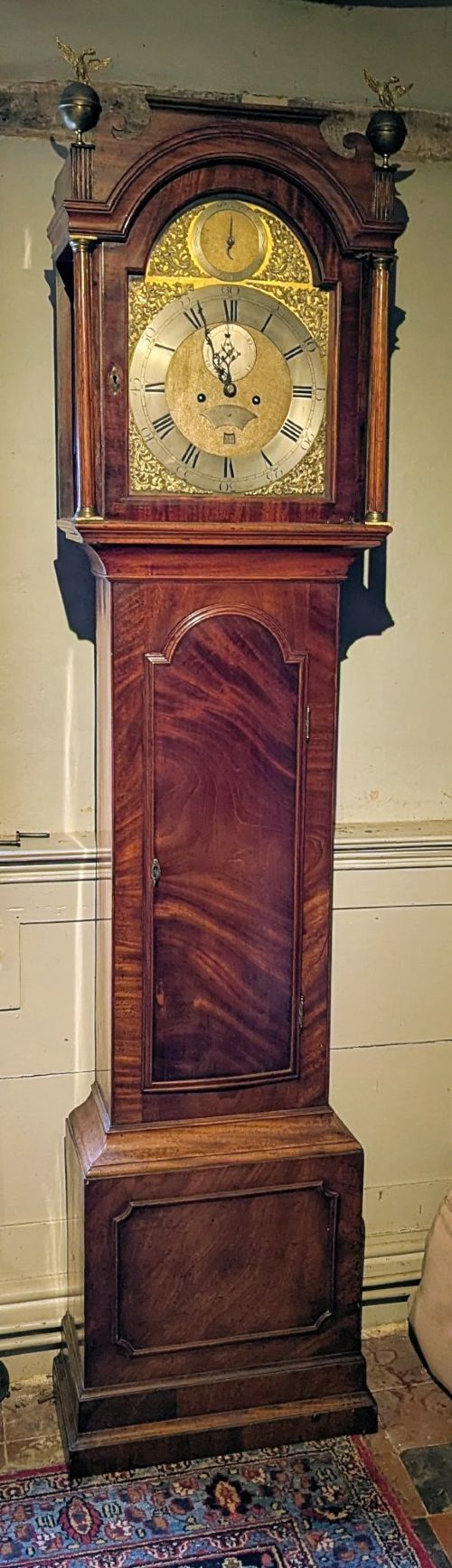
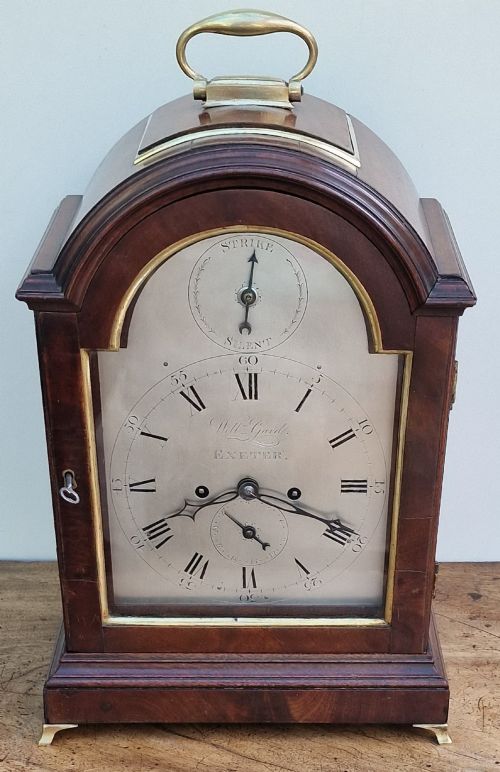
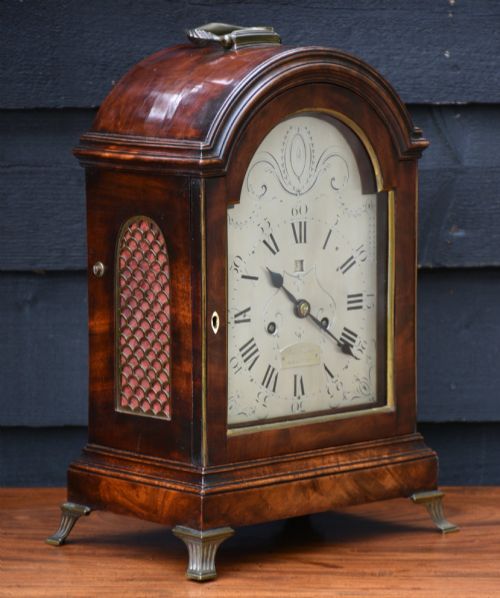
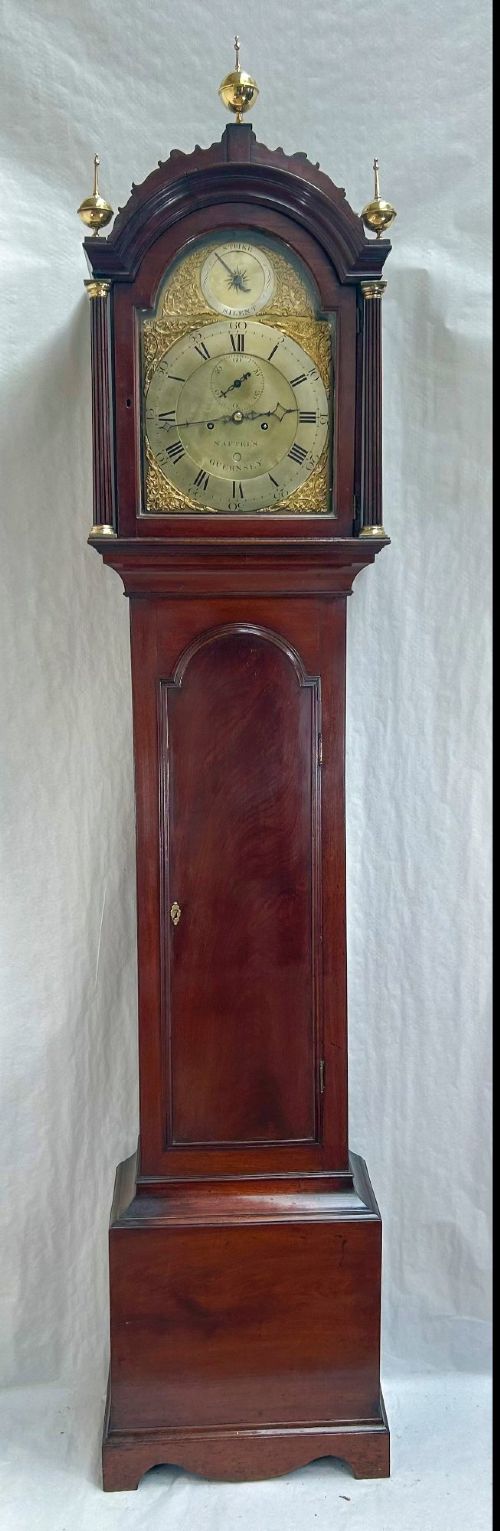
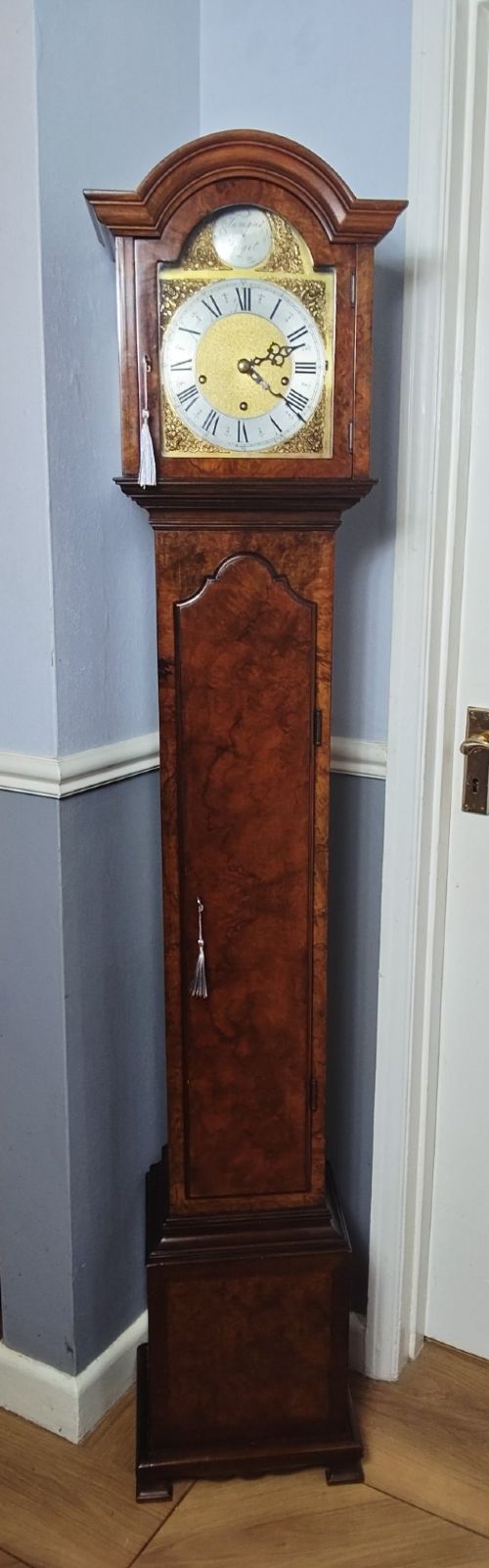
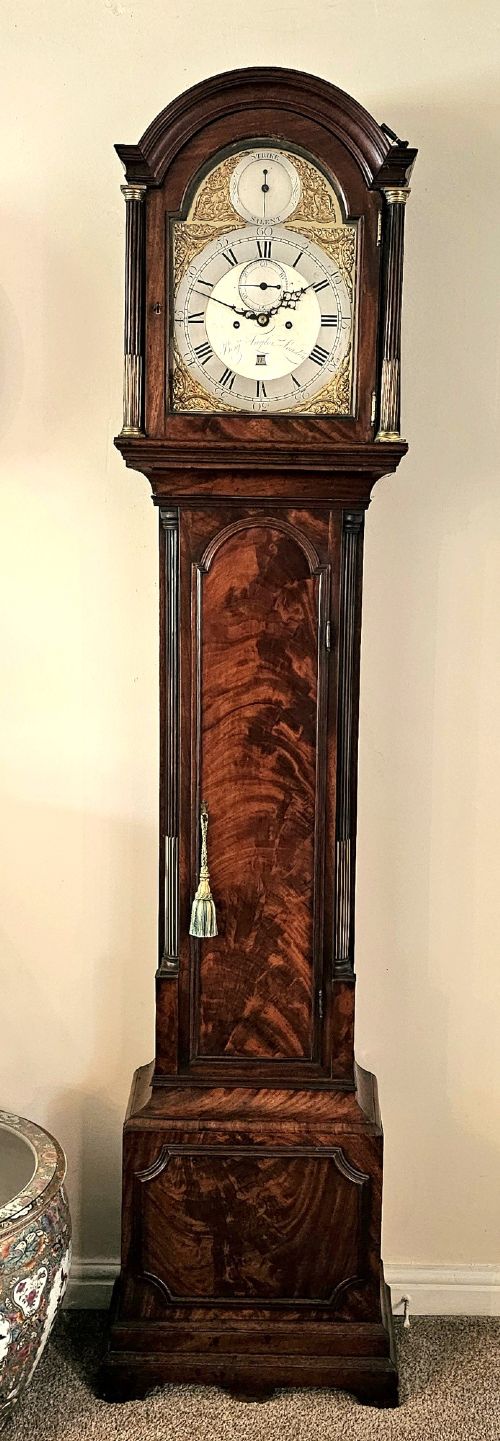
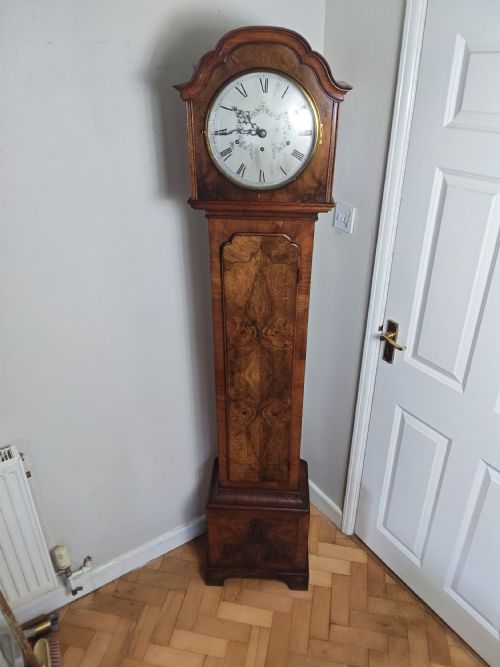
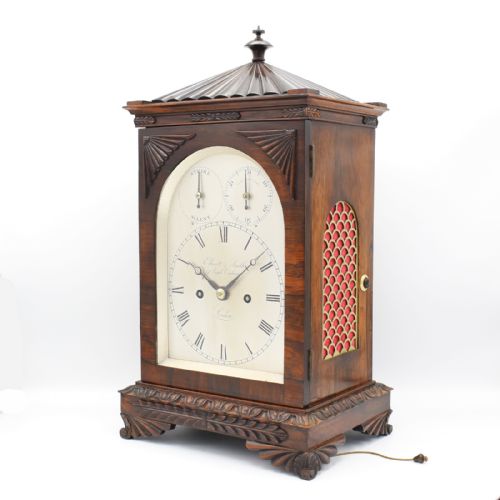
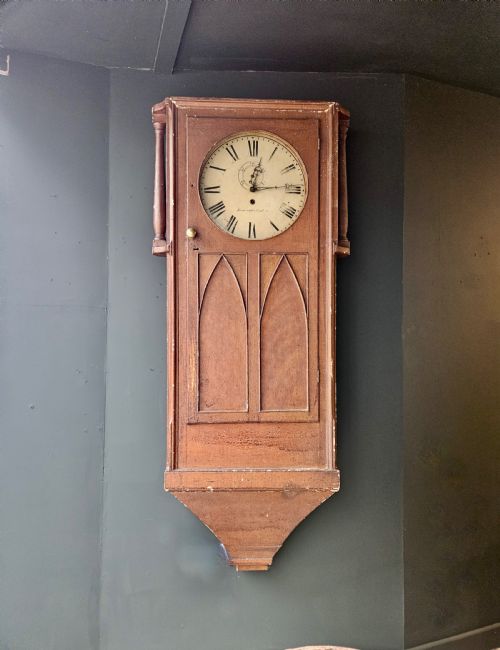
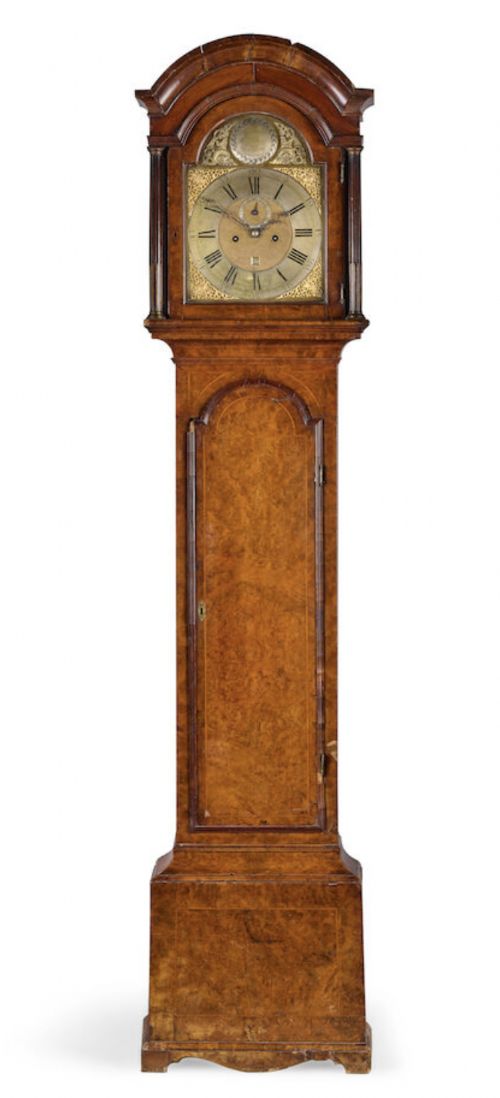
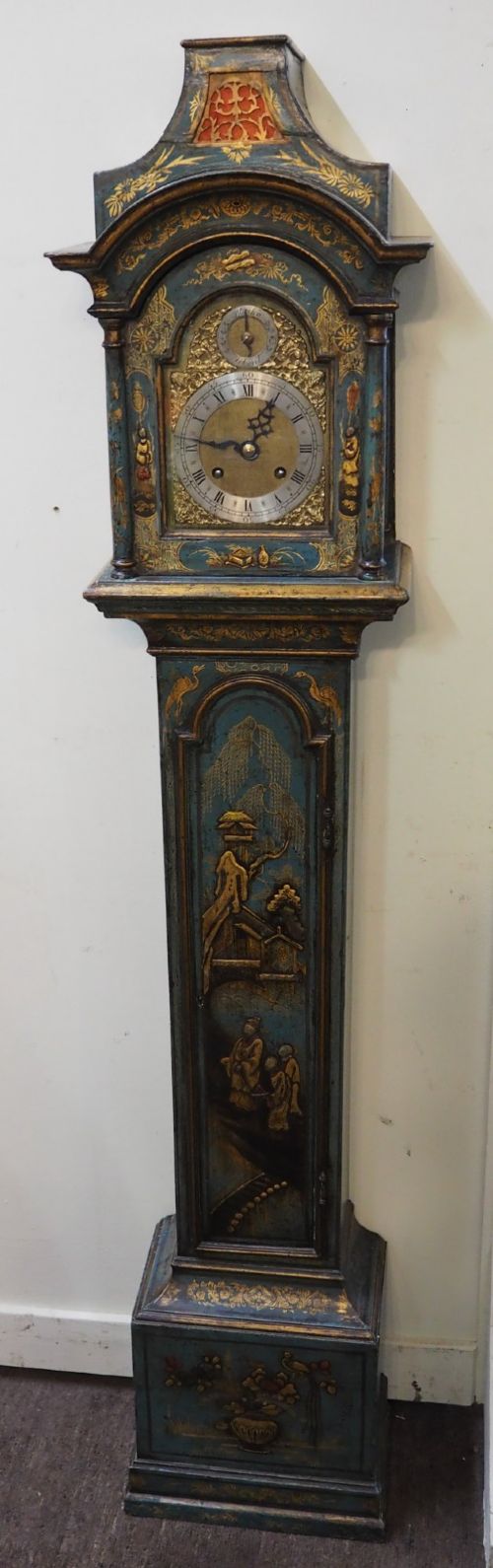
A georgian arch dial clock most commonly appears on this page as a tall longcase clock, housing an eight-day movement beneath an arched brass or silvered face. These pieces originate principally in the eighteenth century and the Georgian era, though related bracket clocks, mantel clocks and wall clocks also emerge from the period.
Makers construct these clocks using mahogany, oak and walnut cases, often enriched with flame mahogany or burr walnut veneers. London makers like James Tregent, Benjamin Taylor and Francis Perigal represent the metropolitan standard, alongside regional craftsmen working in Exeter, Hempstead and Dundee.
The arch above the main dial frequently accommodates lunar moonphase rollers, strike-silent mechanisms or subsidiary dials. Beyond the standard floor-standing grandfather clocks, smaller proportions appear in the form of grandmother clocks and portable bracket clocks.
Materials and construction
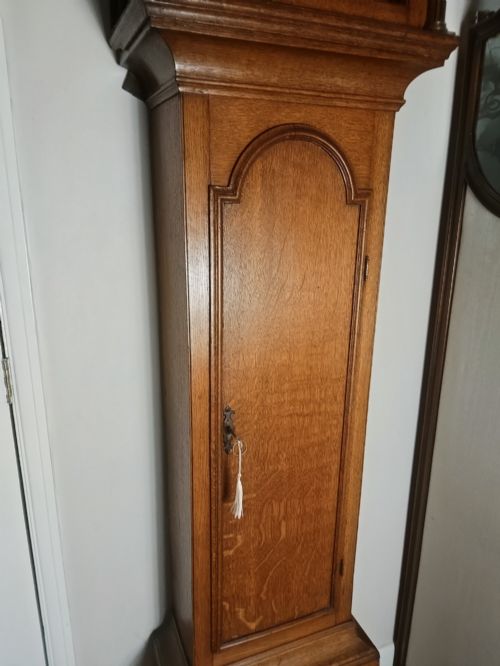
Cabinetmakers build the primary carcasses from solid oak, mahogany and walnut, applying figured veneers such as burr walnut and flame mahogany to the hood and trunk doors. Brass forms the intricate dial plates, spandrels and movement components, whilst steel drives the springs and arbors within.
Movements rely on cast brass wheels, steel pinions and lead or iron weights suspended by cords or chains. Glass panels protect the dial face within the hinged hood door, allowing a clear view of the engraved chapter rings and moving moon rollers.
The selection includes wall clocks, bracket clocks, mantel clocks and longcase clocks originating from London and regional workshops.
Standards of craftsmanship
Case proportions and original surface patination determine visual success, where untouched mahogany or burr walnut retains a warm, soft lustre. The integration of the arched dial into the hood door framing dictates the architectural harmony of the entire piece.
James Field of Hempstead·William Gard·Benjamin Taylor·Ellicott and Smith·Windmills and Wightman·Priory of Dundee Scotland·Benj Reeves Lamberhurst·Handley and Moore Of London·Des Granges of London·William Allam·James Tregent of London·Thomas Goddard London·Edward Upjohn·Francis Perigal of Bond Street·William Wady of Twickenham
The Georgian Arch Dial Clock Glossary
- Arch dial
- A clock face featuring a curved semi-circular section above the square main chapter ring. This upper space frequently houses a moonphase mechanism or subsidiary regulation dial.
- Longcase clock
- A tall pendulum clock enclosed in a wooden case consisting of a hood, a trunk and a base. Commonly known as a grandfather clock.
- Bracket clock
- A portable spring-driven clock designed to sit on a table or shelf. Early examples often incorporate architectural wooden cases with carrying handles.
- Spandrel
- An ornamental metal corner piece fixed to the dial surrounding the chapter ring. These cast brass decorations evolve in style from rococo scrolls to neoclassical motifs.
- Chapter ring
- The circular metal ring affixed to the dial face that displays the hours and minutes. These are usually silvered or engraved and blackened for legibility.
- Moonphase
- A mechanical display on the arch of the dial that tracks the lunar cycle. It utilises a rotating disc painted with two moons to show the phases of the moon.
Georgian Arch Dial Clock: Frequently Asked Questions
How do eight-day movements work?
An eight-day movement requires winding approximately once a week using a key inserted into holes on the dial face. Weights suspended on lines inside the trunk supply the driving power for the gear train.
This system offers greater convenience than thirty-hour clocks which need daily attention. It represents the standard mechanism found in fine Georgian longcase clocks.
Where should I place a longcase clock?
Longcase clocks require a stable, level floor and a secure fixing to a wall through the back of the trunk to prevent swaying. They perform best away from direct sunlight, central heating vents and damp walls.
The pendulum needs a solid foundation to maintain an even beat and accurate timekeeping. Hallways, landings and principal living rooms traditionally house these tall wooden pieces.
How do I tell different periods apart?
Early Georgian pieces often utilise solid oak with simpler square dials and restrained brass spandrels. As the eighteenth century progresses into the Regency era, mahogany and burr walnut veneers dominate alongside painted or silvered arched dials.
Twentieth-century revivals imitate these earlier forms but employ modern internal components or distinctively figured timbers. Examining the construction of the case interior and the style of the dial engraving reveals the true age.