




Georgian Air Twist Glass
A georgian air twist glass brings the delicate, spiralling inner bubbles of eighteenth-century tableware directly to the modern table.
Georgian Air Twist Glass
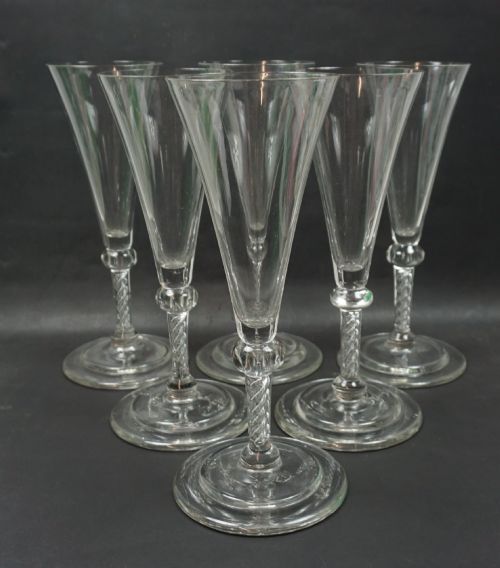
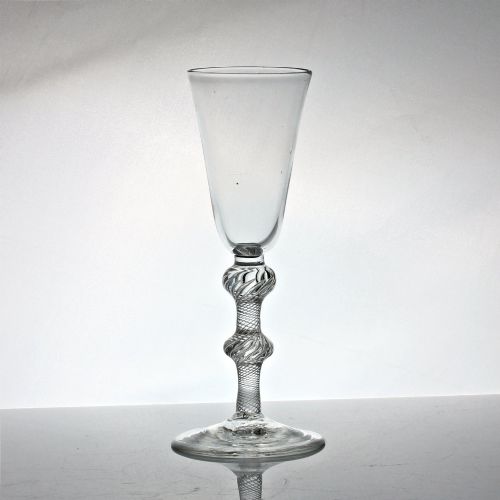
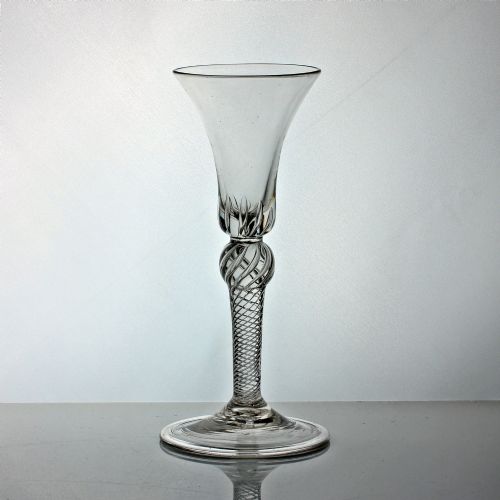
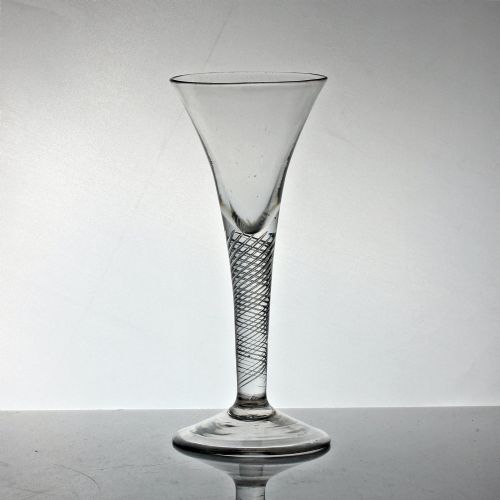
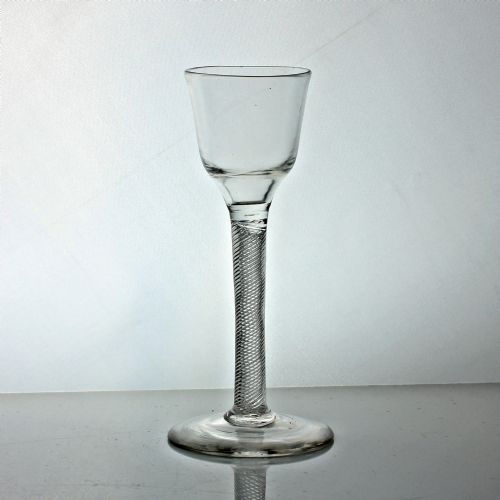
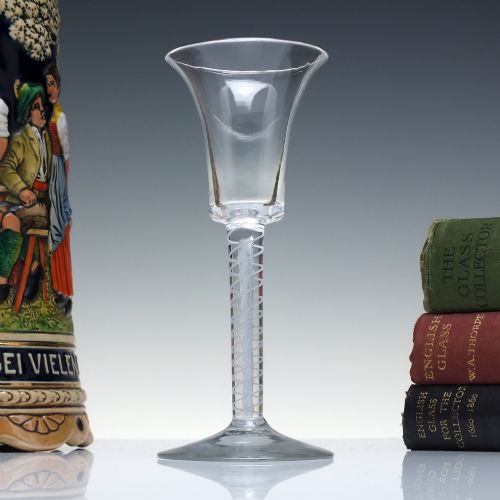
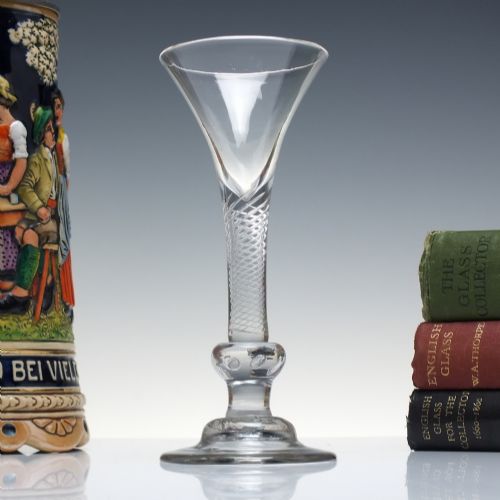
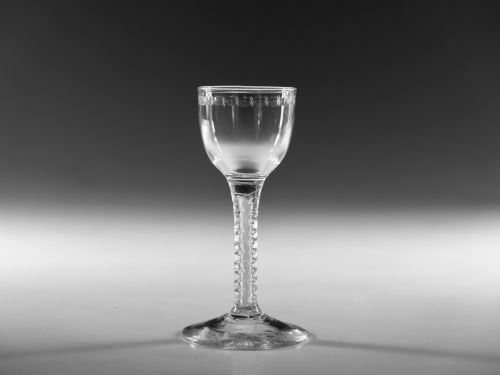
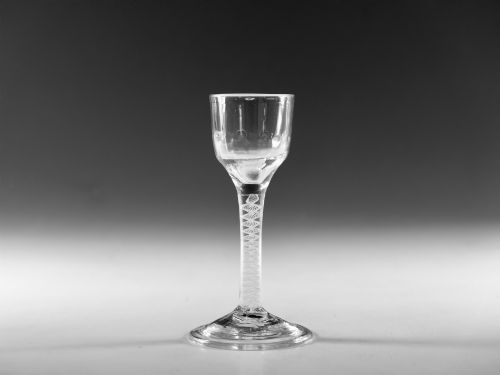
A georgian air twist glass typically takes the form of stemware designed for wine, ale, or cordials, originating primarily from the eighteenth century. These drinking vessels feature slender stems enclosing elongated air bubbles drawn out into threads, spirals, or cables.
The most common examples on this page belong to the mid-eighteenth century, particularly around seventeen-fifty, though later nineteenth-century revivals and twentieth-century interpretations also appear. Forms range from standard wine glasses with bell or ogee bowls to taller ale glasses and champagne flutes.
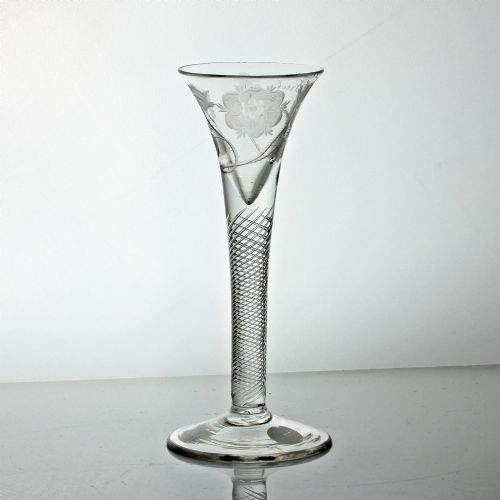
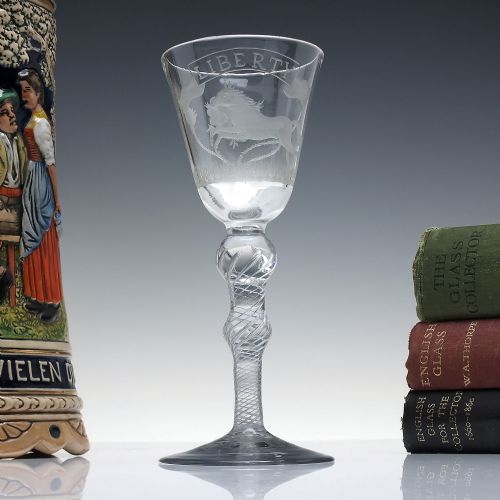
Engraved ornamentation frequently surfaces on the bowls of these pieces, showing Jacobite emblems, hunting scenes, or hop and barley motifs. Collectors encounter single-series twists, multi-spiral variations, and composite stems featuring knops or collars.
Materials and construction
To create the optical effect within the stem, glassmakers imprisoned tiny air bubbles inside a solid cylinder of hot glass before drawing and twisting the mass. The twisted threads were then encased in a smooth outer layer of clear glass to seal the internal spirals.
Georgian Air Twist Glass Retail Price Guide 2026
Typical asking prices for georgian air twist glass among the pieces listed under this phrase on Sellingantiques today, from the lower quarter to the upper quarter. They describe what is for sale here now, not the wider market.
Some glasses bear covert political rebellion within their delicate stems, preserving secret toasts to exiled monarchs in spun air.
Assessing quality in twist stems
Quality in a georgian air twist glass rests upon the optical clarity of the metal and the precision of the internal threads. Exceptional pieces display brilliant transparency in the bowl alongside tightly controlled, uniform spirals within the stem.
The presence of structural additions such as folded feet, multiple knops, or complex balustroid collars elevates the desirability of a piece. Furthermore, crisp, detailed wheel engraving on the bowl distinguishes superior examples from plain or hastily decorated counterparts.
The Georgian Air Twist Glass Glossary
- Air twist
- A stem containing internal threads or spirals of trapped air formed during the glassmaking process. This technique became popular in English drinking vessels during the eighteenth century.
- Ogee bowl
- An S-curve bowl profile that curves outward at the rim and inward at the base, commonly found on mid-eighteenth-century stemware. It offers a comfortable mouthfeel for the drinker.
- Knop
- A knob or swelling on the stem of a glass, used for decorative effect or a secure grip. Multiple knops significantly alter the visual weight of the stem.
- Folded foot
- A glass foot where the outer rim has been folded underneath to create a thickened, rounded edge. This technique adds stability and strength to delicate drinking vessels.
- Ale glass
- A tall, narrow drinking glass specifically shaped to serve ale or beer. These pieces often feature hop and barley engravings.
Georgian Air Twist Glass: Frequently Asked Questions
Were these glasses used for everyday dining?
In the eighteenth century, lead glass stemware represented significant luxury and was reserved for formal dining, toasts, and social gatherings. Wealthy households utilised them for serving wine, ale, and cordials during supper.
Today, owners typically treat them as display items or use them sparingly for special toasts rather than daily meals.
What is a Jacobite engraving?
Jacobite engravings commemorate supporters of the exiled Stuart dynasty, featuring secret symbols such as the white rose, the oak leaf, or specific portraits. These motifs allowed sympathizers to drink hidden toasts to the king over the water.
Finding such historical detail on an air twist stem adds considerable narrative depth to a piece of antique glassware.
How can I tell an eighteenth-century piece from a later copy?
Examine the base of the foot for pontil marks, wear patterns, and irregularities characteristic of hand-blown manufacturing techniques. Eighteenth-century lead glass also exhibits a distinctive weight, greyish tone, and exceptional ring when tapped gently.
Later revivals from the nineteenth and twentieth centuries often feature different proportions, heavier bases, or machine-moulded uniformity that distinguishes them from period originals.