





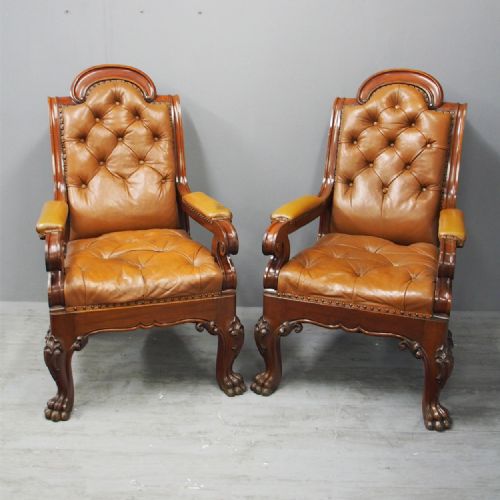


George IV Mahogany Chairs
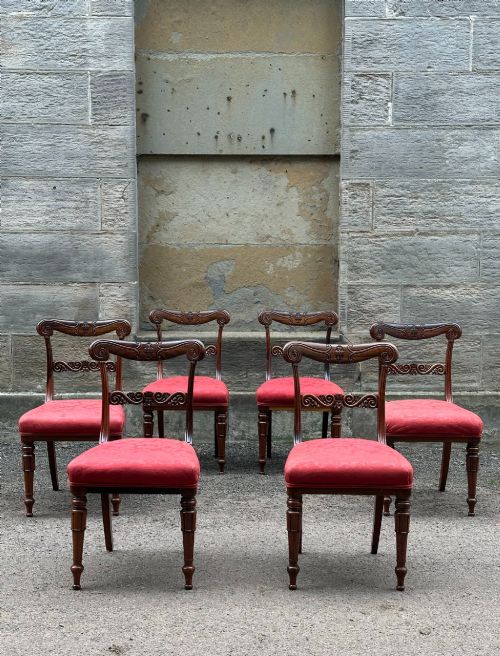
George iv mahogany chairs bring robust timber, architectural confidence and generous proportions into a dining room or library.
George IV Mahogany Chairs
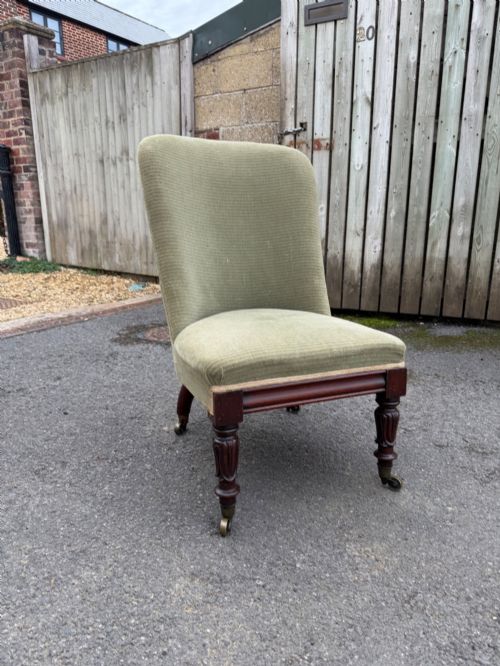
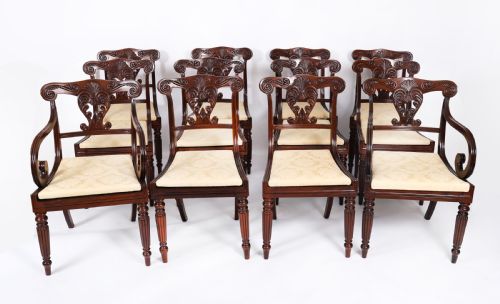
George iv mahogany chairs encompass a distinct group of seating furniture created during the early decades of the nineteenth century, spanning the Georgian, Regency and William iv stylistic shifts. Dining chairs appear most frequently on this page, often found in sets ranging from pairs up to dozens, alongside armchairs, hall chairs, library chairs and slipper chairs.
Makers of the period adapted earlier classical idioms into bolder statements, drawing on Grecian revival motifs, bar back constructions and curule designs. Dining sets and hall chairs form the backbone of the available selection, complemented by specialised library armchairs configured for reclining.
Timber and upholstery
Cabinetmakers built these chairs predominantly using solid mahogany, though occasional pieces utilise rosewood or incorporate painted finishes alongside brass accents. Structural integrity relies on dense native grain, which allowed workshops to carve heraldic armorials and intricate details directly into the wood.
Seating surfaces and back supports frequently incorporate fabric, leather, or specialised upholstery to provide comfort, particularly on library armchairs and bergères. Patent mechanisms appear on reclining library chairs, showing mechanical ingenuity alongside traditional joinery.
Listings feature items spanning the 19th century, Georgian and Regency periods, constructed in mahogany, rosewood and leather.
Craftsmanship and distinction
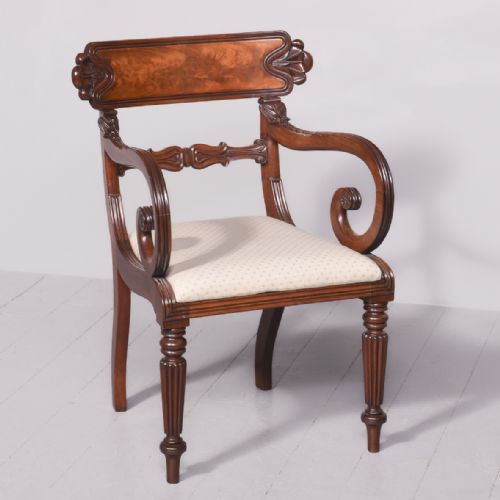
Quality rests in the crispness of the carved details, such as heraldic armorials or crest rails, and the selection of figured timber with deep grain patterns. Sets that remain intact with uniform timber and matching frames command greater attention than assembled groups.
The sophistication of the design, whether standard bar backs or architectural Grecian revival forms, dictates the standing of the piece. Attribution to known workshops like Gillows elevates specific items through documented standards of construction.
Gillows of Lancaster·Robert Daws
The George IV Mahogany Chairs Glossary
- Mahogany
- A durable tropical hardwood prized for its deep reddish-brown colour and stable grain. It forms the primary structural material for the majority of pieces in this category.
- Bergère
- An enclosed upholstered armchair with wooden framing exposed around the sides and back. This form provides a formal yet comfortable seat for a parlour or library.
- Curule
- A distinctive X-shaped furniture design derived from ancient Roman magistrate seats. It appears on library armchairs designed with scrolling cross-frame supports.
- Armorial
- A heraldic design or crest carved directly into the wooden panel of a chair back. Hall chairs frequently display these motifs to indicate family lineage.
- Bar back
- A horizontal wooden slat forming the central rail of a chair back, frequently curved to fit the spine. This configuration dominates dining chair variations from the period.
George IV Mahogany Chairs: Frequently Asked Questions
How do I identify george iv mahogany chairs?
Look for heavy proportions, dark mahogany timber and decorative motifs influenced by Grecian revival and Regency styles. Carved details often feature bold architectural lines rather than delicate eighteenth-century curves.
Check for construction methods typical of the early nineteenth century, including drop-in seats and integrated bar backs.
Were these chairs used for dining?
Dining chairs represent the most common survival from this era, frequently found in sets ranging from four to twelve pieces. They were designed around large dining tables in formal houses.
Matching carver armchairs often accompanied the smaller side chairs at the head and foot of the table.
What is a hall chair?
Hall chairs are rigid wooden seats with solid backs, often carved with crests or armorials. They stood in entrance halls for visitors waiting briefly.
Because they lacked upholstery, makers focused entirely on carved woodwork and painted finishes.
How do I care for mahogany furniture?
Keep wooden surfaces away from direct sunlight and rapid temperature changes to prevent the timber from drying out. Regular dusting with a dry cloth maintains the finish.
Leather and fabric upholstery require specialised cleaning appropriate to their specific textile type.