
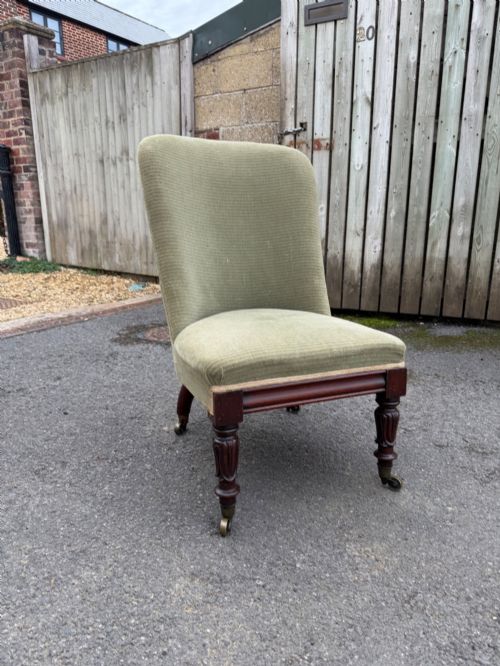

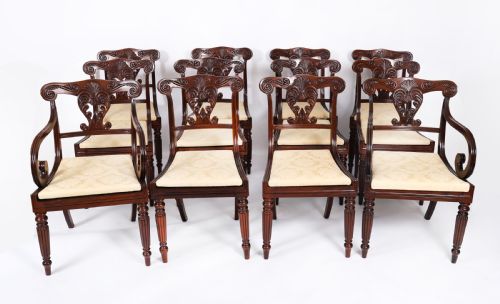


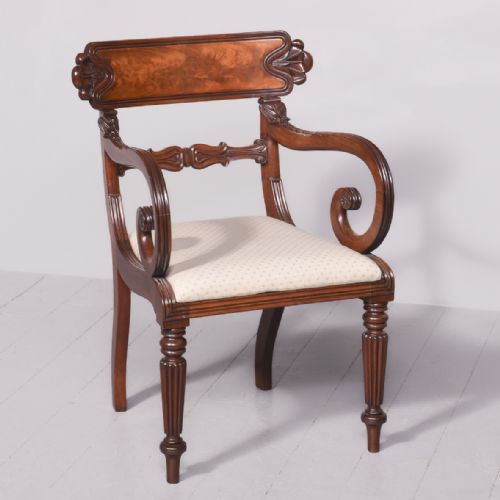

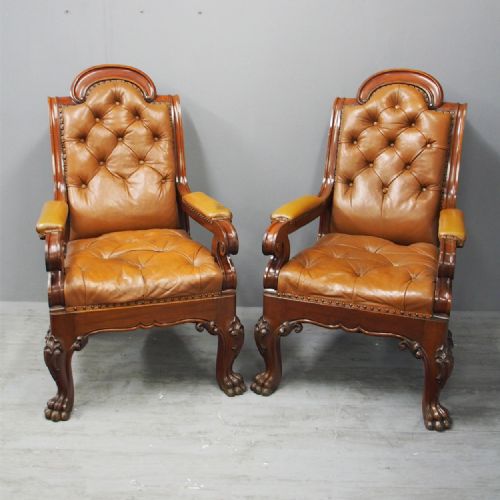

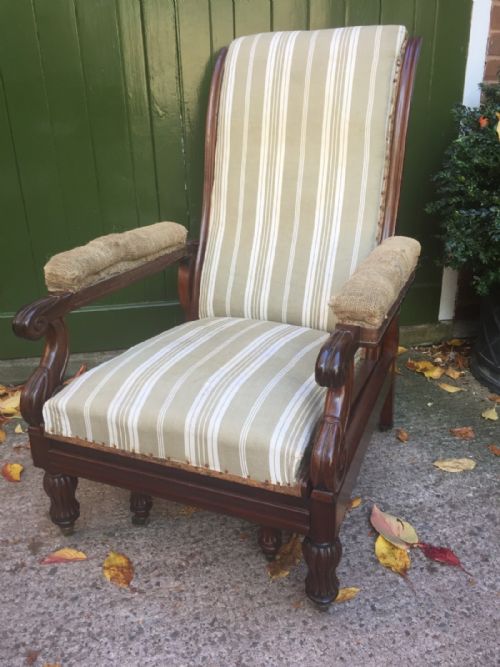
George IV Armchairs
George iv armchairs are robust seating from the early nineteenth century that bring substantial presence and classic British craftsmanship to any room.
George IV Armchairs
George iv armchairs span the 19th century, Georgian, and Regency periods, showing the heavy influence of classical design and evolving comfort in British seating. You encounter everything from large library chairs to dining chairs and slipper chairs within these listings.
The materials recorded across these pieces include mahogany, rosewood, birch, fruitwood, stained beech, and occasional child's Windsor forms. These timbers are paired with brass, leather, silk, and various upholstery fabrics to complete each piece.
The style labels attached to these items cover George IV, Regency, and William IV, reflecting the shifting tastes of the eras. Most pieces you meet on this page are mahogany library or dining armchairs from the early nineteenth century.
How they were made
Makers utilised dense timbers such as mahogany and rosewood, alongside regional choices like birch and fruitwood, to build sturdy frames that survive today. These woods were often turned, carved, or polished to highlight the natural grain.
Upholstery techniques involved traditional stuffing and covering with leather, silk, or fabric, sometimes incorporating early reclining mechanisms and brass castors. Patent designs by makers like Robert Daws demonstrate the mechanical ingenuity applied to seating during this period.
A tiny child's Windsor armchair sits among the massive library chairs, proving that early nineteenth-century comfort came in all sizes.
What varies in quality
The standard of carving and the selection of timber dictate the distinction between simpler seating and grander library armchairs. Richly figured rosewood or carefully turned mahogany legs set finer examples apart from plainer utility pieces.
Original mechanisms in reclining chairs and the retention of period upholstery materials influence the integrity of a piece. Pieces reflecting specific regional or maker traditions command attention through distinct proportions and joinery.
Robert Daws·James Mein of Kelso
The George IV Armchairs Glossary
- Bergère armchair
- An upholstered armchair with enclosed sides, typically featuring cane or fabric panels. This form offers a refined silhouette often seen in Regency interiors.
- Curule design
- A style of cross-frame seating inspired by ancient Roman magistrate chairs. It appears in early nineteenth-century library chairs with distinctive X-shaped supports.
- Library chair
- A substantial armchair designed for reading rooms, frequently built with deep seats and upholstered arms. These pieces emphasise stability and prolonged comfort.
- Bar back dining chair
- A chair featuring a horizontal top rail shaped like the crossbar of a piece of harness. This style is characteristic of Regency dining sets.
- Patent armchair
- Seating incorporating mechanical adjustments for reclining, often attributed to specific inventors of the era. These designs showcase the mechanical ambitions of early nineteenth-century cabinet makers.
George IV Armchairs: Frequently Asked Questions
Were these chairs used in libraries?
Large library chairs were specifically constructed for reading rooms and studies, offering deeper seats and sturdier frames. They were built to support extended periods of sitting.
Dining chairs and slipper chairs served different domestic functions around the house, ranging from formal dining rooms to bedrooms.
What woods were used for these chairs?
Mahogany and rosewood dominate the listings, prized for their rich grain and structural strength. Regional timbers like birch, fruitwood, and stained beech also appear.
Brass hardware and various upholstery fabrics complete the construction of these pieces.
How do I care for antique upholstery and leather?
Keep leather conditioned with appropriate treatments to prevent drying and cracking over time. Protect fabric and silk upholstery from direct sunlight to preserve the colour.
Regular, gentle dusting helps maintain the wooden frames and prevents accumulation in carved details.