

George III Tapered Table
A george iii tapered table brings eighteenth-century proportion and fine cabinet-making into a room with understated architectural grace.
George III Tapered Table
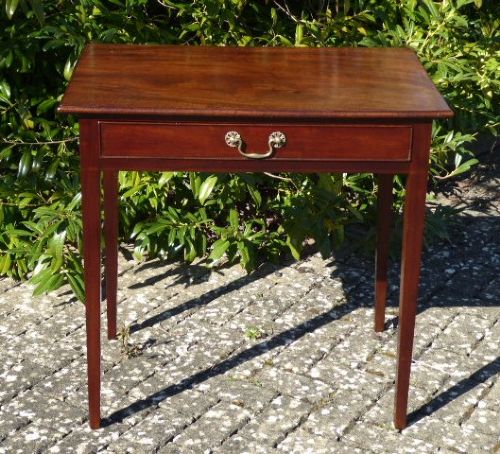
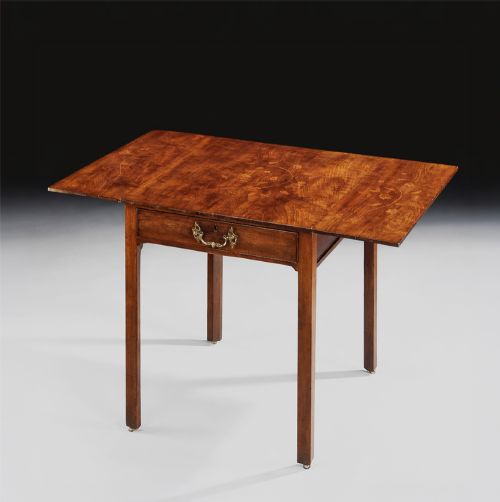
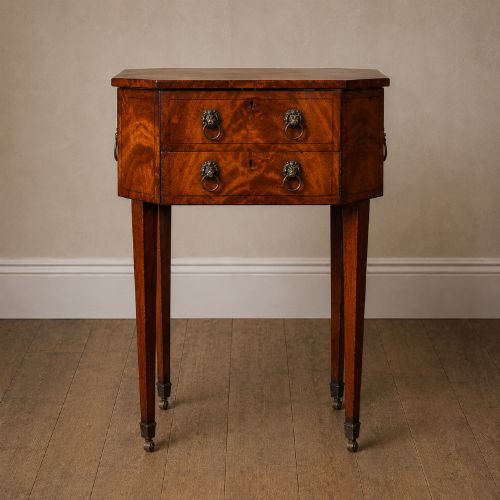
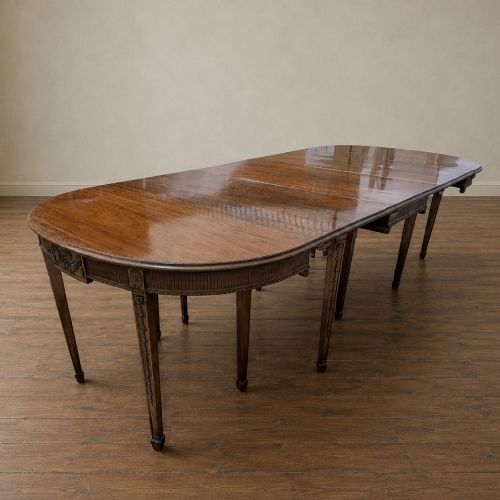
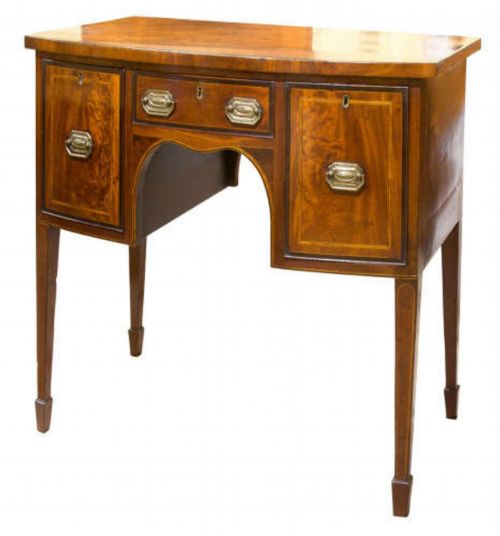
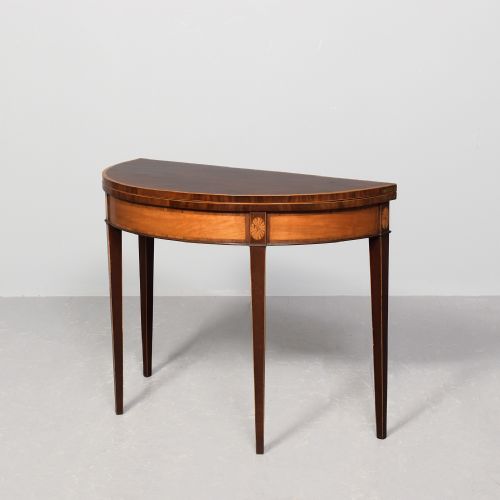
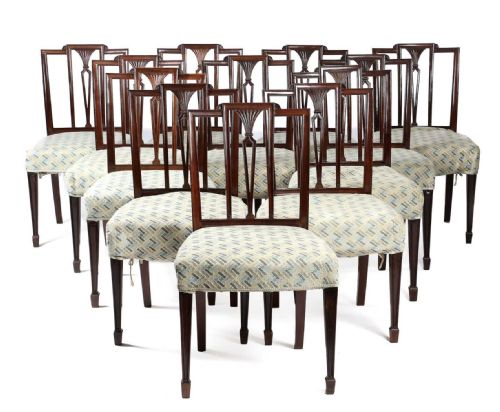
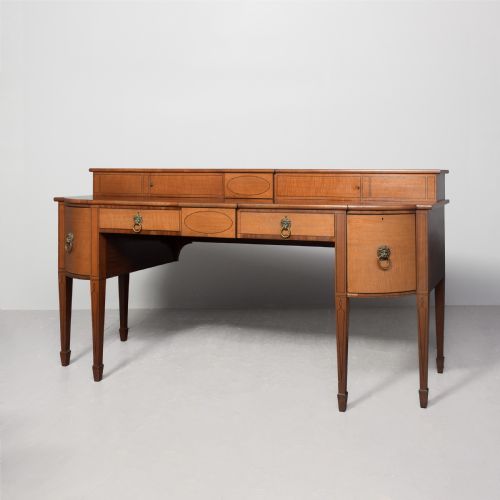
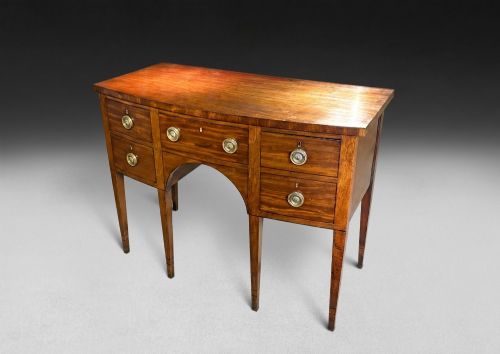
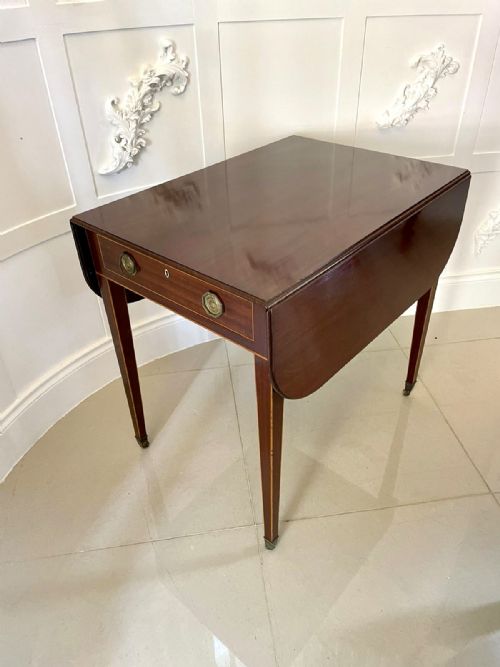
Buyers searching for a george iii tapered table seek functional furniture defined by straight, narrowing legs that lighten the visual weight of dense timbers. The selection spans utilitarian side tables and Pembroke designs alongside console tables, card tables, and occasional dining pieces.
Most examples originate from the Georgian era or reproduce its distinct stylistic language through mahogany, satinwood, and rosewood veneers. These forms served various domestic duties, from holding tea services to providing writing surfaces in withdrawing rooms.
Materials and Construction
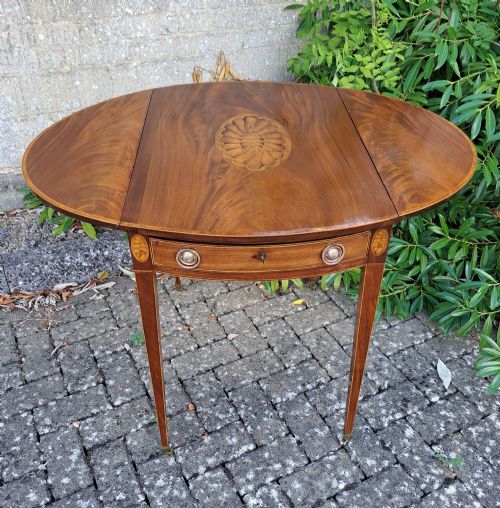
Cabinet-makers relied heavily on figured mahogany as the primary carcass and framing timber, often selecting dense growth for stability and rich figuring. Surfaces frequently display contrasting inlay and stringing executed in boxwood, satinwood, and purpleheart.
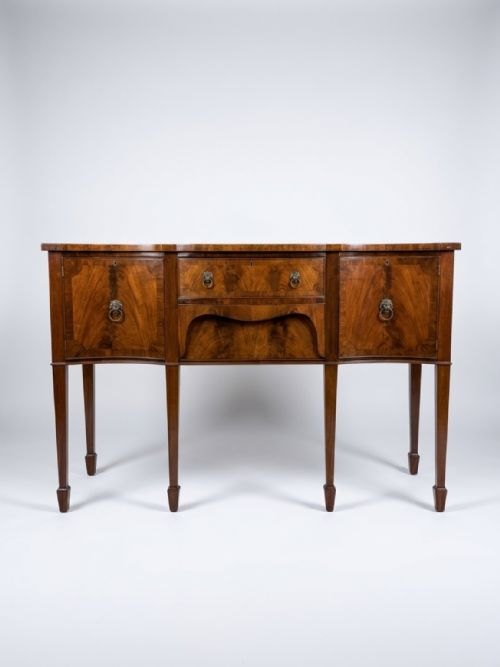
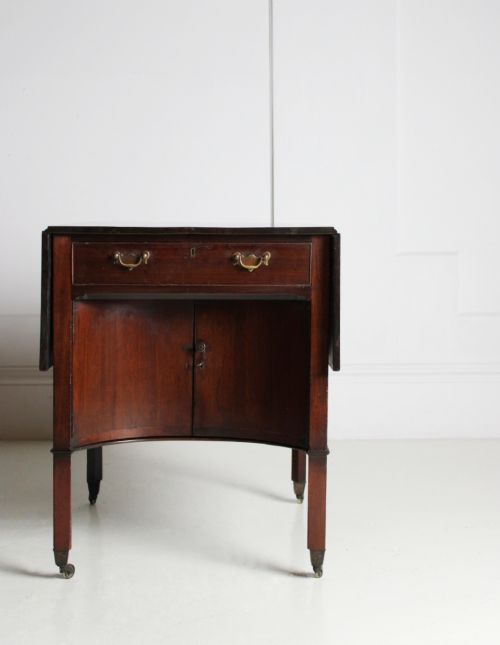
Details such as brass handles and lion mask mounts provide functional accents against polished wooden planes. Joinery techniques prioritize clean lines, particularly where legs taper toward the floor to create an impression of slender strength.
Listings feature mahogany, satinwood, and rosewood alongside boxwood stringing and brass hardware across multiple Georgian and revival periods.
Assessing Quality and Execution
Superior execution shows in the choice of timber figure, where book-matched veneers or highly figured mahogany grain align precisely across drawers and tabletops. Secondary woods hidden from view maintain the same rigorous standard of selection and planing.
Refinement of inlay work distinguishes finer pieces, with crisp boxwood stringing and delicate marquetry panels set flush into the primary timber. The proportion of the tapered leg relative to the top determines the overall visual balance.
Bruce & Burns of Edinburgh
The George III Tapered Table Glossary
- Pembroke table
- A small drop-leaf table with hinged flaps on either side, designed for versatile placement and light domestic tasks. These pieces frequently feature slender tapered legs and a single drawer.
- Demi-lune
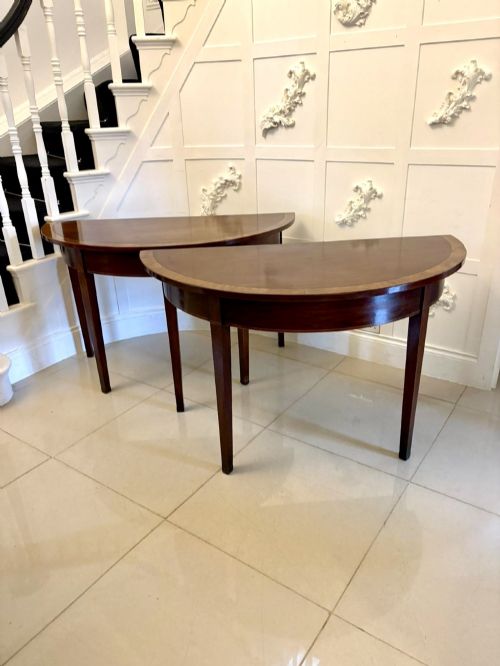
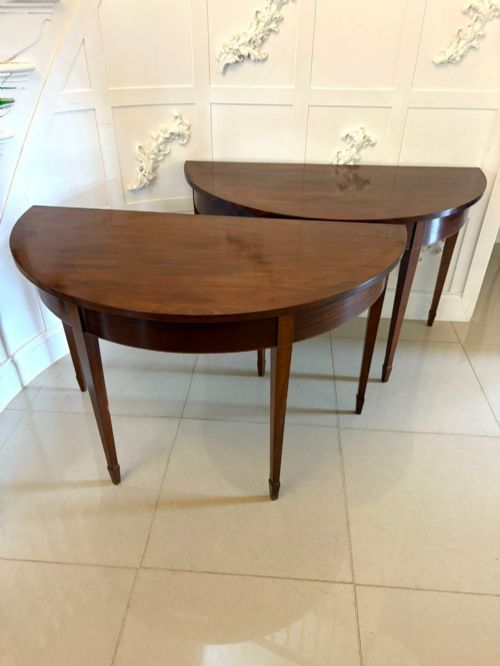
- A half-moon shape characteristic of console and card tables designed to stand flat against a wall. The format suits smaller spaces while offering a generous surface when placed in pairs.
- Stringing
- A narrow inlay of contrasting wood used to outline drawer fronts, edges, and tabletops. This linear decoration accentuates the geometric construction of Georgian furniture.
- Marquetry
- The art of applying pieces of veneer to a structure to form decorative patterns and pictures. Craftsmen utilised timbers like satinwood and rosewood to achieve tonal contrast.
George III Tapered Table: Frequently Asked Questions
What rooms suit a george iii tapered table?
These tables adapt easily to various domestic spaces due to their restrained proportions and functional surface areas. Pembroke and side variants fit neatly into reception rooms or hallways.
Larger console or card versions function effectively against dining room walls or as display surfaces beneath mirrors.
How do I care for mahogany surfaces?
Polished mahogany requires consistent, gentle maintenance to preserve the natural depth of the grain and the protective wax finish. Dusting with a soft cloth prevents surface accumulation.
Avoid placing timber furniture near direct heat sources or strong sunlight to prevent the wood from drying and the veneers from lifting.
Are these tables suitable for daily use?
Georgian tables were built for practical domestic routines using stable timbers and robust joinery methods. Pembroke and side formats handle regular writing or serving tasks reliably.
Care should be taken with folding card table mechanisms and drop-leaf supports to avoid straining historical hinges.
How do I distinguish periods within these listings?
Pieces span the eighteenth-century Georgian period through later Victorian and Edwardian revivals. Original eighteenth-century examples display construction methods and timber ageing consistent with hand-tool working.
Revival pieces often incorporate machine-cut elements or differing secondary woods beneath the visible surfaces.