


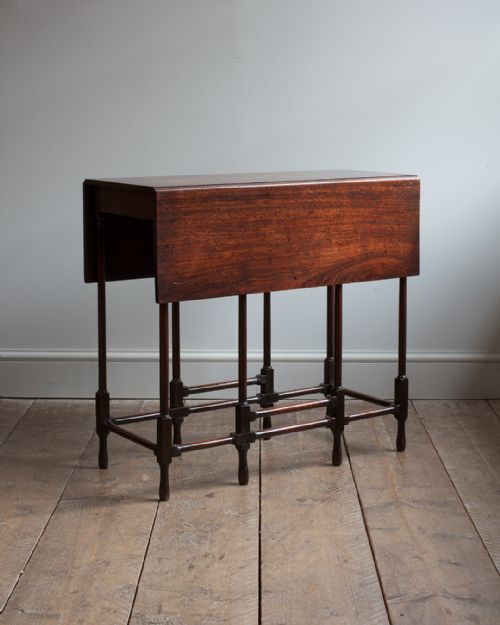


George III Gateleg Table
A george iii gateleg table brings solid timber practicality and folding leaves together in a piece designed to expand for dining and fold away when space is tight.
George III Gateleg Table
A george iii gateleg table is fundamentally a drop-leaf design supported by pivoting legs that swing out to hold the flaps. The examples gathered here span the eighteenth century into later nineteenth and twentieth century interpretations, showing both compact spider leg formats and substantial dining sizes.
The form stretches from small occasional and side tables to large wake and dining tables built for daily use. Mahogany dominates the selection, accompanied by occasional pine and satinwood variants alongside older oak pieces from the archive.
Buyers encounter circular, oval and rectangular top configurations supported by four, six or delicate slender legs. These tables serve as versatile room centres that transition easily from folded consoles to full-scale dining surfaces.
How they were made
Makers built these pieces primarily using solid mahogany, pine and satinwood, supported by brass and iron fittings in the hinges and swing actions. Timber selection dictated the weight and durability of the folding leaves, ensuring the hinged flaps remained stable when extended.
Joinery focused on the robust framing required to support pivoting gate legs under regular movement. Delicate variants like spider leg tables utilised exceptionally slender turned supports while maintaining structural integrity through careful frame construction.
Listings feature mahogany, pine and satinwood across eighteenth-century and later formats.
What varies in quality
Quality rests upon the choice of timber and the proportion of the frame when fully extended or folded down. Better pieces display refined turning on the legs and tight, precise joints in the gate mechanism that allow smooth operation without sagging leaves.
Scale and timber figuring separate everyday examples from superior ones, particularly in large dining formats where dense mahogany grain and substantial framing define the piece. Original condition and timber consistency across the top and leaves mark the upper tier of the range.
The George III Gateleg Table Glossary
- Gateleg table
- A table with hinged leaves supported by legs that swing outward like a gate. This mechanism allows the surface area to expand or contract significantly.
- Spider leg table
- A delicate table featuring exceptionally thin turned uprights. These slender supports give the frame a light visual footprint while maintaining steady balance.
- Drop leaf table
- A table equipped with one or two hinged flaps that drop down at the sides. Raising the flaps extends the main top surface for dining or serving.
- Wake table
- An exceptionally large drop-leaf or gateleg table traditionally used for gatherings or communal meals. These pieces offer expansive seating capacity through multiple folding leaves and extra supporting legs.
- Satinwood
- A durable hardwood known for its pale, golden sheen and fine grain. Cabinet makers utilised it for decorative surfaces and contrasting details.
George III Gateleg Table: Frequently Asked Questions
How do I use a gateleg table daily?
Keep one or both leaves dropped against a wall as a console or side table when floor space is limited. Swing the gate legs outward and lift the flaps whenever you need an expanded surface for dining or working.
Ensure the folding leaves are supported evenly by the swing legs to prevent strain on the central hinges over time.
What is a spider leg table?
A spider leg table is a lighter variant featuring very thin, delicate turned vertical supports. These tables function well as small occasional or tea tables rather than heavy-duty dining surfaces.
The slender frame requires careful placement to avoid excessive lateral movement during everyday use.
How can I tell the period of these tables?
Examine the timber species, construction methods and turning style on the legs. Eighteenth-century pieces typically show heavier native hardwoods and hand-cut joinery, while later interpretations reflect the manufacturing techniques of their respective eras.
Hardware such as hinges and screw types also provide clues regarding the age of the piece and any subsequent restoration work.
Are these tables sturdy enough for dining?
Larger formats built with solid mahogany and multiple supporting legs offer exceptional stability for regular meals. The integrity of the swing gate mechanism is key to supporting weight on the extended flaps.
Compact or spider-legged versions suit lighter tasks rather than heavy daily dining use.