




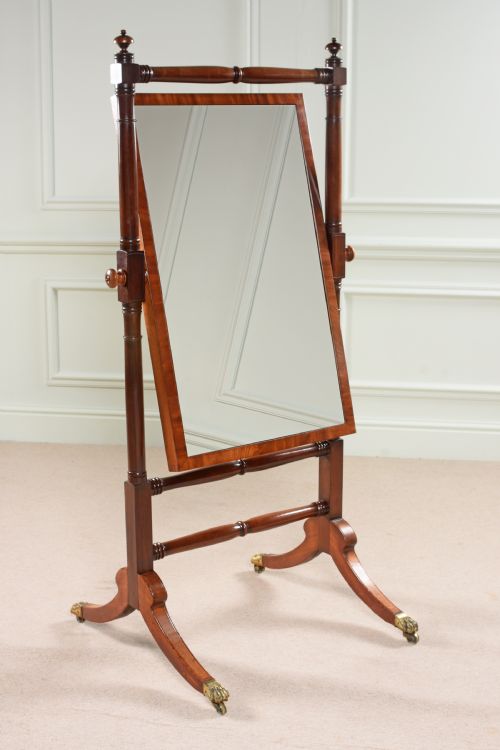


George III Swing Mirror
A george iii swing mirror brings refined Georgian craftsmanship and practical elegance to any dressing surface.
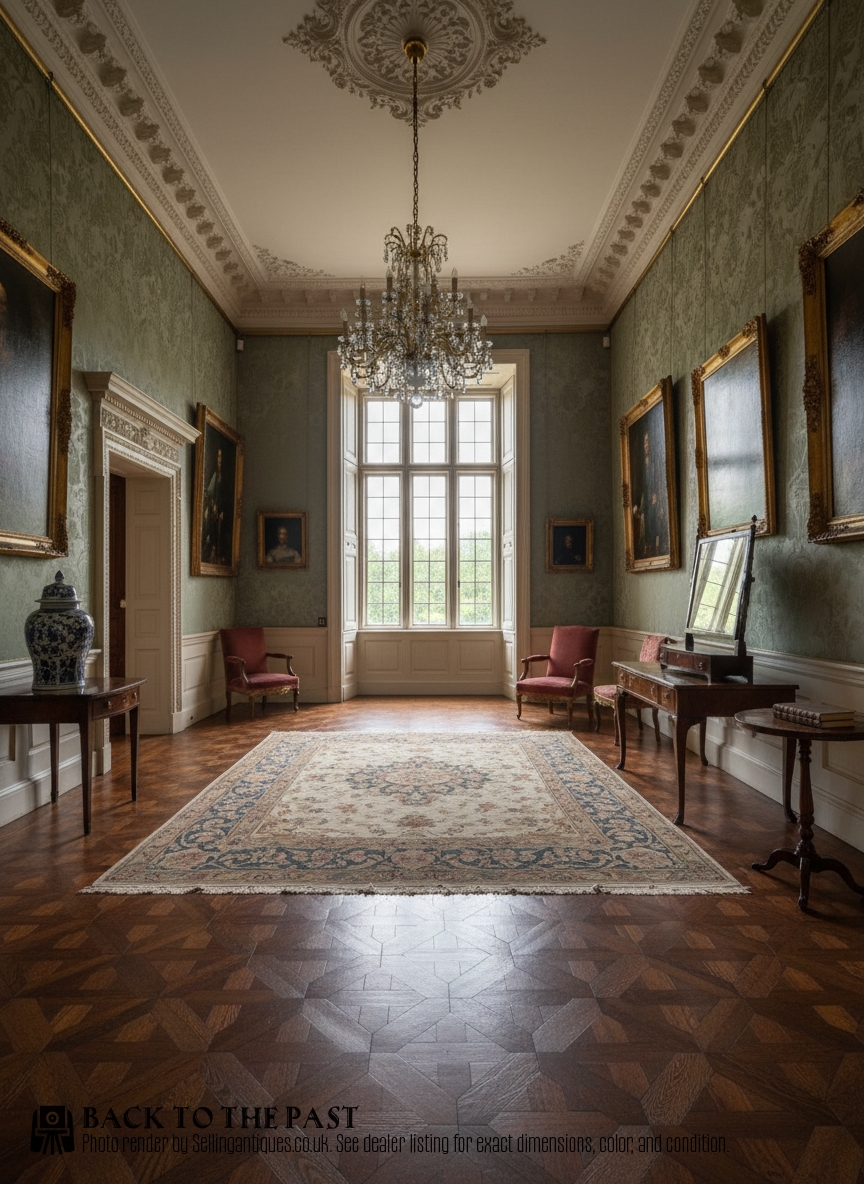
George III Swing Mirror
When you search for a george iii swing mirror, you are looking at compact table-top dressing glasses alongside larger cheval mirrors designed for full-length reflection. The examples appearing here span the Georgian period, the year 1800, the eighteenth century, and the Edwardian era.
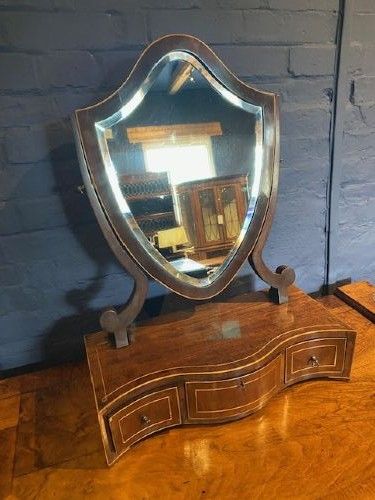
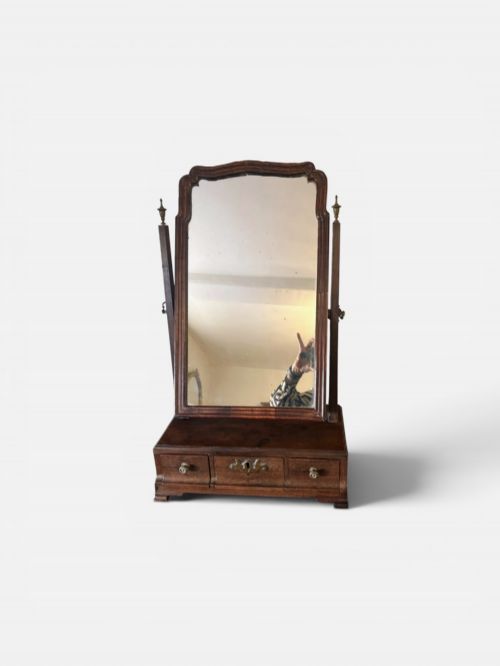
You are most likely to meet mahogany toilet mirrors resting on small drawer bases, often featuring oval or serpentine shapes. Walnut, satinwood, burr maple, and harewood pieces also appear, alongside occasional cheval mirrors.
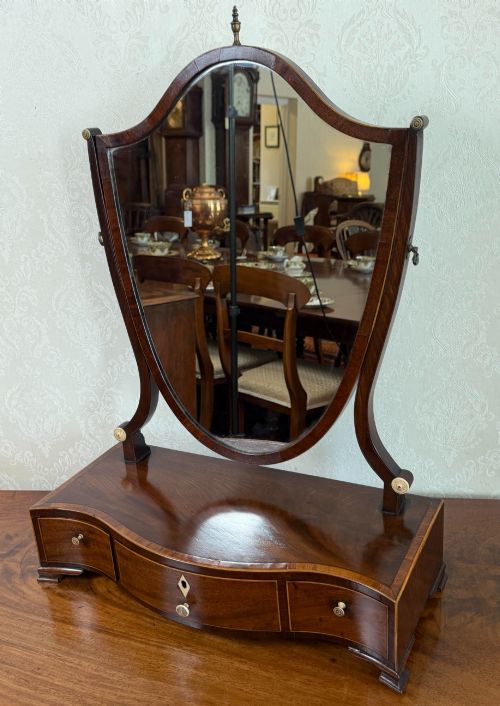
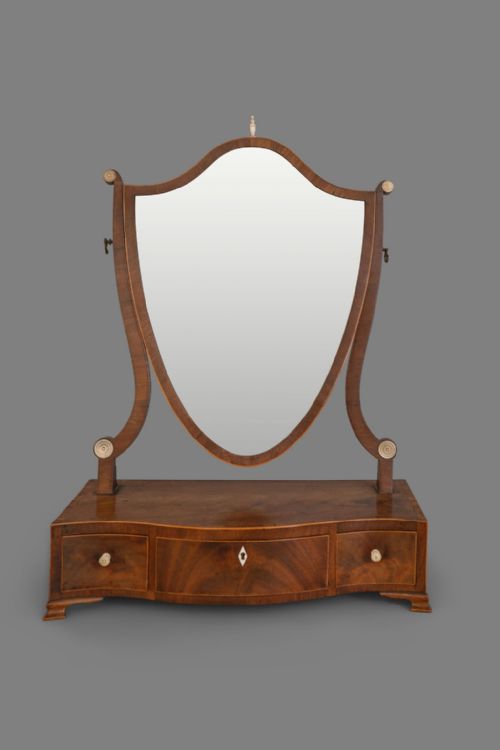
The forms range from simple rectangular plates on upright frames to elaborate three-drawer serpentine designs fitted with boxwood inlay and bone accents.
Materials and construction
Cabinetmakers built these mirrors primarily using solid mahogany and mahogany veneers, frequently incorporating satinwood, harewood, burr maple, and walnut for decorative effect. Boxwood inlay and bone details frequently accent the drawer fronts and frames.
Glass plates tilt within vertical uprights supported by box bases, which often contain one, two, or three small drawers for trinkets. Brass fittings secure the pivoting mechanism, allowing the mirror plate to adjust at various angles.
Listings feature items from the Georgian period, the year 1800, the eighteenth century, and the Edwardian era, constructed in mahogany, walnut, satinwood, burr maple, and harewood.
What separates the best pieces
Quality reveals itself in the choice of timber and the precision of the cabinetwork, particularly around the serpentine curves and dovetailed drawer construction. Finer examples display carefully selected grain patterns, such as burr maple or figured mahogany.
The sophistication of the secondary details dictates the standing of a piece, from delicate boxwood stringing and bone escutcheons to well-proportioned ogee bracket feet and original brass hardware.
The George III Swing Mirror Glossary
- Toilet mirror
- A small mirror designed to sit on a dressing table or chest of drawers. These portable glasses often incorporate small drawers in their bases.
- Cheval mirror
- A full-length standing mirror mounted in a frame that allows it to swing freely on vertical pivots. The name derives from the French word for horse.
- Serpentine
- A shape characterised by a gently undulating front with a convex centre flanked by concave curves. This contour requires skilled woodworking to execute cleanly on drawer fronts.
- Boxwood inlay
- Narrow strips or geometric motifs of pale boxwood inserted into a contrasting darker wood surface such as mahogany. This technique creates crisp decorative borders.
- Swing-lock
- A mechanism designed to hold the pivoting mirror plate firmly at a chosen angle. It relies on tension applied through the side mounting screws or pins.
George III Swing Mirror: Frequently Asked Questions
What is a george iii swing mirror?
A george iii swing mirror is a pivoting glass used for grooming, typically set into a wooden frame upon a small drawer base. These pieces originated during the Georgian era to sit atop dressing tables.
They combine practical reflection with cabinetwork, providing both a tilting mirror plate and storage for small personal items.
How do I use a toilet mirror?
You place the mirror on a sturdy chest of drawers, sideboard, or dedicated dressing table at a comfortable height for seated use. Adjust the angle of the glass using the side pivots to achieve the desired reflection.
The small drawers beneath the frame provide convenient storage for jewellery, hairpins, and daily accessories.
How do I tell different periods apart?
Distinguishing periods relies on examining the timber choices, hardware styles, and structural lines of the base. Georgian pieces frequently utilise solid mahogany with precise dovetailing, while later Edwardian interpretations employ different construction traits.
Secondary woods, inlay patterns, and foot designs also offer reliable clues to the era of manufacture.
Are these mirrors freestanding?
Table-top versions require a surface such as a chest of drawers or dressing table to achieve a usable height. Cheval mirror variants stand independently on the floor as large full-length furniture items.
Both types utilise a swinging frame mechanism to alter the angle of the glass plate.