
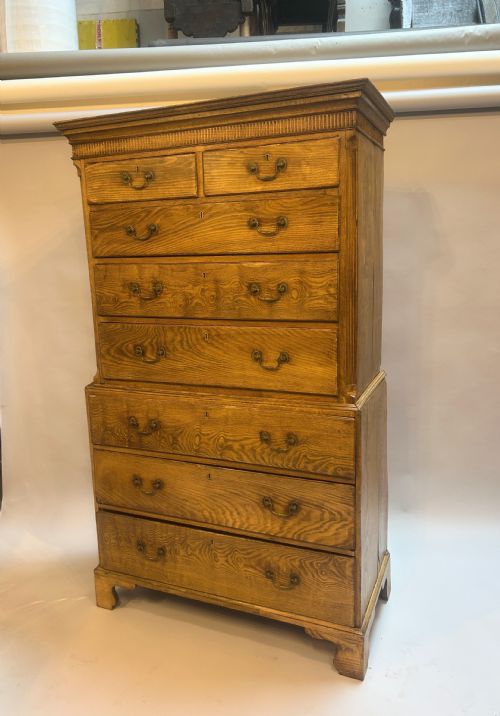
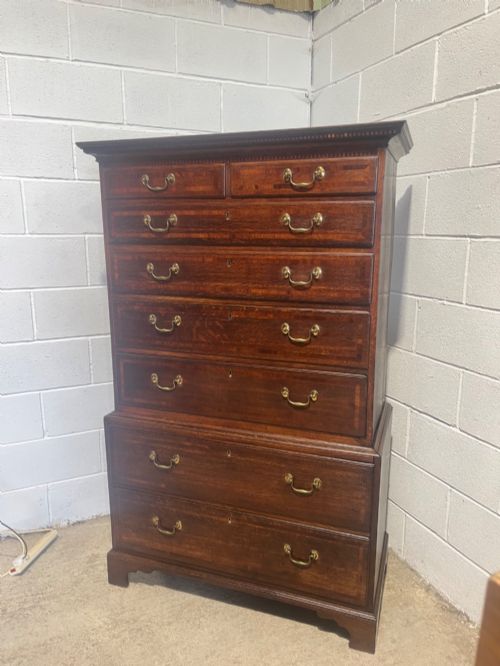
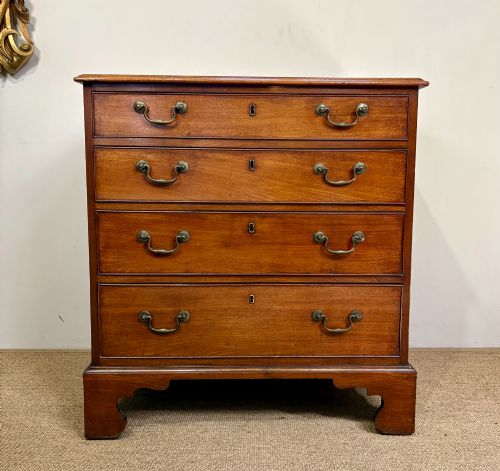
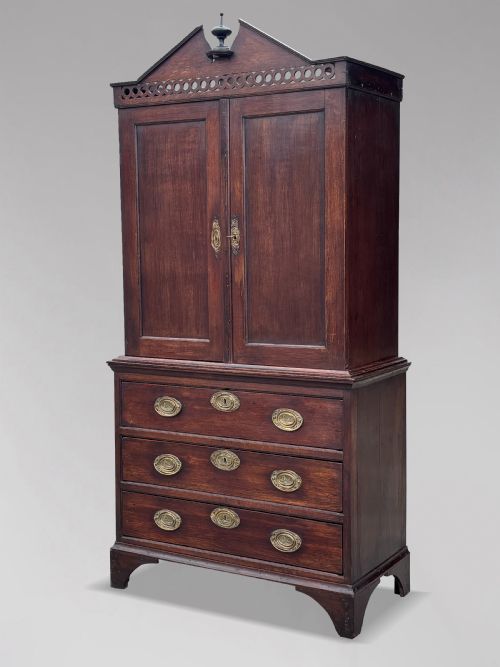


George III Oak Chest
A george iii oak chest offers honest construction and enduring storage, combining practical utility with the warm grain of 18th-century timber.
George III Oak Chest
A george iii oak chest encompasses a variety of storage forms originating from the Georgian period, spanning the mid to late 18th century and into 1800. Buyers encounter standard chests of drawers, taller chest on chest configurations, mule chests, and housekeepers cupboards.
The material identity is predominantly oak, though pieces frequently incorporate mahogany crossbanding, fruitwood inlay, and marquetry. These forms reflect both provincial country workshops and more refined urban cabinet making from the era.
Most examples function as practical domestic furniture, ranging from small proportioned bedside boxes to large Lancashire mule chests with integrated lower drawers. The search phrase covers utilitarian storage vessels designed to anchor a room.
Materials and Construction Methods
Makers built these pieces primarily using solid oak timber, frequently pairing it with secondary woods such as chestnut or integrating mahogany crossbanding along drawer edges and top surfaces. Structural integrity relied on traditional joinery, supported by brass handles, iron fittings, and occasional screw mechanisms.
Decorative surface details utilised fruitwood inlay and marquetry to create contrast against the dark timber ground. Drawers commonly featured oak linings, while specialised items like mule chests combined lidded upper compartments with functional lower drawer banks.
Listings feature oak, mahogany, brass, iron, fruitwood inlay, and marquetry across Georgian periods spanning 1750 to 1800.
Markers of Distinction
Quality differences rest upon the selection of timber and the restraint of decorative enrichment. Pieces utilising finely figured oak and subtle mahogany crossbanding occupy a different tier from plain provincial work.
Proportion and scale dictate the desirability of a piece, with small-scaled chests and well-executed miniatures commanding distinct interest. The integration of original brass hardware, such as swan neck handles, elevates the integrity of the surviving object.
The George III Oak Chest Glossary
- Crossbanding
- A decorative border technique where thin strips of veneer, often mahogany, are applied to the edges of a surface so the grain runs perpendicular to the core timber. This frames the primary oak panels.
- Mule chest
- A storage form combining a hinged lid compartment with one or more lower drawers. These pieces bridge the gap between traditional blanket boxes and modern drawer chests.
- Chest on chest
- A tall storage unit constructed as two separate stacked carcases, placing a smaller chest directly upon a wider base chest. They maximise vertical capacity.
- Marquetry
- The art of forming decorative patterns using fitted pieces of various coloured veneers. It appears on select surfaces alongside fruitwood inlay.
- Tallboy
- A colloquial term for a tall chest of drawers or a chest on chest. They provide extensive vertical storage within a compact floor footprint.
George III Oak Chest: Frequently Asked Questions
What is a mule chest?
A mule chest combines a lidded top compartment for bulky items with one or more lower drawers for smaller garments. This hybrid form evolved during the 18th century to provide more versatile bedroom storage.
Makers often built them in regional workshops using local oak, sometimes adding mahogany crossbanding or fruitwood inlay to the exterior surfaces for visual contrast.
How do I date a Georgian oak chest?
Dating relies on examining construction methods, timber choice, and hardware styles. Pieces from the George III period typically display hand-cut dovetails and oak drawer linings rather than machine-sawn elements.
Hardware such as original brass swan neck handles and escutcheons also helps anchor a piece within the mid to late 18th century or around 1800.
Where were these chests made?
These pieces originated across both urban cabinet maker workshops and provincial country houses throughout Britain. Regional variations appear in timber selection and decorative details.
Some items reflect distinct local building traditions, utilising native oak alongside secondary woods like chestnut and fruitwood.
How do I care for antique oak?
Antique oak benefits from stable indoor humidity and protection from direct sunlight to prevent timber shrinkage and fading. Regular dusting with a dry cloth maintains the surface finish.
Applying traditional wax polish occasionally nourishes the grain without building up heavy chemical layers over the historic wood.