


Antique Kist Trunk
These antique kist trunk pieces are solid timber storage boxes built to last centuries, offering practical utility alongside historic character for any room.
Antique Kist Trunk
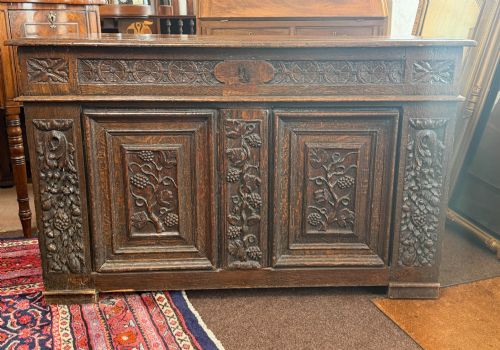
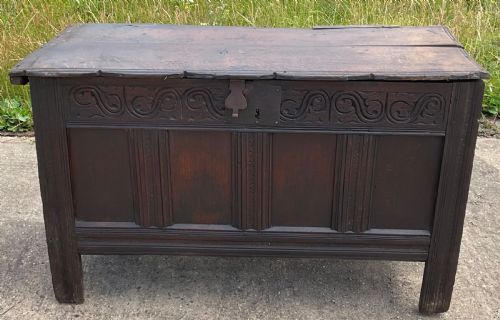
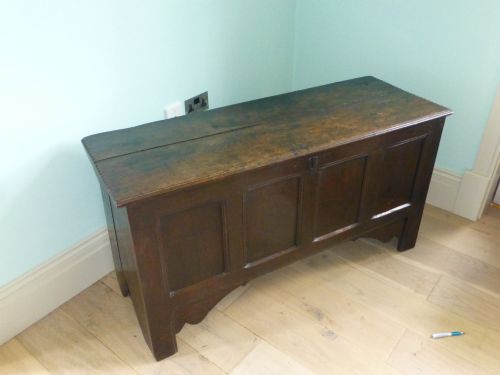
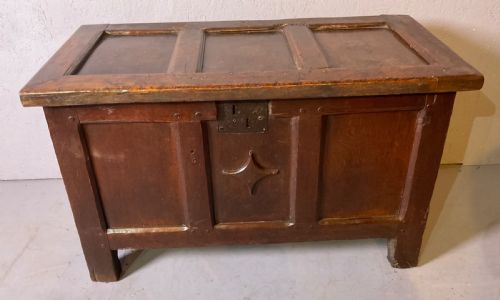
The assortment on this page ranges from early carved oak coffers featuring traditional arcading down to later painted pine blanket boxes and mule chests equipped with internal candle boxes. Most items serve as deep domestic storage for blankets and textiles, bridging centuries of household utility.
How they were made
Construction relies heavily on solid oak and pine timbers, shaped by carpenters using traditional joinery methods suited to the period. Iron and brass hardware, such as hinges and lock plates, secure the lids and add structural reinforcement.
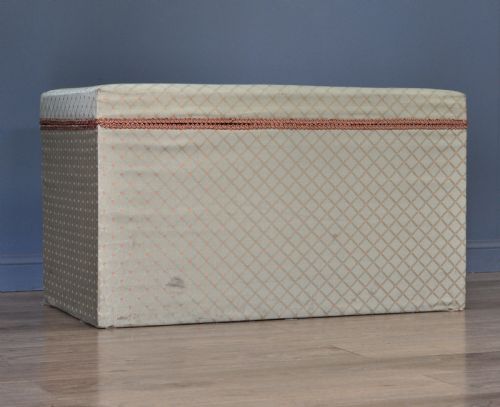
Surface decoration appears through hand carving, wood inlay, and occasionally painted finishes, while some later Victorian examples incorporate upholstery fabric, braid trim, and leatherette details.
Several trunks include tiny internal candle boxes, reminding us that early owners needed a light source while rummaging through the linens in the dark.
What varies in quality
Quality rests primarily in the integrity of the timber, the depth and crispness of any original carving, and the survival of early hardware. Pieces featuring untouched surfaces and period joinery stand apart from heavily restored alternatives.
Proportion and scale also dictate distinction, with smaller regional kists and large dated examples commanding particular interest for their specific provenance and architectural detail.
The Antique Kist Trunk Glossary
- Kist
- A traditional regional term for a chest or box used for domestic storage. It usually refers to pine or oak examples from Scottish, Welsh, or northern English traditions.
- Coffer
- A heavy wooden chest traditionally used for storing valuables or documents. These pieces often feature hinged lids and elaborate front panel carvings.
- Mule chest
- A storage chest that incorporates one or more drawers beneath the main lift-top compartment. This form emerged during the seventeenth and eighteenth centuries.
- Arcading
- A decorative architectural motif carved into wood panels to resemble a series of arches. This style appears frequently on seventeenth-century pieces.
- Candle box
- A small internal lidded compartment built inside a chest to hold small items. It sits neatly within the primary storage space.
Antique Kist Trunk: Frequently Asked Questions
What is an antique kist trunk used for?
These pieces function primarily as deep storage chests for household textiles, blankets, and bulky items. Historically, they served secure storage purposes in domestic settings.
Today, they integrate easily into modern living spaces as coffee tables, hallway benches, or bedroom blanket boxes while maintaining their historic utility.
How do I date an antique kist?
Dating relies on examining the timber species, joinery techniques, and decorative styles present on the body. Seventeenth-century examples often display hand-carved oak panels and pegged joints.
Later nineteenth-century pieces typically utilise simpler pine construction, sometimes with painted finishes or applied hardware that reflects Victorian tastes.
Are oak and pine kists different?
Oak kists generally belong to earlier seventeenth and eighteenth-century periods, characterised by dense grain, heavy construction, and traditional carved ornamentation. They represent robust joinery.
Pine kists appear more frequently in nineteenth-century Scottish and Victorian listings, offering lighter weights and smoother surfaces that often accommodated painted finishes.
What is a mule kist?
A mule kist combines the traditional lift-top storage compartment of a chest with one or more lower drawers. This design evolved to provide easier access to smaller items.
Examples from the Georgian and Queen Anne periods demonstrate this hybrid form in solid oak.