


George III Mahogany Console Table
When choosing a george iii mahogany console table, you select a piece of Georgian engineering that brings refined timberwork and versatility to a hall or drawing room.

George III Mahogany Console Table
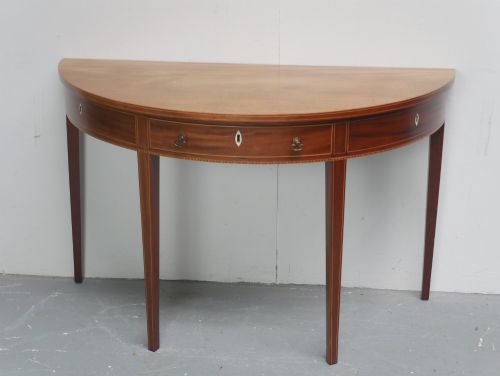
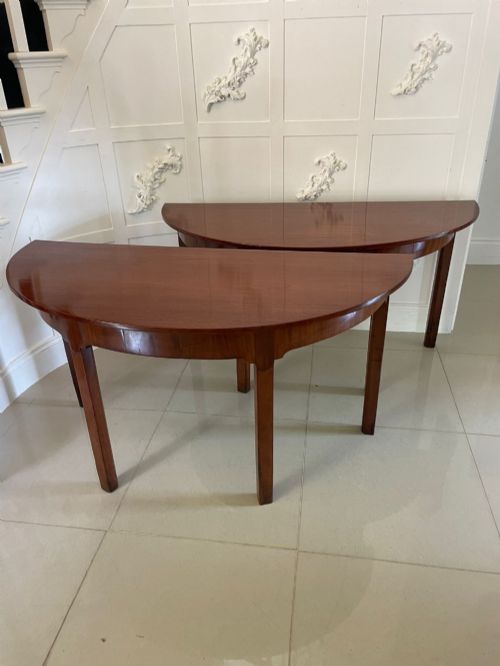
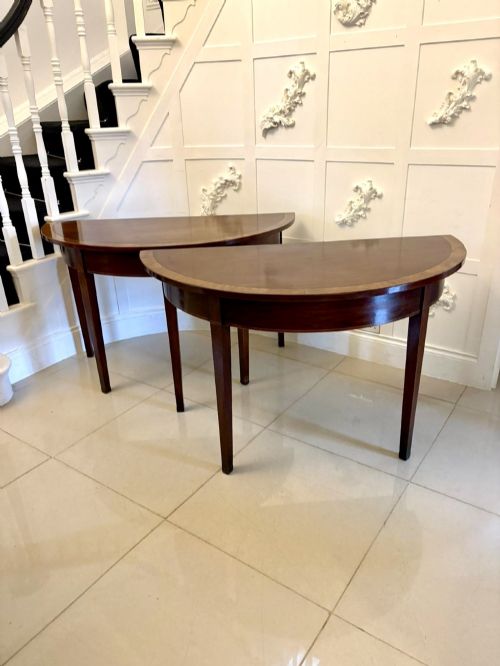
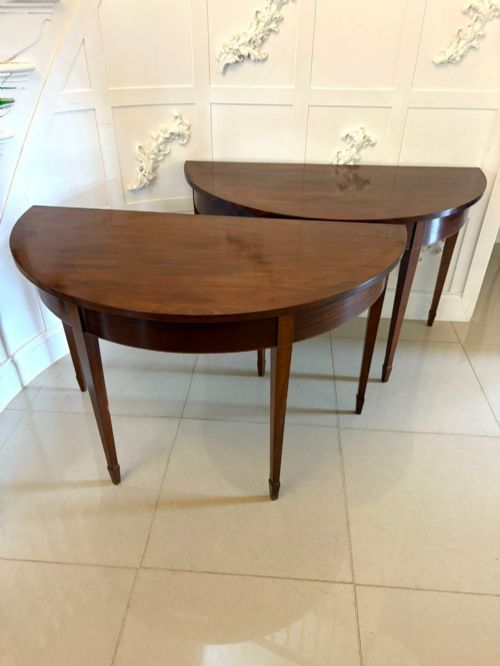
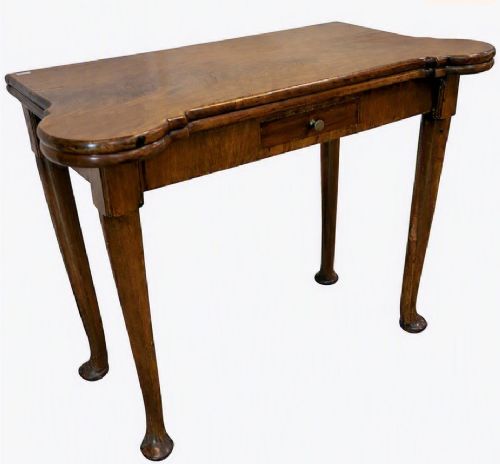
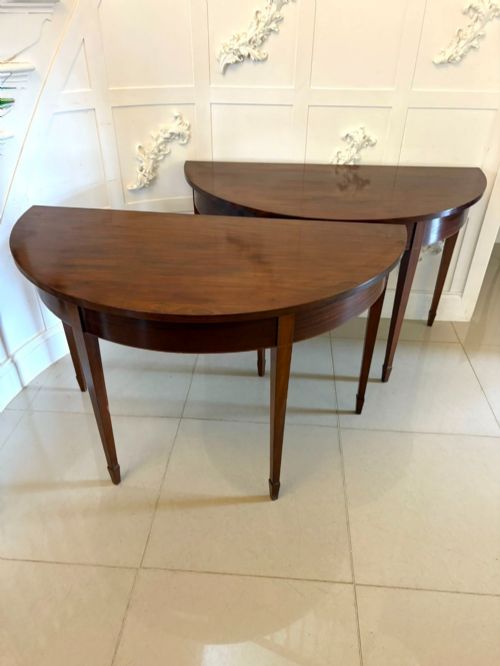
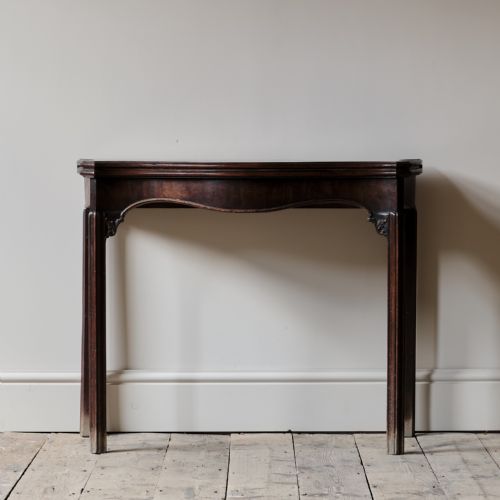
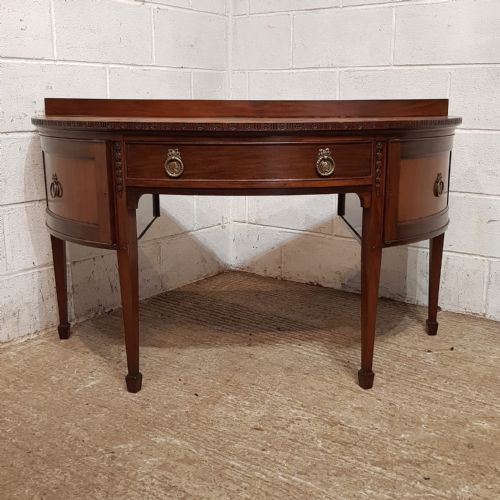
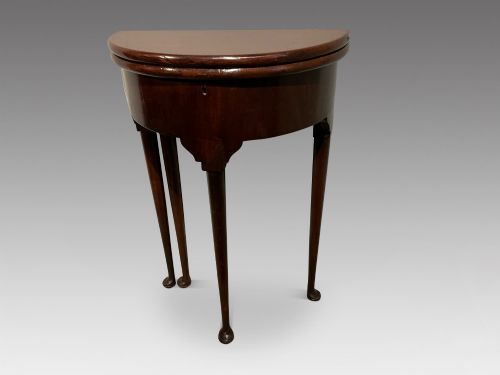
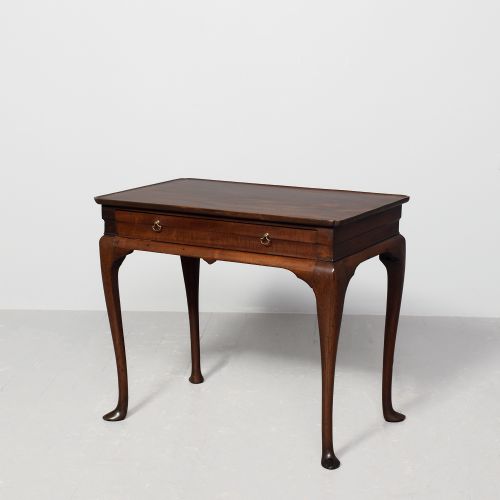
A george iii mahogany console table spans various practical formats, from folding card and tea tables to semicircular demi-lune designs and serving tables. The demi-lune variant appears frequently, often built as matched pairs designed to stand against a wall or combine into a larger dining surface.
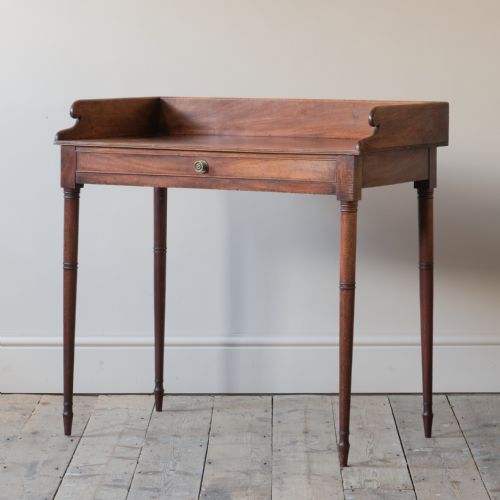
Makers of the period constructed these surfaces primarily for domestic entertaining and display, incorporating drawers or folding tops to adapt to different rooms. Alongside dedicated console tables, the selection includes related side, sofa and lowboard forms sharing the same Georgian proportions.
Judging the standard
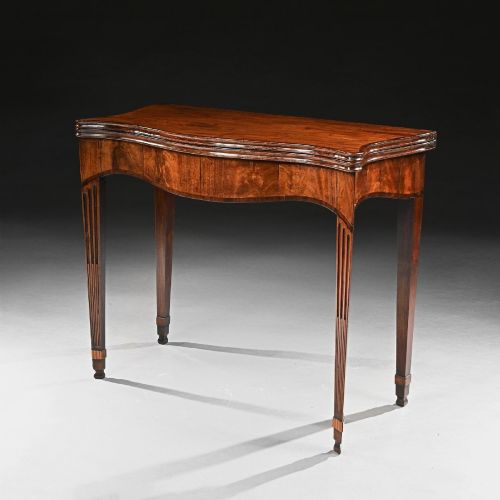
Quality rests in the selection of the mahogany veneer, where highly figured flame patterns and matched timber grains elevate the visual presence of the top. Superior examples demonstrate crisp execution in inlaid borders and carved details, maintaining structural integrity without unnecessary restoration.
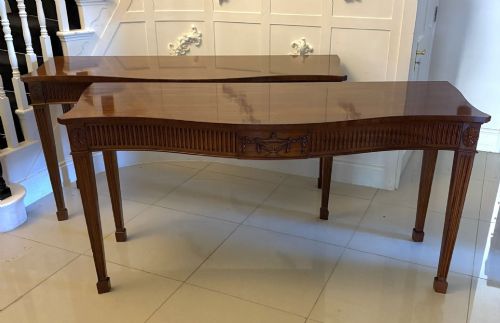
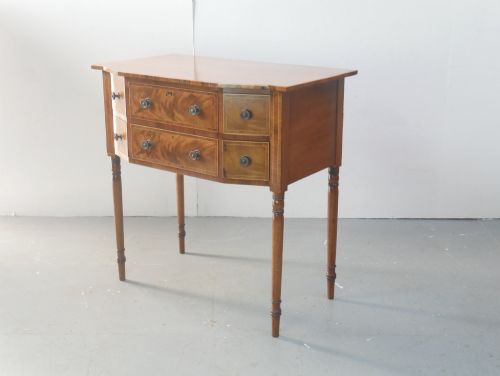
The sophistication of the design, such as a well-proportioned serpentine front or an integrated folding mechanism that operates smoothly, distinguishes workshop output. Original patination and depth of colour preserved across the timber surface further define the standing of individual tables.
Card tables often retain remnants of old green baize inside, ready for a phantom game of whist.
Bruce & Burns of Edinburgh·Gillows
The George III Mahogany Console Table Glossary
- Demi-lune
- A half-moon shape used for console and card tables designed to sit flush against a wall.
- String inlay
- A narrow line of contrasting timber inserted into the surface to create geometric borders.
- Flame mahogany
- A veneer cut from the fork of the tree, producing a distinctive flickering flame pattern.
- Fold-over top
- A hinged surface that opens to double the table area for gaming or dining.
- Crossbanding
- A border strip of veneer laid with the grain running perpendicular to the main surface.
George III Mahogany Console Table: Frequently Asked Questions
How were console tables used?
These tables served primarily for display in hallways and formal reception rooms, holding decorative items or lighting.
Many variants also functioned as card or tea tables, featuring folding leaves that opened when guests gathered for evening entertainment.
Can paired tables be separated?
Many demi-lune consoles were constructed as matching pairs designed to mirror each other at opposite ends of a room or flank a fireplace.
While they function independently as side tables, separating a matched pair alters their original decorative context.
How do I identify a folding top?
Fold-over tops utilise hidden hinges and rotating support legs, known as gate legs, to hold the expanded leaf level.
When closed, the double-layered top sits securely on the frieze, often concealing a baize-lined interior for playing cards.
What defines Neoclassical style?
Neoclassical design draws on classical Greek and Roman motifs, introducing symmetry, straight tapered legs and restrained carving.
In these tables, the aesthetic appears through geometric inlay, urn motifs and delicate stringing rather than heavy baroque ornamentation.