




George III Drop Table
A george iii drop table brings flexible surface space and refined cabinet-making into a room through hinged leaves and folding frames.
George III Drop Table
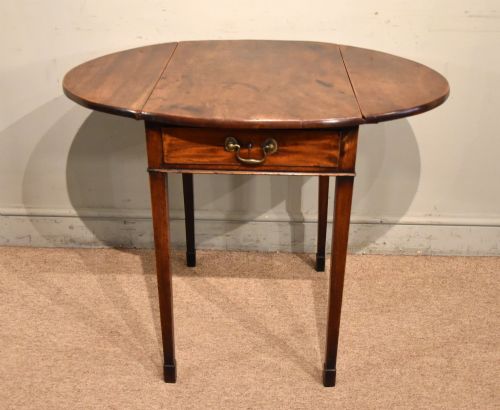
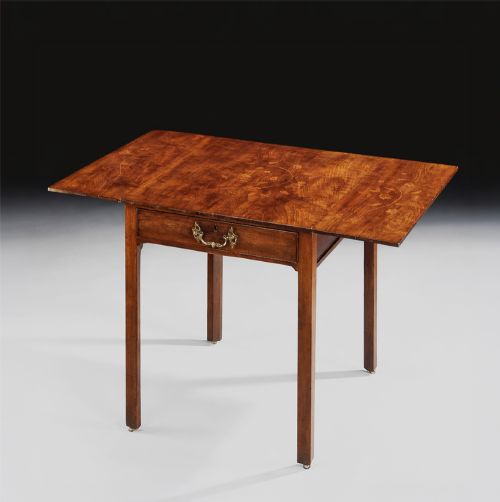
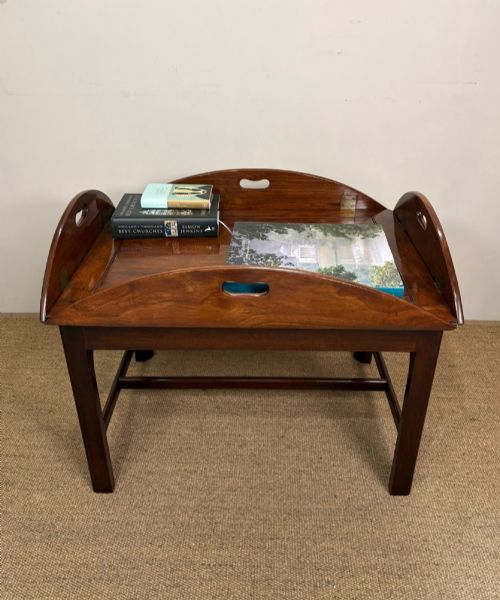
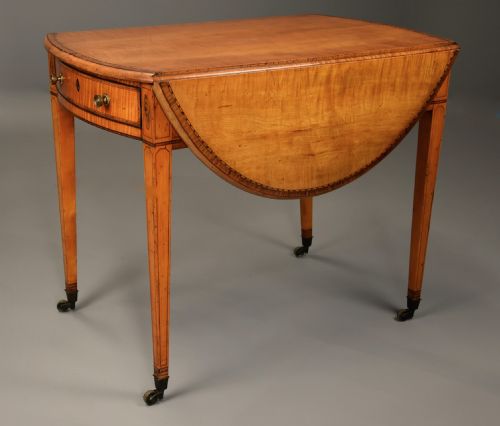
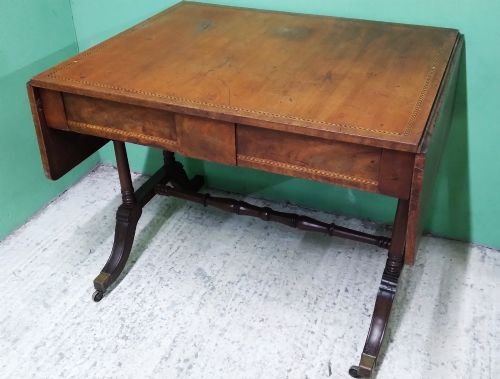
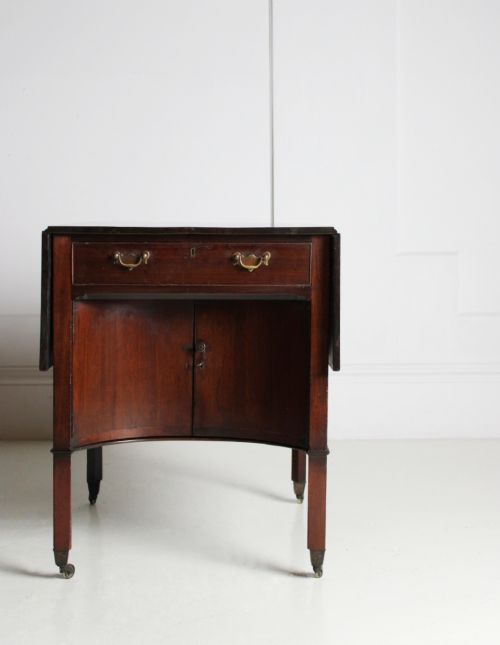
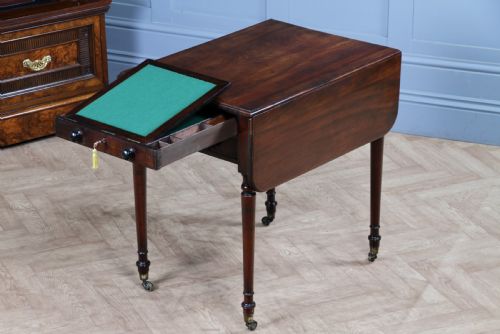
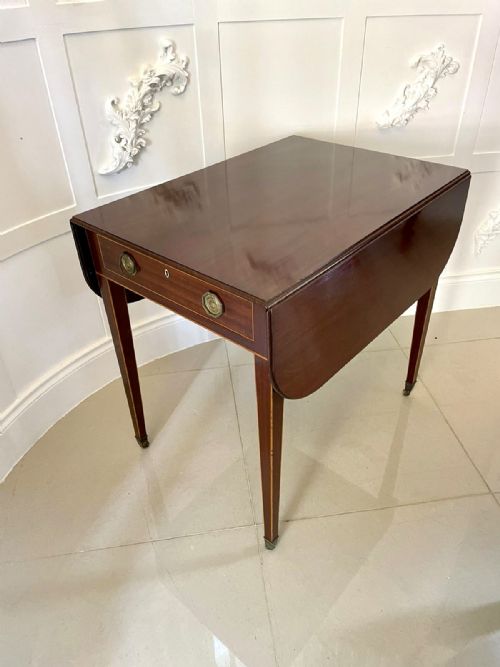
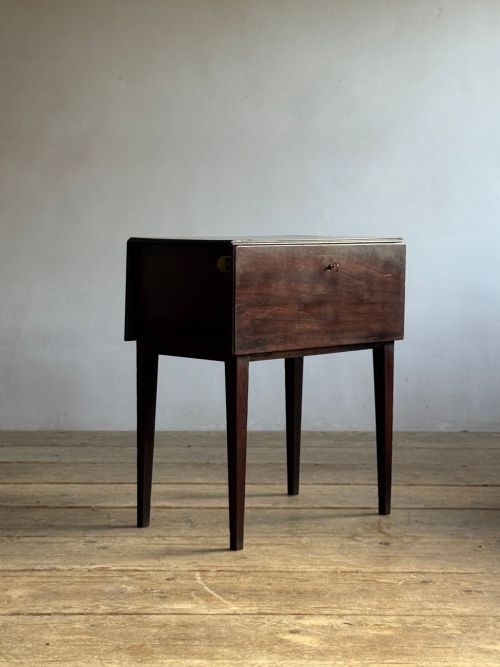
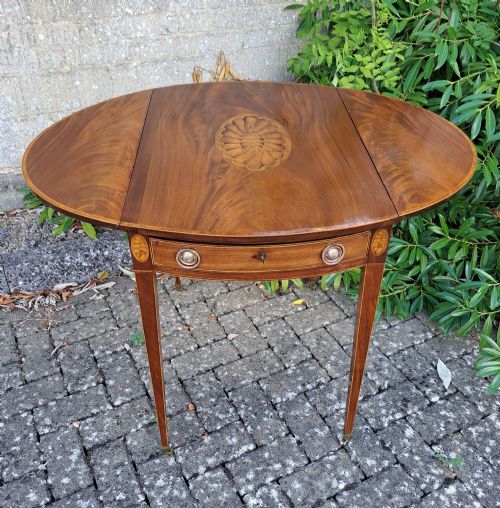
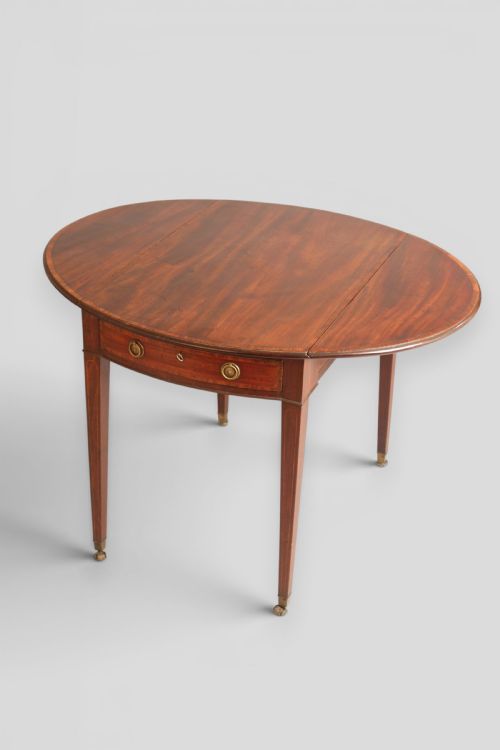
A george iii drop table encompasses dining formats, Pembroke tables with drawer fittings, sofa tables, and multi-tiered dumb waiters originating from the Georgian era. The selection draws heavily from 18th-century workshops, alongside occasional later interpretations spanning the 19th and early 20th centuries.
Pembroke and dining variations dominate the available examples, often featuring drop leaves supported by swing brackets or folding legs. Buyers encounter everything from compact sewing and work tables to large Irish wake and dining tables built for communal gathering.
Regional variations appear across the inventory, including Welsh oak farmhouse pieces and Scottish campaign or hunt tables. These domestic items reflect the varied social requirements of polite Georgian households and provincial dining rooms alike.
Materials and Construction
Mahogany serves as the primary timber across the majority of items, frequently chosen in Cuban or figured varieties for its grain depth and structural stability. Secondary woods such as oak and pine provide robust framing for hidden components and structural undercarriages.
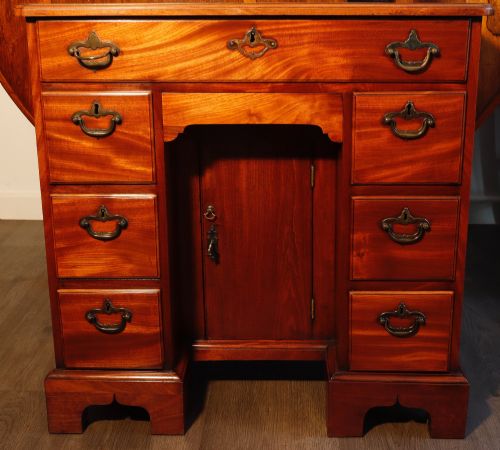
Cabinet-makers incorporated decorative techniques including satinwood, boxwood, and contrasting wood inlay to accent tabletops and drawer fascias. Brass castors, hinges, and drop handles complete the hardware assembly on movable tables and serving furniture.
The inventory spans dining tables, Pembroke desks, sofa tables, and multi-tiered dumb waiters.
Evaluating Craftsmanship
The degree of refinement rests on the choice of timber and the precision of the joinery within the drawer linings and leaf supports. Superior pieces display carefully matched grain patterns across the hinged flaps and top surfaces.
Subtleties in carved ornamentation, such as spider leg configurations or delicate inlay borders, distinguish high workshop standards from standard domestic utility pieces. Original brassware and well-preserved surface patination further indicate sustained preservation over centuries.
The George III Drop Table Glossary
- Pembroke table
- A small rectangular table featuring two hinged drop leaves on opposing sides, frequently fitted with one or more small drawers.
- Sofa table
- A long, narrow table designed to stand in front of a sofa, equipped with drop leaves and often supported on double pedestal uprights.
- Dumb waiter
- A tiered serving stand incorporating revolving or stationary shelves, sometimes designed with drop leaves on the lowest tier.
- Cellarette
- A fitted storage cabinet or table designed for holding wine bottles securely within a lined interior.
- Fiddleback sycamore
- A figured timber exhibiting undulating grain patterns that create a shimmering, ripple-like visual effect under light.
George III Drop Table: Frequently Asked Questions
How are Pembroke tables used?
Pembroke tables serve as versatile writing desks, breakfast tables, or side surfaces because their folding leaves expand or contract to fit confined spaces.
Their compact footprint allowed Georgian owners to move them easily around a room as daily domestic requirements shifted.
How do I identify a dining table?
Large drop-leaf dining tables display deep hinged flaps supported by swing legs that pull outward to sustain heavy serving weights.
They scale up from occasional furniture into full dining surfaces when fully extended.
Are these tables solid mahogany?
Many examples utilise solid Cuban or figured mahogany throughout the tops and structural framework, showcasing dense natural grain.
Cabinet-makers also paired primary show woods with secondary timbers like oak for internal framing and drawer linings.