


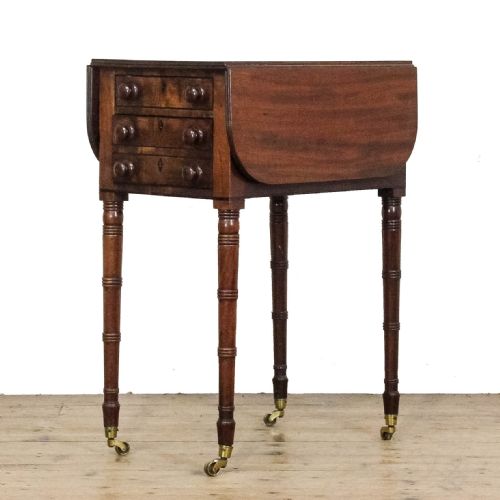


Compact Accent Table
A compact antique accent table brings folding timber ingenuity and rich grain to tighter domestic corners.
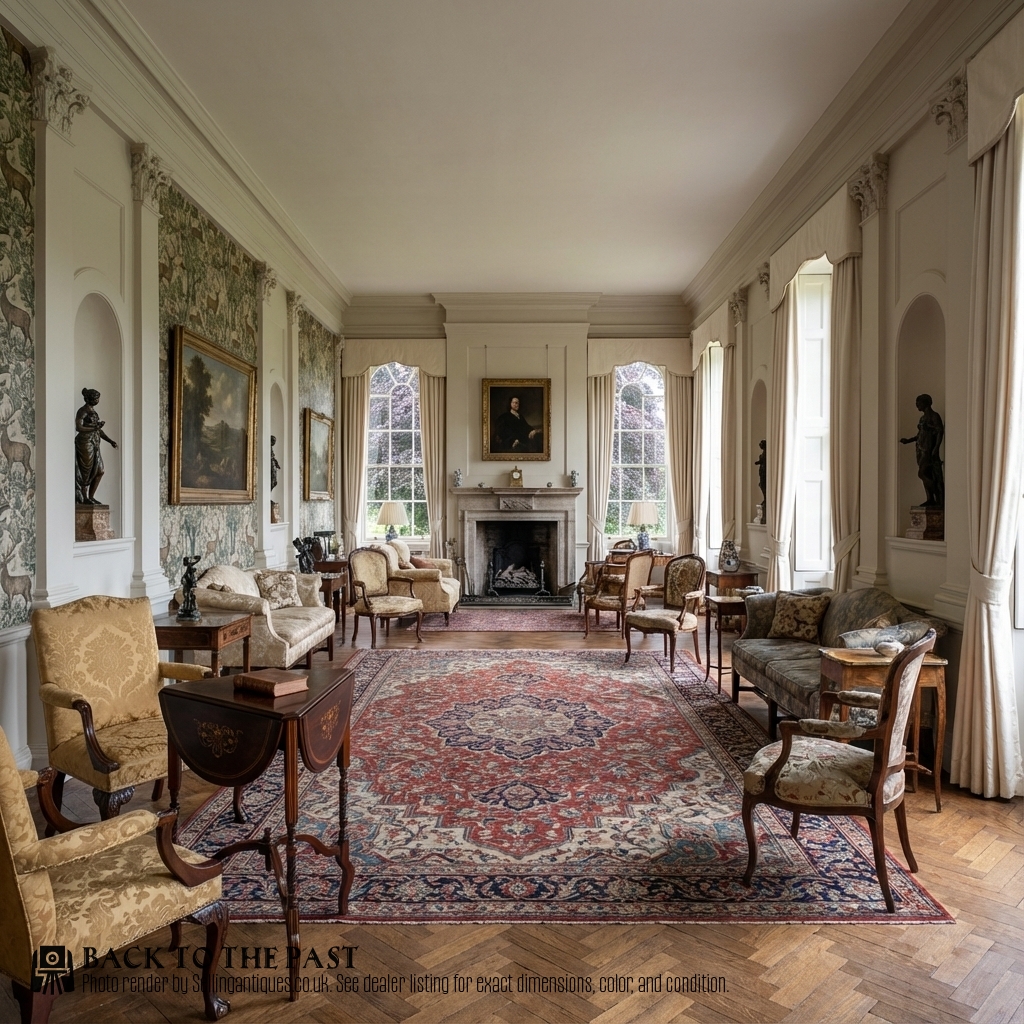
Compact Accent Table
When searching for a compact antique accent table, one finds portable timber furniture designed to serve as a side piece without dominating a room. The selection spans the seventeenth, eighteenth, and nineteenth centuries, alongside Edwardian examples.
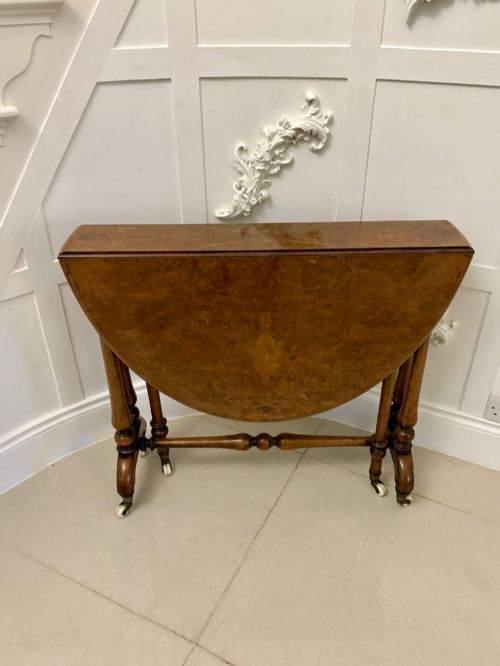
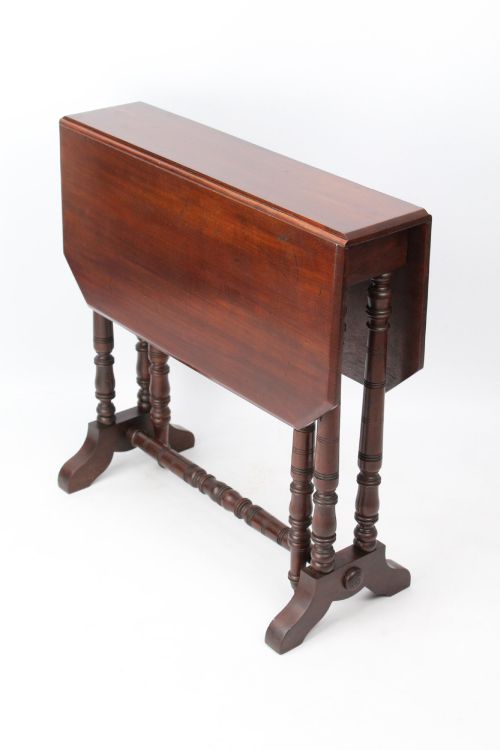
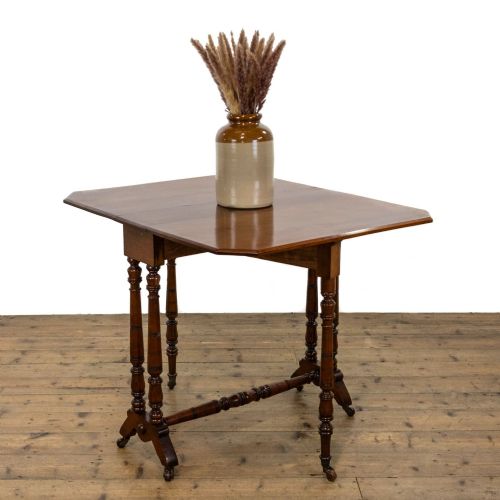
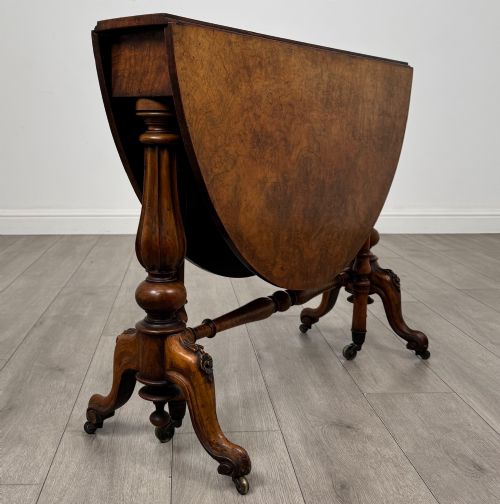
Sutherland tables and Pembroke tables dominate the offerings, characterised by drop leaves and slender folding legs. Occasional tables and nests of coffee tables also appear frequently across these listings.
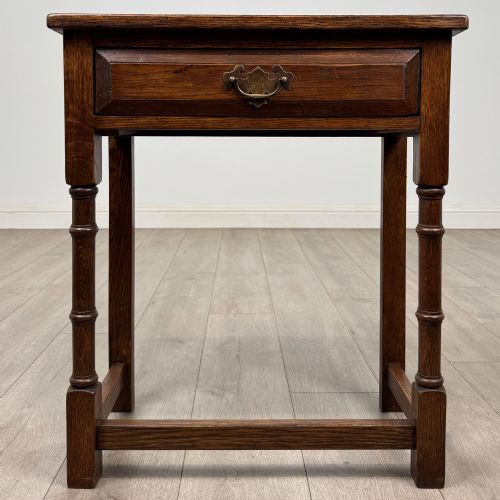
Origin styles vary between English and Scottish country pieces, Georgian refinement, and French provincial design. Mahogany, walnut, and oak form the backbone of these smaller domestic tables.
How they were made
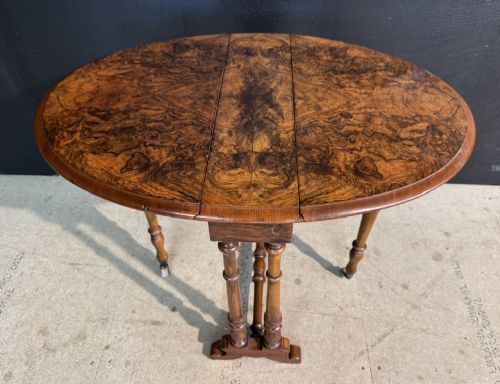
Cabinet makers utilised dense hardwoods such as mahogany, oak, and walnut to construct sturdy frames with delicate profiles. Burr walnut veneers provided decorative figured surfaces on tabletops, whilst brass fittings secured hinges and drop leaf mechanisms.
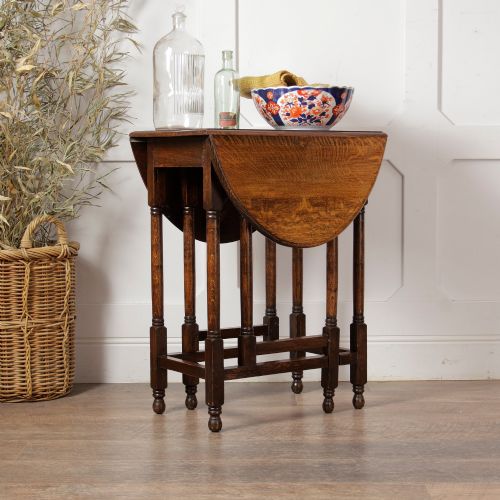
Gateleg and spider leg constructions allowed tables to expand and contract through pivoting supports and folding leaves. Joinery relied on traditional methods suited to frequent movement and daily use.
Several tables fold down so thinly they practically disappear, proving that Victorian furniture designers understood modern minimalist spatial anxiety.
What varies in quality
The choice of timber grain defines the visual tier, with highly figured burr walnut sitting above plain oak or mahogany. Finer examples display meticulous inlay work and slender, well-turned supports that maintain rigidity despite their narrow gauge.
Structural integrity of the drop leaf mechanism dictates everyday utility. Superior pieces operate smoothly without sagging leaves or loose gateleg pivots.
The Compact Accent Table Glossary
- Sutherland table
- A narrow drop leaf table with exceptionally slender folding legs that support the leaves when raised. It folds flat for storage against a wall.
- Pembroke table
- A small rectangular table featuring two folding side leaves and usually one or two drawers. It was originally designed for breakfast or writing.
- Spider leg table
- A small occasional table supported by exceptionally thin, turned legs braced together. This design maximises legroom whilst maintaining a light footprint.
- Gateleg table
- A table with hinged leaves supported by legs that swing outward like a gate. The pivoting leg locks the leaf into position for use.
- Burr walnut
- Timber taken from a tree growth featuring intricate, swirling grain patterns. Cabinet makers prized it for decorative veneering on tabletops.
Compact Accent Table: Frequently Asked Questions
What is a Sutherland table?
A Sutherland table is a specific type of drop leaf table featuring very narrow leaves and slender folding legs. When lowered, the table occupies minimal floor space.
Cabinet makers designed them as versatile tea or occasional tables that could sit against a wall until needed.
How were Pembroke tables used?
Pembroke tables served multiple domestic purposes including light writing, breakfast, and needlework. Their drop leaves allowed them to expand quickly for tasks.
Their compact proportions made them suitable for smaller parlours and sitting rooms.
Where should I place an accent table?
These tables fit easily beside armchairs, sofas, or in entrance halls where floor space is limited. Their folding leaves allow them to adapt to different spatial requirements.
They function well as lamp stands or surfaces for holding books and cups.
What is a nest of tables?
A nest of tables comprises a set of graduated tables designed to slide neatly underneath one another. They provide multiple surfaces whilst occupying the footprint of a single table.
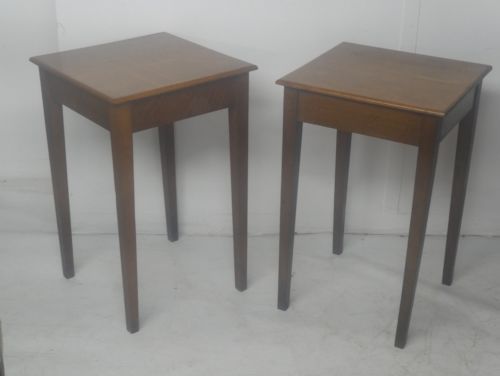
Edwardian and later makers produced them in oak and mahogany for flexible entertaining.