
Turned Leg Drop Table
A turned leg drop table offers practical surface space through folding leaves supported by distinctive turned woodwork.
Turned Leg Drop Table
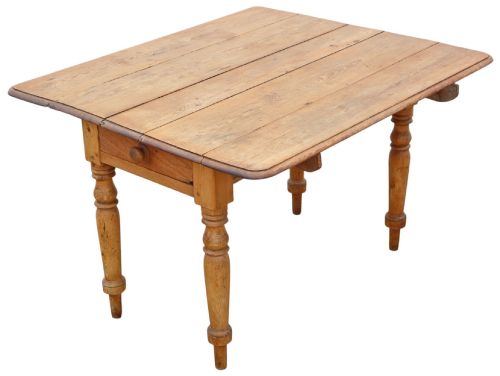
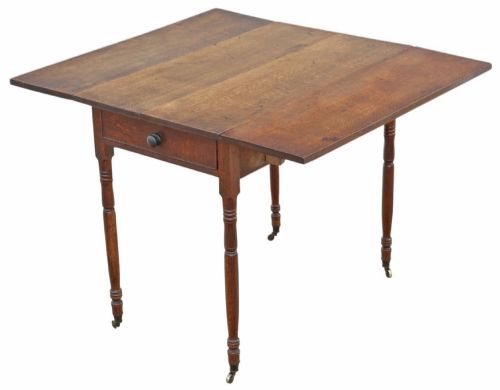
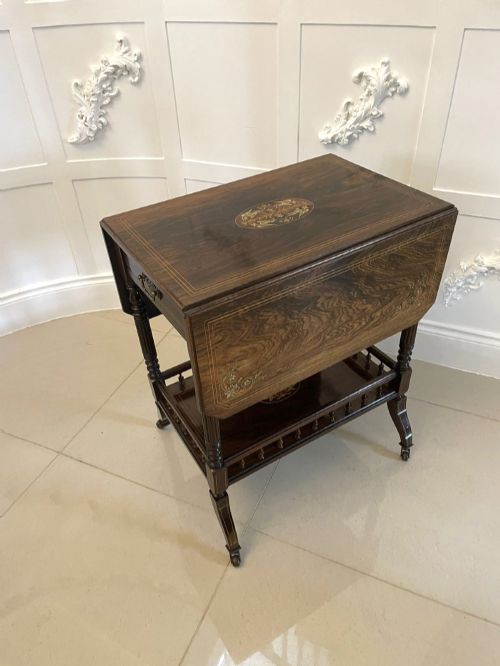
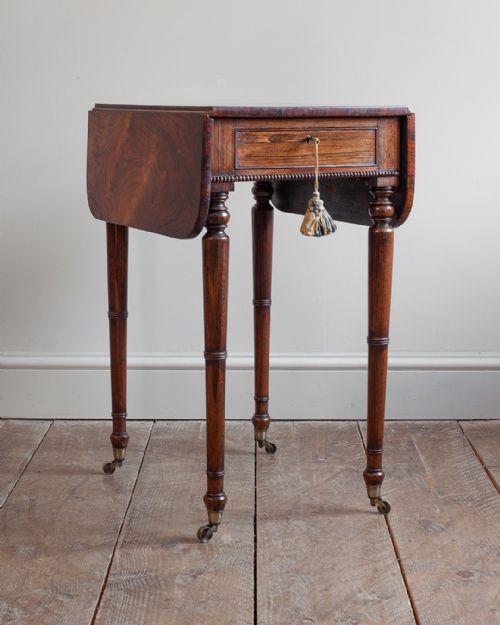
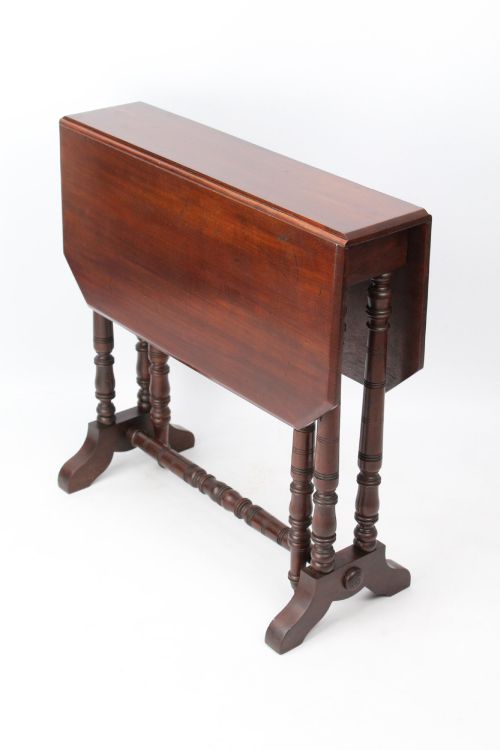
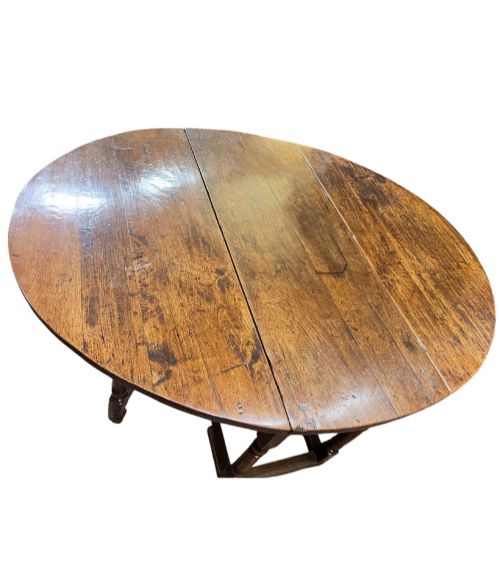
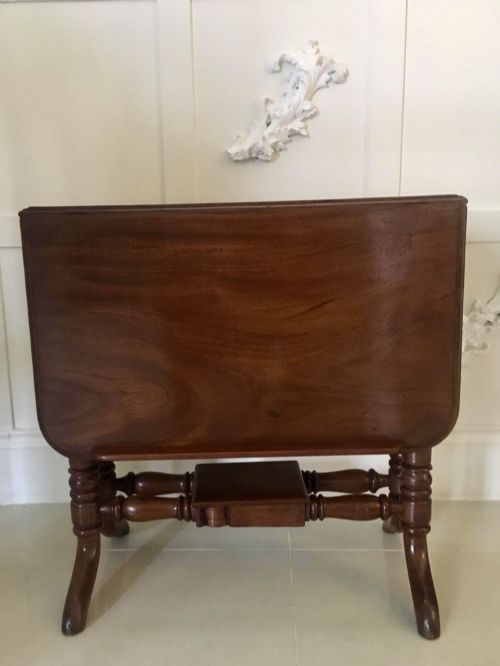
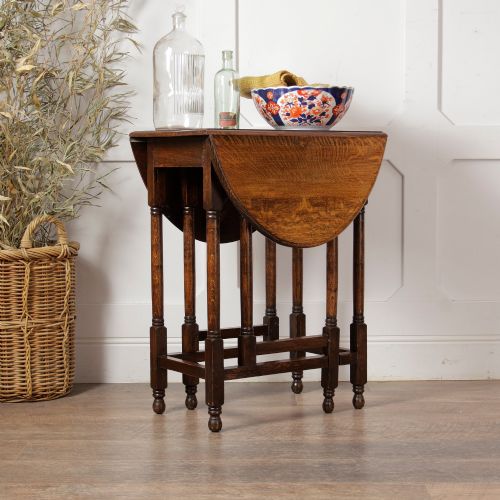
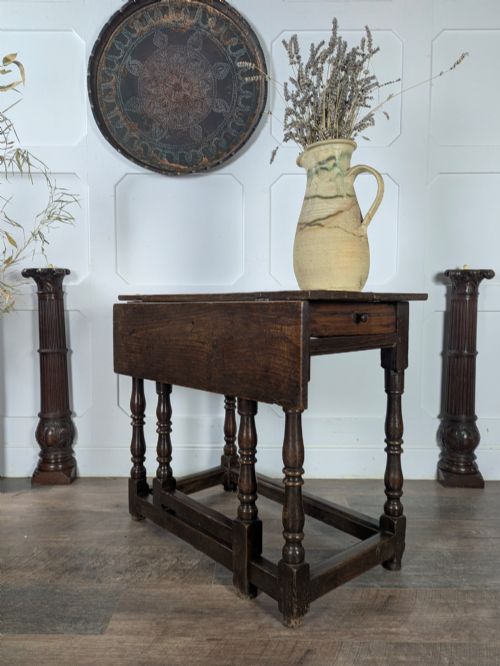
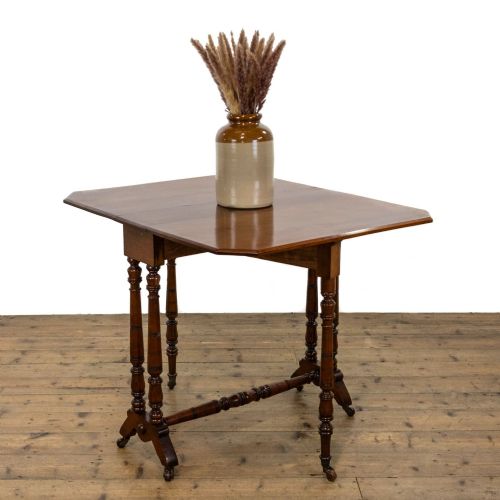
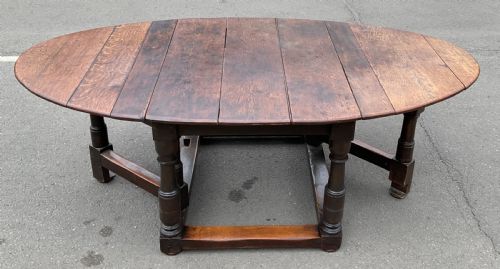
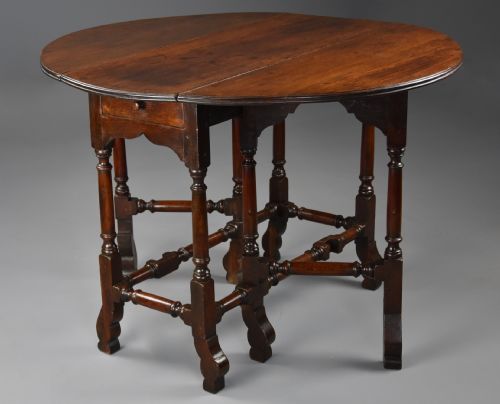
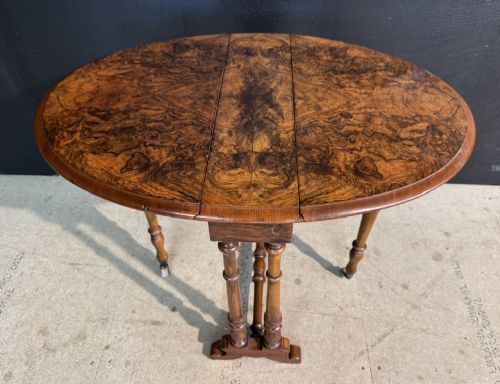
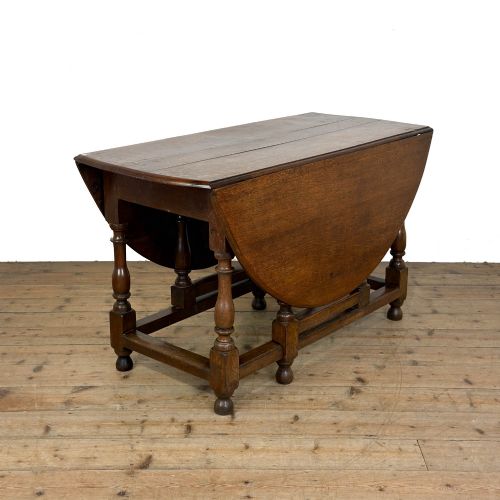
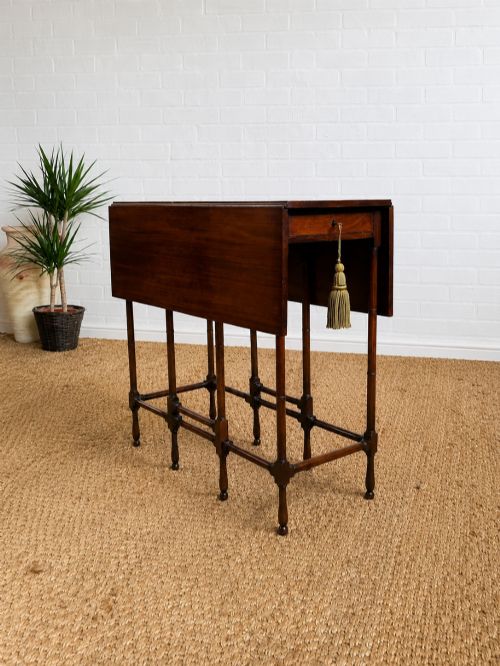
A turned leg drop table combines hinged leaves with shaped vertical supports, appearing frequently as oak gateleg forms and mahogany Pembroke or Sutherland variants across this selection.
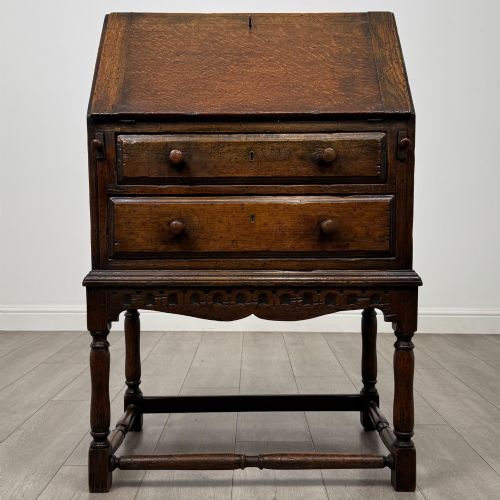
The periods span from the seventeenth century through the Victorian era and into the early twentieth century, bringing woods like oak, mahogany, walnut, and pine into everyday domestic use.
Dining tables, side tables, and work tables populate the range, providing compact daily utility that expands when the leaves are raised on their hinged brackets or swinging legs.
Materials and construction
Solid timbers such as oak, mahogany, and walnut form the primary structures, joined with traditional methods that allow the drop leaves to pivot securely on sturdy hinges.
Turning lathes shape the legs into bobbin, baluster, or bamboo profiles, creating rhythmic vertical supports that brace the framework underneath.
Even the smallest miniature Sutherland table comes equipped with hinges that work just like its full-sized ancestors.
Judging quality in turned leg tables
The crispness of the timber turning and the depth of the natural surface patina indicate the care given to the piece during its manufacture and subsequent history.
Structural integrity relies upon original hinges, sound joints around the drop leaves, and timber that has aged evenly without excessive replacement of parts.
Johnstone and Jeanes
The Turned Leg Drop Table Glossary
- Gateleg table
- A drop leaf table where hinged legs swing outward to support the raised flaps.
- Pembroke table
- A small rectangular table with two folding leaves on opposite sides, frequently featuring a drawer.
- Sutherland table
- A narrow table with exceptionally slender drop leaves and matching narrow gate supports.
- Patina
- The surface sheen and colour developed over decades of handling and polishing.
- Bobbin turning
- A type of leg shaping resembling a series of rounded wooden beads threaded together.
Turned Leg Drop Table: Frequently Asked Questions
How do I use a drop leaf table daily?
Raise the hinged leaves and swing the supporting turned legs into position when you require an extended surface for dining or working.
Lower the flaps afterward to tuck the piece neatly against a wall and reclaim floor space.
What is the difference between gateleg and Pembroke tables?
A gateleg table relies on legs that swing outward from the main frame like a gate to bear the weight of the leaves.
Pembroke tables generally feature shorter drop leaves supported by hinged brackets rather than moving leg assemblies.
How do I date an antique turned leg table?
Examine the timber species, joinery methods, and the specific style of the turned wooden legs against known period characteristics.
Original hinges, fixings, and surface patina provide further clues to the age of the piece.
Where should I place a Sutherland table?
Sutherland tables suit narrow hallways, sitting rooms, or tight spaces because their folded profile is remarkably slender.
They function well as occasional surfaces that expand instantly when visitors arrive.