
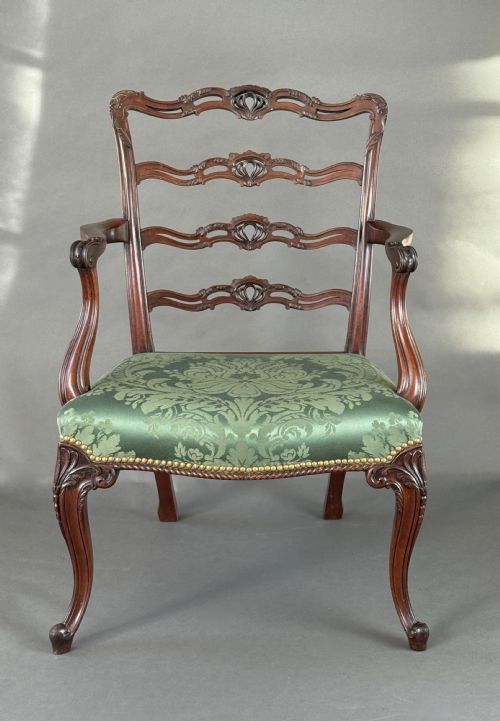
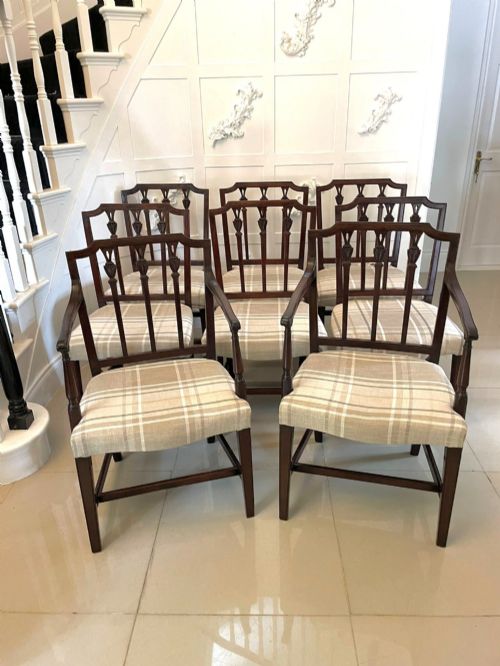
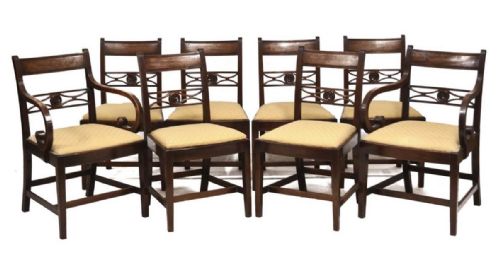
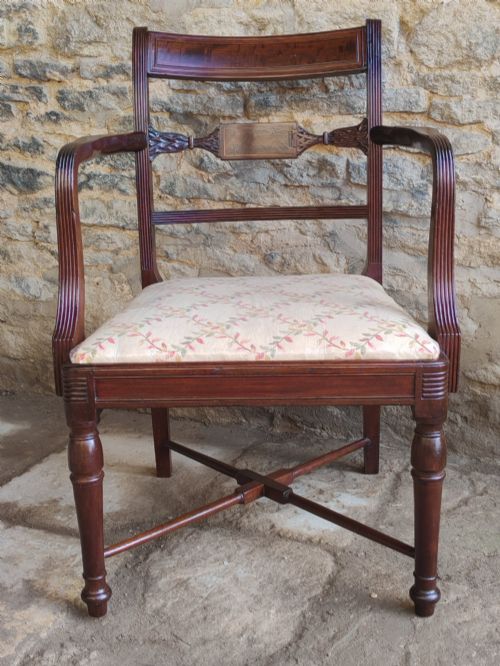
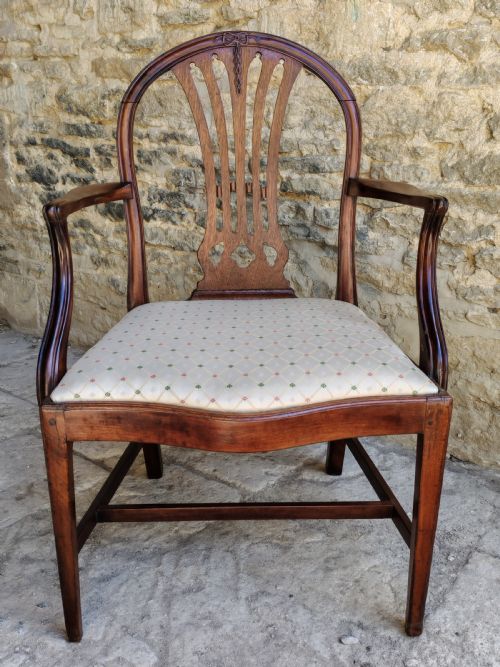
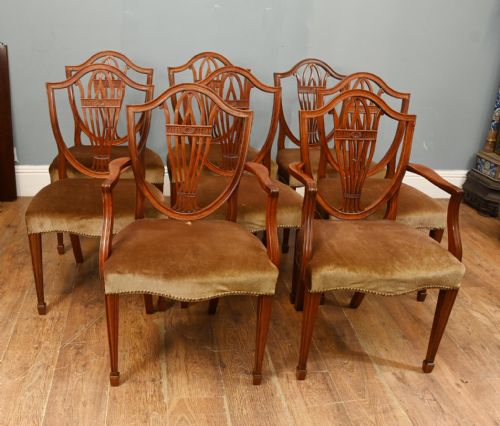


George III Dining Armchairs
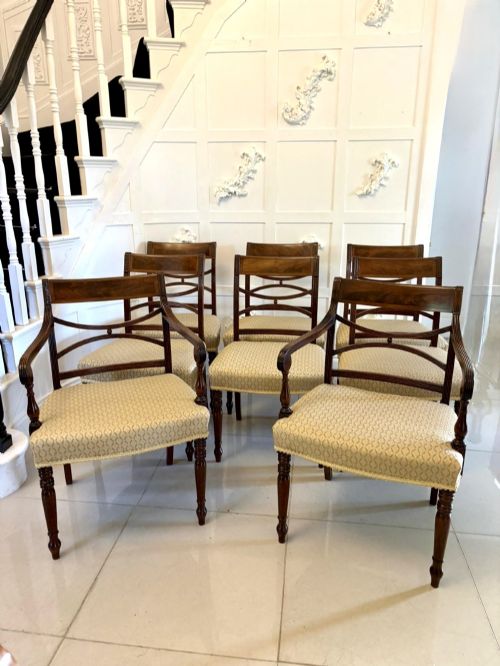
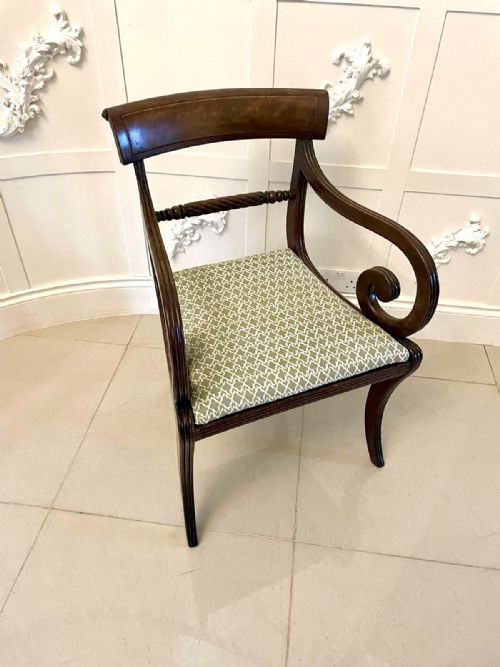
George iii dining armchairs offer robust mahogany timber and classic proportions, bringing enduring utility and traditional presence to the dining table.
George III Dining Armchairs
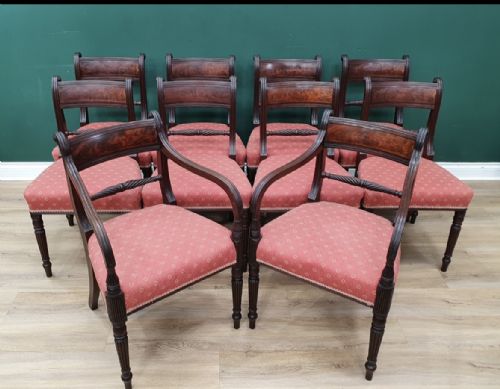
When you search for george iii dining armchairs, you encounter robust seating designed primarily for formal eighteenth-century and early nineteenth-century dining rooms. These pieces commonly present as carvers or elbow chairs accompanying larger sets of single dining chairs, or occasionally as individual armchairs.
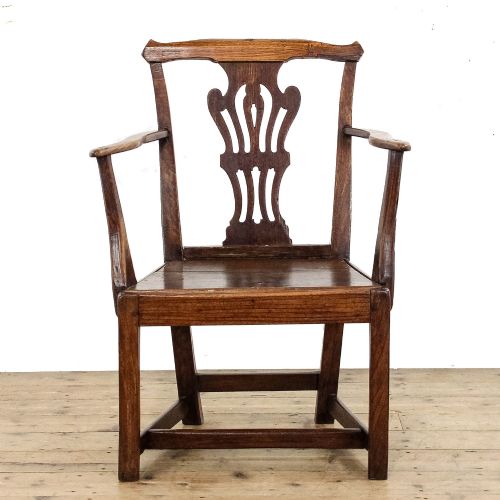
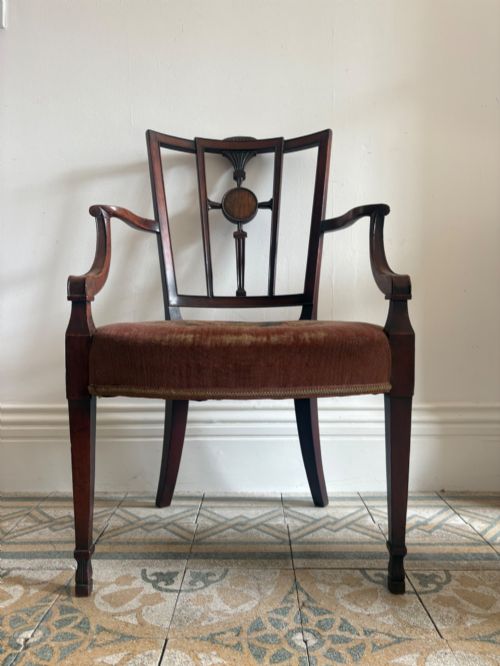
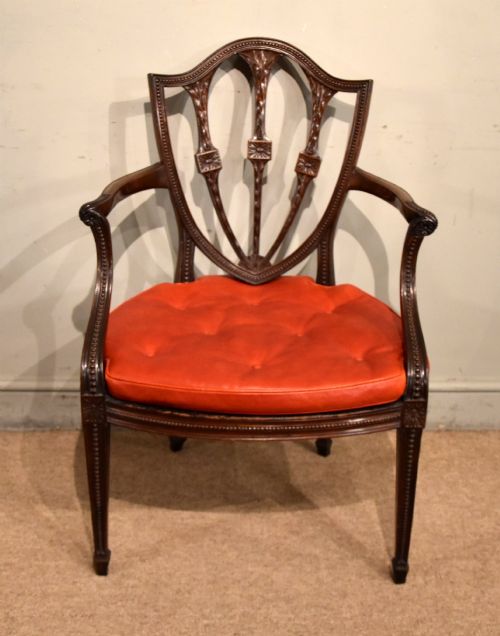
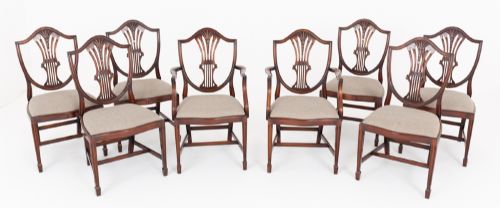
The pieces on this page span the eighteenth century, the Georgian period, and nineteen-hundreds revivals, predominantly rendered in rich mahogany. You meet shield back, spindle back, and open arm forms influenced by classic makers and vernacular regional traditions.
Originating largely from British workshops, these armchairs combine structural integrity with carved decorative motifs. They serve both practical dining functions and decorative roles within traditional and contemporary interiors.
How they were made
Cabinetmakers constructed george iii dining armchairs primarily using solid mahogany, alongside supplementary timbers such as elm, fruitwood, and satinwood. Woodworkers shaped structural components through precise joinery, often incorporating carved details directly into the timber frame.
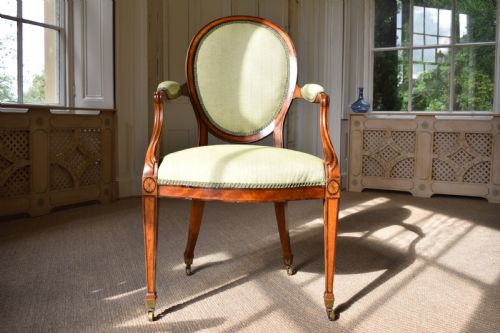
Seats utilised drop-in frames or upholstered pads covered in leather, fabric, velvet, or tapestry, secured with brass tacks. Surfaces received hand-applied polish or paint finishes, occasionally accented with contrasting woods like rosewood roundels.
Block feet on painted armchairs demonstrate that even classical cabinetmakers enjoyed surprising structural footwear.
What varies in quality
The refinement of carved ornament separates standard production from exceptional examples, distinguishing crisply rendered foliage and fluting from softer, simpler execution. The choice and figure of the primary mahogany timber also dictate the overall prestige of an armchair.
Structural harmony and proportion define superior pieces, where arm supports, legs, and backsplats maintain balanced weight and ergonomic comfort. Stamped maker marks, such as those from documented workshops like Gillows, elevate historical significance and desirability.
Gillows·H. Samuel London
The George III Dining Armchairs Glossary
- Carver chair
- An armchair designed to match a set of single dining chairs, traditionally used at the head of the dining table. These pieces feature supportive arms that accommodate formal attire.
- Shield back
- A chair back design shaped like a classical shield, popularized during the late eighteenth century by designers like Hepplewhite. This form often incorporates delicate pierced splats.
- Elbow chair
- A traditional British term for an armchair, frequently used interchangeably with carver in the context of dining furniture. These chairs provide low arms designed to tuck beneath the dining table.
- Spindle back
- A chair back constructed from multiple turned vertical wooden rods or spindles. This vernacular style offers lighter visual weight compared to solid splats.
George III Dining Armchairs: Frequently Asked Questions
What is a carver chair?
A carver chair is an armchair designed to accompany a matching set of single dining chairs. They were traditionally placed at the head and foot of the dining table.
These pieces feature low arms that allow the chair to slide neatly beneath the table surface when not in use.
How do I identify George III style?
George III furniture typically displays classic proportions, solid mahogany construction, and restrained carved ornamentation. Styles range from early rococo influences to later neoclassical Sheraton and Hepplewhite designs.
Examination of the timber, joinery techniques, and backsplat geometry helps distinguish authentic period pieces from later nineteenth and twentieth-century revivals.
Were these sold in sets?
Dining chairs from this era were frequently commissioned in large sets to accommodate formal dining customs. A typical surviving arrangement includes six single chairs accompanied by a pair of matching armchairs.
Sets often combine primary seating with carvers, though individual armchairs also appear independently.
How do I care for mahogany?
Mahogany furniture benefits from stable indoor environments away from direct sunlight and extreme temperature fluctuations. Regular dusting with a soft, dry cloth preserves the polished wooden surface.
Avoid applying silicone-based polishes, opting instead for traditional natural waxes when nourishment is required.