


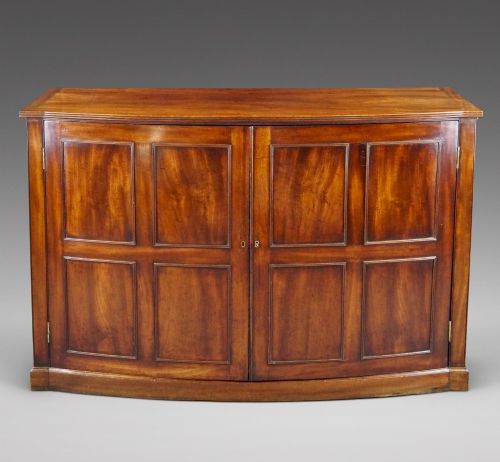
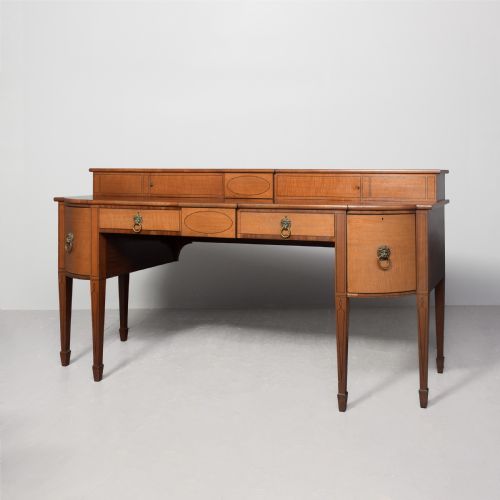
George III Credenza
A george iii credenza search brings up substantial timber sideboards, potboard dressers, and cabinets built to anchor formal dining rooms.
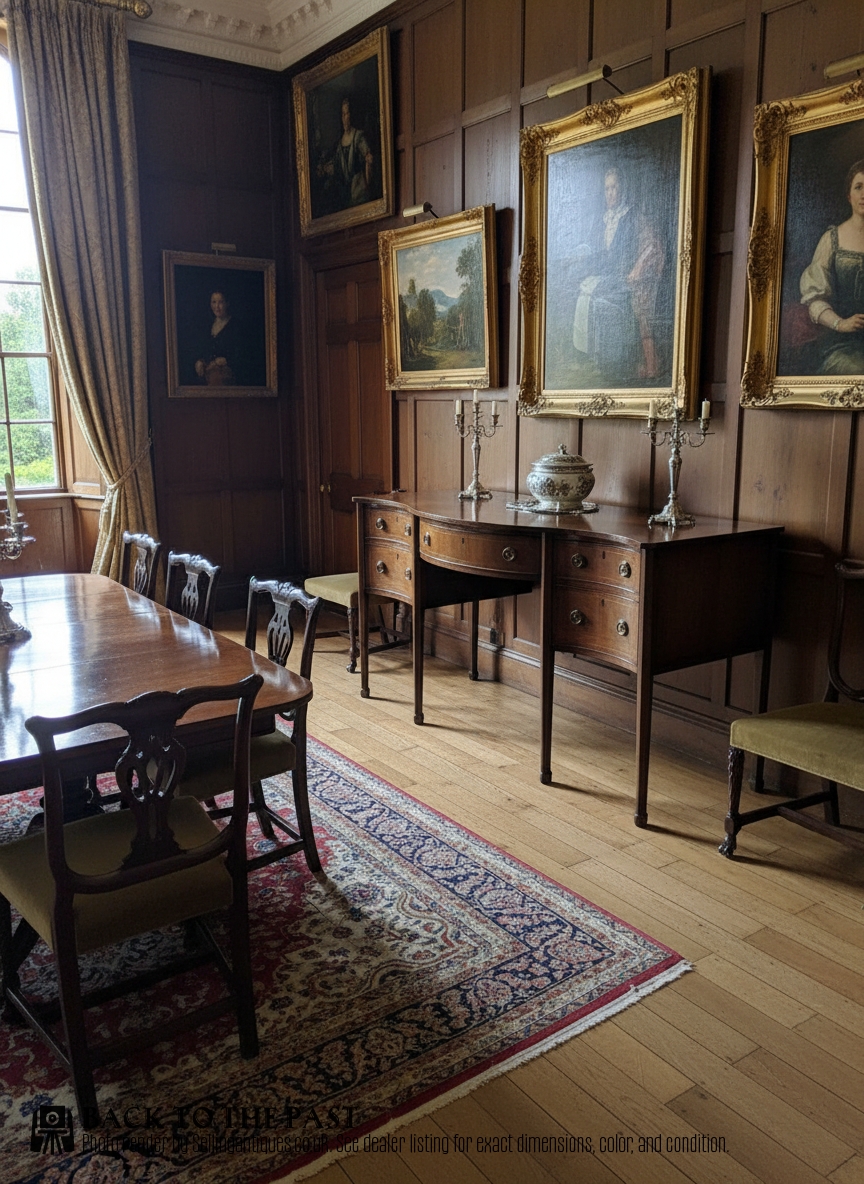
George III Credenza
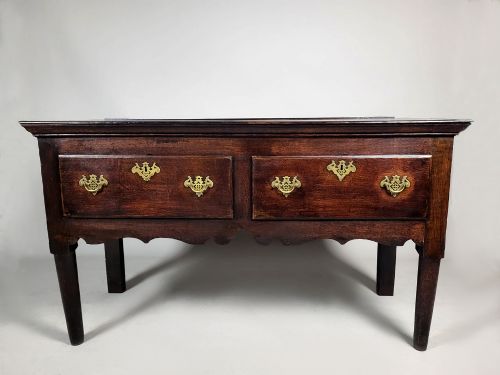
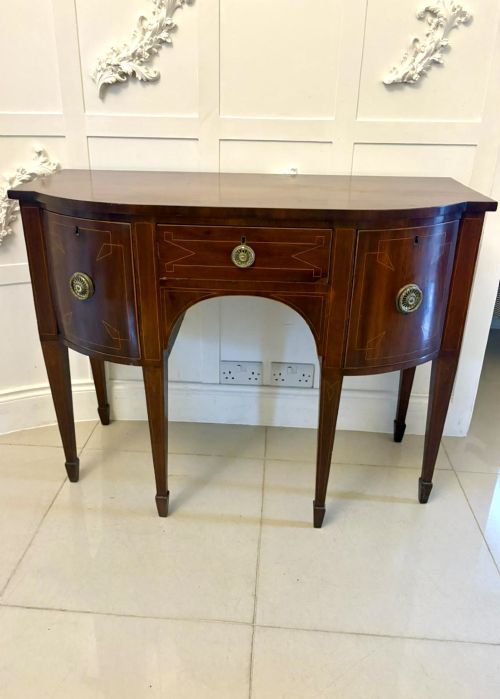
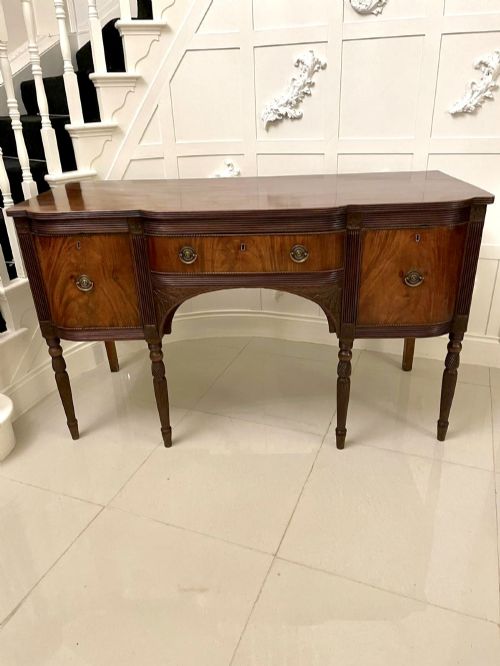
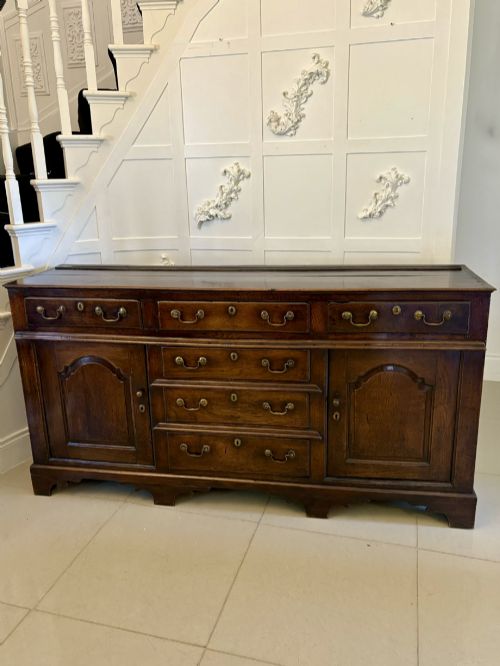
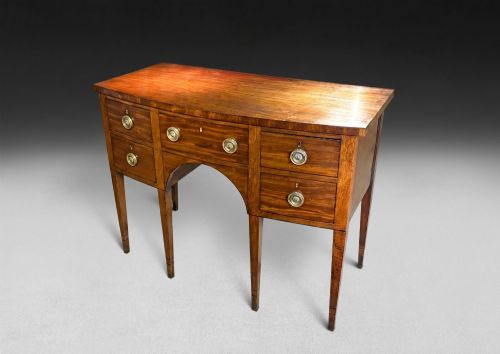
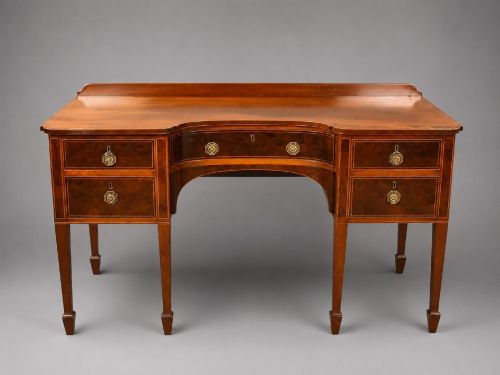
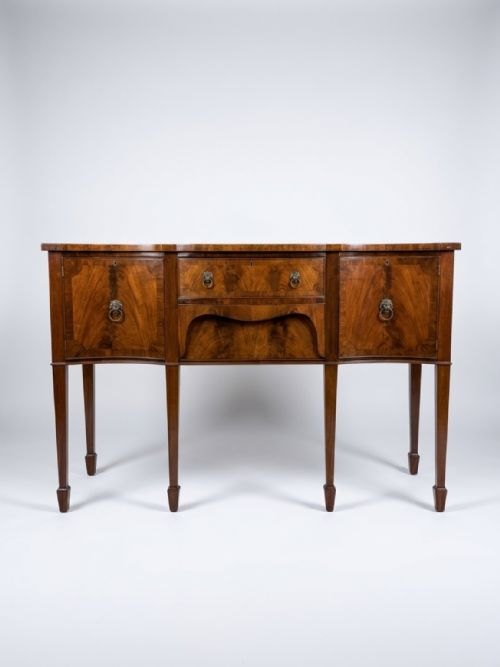
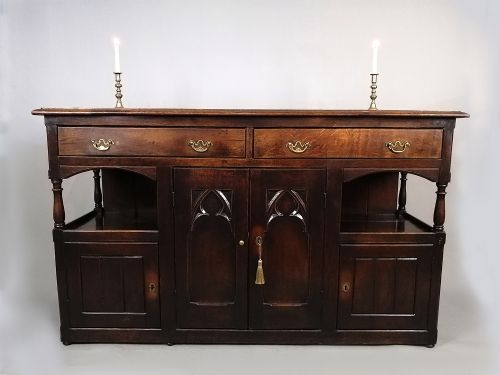
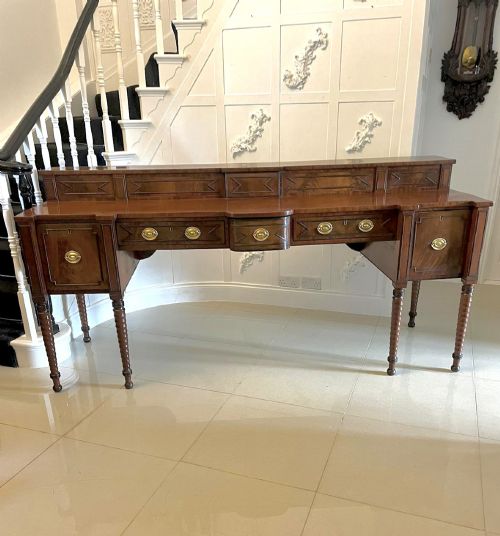
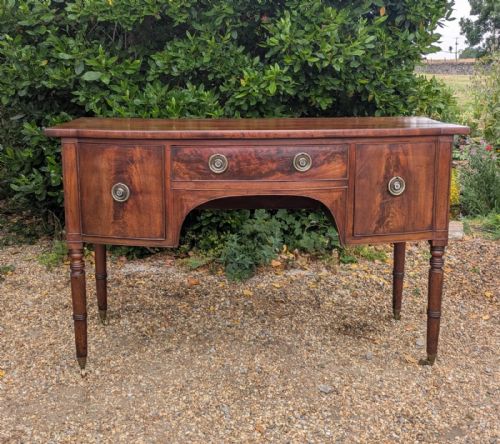
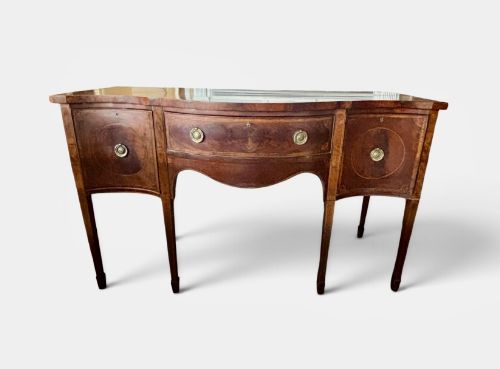
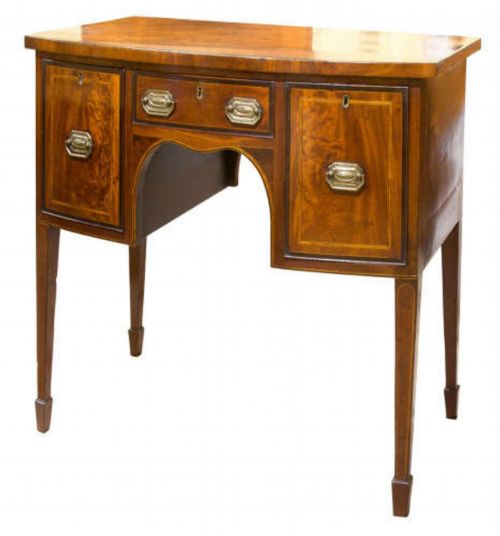
When you search for a george iii credenza, you encounter forms centred primarily on mahogany sideboards, breakfront servers, and oak dresser bases rather than standard office credenzas. These pieces date predominantly from the eighteenth century and the Georgian period, alongside later revival interpretations spanning into the twentieth century.
The domestic role of these items was to serve dining spaces for the storage and display of silver, linen, and glassware. You will meet straight-fronted models, bow-front designs, and serpentine shapes alongside robust potboard dressers originating from English and Scottish workshops.
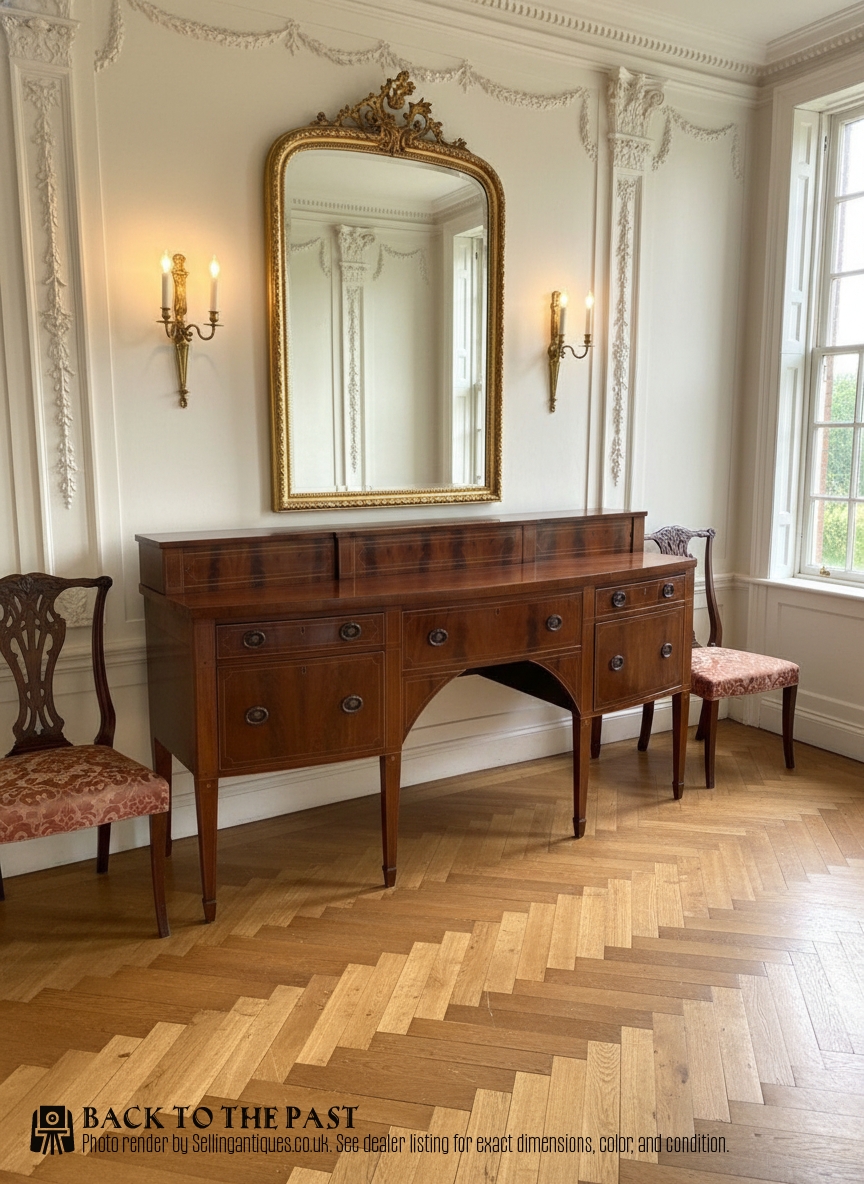
Materials and Construction
Cabinet makers relied heavily on solid and figured mahogany, often enhanced by flame veneers and structured with secondary timbers like oak. Surfaces frequently incorporate satinwood, boxwood, and purpleheart banding, laid out in geometric or neoclassical stringing patterns.
Construction techniques involve traditional dovetailing for drawer carcases and mortise and tenon joints for structural frames. Brass hardware, ranging from original drop handles to decorative backplates, fastens doors and drawers alongside brass stringing inlay.
George III Credenza Retail Price Guide 2026
Typical asking prices for george iii credenza among the pieces listed under this phrase on Sellingantiques today, from the lower quarter to the upper quarter. They describe what is for sale here now, not the wider market.
Some provincial pieces reveal mismatched secondary drawer linings, showing where carpenters utilised whatever seasoned offcuts rested in the workshop scrap bin.
Judging Quality
The hierarchy of quality rests upon the selection of timber figures and the precision of the cabinet work. Superior examples display highly figured flame mahogany or burr elm veneers that match symmetrically across the front elevation, coupled with crisp, unfaded inlay work.
Proportion and structural integrity separate standard utility pieces from exceptional commissions. Refined pieces maintain delicate serpentine or bow-front curves without timber distortion, retaining original brasses and secondary woods that show consistent age throughout the carcase.
The George III Credenza Glossary
- Potboard dresser
- A traditional dining room base featuring an open lower shelf designed for displaying heavy platters and earthenware.
- Serpentine
- A front contour characterised by a convex central section flanked by two concave curves, demanding high woodworking skill.
- Boxwood stringing
- Thin lines of contrasting pale wood inlaid into darker timber surfaces to create geometric outlines and borders.
- Breakfront
- A cabinet or sideboard whose central section projects forward from the flanking outer cupboards or drawers.
- Stage-back
- An elevated tier at the rear surface of a sideboard used for displaying serving silver and platters.
George III Credenza: Frequently Asked Questions
What rooms suit these large sideboards?
These pieces function naturally within dining rooms and spacious hallways where their length and depth provide substantial surface area and storage.
They also serve well in large living spaces as media consoles or display surfaces when paired with appropriate lighting.
How do I care for mahogany timber?
Maintain the finish by applying natural beeswax periodically and avoiding placement near direct heat sources or strong sunlight.
Keep humidity stable within the room to prevent timber shrinkage and veneer lifting over seasonal changes.
Are these pieces strictly eighteenth century?
The selection includes genuine eighteenth-century Georgian items alongside nineteenth-century pieces and twentieth-century revival interpretations.
Reviewing construction details, timber characteristics, and secondary woods helps determine the precise period of manufacture.