


George II Slant Front Desk
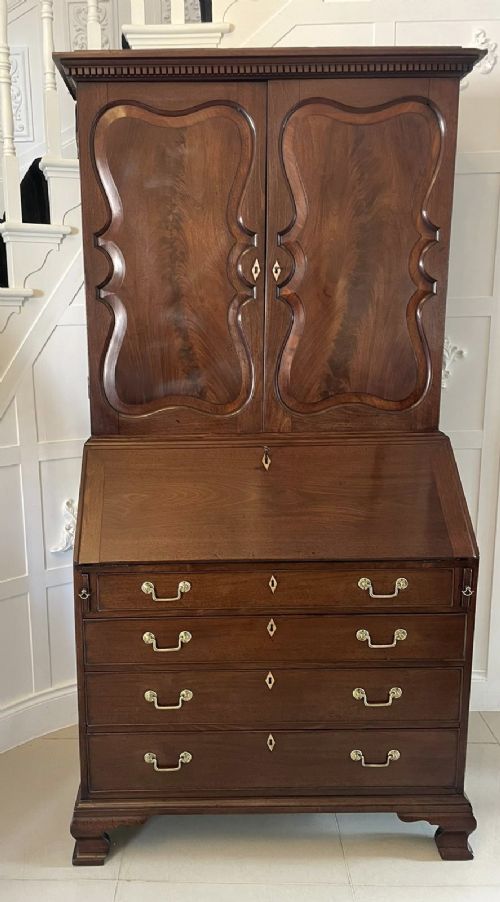
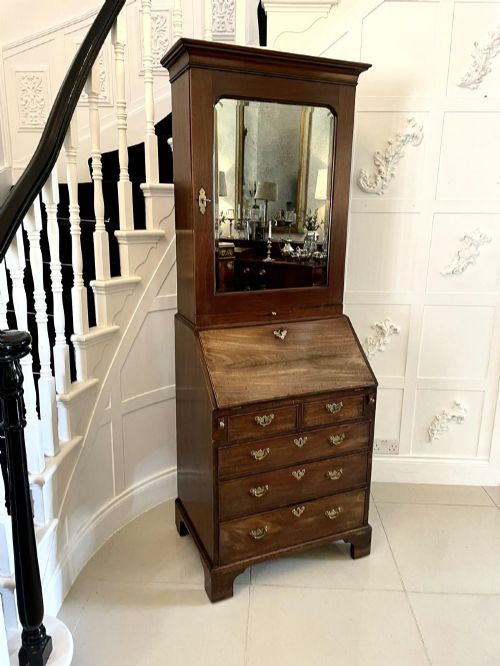
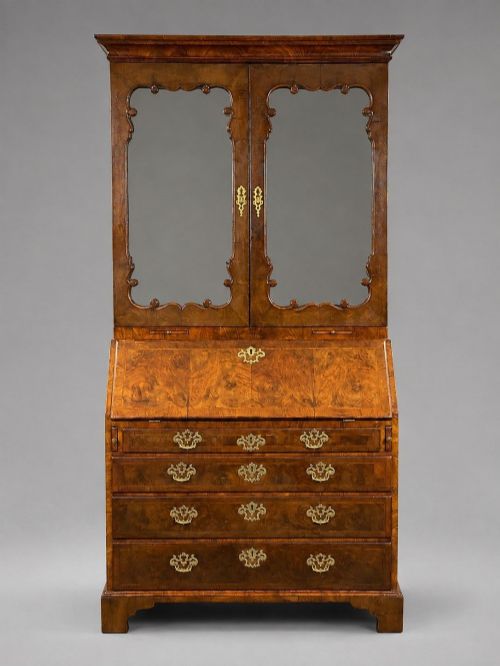
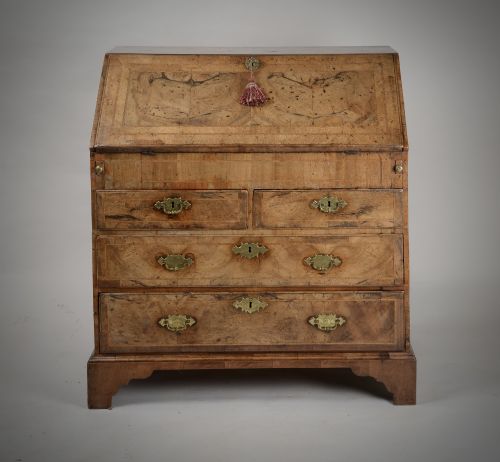
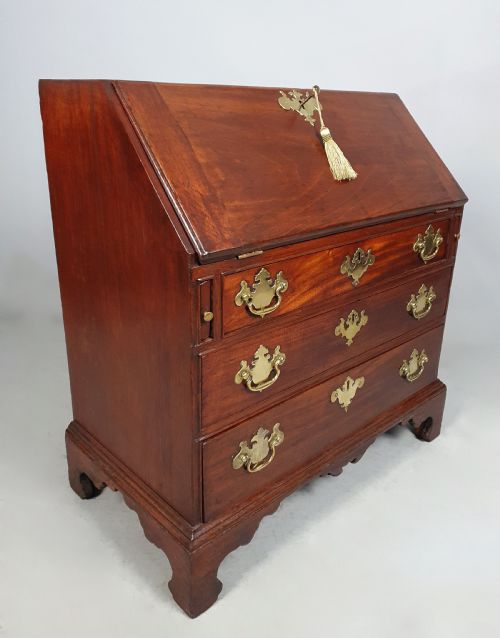
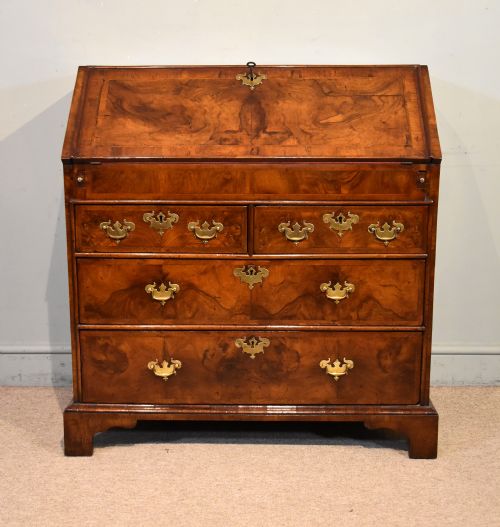
These george ii slant front desk pieces combine clever compartmentalised storage with a falling flap for writing, forged in walnut, mahogany, oak, and fruitwood.
George II Slant Front Desk
A george ii slant front desk takes the form of a bureau or bureau bookcase, offering a sloping lid that opens to reveal internal drawers and pigeonholes. Buyers searching this phrase encounter examples from the 18th century and Georgian eras, predominantly rendered in walnut or mahogany.
Many variants appear as compact writing bureaux or larger bureau bookcases topped with glazed cabinetry. The wood selection spans burr walnut, fruitwood, cedarwood, oak, and elm, reflecting the diverse cabinet-making practices of the period.
Proportions range from small three-foot widths to taller architectural bookcases designed for formal rooms. Each piece balances utilitarian storage with polished woodwork characteristic of mid-eighteenth-century design.
Construction and Materials
Cabinet makers utilised solid timbers alongside fine veneers applied to secondary woods, creating figured surfaces on walnut and mahogany models. Brass hardware such as escutcheons and handles reinforced operational stress points on drawers and falls.
Internal compartments required intricate joinery for secret compartments, pigeonholes, and small drawer boxes housed behind the main writing flap. Secondary timbers like oak and cedar provided structural stability for drawer linings and carcases.
Listings feature walnut, mahogany, oak, and fruitwood across the 18th century, Georgian, and 1700 periods.
Evaluating Quality and Execution
The sophistication of internal cabinetry and the choice of veneer figure separate standard examples from exceptional ones. Figured mahogany and burr walnut demand greater skill in matching and application across large surface areas.
Proportion and scale dictate desirability, with smaller three-foot widths commanding particular attention from collectors. The crispness of carved details, such as bracket feet or fitted interior drawers, indicates the level of workshop competence.
Giles Grendey
The George II Slant Front Desk Glossary
- Bureau
- A desk featuring a sloping hinged lid that drops to form a writing surface. It conceals a cluster of small drawers and pigeonholes inside.
- Bureau bookcase
- A tall two-part piece combining a lower writing bureau with an upper shelving or cabinet section, often enclosed by glass doors.
- Veneer
- A thin layer of figured wood, such as burr walnut or mahogany, applied over a stable secondary timber base to create decorative patterns.
- Fruitwood
- A dense timber derived from fruit-bearing trees, utilised by cabinet makers for smaller bureau variants and interior details.
- Escutcheon
- A protective brass plate surrounding a keyhole, designed to prevent wear on the surrounding wood during daily use.
George II Slant Front Desk: Frequently Asked Questions
What is a george ii slant front desk?
A george ii slant front desk is an 18th-century writing cabinet featuring a hinged sloping writing flap. This lid drops forward to provide a flat writing surface above a series of drawers.
Inside, the desk typically houses a collection of small drawers and pigeonholes for correspondence and documents. These pieces range from simple standalone bureaux to grand bureau bookcases.
How were these desks used historically?
These desks served as private writing spaces for correspondence, household accounts, and the storage of valuable documents. The slant front kept sensitive papers concealed and secure when the lid was locked shut.
Upper bookcase sections, where present, allowed owners to display books or porcelain collections. They functioned as central pieces of furniture in reception rooms or private studies.
What woods were used for these desks?
Walnut and mahogany dominate the material palette, often selected for their rich grain patterns and deep natural tones. Cabinet makers also employed burr walnut veneers to create striking decorative surfaces on drawer fronts and writing flaps.
Secondary timbers like oak, elm, cedar, and fruitwood appear in carcase construction and internal drawer linings. Brass hardware complemented these hardwoods on drawer pulls and escutcheons.
How do walnut and mahogany pieces differ?
Walnut pieces often date from the earlier decades of the period, displaying rich figuring and warm tones. Mahogany gained prominence later in the century, offering robust durability and a darker reddish-brown colour profile.
Both timbers responded well to high-level cabinet making techniques, though walnut frequently incorporated intricate veneering. Mahogany examples often emphasised solid construction and clean architectural lines.
Where should I place one at home?
These desks suit studies, living rooms, or hallways where their compact proportions can be appreciated. A location away from direct sunlight and heat sources protects the antique timbers and prevents veneer warping.
Their flat tops and practical writing surfaces make them functional additions to modern interiors. Pairing them with a simple chair allows the desk to serve as a working writing station.