



George II Mirror
A george ii mirror brings architectural presence and rich wood tones to a room, driven by the proportions and carving of the mid-eighteenth century.
Identifying George II Mirrors
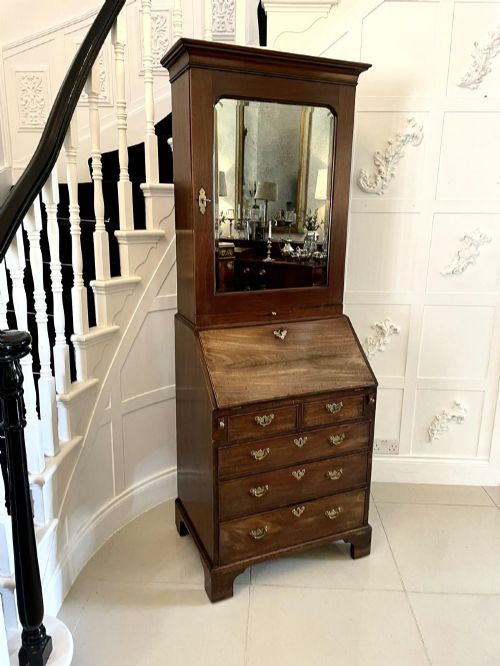
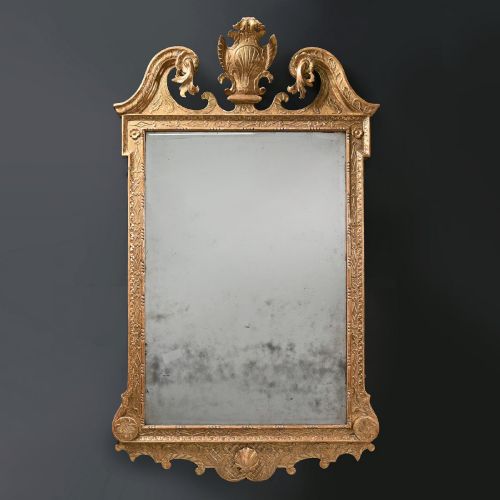
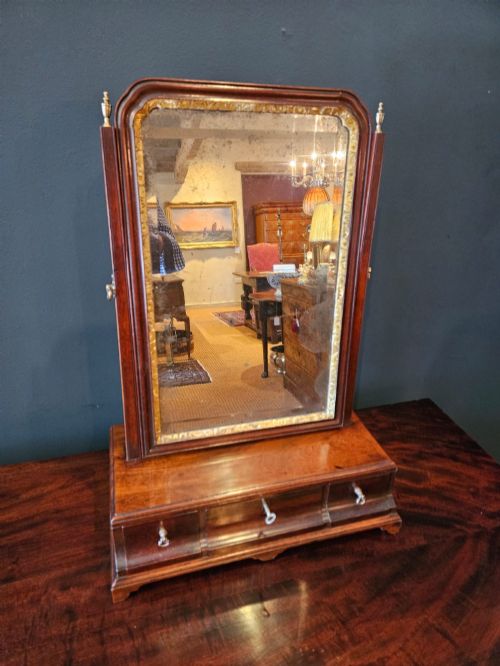
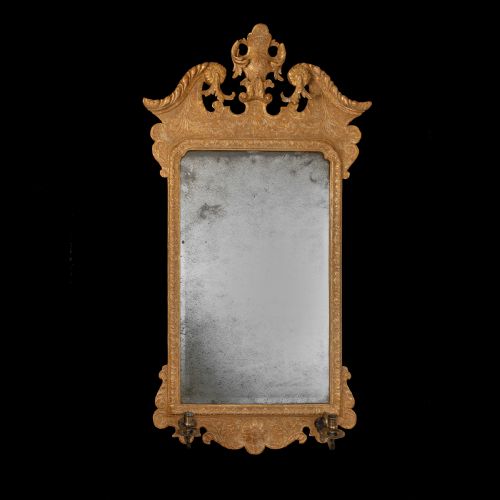
Original examples date firmly from the period of the mid-eighteenth century, while revival pieces draw closely upon the same design vocabulary of architectural pediments, parcel-gilt accents, and fretwork frames. Buyers will encounter both grand giltwood wall hanging pieces and domestic walnut dressing mirrors across these selections.
Materials and Construction
Frames are constructed from dense timbers such as mahogany, walnut, burr elm, and rosewood, frequently accented with parcel-gilt detailing, gold leaf, and boxwood inlay. The woodwork relies on traditional joinery for fretwork plates and cabinet-style toilet mirror bases.
Giltwood pieces utilise applied gesso over carved wooden carcases to take rich surface gilding, while glass plates are set directly into the frames, occasionally retaining their original mercury or vintage mirror glass.
Retail Price Guide 2026
Typical UK retail prices for george ii mirror, calculated from the Sellingantiques database of over a million retail prices indexed since 2003. This retail price guide relies exclusively on Sellingantiques data; no external sources or auction records are used, so the figures do not describe the wider market.
Several mirrors proudly retain their perching Ho-Ho birds atop the fretwork, adding a whimsical touch of eighteenth-century exoticism to the room.
Gradations in Quality
The distinction between tiers rests upon the depth and crispness of the hand-carving on the wooden frames, particularly around architectural mouldings and fretwork details. Pieces attributed to documented makers or specific workshops demonstrate superior sculptural control in motifs like parcel-gilt scrolls and architectural pediments.
Material selection dictates the upper range, where figured burr elm, dense walnut, and well-preserved original gold leaf create a richer visual depth than plainer secondary timbers. Scale and proportion also govern standing, with larger wall and pier mirrors commanding greater presence than standard domestic toilet glasses.
Benjamin Goodison·William Kent
The George II Mirror Glossary
- Parcel Gilt
- A technique where portions of a wooden frame are selectively highlighted with gold leaf while the underlying timber remains visible. This method accentuates carved details against polished walnut or mahogany surfaces.
- Pier Mirror
- A tall wall mirror specifically designed to hang on the pier of wall space situated between two windows. These pieces often feature grand architectural proportions to reflect natural light across a room.
- Fretwork
- Openwork ornamentation cut from thin boards of wood using a scroll saw or piercing saw. Eighteenth-century mirrors frequently employ symmetrical fret-cut borders.
- Giltwood
- Timber carved and surfaced with a thin layer of gold leaf applied over a prepared gesso ground. It provides a bright, reflective finish popular in formal Georgian interiors.
- Toilet Mirror
- A smaller dressing table mirror mounted on a pivoting frame above a miniature cabinet base fitted with small drawers. These served functional grooming purposes in bedchambers.
Frequently Asked Questions
How do I spot an original george ii mirror?
Original pieces display period construction techniques in the wood framing, combined with historic mirror glass that often shows oxidation, foxing, and wavy distortions. Examining the backboards and joinery reveals eighteenth-century hand-cut fixings.
Revival pieces made in the nineteenth or twentieth century typically utilise cleaner machine-sawn timbers and more uniform mirror plates, even when adopting strict Georgian forms.
Where should I hang a large pier glass?
Pier mirrors are traditionally proportioned to sit on the narrow wall space between windows, maximising the reflection of natural daylight into the centre of a reception room. Their height also suits placement above living room mantelpieces.
Ensure the wall fixings are rated to support the considerable weight of a solid timber and giltwood frame.
What is the difference between a wall mirror and a toilet mirror?
Wall mirrors are designed to hang permanently at eye level on a room partition, featuring decorative frames built for visual impact. Toilet mirrors are smaller vanity items constructed with a pivoting swing glass mounted upon a miniature chest of drawers.
These dressing mirrors sat upon tables for personal grooming rather than serving as primary wall decoration.
How do I care for antique giltwood and wood frames?
Keep these frames away from direct sunlight and damp environments, which can degrade fragile gold leaf and cause timber to warp. Dust gently with a soft, dry brush rather than applying liquid polishes that damage gesso.
Original glass plates should be cleaned sparingly with a dry microfibre cloth to preserve historic surface patination.