

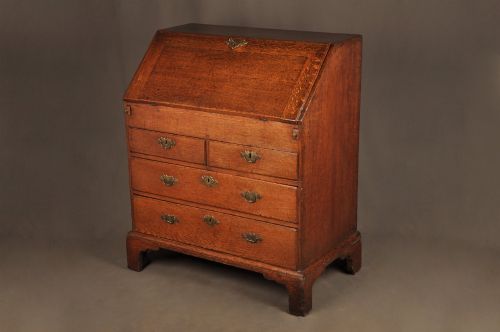


George I Oak Desk
A george i oak desk brings sturdy eighteenth-century craftsmanship into a room, offering warm timber tones and practical writing space.
George I Oak Desk
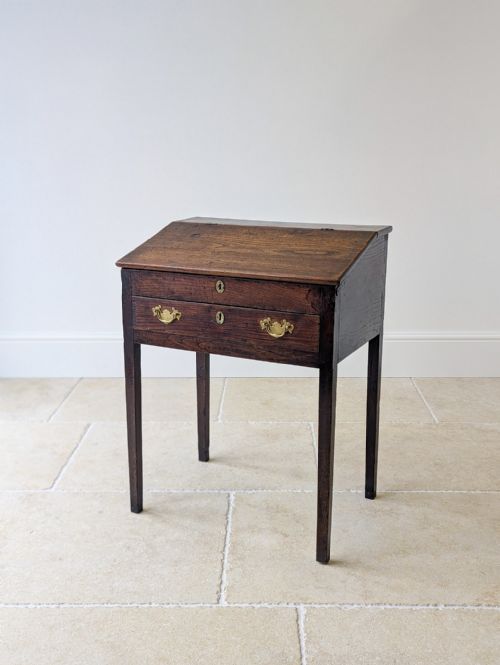
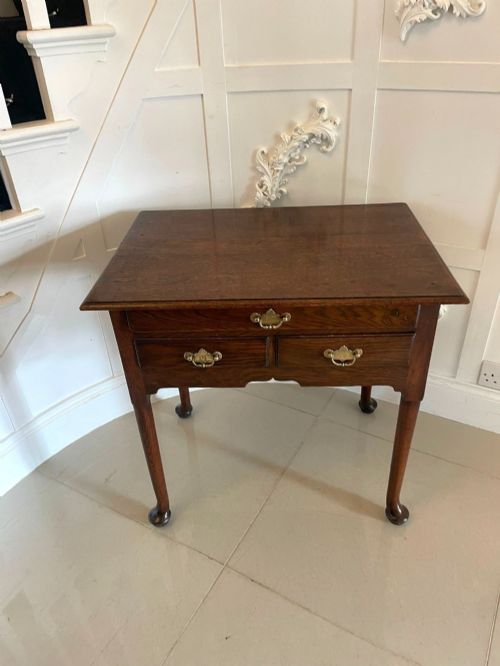
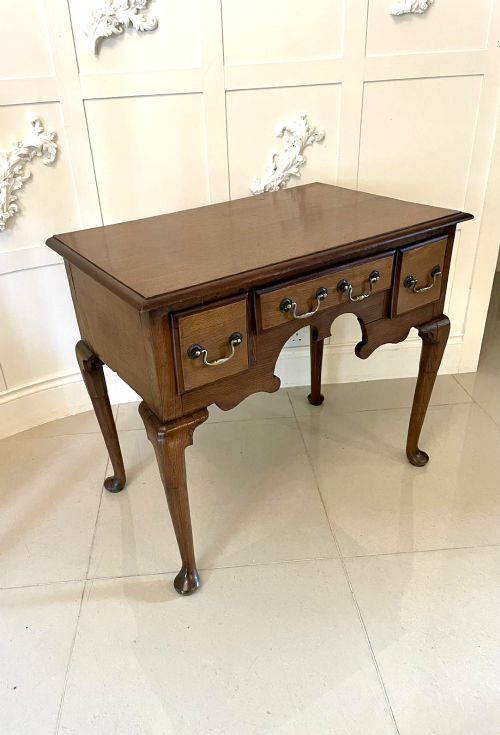
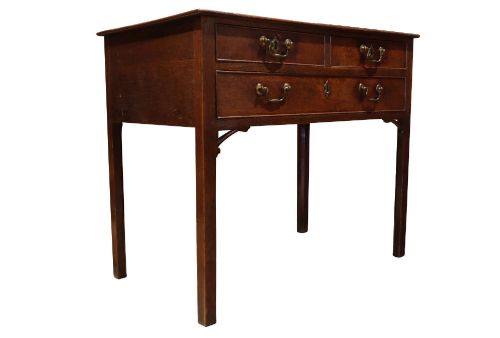
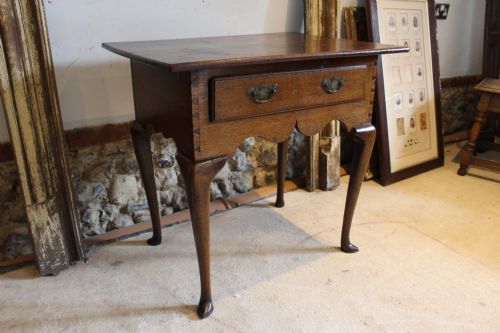
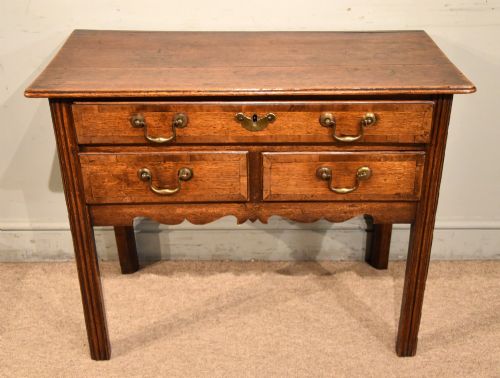
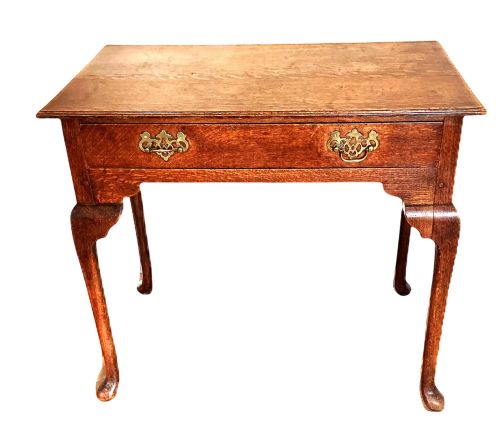
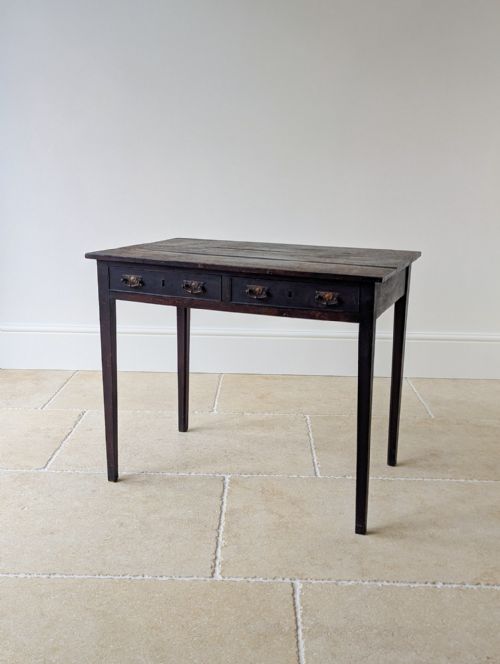
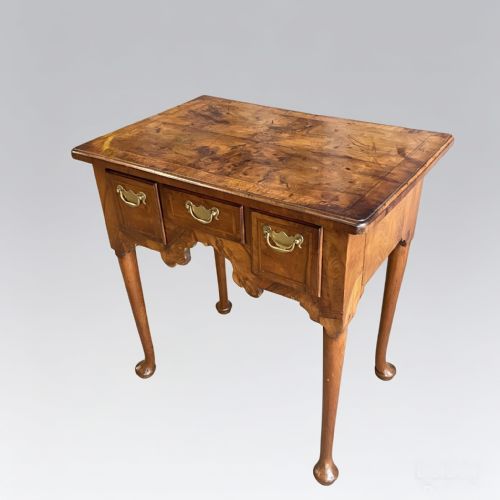
When searching for a george i oak desk, buyers encounter robust pieces dating primarily from the eighteenth century, including bureau bookcases, corner bureaus, and large dressing table lowboys. The selection spans early eighteenth-century examples alongside related forms from the George II and George III periods.
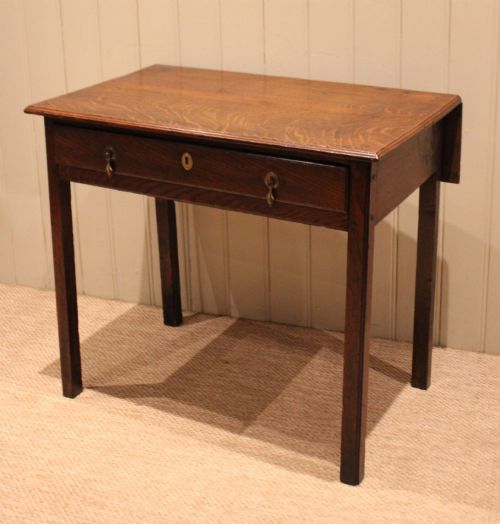
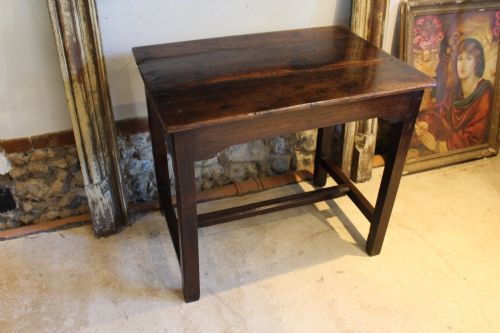
The material palette centres on solid oak, frequently paired with walnut, mahogany, and brass hardware. While side tables and lowboys share similar proportions, dedicated desks and writing furniture provide specialised storage compartments and sloping surfaces.
Materials and construction
Cabinet makers utilised dense domestic oak for primary framing and structural integrity, sometimes combining it with walnut or mahogany veneers and cross-banding. Brass handles, escutcheons, and hinges secure drawers and fall fronts.
Joinery methods rely on traditional pegged mortise and tenon joints for stability. Surfaces receive hand-applied finishes that highlight the natural grain patterns of the timber.
George I Oak Desk Retail Price Guide 2026
Typical asking prices for george i oak desk among the pieces listed under this phrase on Sellingantiques today, from the lower quarter to the upper quarter. They describe what is for sale here now, not the wider market.
Primary materials span oak, walnut, and mahogany, supplemented by brass fittings, leather inserts, and fabric.
Judging quality
Quality rests on the crispness of the cabinet work, the integrity of the timber, and the retention of original hardware such as brass pulls and locks. Early pieces show careful selection of quarter-sawn oak boards that resist warping.
The presence of original fitted interiors within bureaus separates superior examples from altered pieces. Subtle details like feather banding and secondary wood choices indicate the standard of workshop production.
Morris & Co·George W Jack
The George I Oak Desk Glossary
- Lowboy
- A small dressing table or side table with drawers, typically standing on four legs. These versatile pieces often double as writing desks in compact spaces.
- Bureau
- A desk featuring a sloping hinged lid that opens to reveal a fitted interior of pigeonholes and small drawers. They frequently sit upon a chest base or stand on bracket feet.
- Bureau Bookcase
- A tall dual-purpose furniture form combining a desk bureau on the lower section with shelving enclosed by doors above. Early examples often display dome top or architectural crowning.
- Corner Bureau
- A specialised desk designed to fit snugly into a room angle. These unusual items maximise floor space while providing a functional writing surface.
- Feather Banding
- A decorative inlay technique using veneer strips cut across the grain to form a herringbone pattern. It frames drawer fronts on refined walnut and oak case pieces.
George I Oak Desk: Frequently Asked Questions
What is a george i oak desk?
A george i oak desk is a piece of eighteenth-century writing furniture constructed primarily from solid oak during the early 1700s. These items often take the form of slope-front bureaus, corner units, or large lowboys adapted for writing.
They reflect the domestic architectural styles of the period, emphasising sturdy timber construction and functional interior compartments over excessive ornamentation.
How do I identify a george i period piece?
Identification relies on examining construction techniques, hardware, and wood selection typical of the early eighteenth century. Cabinet makers utilised native oak with pegged joinery and simpler line profiles compared to later Georgian iterations.
Interior layouts feature small drawers and pigeonholes arranged around a central cupboard, characteristic of early desk designs.
Where were these desks used?
Original owners utilised these desks in private studies, libraries, and withdrawing rooms of country houses and town residences. They served as primary workspaces for correspondence and estate management.
Today, they function effectively in modern home offices or living areas as practical writing surfaces with built-in document storage.
How should I care for antique oak furniture?
Maintenance involves keeping the timber away from direct heat sources and rapid humidity fluctuations to prevent wood splitting. Regular dusting with a soft, dry cloth preserves the finish without requiring heavy polishes.
Applying microcrystalline wax periodically helps nourish the dry oak surface and protects the historic patina.