


George I Oak Chest
When you search for a george i oak chest, you are looking at early eighteenth-century storage furniture built with sturdy native timber and quiet proportion.

George I Oak Chest
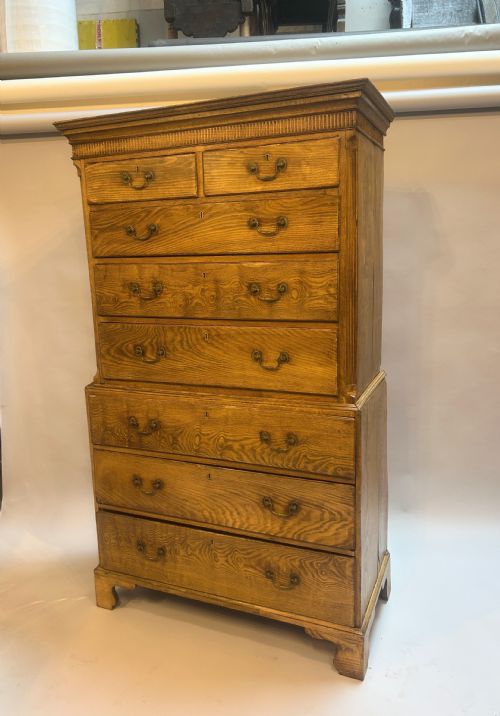
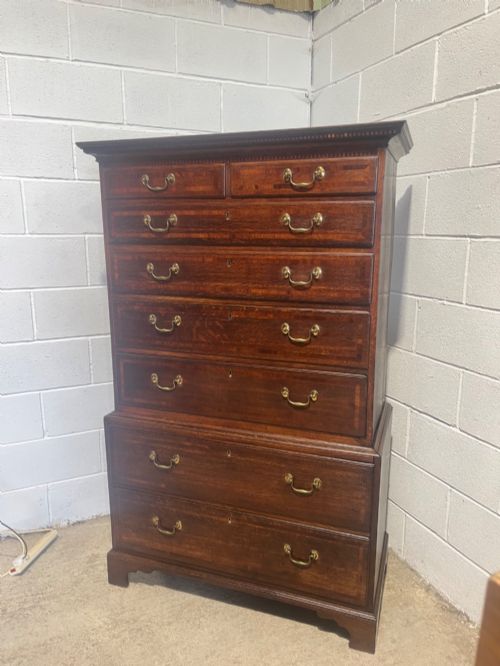
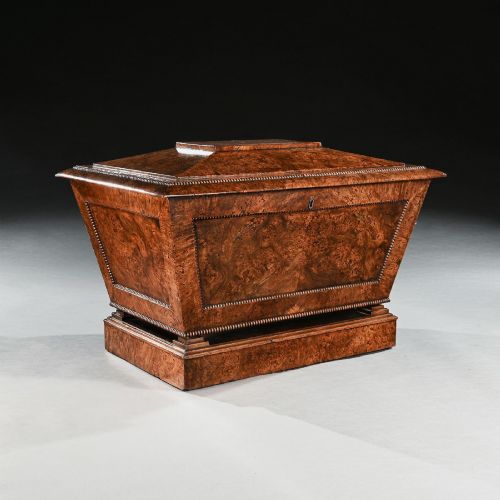
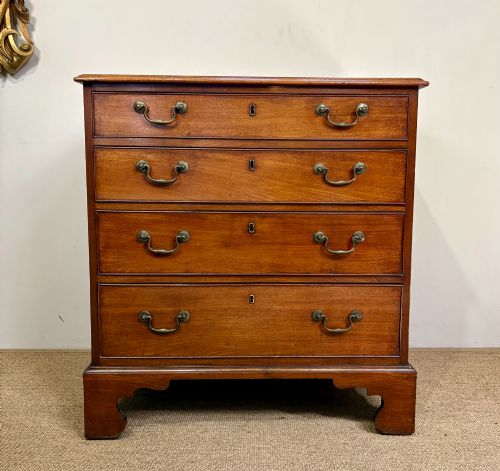
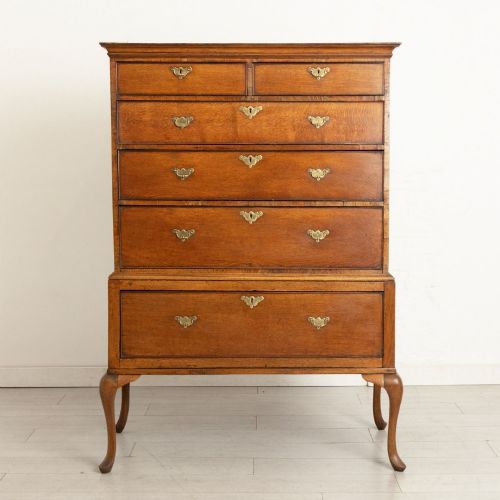
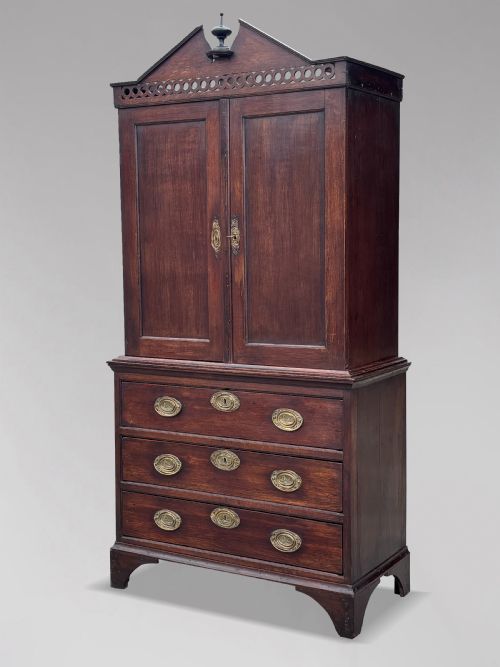
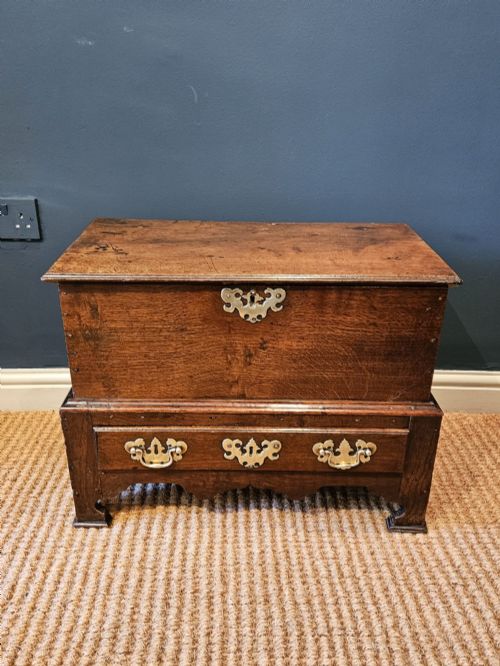
A george i oak chest typically belongs to the early eighteenth century, displaying the straightforward plank construction and rich grain characteristic of the period. These pieces span standard chests of drawers, elevated chest on stand forms, and compact box chests designed for domestic storage.
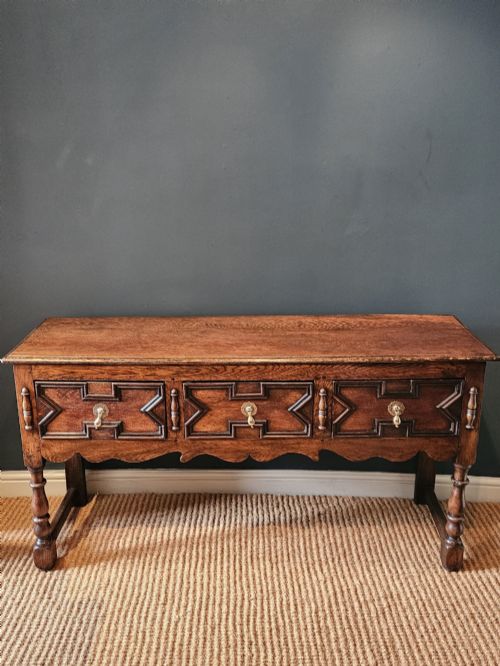
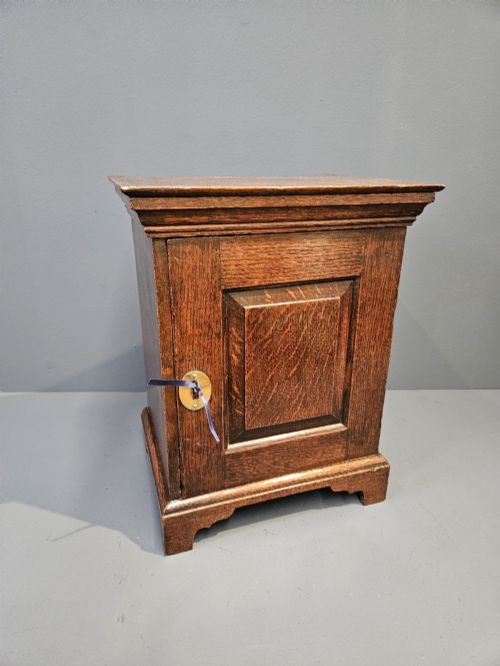
The versions most commonly met in these listings include solid oak drawer units from the Georgian era, alongside related forms like lowboys, mule chests, and spice cupboards. Makers of this period relied on honest joinery, panelled sides, and working drawer configurations rather than heavy surface ornament.
Materials and construction methods
Cabinet makers built these pieces primarily from solid English oak, often incorporating secondary timbers such as elm, deal, or walnut for internal drawer linings and backboards. Surfaces were finished by hand, bringing out the natural medullary rays and figuring of the timber through traditional waxing.
Hardware played a functional role, utilising brass drop handles,escutcheons, and iron hinges fixed securely to hand-cut dovetail joints. Drawer construction relied on tight manual joints that allowed the solid wood to move naturally with changes in household humidity.
One surviving eighteenth-century oak chest preserves the stitched name Mary Rees inset quietly into the wood.
Distinctions in craftsmanship and survival
Quality rests heavily on the degree of original survival, separating pieces that retain their untouched surfaces and period brasses from those altered by later restoration. The crispness of the drawer dovetails and the integrity of the timber mouldings also indicate the original maker's skill.
Proportion and scale dictate the desirability of a piece, with smaller country house examples commanding particular attention due to their domestic utility. Grain selection matters greatly, where well-matched oak boards and subtle banding elevate a utilitarian box into a sophisticated interior furnishing.
George Walton
The George I Oak Chest Glossary
- Chest on stand
- A two-part storage form where a set of drawers sits upon an elevated frame with legs. This configuration lifts the main storage body off the floor.
- Mule chest
- A storage chest fitted with one or more drawers at the base beneath the primary lid compartment. It bridges the gap between a blanket box and a full chest of drawers.
- Dovetail
- A interlocking woodworking joint formed by interlocking wedge-shaped fingers. It provides exceptional tensile strength for drawer corners.
- Crossbanding
- A narrow strip of veneer laid around the border of a drawer front or top with the grain running perpendicular to the centre panel. This technique frames the primary timber.
- Bracket foot
- A structural support foot shaped like a small bracket, projecting beneath the corners of a case piece. It replaced earlier base moulding styles during the eighteenth century.
George I Oak Chest: Frequently Asked Questions
How do I identify a George I oak chest?
Examine the timber for genuine age, looking for deep patination, hand-cut dovetails, and early brass hardware configurations typical of the early eighteenth century.
Check for panelled sides and solid oak construction methods that predate later mass-produced Victorian manufacturing techniques.
Where were these chests used originally?
These storage pieces served primary duties in bedchambers, hallways, and living quarters of country houses and town homes alike for holding linens and garments.
Smaller box forms rested on tables or floors to secure valuables, while larger drawer chests remained stationary against structural walls.
How should I care for an antique oak surface?
Maintain the finish by applying natural beeswax sparingly and buffing gently with a soft cloth to nourish the dry historical timber.
Keep the piece away from direct heat sources and drastic humidity swings to prevent the solid oak panels from splitting.
What is the difference between a chest and a tallboy?
A standard chest provides a low rectangular profile with two or three small drawers over several longer graduated drawers.
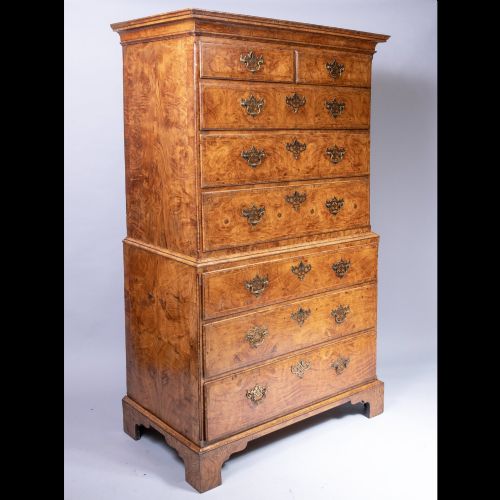
A tallboy stacks two distinct case sections together vertically, creating a much higher storage unit with numerous compartmental drawers.