
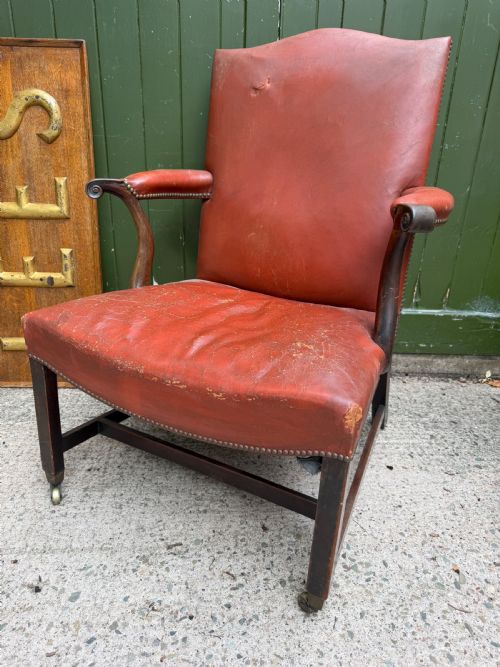
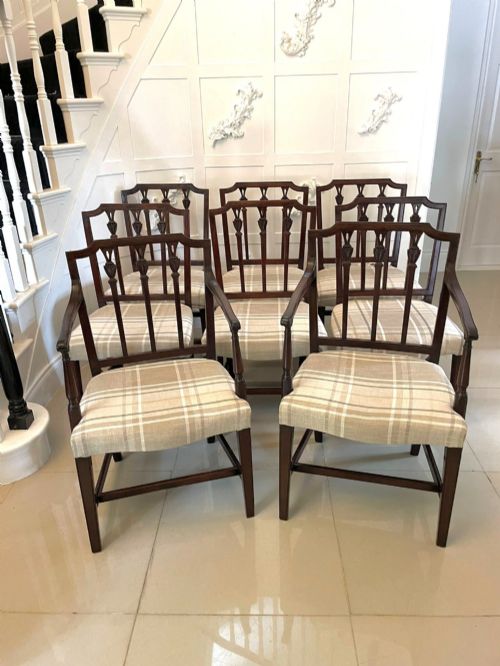
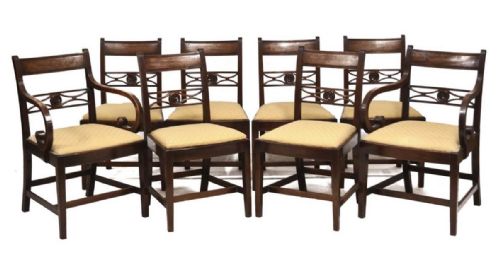
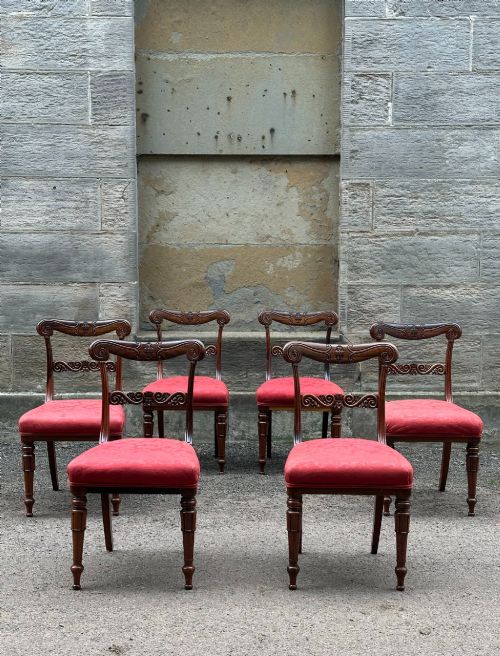
George I Chairs
When buyers search for george i chairs, they seek early eighteenth-century seating defined by restrained walnut frames and pad feet.
George I Chairs
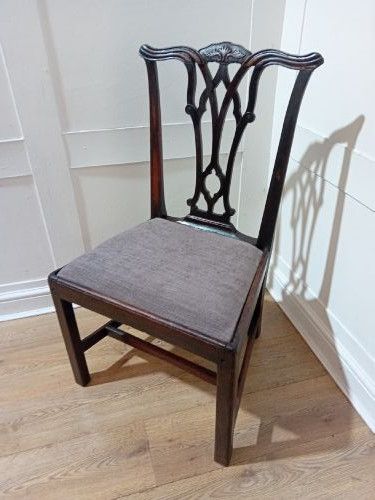
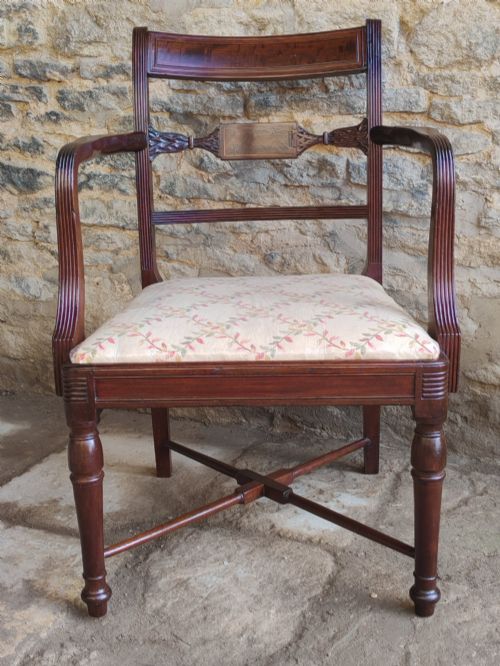
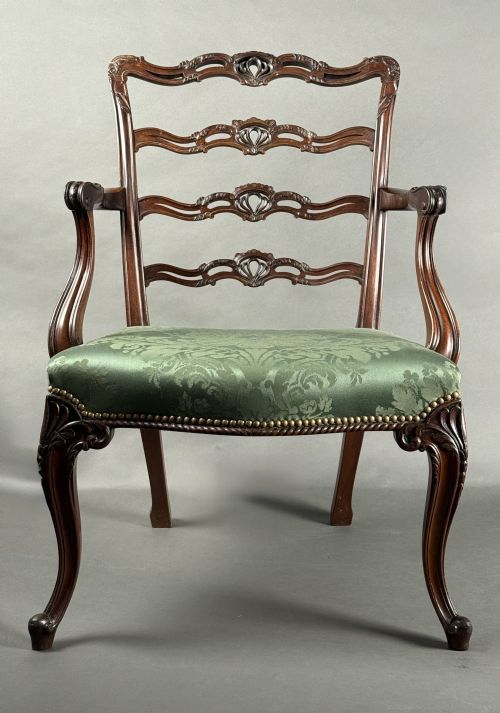
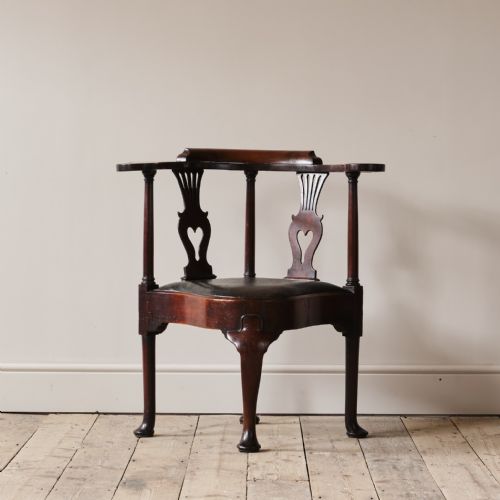
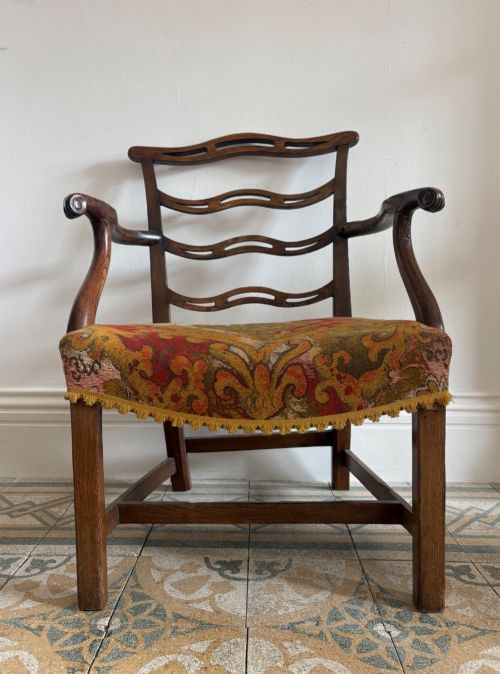
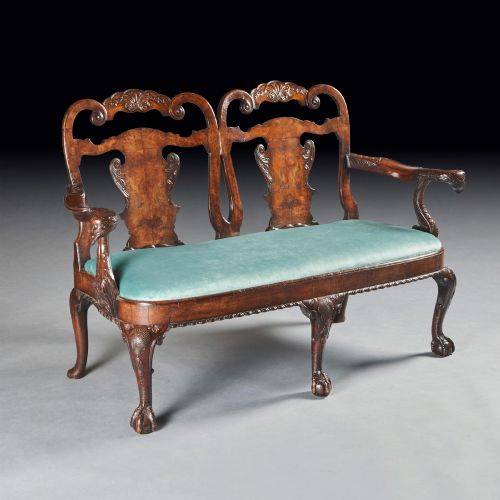
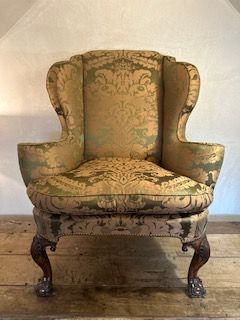
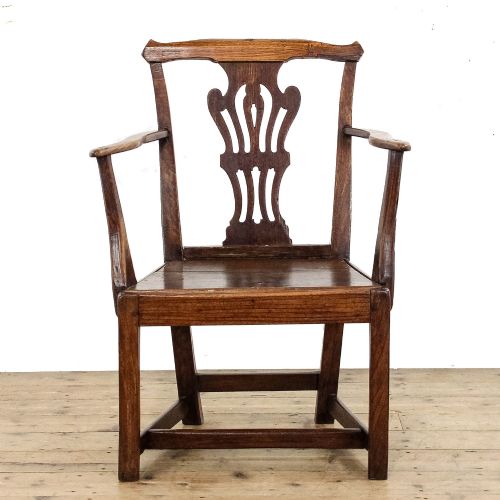
The phrase george i chairs brings up early eighteenth-century seating, predominantly side chairs and armchairs constructed during the reign of the first Hanoverian monarch. These forms typically display solid splats, cabriole legs, and understated walnut surfaces rather than the dense carving associated with later decades.
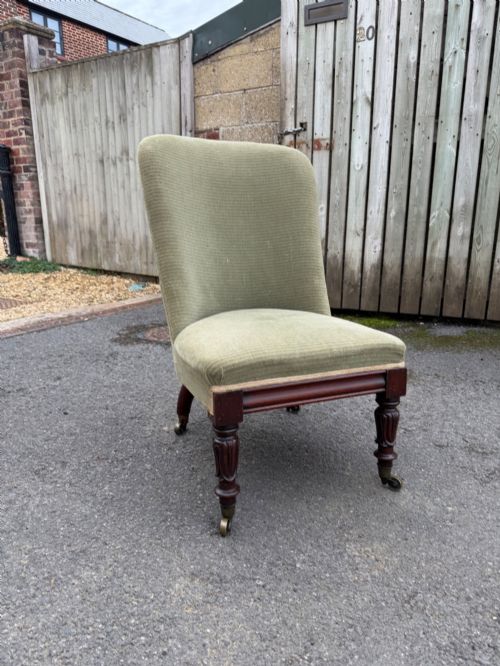
While true early pieces survive in pairs or sets from the 1720s, buyers frequently encounter later nineteenth-century revivals styled after these early designs. Both original period examples and later interpretations share a focus on domestic utility and structural restraint.
Materials and Construction
Cabinetmakers relied heavily on dense walnut for frames during this period, often shaping the timber into flowing cabriole legs that terminated in pad or trifid feet. Joinery depended on pegged mortise and tenon joints to secure the seat rails to the uprights.
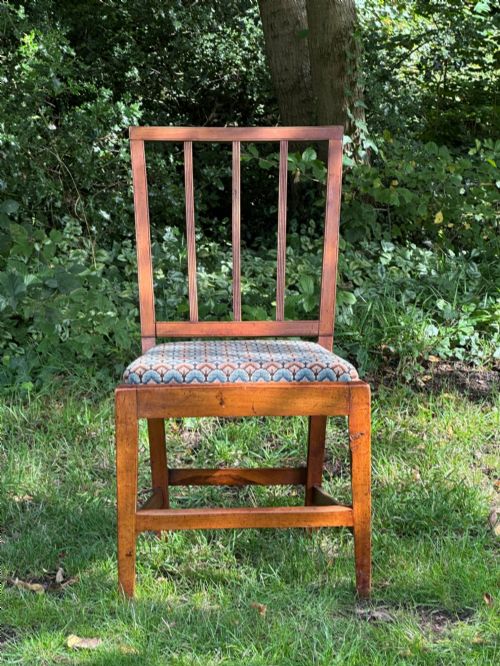
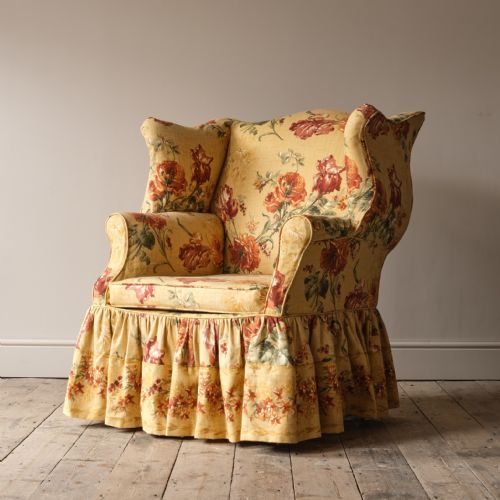
Upholstered variants incorporated drop-in seats webbed and stuffed with natural fibres, secured by textile coverings like silk or horsehair. Secondary timbers such as elm and oak occasionally reinforced internal frame structures.
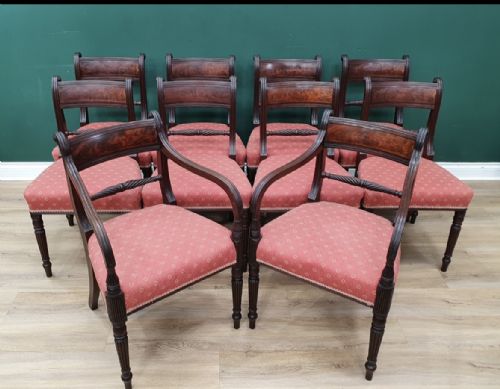
Current listings feature walnut and mahogany alongside elm and ash timbers across eighteenth and nineteenth-century forms.
Evaluating the Seating
Quality rests upon the crispness of the joinery and the integrity of the timber figure, where well-figured walnut commands greater appreciation than plain stock. The fluidity of the cabriole curve and the depth of hand-carved shell motifs on the knees dictate the tier of craftsmanship.
Originality of the frame components remains paramount, distinguishing untouched period construction from heavily restored or entirely recreated examples. The preservation of early surface patination further separates superior survivals from stripped or over-polished instances.
Gillows·Thomas Chippendale·Morris & Co·Waring & Gillow·George Bartholomew & Co
The George I Chairs Glossary
- Cabriole leg
- A furniture leg that bends outward in a convex curve and tapers inward in a concave arc, mimicking animal limbs. This form appeared widely on seating during the early eighteenth century.
- Pad foot
- A simple, rounded foot shape that terminates a cabriole leg without decorative carving. It provides a stable base on domestic floor surfaces.
- Splat
- The vertical wooden slat positioned in the centre of a chair back, often shaped in a vase or fiddle outline. It supports the sitter's back.
- Drop-in seat
- A removable wooden frame upholstered separately and dropped into a recess within the chair rails. This construction allowed for straightforward re-covering over generations.
- Cocuswood
- A dense tropical timber used occasionally for turned components and inlay work on fine seating. It yields a dark, polished finish.
George I Chairs: Frequently Asked Questions
How do I identify a true early eighteenth-century piece?
Examine the timber species and the construction of the seat frame underneath. Early examples predominantly utilise walnut with traditional hand-cut joinery.
Check for signs of age in the patination and wear patterns around the foot and stretcher joints. Later revival pieces often betray their origin through machine-cut marks or differing secondary woods.
Were these side chairs used exclusively for dining?
These chairs served multiple domestic functions in reception rooms, parlours, and bedchambers as well as around dining tables. Their portable nature allowed servants to move them between rooms as social gatherings demanded.
Armchairs remained scarcer and were typically reserved for the head of the household or honoured guests.
How should I care for antique wood and upholstery?
Maintain stable indoor humidity levels to prevent the walnut timber from shrinking and splitting. Avoid placing antique seating near direct heat sources or strong sunlight.
Dust the frames regularly with a soft, dry cloth and consult a specialist conservator for textile maintenance. Leather and historic fabrics require periodic treatment to preserve their suppleness.
What distinguishes walnut from mahogany seating?
Walnut predominated during the earlier decades of the eighteenth century, offering a warm golden-brown tone with dark grain figuring. It yields softer forms and often incorporates delicate shell carvings.
Mahogany gained favour later in the century, allowing for crisper carved details and a deeper reddish hue. The shift in primary timber serves as a reliable indicator of changing stylistic periods.