




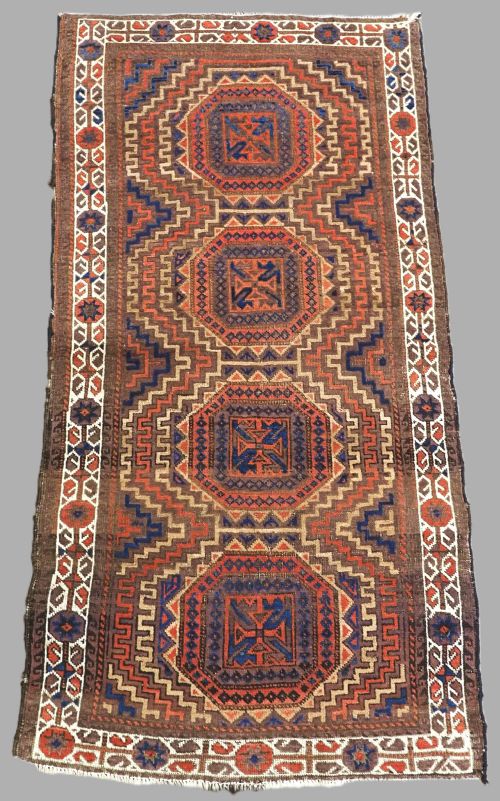
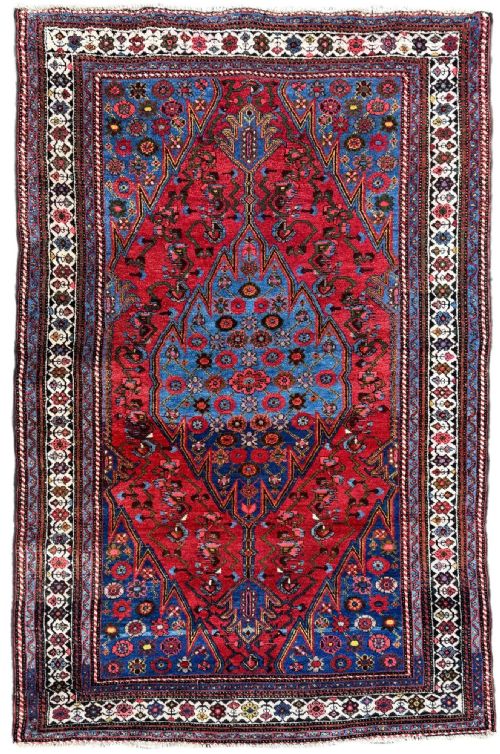
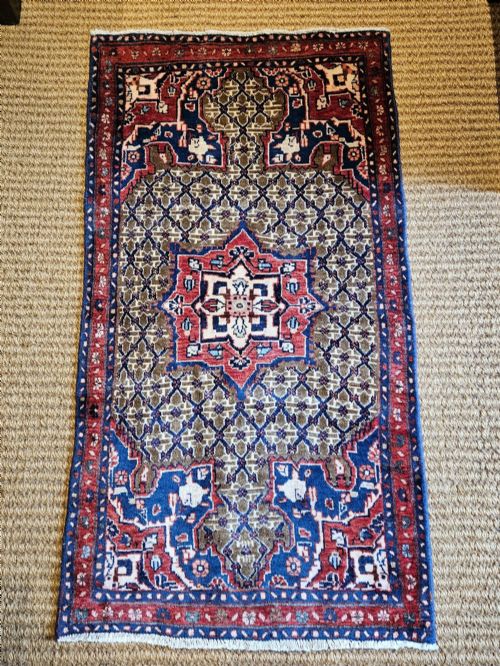
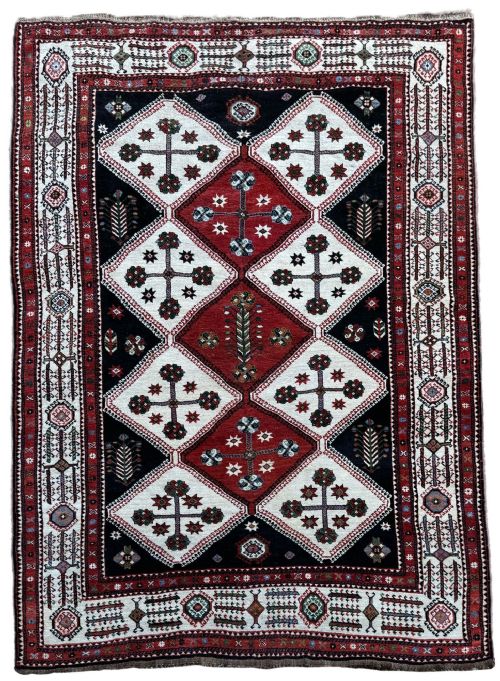
Geometric Wool Floor Rug
A geometric wool floor rug grounds a room with traditional pattern, bringing historical tribal and village weaving into modern spaces.
Geometric Wool Floor Rug
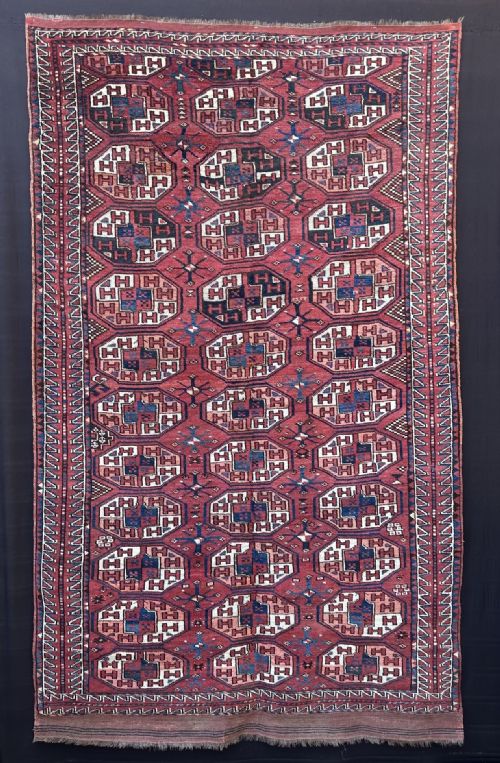
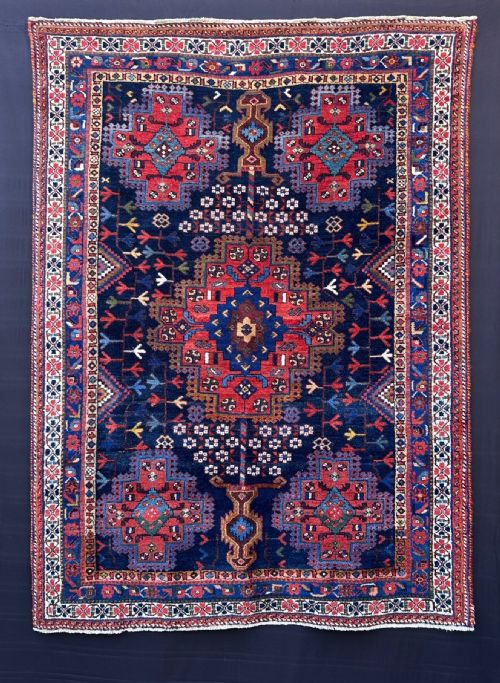
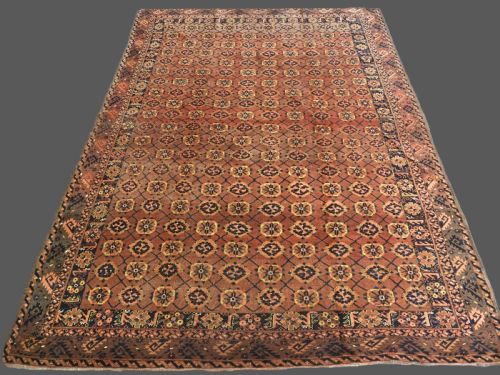
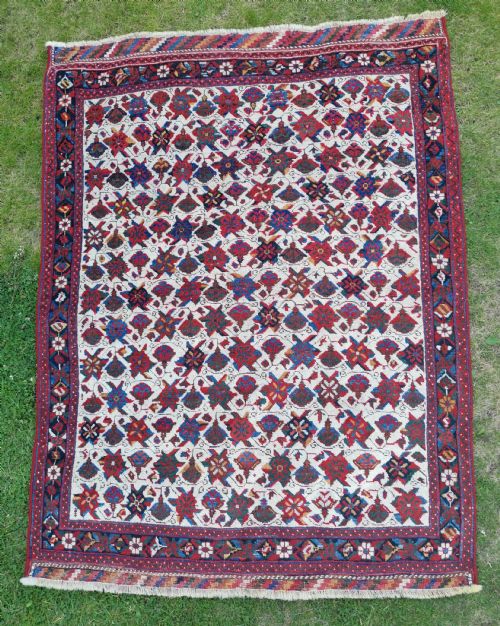
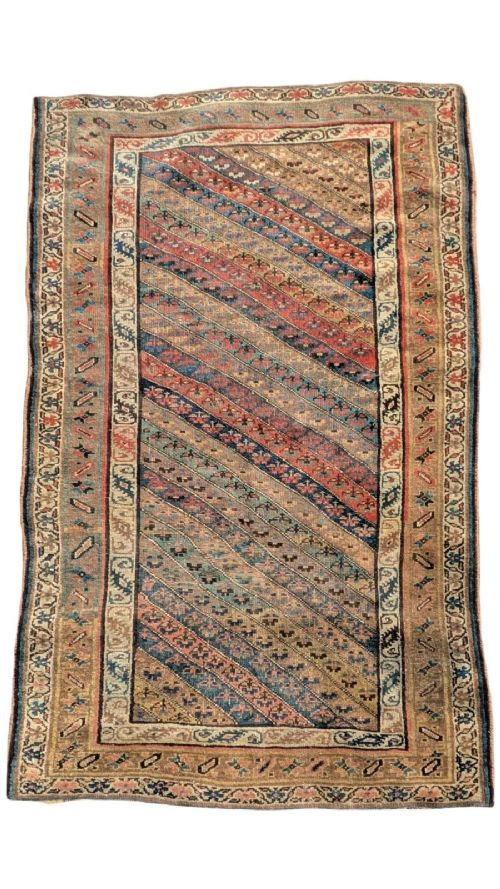
A geometric wool floor rug encompasses room-sized carpets, area rugs, and hallway runners originating from village and tribal workshops across Persia, the Caucasus, and Central Asia. Buyers searching for a geometric wool floor rug encounter pieces spanning the nineteenth century through the early twentieth century, including Heriz, Kazak, Afshar, and Turkmen examples.
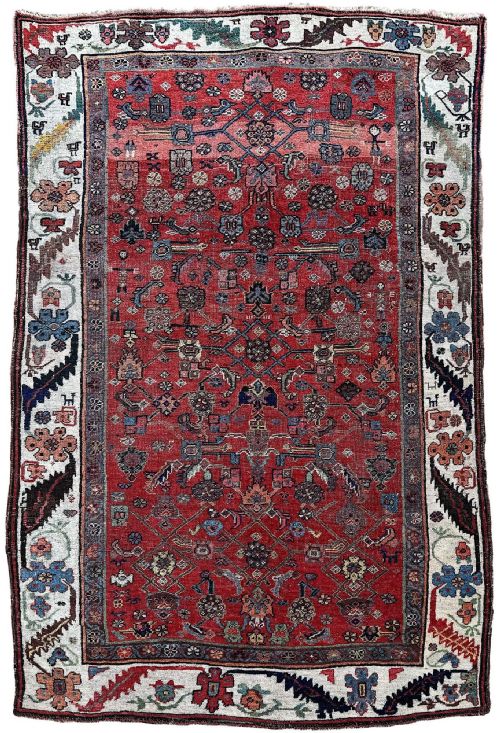
The forms vary from compact hearth-sized mats and runner rugs to very large carpets measuring over six metres. Tribal weaves such as Kurdish, Baluch, and Qashqai pieces sit alongside village productions like Hamadan, Bidjar, and Bakhtiari, representing distinct regional traditions of pattern and layout.
Materials and construction
Construction relies upon wool foundations and pile, combined with cotton elements in specific regional types. Weavers utilise natural dyes to achieve deep red, navy blue, and sky blue colour palettes that develop patination over decades of use.
Hand-weaving techniques produce durable pile carpets designed for heavy domestic traffic. Village and tribal makers knot the wool by hand onto structural warps and wefts, creating firm, dense textiles.
Some tribal weavers included tiny intentional imperfections in their geometric patterns to ward off the evil eye.
Factors of distinction
Quality rests upon the fineness of the knotting and the precision of the rectilinear layout. Tightly packed wool pile yields sharper definition in medallion and motif outlines.
The richness and depth of the natural dyes dictate visual success. Subtle shifts in hue across the field show the hand of the dyer and add character to the finished carpet.
The Geometric Wool Floor Rug Glossary
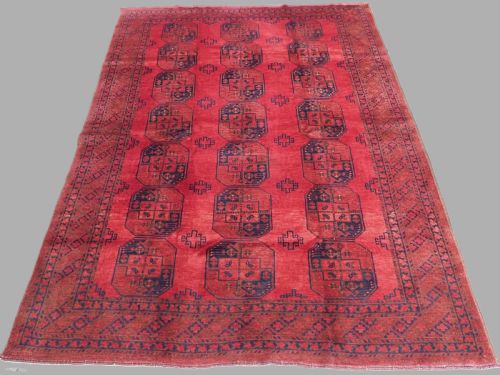
- Gul
- A repeating octagonal or medallion-like motif found frequently in Turkmen and Baluch tribal weaving. These symbols often signify specific tribal lineages.
- Runner
- A long, narrow carpet format designed for hallways, corridors, or staircases. They balance linear proportions with repeating central motifs.
- Medallion
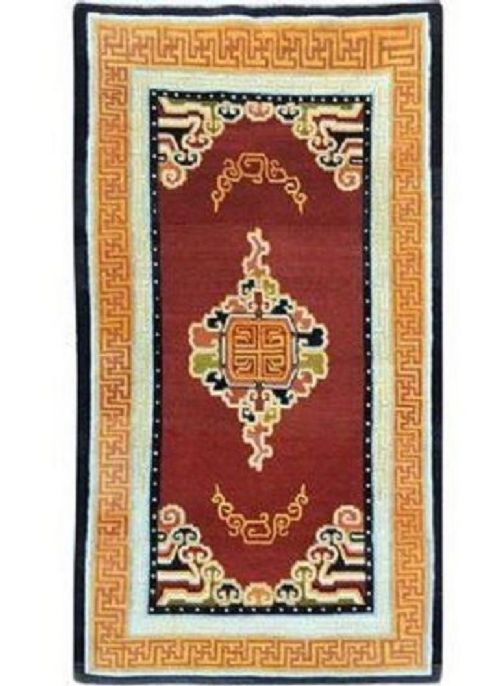
- A large central ornamental design set into the middle of the carpet field. Heriz and other Persian types frequently anchor their composition around this focal element.
- Warp
- The vertical threads stretched tightly on the loom before knotting begins. Wool and cotton serve as the primary foundational materials for these structural threads.
- Natural dye
- Colouring extracted from plants, insects, or minerals rather than synthetic chemicals. These dyes produce complex, muted tones that age gracefully.
Geometric Wool Floor Rug: Frequently Asked Questions
How do I choose the right size rug?
Measure your floor space to ensure furniture legs sit comfortably on the textile or leave an appropriate margin of exposed flooring around the perimeter.
Consider whether you need a compact hearth mat, an area rug for a seating group, or a long runner for a hallway.
Where were these rugs made?
These textiles originate from village and tribal regions across Persia, the Caucasus, Turkmenistan, and Central Asia. Specific areas include Heriz, Kurdistan, Shiraz, and the Caucasus mountains.
Each region developed distinct weaving structures, colour combinations, and geometric vocabulary passed down through generations.
How do I care for a wool rug?
Vacuum gently using suction attachments without rotating brush bars to protect the vintage wool pile. Rotate the rug periodically to ensure even wear from foot traffic and sunlight exposure.
Professional cleaning suited to antique textiles preserves the natural dyes and wool structure over time.
What defines a geometric design?
Geometric designs utilise straight lines, triangles, squares, diamonds, and stylized medallions rather than flowing floral curves. These rectilinear patterns characterise tribal and village weaving traditions.
Weavers abstract natural forms into rigid, structural motifs that repeat across the field and border.