


Geometric Turkmen Weave
Geometric turkmen weave textiles display the structured tribal motifs and rich palettes characteristic of Central Asian nomadic weaving traditions.
Geometric Turkmen Weave
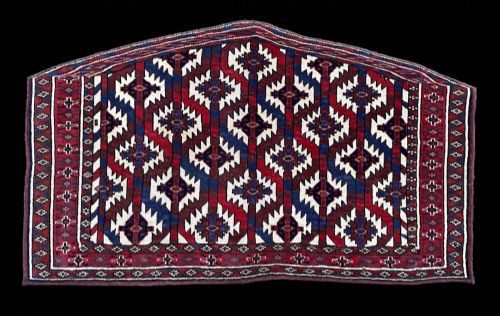
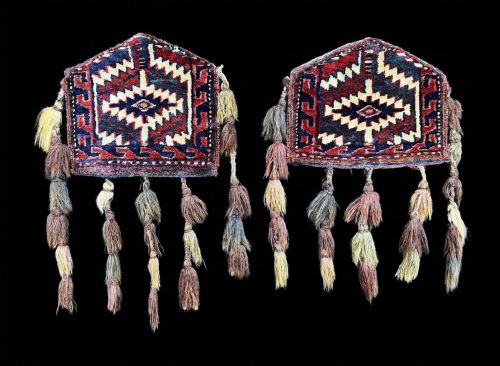
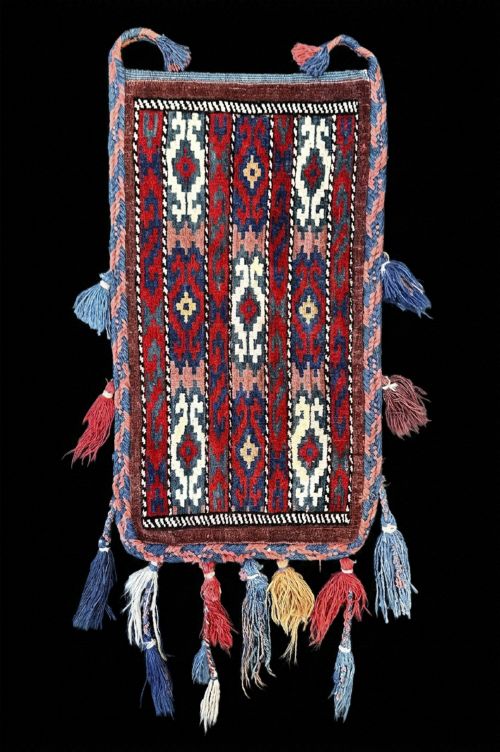
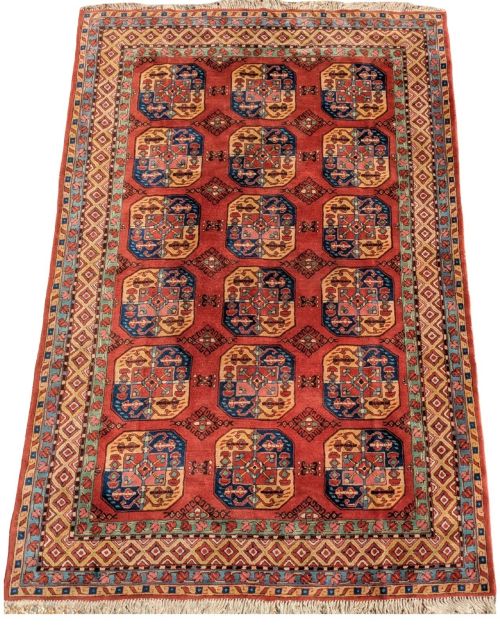
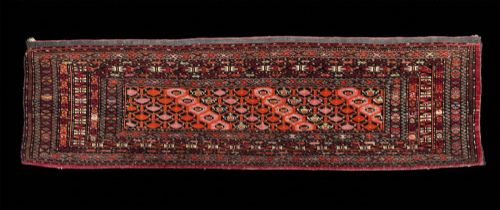
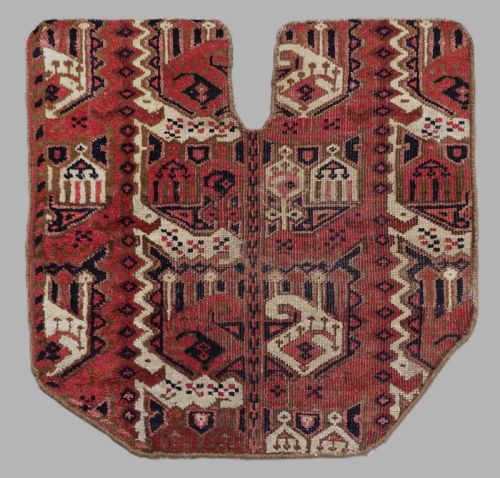
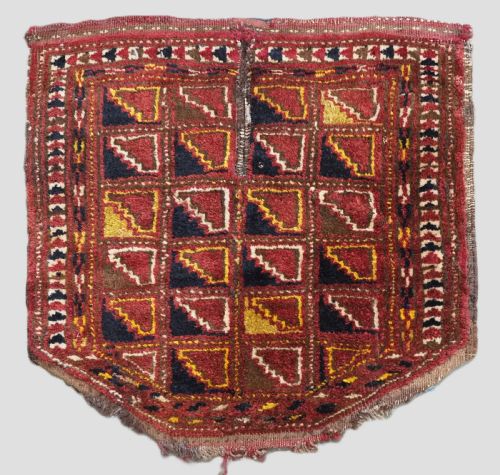
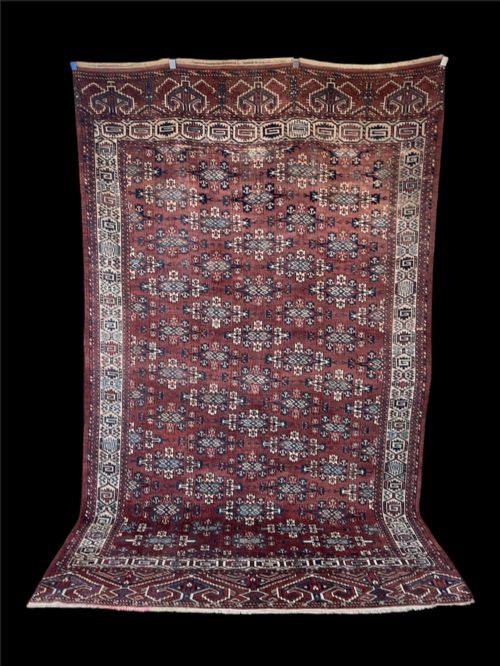
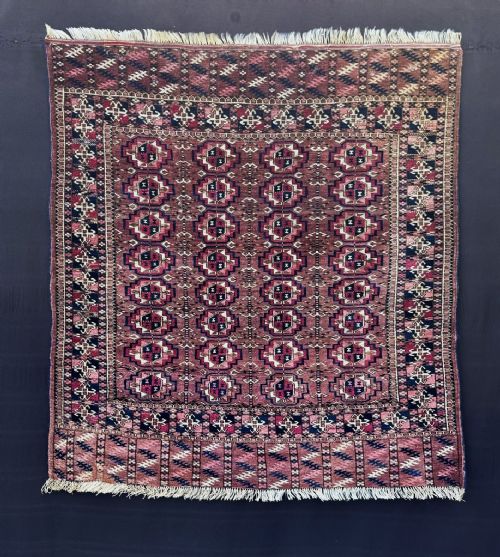
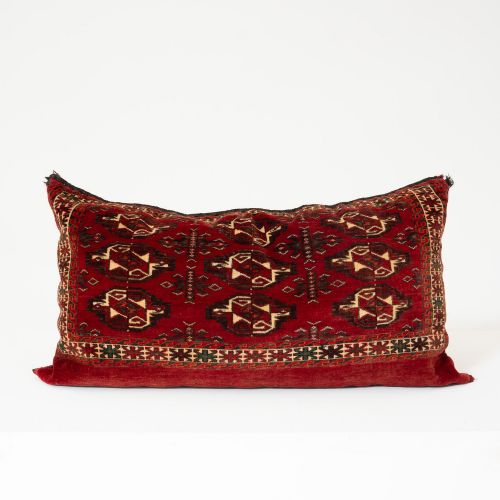
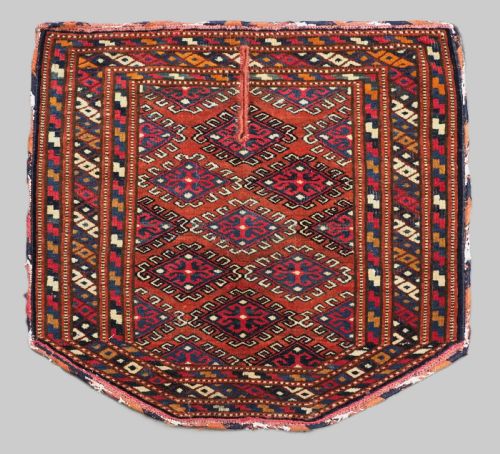
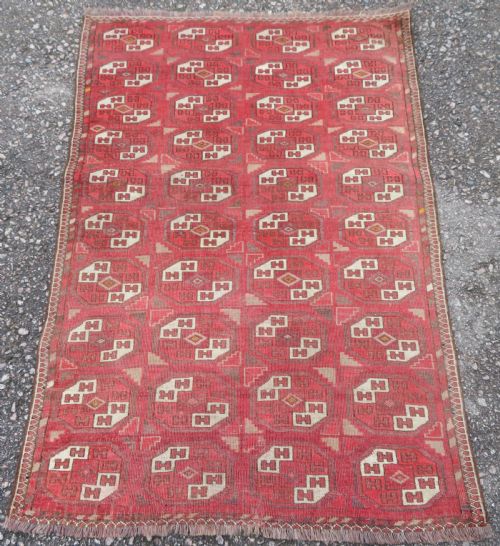
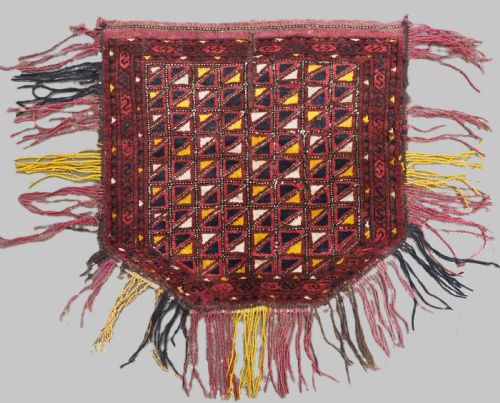
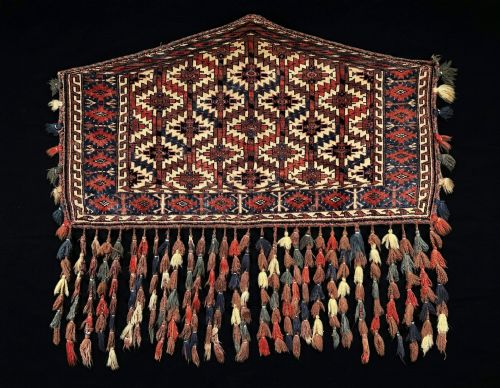
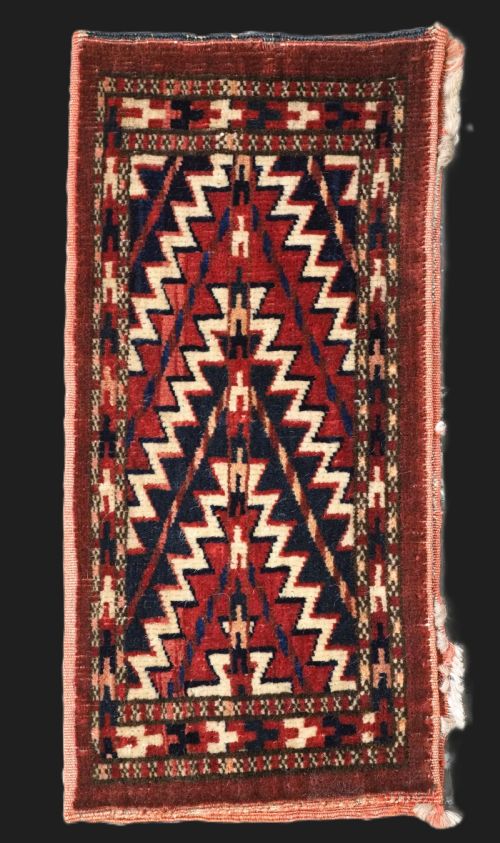
A geometric turkmen weave encompasses a diverse category of tribal artefacts originating from the steppes and oases of Central Asia, spanning rugs, carpets, and smaller utilitarian hangings. Buyers encounter main carpets alongside specialised domestic items such as asmalyks, torbas, chuvals, and tent door rugs.
The objects derive from specific tribal groups including the Yomut, Ersari, Tekke, Saryk, and Karadashli, each employing distinct structural layouts and primary motifs. Dating primarily from the nineteenth and early twentieth centuries, these pieces reflect the traditional nomadic lifestyle and clan heritage of the region.
Materials and Construction
Nomadic weavers utilised hand-spun wool for the pile and foundation structures, often combined with cotton for structural integrity in specific formats. Natural dyes provide the enduring palette, yielding deep madder reds, browns, and contrasting ivory grounds.
Techniques range from standard pile knots to flatweave constructions like soumak and kilim, particularly evident in utilitarian bags and banded rugs. The integration of original tassels and long kilim ends demonstrates traditional finishing methods.
Geometric Turkmen Weave Retail Price Guide 2026
Typical asking prices for geometric turkmen weave among the pieces listed under this phrase on Sellingantiques today, from the lower quarter to the upper quarter. They describe what is for sale here now, not the wider market.
Some yurt bands stretch to fifty feet in length, proving that nomads took interior decorating very seriously.
Assessing the Pieces
Quality rests upon the precision of the geometric layout, the saturation and clarity of the natural dyes, and the fineness of the knotting or weave. Pieces displaying crisp rendering of primary guls and balanced proportions demonstrate superior workshop or tribal execution.
Condition and completeness also govern the standing of a textile, with surviving fringe details, original tassel attachments, and intact plain weave backs contributing to historical integrity. The depth of the wool pile and the structural tightness of the foundation further distinguish standard domestic pieces from exceptional examples.
The Geometric Turkmen Weave Glossary
- Asmalyk
- A traditional pentagonal trapping produced by Yomut and other tribes, historically mounted on the flanks of a wedding camel.
- Torba
- A small wall-hanging bag utilised within the yurt for storage, typically featuring a prominent face design.
- Chuval
- A large tent bag employed for storing household goods and bedding inside nomadic dwellings.
- Gul
- A primary repeating medallion or motif utilised across Turkmen carpets to identify specific tribal groups.
- Soumak
- A flatweave technique involving wrapping supplementary weft threads over the warp to create a textured, durable surface.
Geometric Turkmen Weave: Frequently Asked Questions
What is a geometric turkmen weave?
These items are traditional woolen textiles produced by nomadic and tribal groups across Central Asia, featuring repeating geometric motifs and characteristic guls.
They encompass large main carpets, utilitarian tent bags, and decorative wedding trappings made primarily during the nineteenth and early twentieth centuries.
How were these rugs used originally?
Nomadic families utilised these textiles for domestic storage, floor coverings, and ceremonial display inside portable dwellings called yurts.
Specialised pieces like asmalyks served as camel trappings during wedding processions, while bags held household provisions and bedding.
How should I care for an antique wool textile?
Protect antique wool carpets and hangings from direct sunlight to preserve the stability of natural dyes over extended periods.
Regular gentle vacuuming without a rotating brush maintains the pile, while professional textile conservators should handle cleaning.