




Tribal Camel Trapping
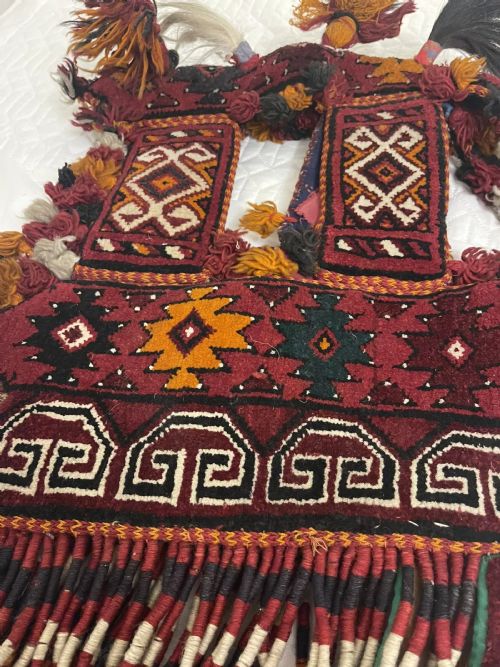
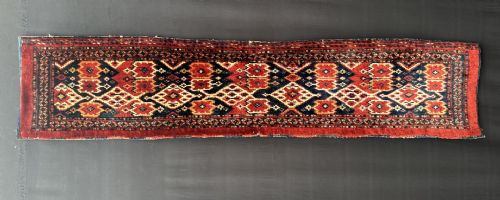
These tribal camel trapping pieces are genuine nomadic weavings of striking geometry, offering rich textile history for your walls.
Tribal Camel Trapping
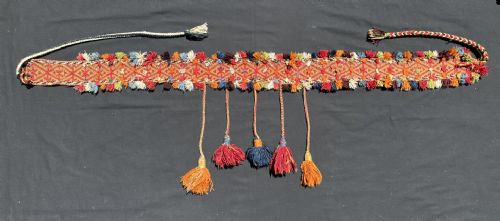
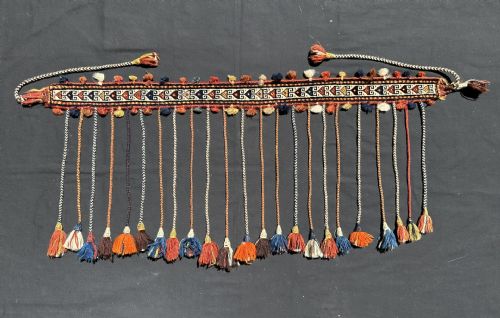
A tribal camel trapping represents nomadic weaving artistry from Central Asia and Persia, created by groups such as the Yomut, Ersari, Saryk, and Qashqa'i tribes. These textiles served functional roles during tribal migrations and wedding ceremonies, adorning animals with traditional tribal designs.
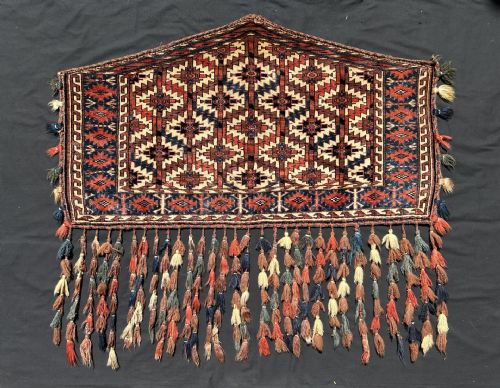
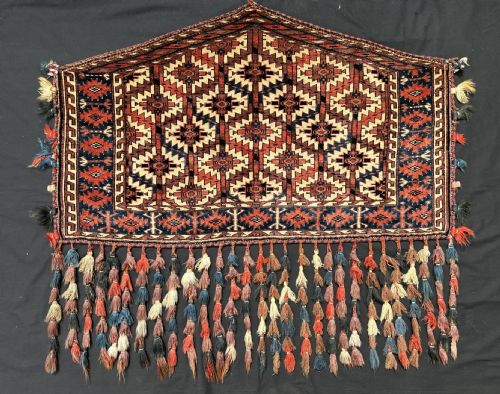
You will most commonly encounter asmalyks, torbas, and dizlyks dating from the nineteenth century, particularly around eighteen seventy to nineteen hundred. These pieces range from pentagonal asmalyks used as wedding trappings to smaller wall hangings and bag faces.
The regional origins span the Trans-Caspian steppes, the Middle Amu Darya region, and the Fars province of south-west Persia. Each piece carries the distinct visual vocabulary of its specific nomadic group.
How they were made
Weavers utilised wool foundations combined with natural dyes to create durable, rich surfaces designed to withstand nomadic life. Cotton and silk highlights frequently appear in specific nineteenth-century examples to accentuate particular motifs and provide textural contrast.
Pile techniques and embroidery methods define the construction of these trappings, paired with supplementary weft work. Tassels and intricate borders complete the traditional structure of these ceremonial textiles.
Listings span eighteen fifty to nineteen hundred, featuring wool, cotton, and silk materials across Turkmen, Qashqai, and Persian tribal traditions.
What varies in quality
The crispness of the tribal design and the depth of the natural dye palette separate standard examples from superior ones. Finely executed gul patterns and well-balanced proportions indicate skilled weaving workshops or master nomadic artisans.
The survival of original pile, silk highlights, and attached tassels greatly influences the integrity of the piece. Superior examples maintain structural clarity alongside vibrant colour saturation across the wool surface.
The Tribal Camel Trapping Glossary
- Asmalyk
- A pentagonal trapping traditionally hung on the flanks of a bride's camel during Turkmen wedding processions. These pieces often feature elaborate geometric guls and rich pile.
- Torba
- A small storage bag used within the yurt, featuring a patterned face and plain back. These items display distinctive tribal motifs unique to specific weaving groups.
- Gul
- A medallion motif repeated across Turkmen carpets and trappings. Each design often identifies the specific tribe or clan that produced the textile.
- Dizlyk
- A knee-cover trapping placed on the legs of a ceremonial camel. These form part of the comprehensive wedding attire alongside neck dress garments.
- Natural Dyes
- Organic colourants derived from plants and minerals used to dye wool before weaving. These materials produce the varied hues seen across nineteenth-century nomadic textiles.
Tribal Camel Trapping: Frequently Asked Questions
How were these trappings used?
Nomadic tribes utilised these textiles to adorn camels during important ceremonies, particularly wedding processions across the steppes.
Families also used related torbas inside dwellings for storage and domestic decoration.
How do I hang a textile?
Wall hangings require careful mounting methods that distribute the weight evenly across the wool foundation without damaging the fabric.
Professional framing or specialised sleeve mounting helps preserve the structural integrity of older pieces.
How can I tell the tribes apart?
Different tribal groups utilised distinct gul patterns, colour palettes, and trapping shapes to mark their identity.
For example, Yomut asmalyks display specific pentagonal forms while Ersari torbas feature unique embroidered details.