





Turkmen Storage Bag
A genuine turkmen storage bag brings the rich textile heritage of Central Asian nomads directly into a modern interior.
Turkmen Storage Bag
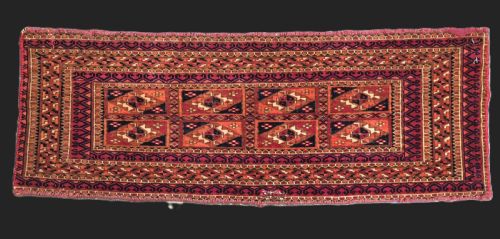
A turkmen storage bag represents the pinnacle of nomadic textile artistry, created by tribes across Central Asia for practical utility within the yurt. These textiles encompass specific functional forms including large tent bags, smaller wall pouches, and specialised spindle containers.
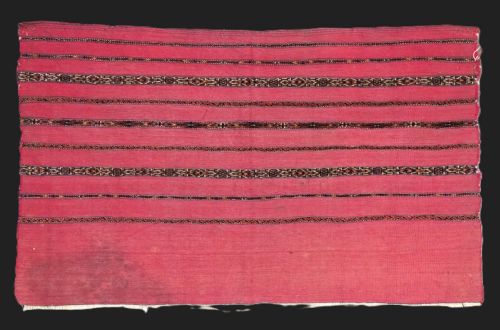
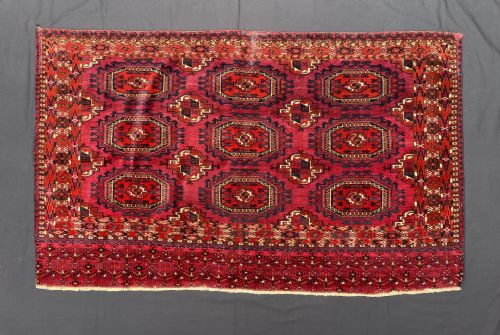
The pieces available on this page most commonly take the form of chuval faces, torbas, and mafrash items originating from tribal groups such as the Tekke, Yomut, and Ersari. Buyers encounter both complete pieces retaining their plain weave backs and individual bag faces designed for display.
Originating predominantly from the nineteenth and early twentieth centuries, these woven artefacts reflect the distinct cultural aesthetics of the Trans-Caspian steppes and surrounding oasis regions.
How They Were Made
Nomadic weavers constructed each turkmen storage bag using hand-spun wool for the foundational pile and structural elements, frequently incorporating cotton and silk highlights for contrast.
Natural dyes provided the deep reds, madder tones, and secondary hues that define the palette, fixed through traditional mordant techniques by tribal artisans.
The construction combined dense pile knotting on the primary display face with durable flatweave techniques on the reverse and utility backs.
Several survival bags still retain their original hanging loops, ready to resume duty on a tent wall after a century.
What Varies in Quality
Knot density and structural tightness dictate the fineness of the weave, separating standard utility items from exceptionally meticulous tribal commissions.
The depth and saturation of natural dyework create visual resonance, where complex abrashe and varied dye batches elevate the artistic merit.
Survival of complete structural integrity, including original plain weave backs, hanging loops, and untouched selvedges, distinguishes superior examples.
The Turkmen Storage Bag Glossary
- Chuval
- A large tent storage bag used by nomadic tribes for bedding and household goods. These rectangular pieces feature dense wool pile and traditional tribal motifs.
- Torba
- A smaller storage bag designed for hanging inside the yurt. They often display intricate gul patterns across the primary face.
- Gul
- A repeating medallion motif associated with specific Turkmen tribes and clans. These primary design elements identify the regional origin of the weaving.
- Mafrash
- A smaller box-shaped storage container or bag face utilised for nomadic transport and organisation. They frequently employ banded flatweave designs.
- Igsalyk
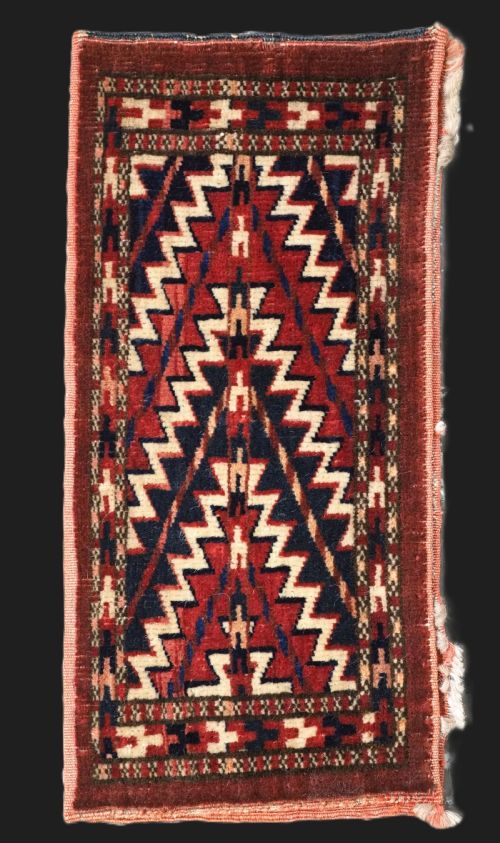
- A specialised spindle bag created to hold spinning tools and fibre. These narrow formats reflect the domestic tasks of nomadic women.
Turkmen Storage Bag: Frequently Asked Questions
How were these bags used originally?
Nomadic families utilised these containers inside circular tents to organise bedding, clothing, and spinning equipment. They hung from lattice walls or stacked neatly to maximise interior space.
The sturdy construction protected contents from dust and dampness while adding warmth and decoration to the living environment.
How do I display a bag face at home?
Bag faces and complete storage sacks mount easily onto walls using custom sleeves or subtle display clips that distribute weight evenly across the wool foundation. They also function effectively as table covers or small floor rugs in low-traffic areas.
Protecting the textile from direct, harsh sunlight preserves the natural wool pile and traditional dyed hues over time.
How do I identify different tribal styles?
Tribal attribution relies primarily on the structural gul motifs, colour palettes, and weave characteristics unique to groups like the Tekke, Yomut, and Ersari. Each group utilised specific geometric arrangements and secondary filler ornaments.
Examining the border designs and structural backing materials provides further clues regarding the specific regional origin on the steppes.