






Nomadic Woven Wall Art
When you search for nomadic woven wall art, you are looking at functional tribal textiles repurposed to hang in modern interiors.
Nomadic Woven Wall Art
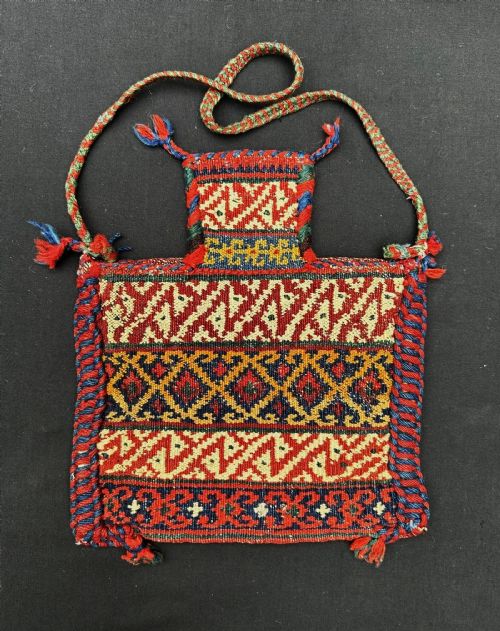
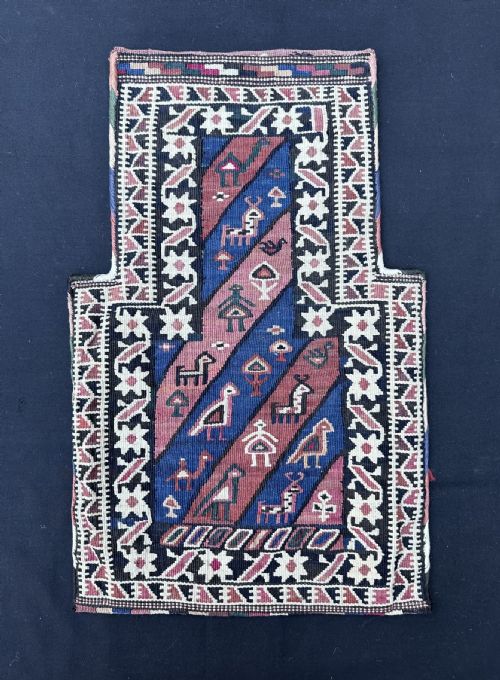
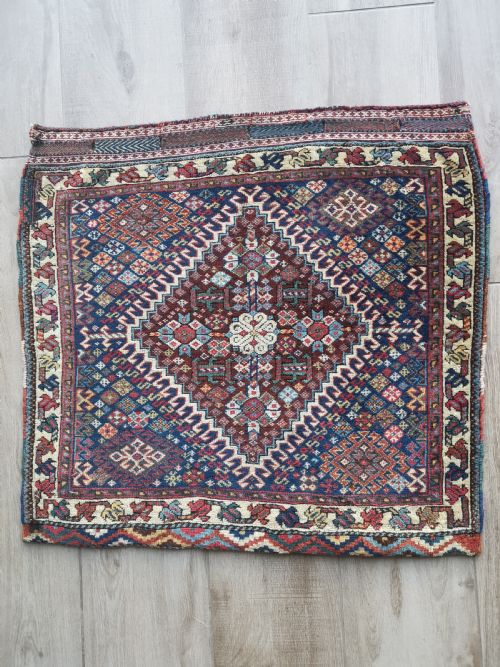
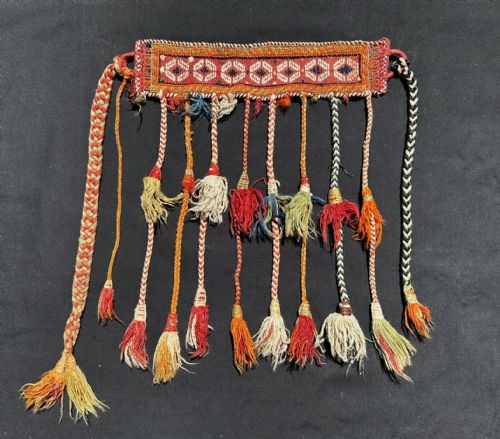
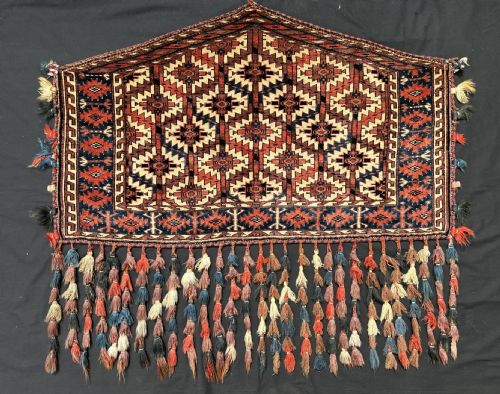
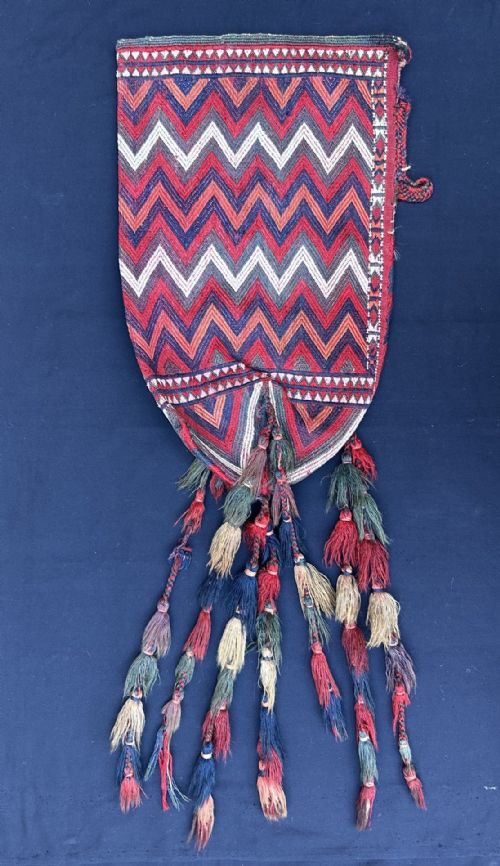
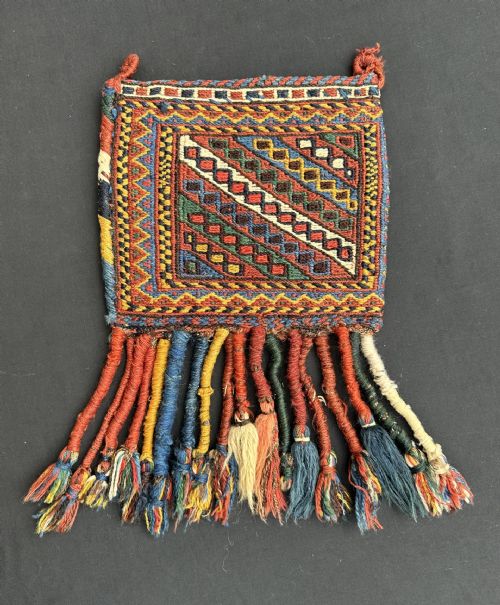
On this page, you will most frequently meet pieces originating from Turkmen tribes such as the Yomut and Tekke, alongside Persian nomadic groups including the Qashqai, Afshar, and Bakhtiari. These include torbas, chuvals, and chantehs woven for household storage or animal trappings. Each object reflects the specific weaving traditions and regional palettes of the group that made it.
Materials and Construction
The foundation of these textiles lies in hand-spun wool and natural dyes, often supplemented by goat hair, cotton, and occasional silk highlights. Weavers utilised sheep and goat fleece sheared from their own flocks, spinning the fibres by hand to create durable yarns that accepted plant and mineral colorants. These natural dyes yielded deep reds, indigos, and browns that mellow gracefully over decades of light and handling.
Construction techniques combine pile knotting and various flatweave methods such as tapestry weave and banded designs. The structures are dense and sturdy, designed to withstand the rigours of nomadic migration and camp use. Artisans worked on portable vertical or horizontal looms, incorporating leather, wood, or embroidery details into specific utility bags and tent ornaments.
Listings span the nineteenth and early twentieth centuries, featuring wool, cotton, and natural dyes across Turkmen, Persian, and Caucasian tribal styles.
Judging Quality and Execution
The visual success of these textiles depends heavily on the fineness of the weave and the clarity of the tribal design. Tighter knotting and precise geometric execution separate pieces produced by experienced makers from simpler utilitarian outputs. A balanced composition and a successful distribution of secondary motifs across the field elevate the visual impact when the object is hung.
Material choice and dye selection further define the upper tier of these works. The use of lustrous hand-spun wool combined with a varied and vibrant natural dye palette produces depth that flat chemical colours cannot replicate. Retention of original finishes, such as complete borders, backs, and attachment loops, contributes to the integrity of the piece.
The Nomadic Woven Wall Art Glossary
- Torba
- A small Turkmen wall hanging or storage bag, traditionally used inside a yurt to store household items and personal possessions.
- Chuval
- A large Turkmen tent bag, wider than it is tall, featuring repeating gul motifs across the main field. These are frequently mounted as wall hangings today.
- Asmalyk
- A pentagonal trapping mounted on the flanks of a camel during Turkmen wedding processions. Their distinctive shape makes them sought-after decorative objects.
- Gul
- A repeating primary medallion or octagonal motif characteristic of Turkmen tribal weaving. Different tribes utilised specific gul designs to denote their lineage.
- Chanteh
- A small Persian tribal vanity or carrying bag, often featuring elaborate pile or flatweave faces. They were utilised by nomads for personal items.
- Mafrash
- A rectangular storage sack or bedding bag woven by nomadic tribes such as the Shahsevan and Yomut. They often feature intricate banded flatweave or soumak designs.
Nomadic Woven Wall Art: Frequently Asked Questions
How do I hang a textile safely?
Mounting these flexible objects requires distributing the weight evenly across the top edge. A conservation-grade velcro strip stitched to a cotton sleeve on the reverse allows the piece to hang flat without sustaining puncture damage.
Alternatively, a professional framer can mount the textile behind UV-filtered glass using non-damaging archival methods. This protects the fibres from dust, humidity, and direct sunlight while keeping the weave fully visible.
What is a torba used for?
Historically, a torba served as a utilitarian storage container inside a nomadic tent or yurt. Families used them to store smaller belongings, bedding, or provisions off the earthen floor.
Today, collectors value these bags for their compact proportions and concentrated tribal designs. Hung on a wall, their format translates well to domestic interiors.
How do I identify Yomut weavings?
Yomut Turkmen pieces are typically distinguished by a palette dominated by rich madder reds and brownish-purple tones. Their design repertoire often includes hooked guls, diamond lattice patterns, and plainweave ends.
Examining the structure reveals warp threads and handle specific to the Trans-Caspian steppes. These traits separate Yomut work from neighbouring Tekke or Ersari productions.
Can I clean these antique textiles?
Routine maintenance requires only gentle surface dust removal using a soft brush or low-suction vacuum with a mesh screen. Vigorous shaking or beating can damage aged wool and brittle foundation threads.
Wet cleaning should be left strictly to professional textile conservators who understand natural dyes. Improper washing can cause fugitive dyes to bleed or weaken the historical wool fibres.