
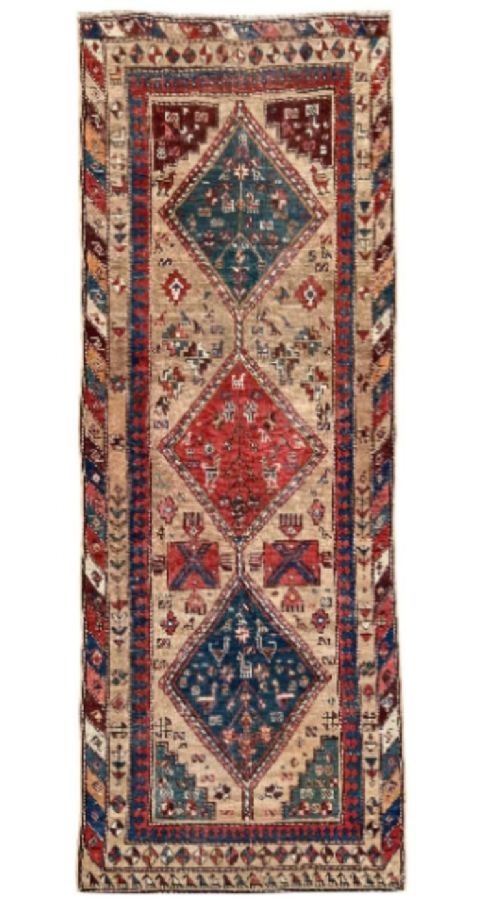
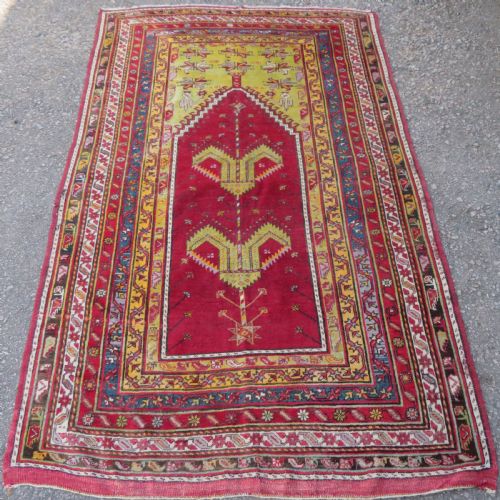
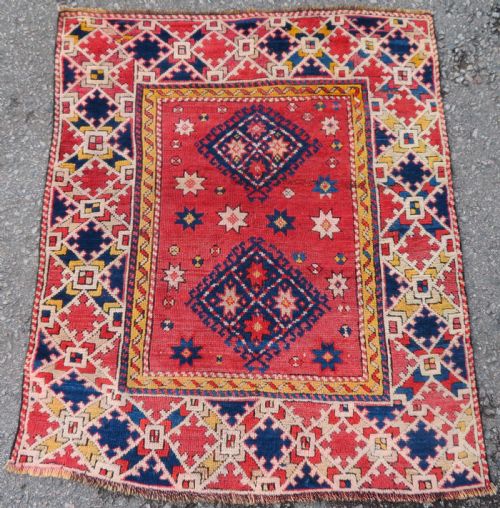
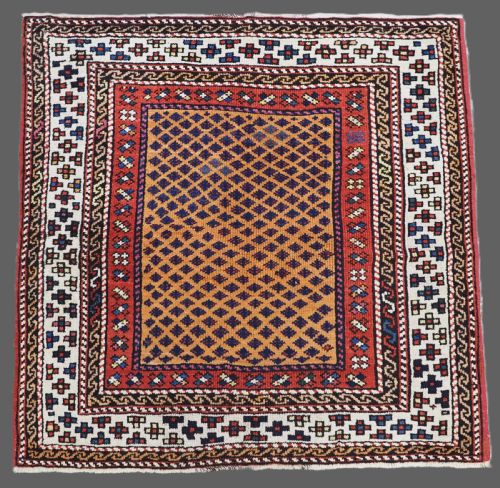
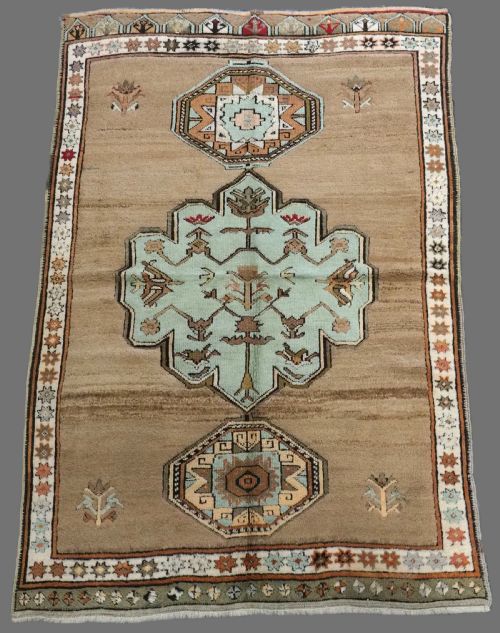
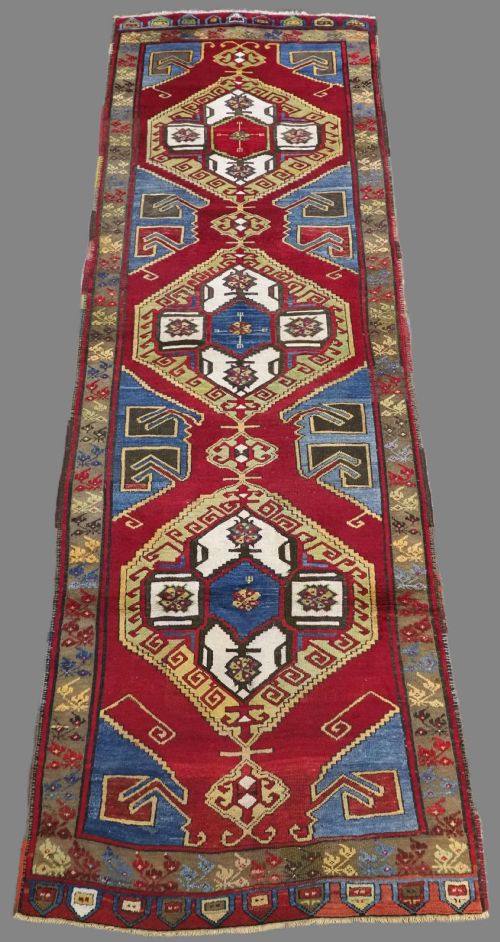
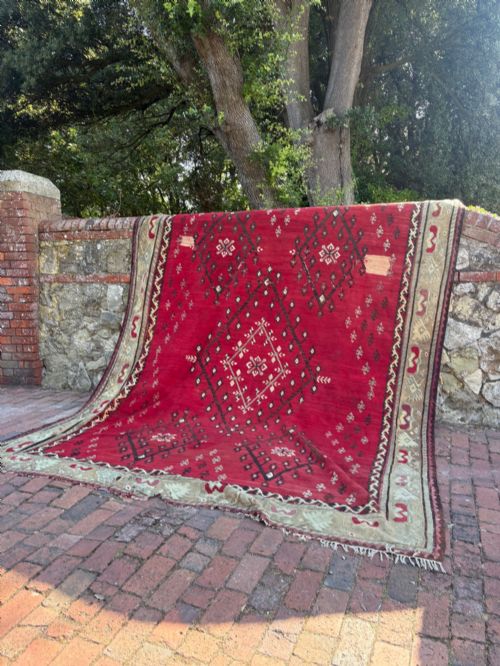

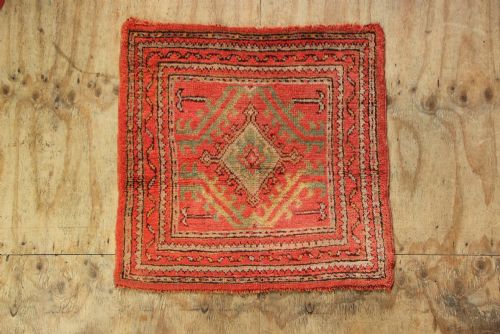
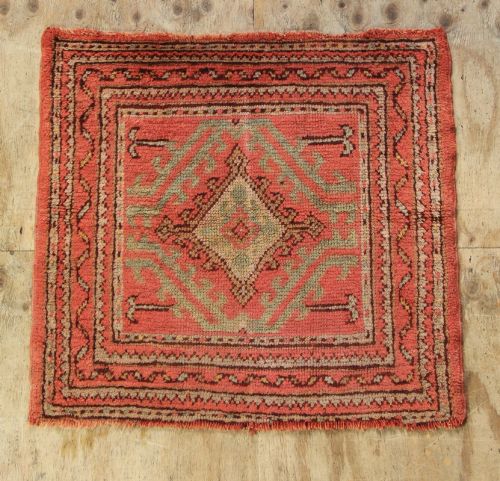


Geometric Turkish Rug
A geometric turkish rug brings honest village patterns and warm wool textures straight into modern interiors.
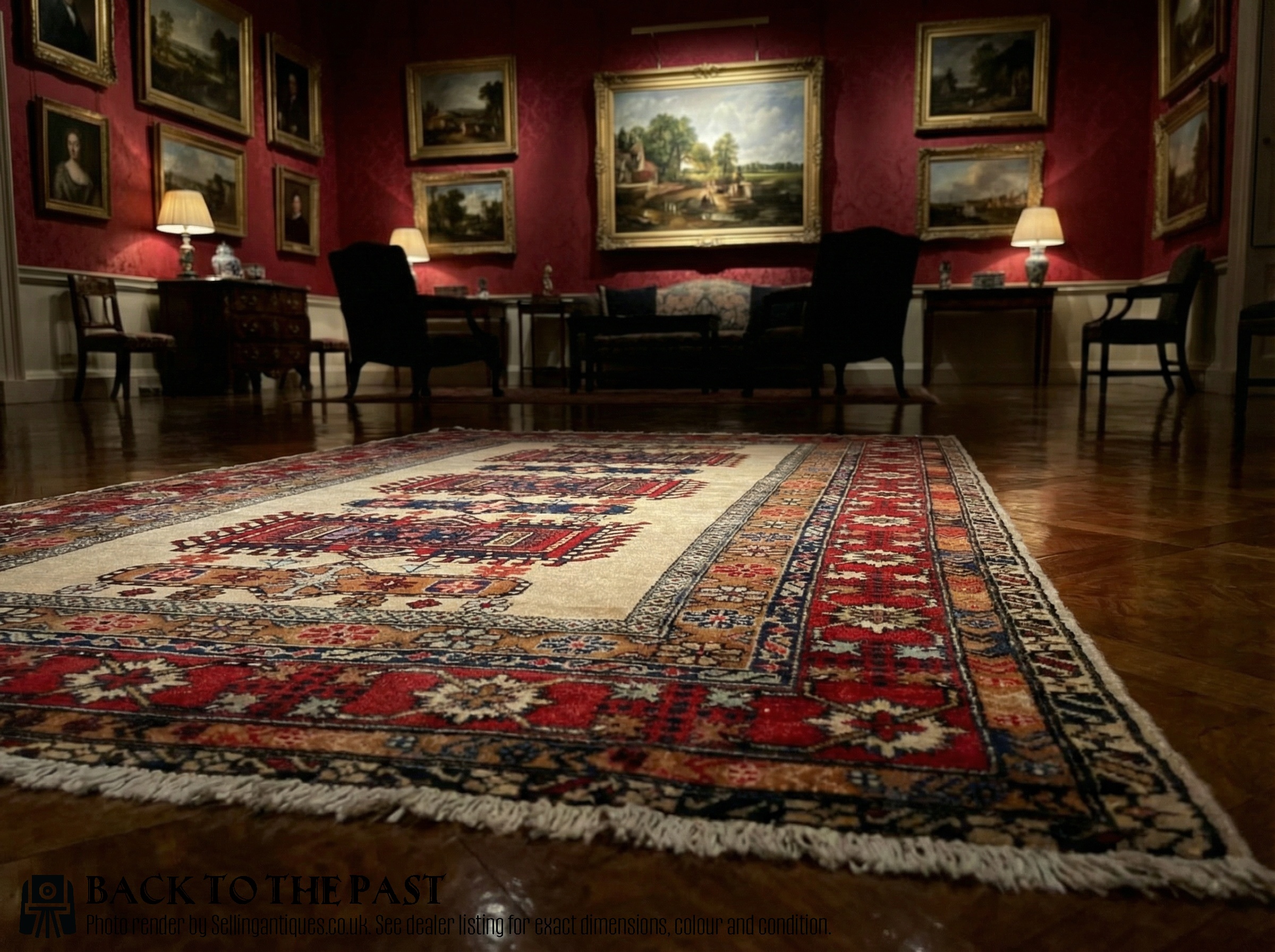
Geometric Turkish Rug
When someone searches for a geometric turkish rug, they are looking at hand-knotted and flatwoven textiles originating from Anatolia. These pieces span from the nineteenth century through the early decades of the twentieth century, encompassing regional village and tribal styles.
The inventory on this page ranges from large carpets and long runners down to square formats, mats, prayer rugs, and small cushions. Buyers most frequently encounter formats tied to traditional weaving centres such as Oushak, Bergama, Konya, and Kirsehir.
Village weavers constructed these floor coverings for domestic use rather than export, resulting in honest tribal designs and direct compositions. Pieces vary from heavy pile carpets to flatwoven kilims and half-kilim runners.
Materials and Construction
Weavers relied principally on wool, cotton, and occasional camel wool for the pile and foundation of these textiles. Much of this material was hand-spun, producing subtle variations in texture and yarn thickness across the surface of the rug.
Makers utilised traditional knotting and flatweaving techniques, constructing carpets and runners that were built to endure heavy daily domestic life. Natural dye traditions governed the palette, resulting in softer tones that mellow gracefully over decades.
Object types recorded here include full-size carpets, runners, prayer formats, square mats, and practical cushion covers.
Defining Quality
Quality in these textiles rests in the handling of the wool, the clarity of the Anatolian tribal motifs, and the integrity of the weave. Finer pieces demonstrate careful control over natural dyes and balanced proportions across the field and borders.
The standard of the wool preparation and the precision of the geometric layout separate standard village pieces from finer examples. Uniformity in hand-spun yarn and well-preserved borders elevate a textile from a simple floor covering to a collector piece.
The Geometric Turkish Rug Glossary
- Anatolian
- Pertaining to the historic region of Anatolia, which forms the Asian part of Turkey. This term covers the broad geographical origin of these village and tribal rugs.
- Kilim
- A flatwoven carpet or rug produced without a pile. These pieces are tightly woven using a slit-weave technique.
- Yastic
- A small Turkish cushion or pillow cover traditionally used on low seating. These examples often preserve fragments of older carpet designs.
- Prayer rug
- A textile featuring a Mihrab design indicating the direction of Mecca. These formats were utilised for daily religious observance.
- Camel wool
- Unbleached wool taken from camels, utilised in the field or highlights of specific regional rugs. It provides a distinct soft brown or golden tone.
Geometric Turkish Rug: Frequently Asked Questions
How do I clean a vintage rug?
Gentle surface brushing and professional specialist washing are recommended for these antique textiles. Avoid harsh chemical detergents that can strip natural dyes from the wool.
Regular light vacuuming without a rotating power brush helps keep dust from settling deep into the hand-knotted pile.
Where were these rugs made?
These pieces originated in various villages, towns, and nomadic camps across Anatolia. Specific weaving regions include Oushak, Bergama, Konya, and Kirsehir.
Each district developed distinct geometric vocabularies and colour palettes over generations of local tradition.
Can I use runners in hallways?
Long runners and narrow formats suit high-traffic hallways and corridors when paired with an appropriate non-slip underlay. The durable wool construction handles everyday walking well.
Rotating the runner periodically ensures even wear across the length of the piece.
What does camel wool look like?
Camel wool provides a soft, warm, unbleached background colour that ranges from pale tan to rich golden brown. It adds a natural warmth to the field of the rug.
Weavers valued it for its durability and pleasing natural shade without requiring dyeing.
How are prayer rugs different?
Prayer rugs feature a distinctive arched niche, known as a mihrab, at one end of the design. This architectural motif directed the user during daily prayers.
They tend to be smaller in format compared to room-size carpets and long runners.