
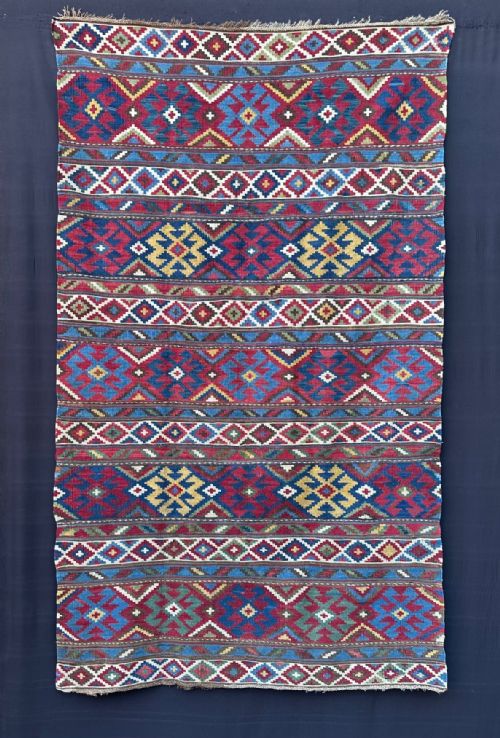
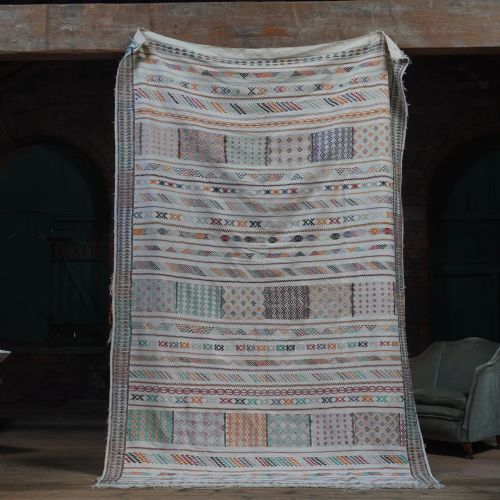
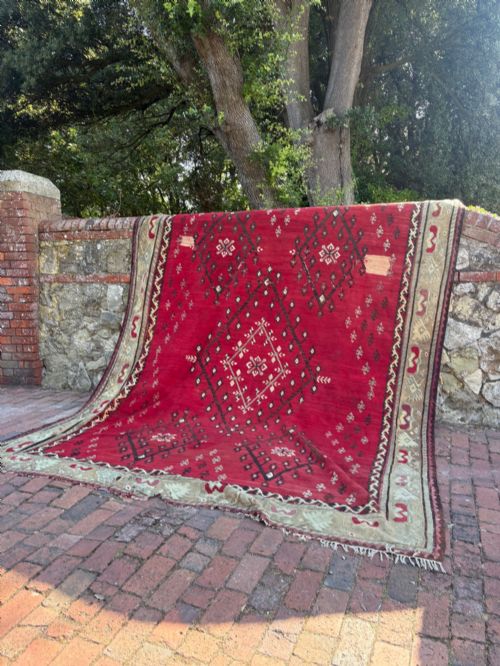
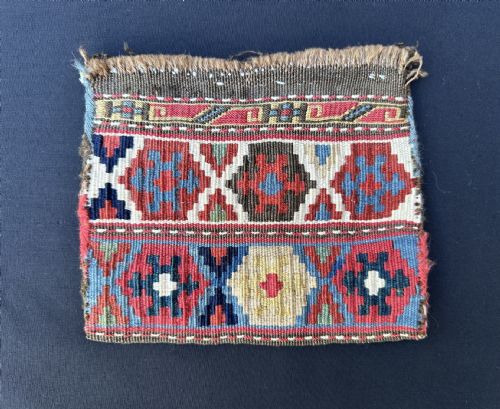



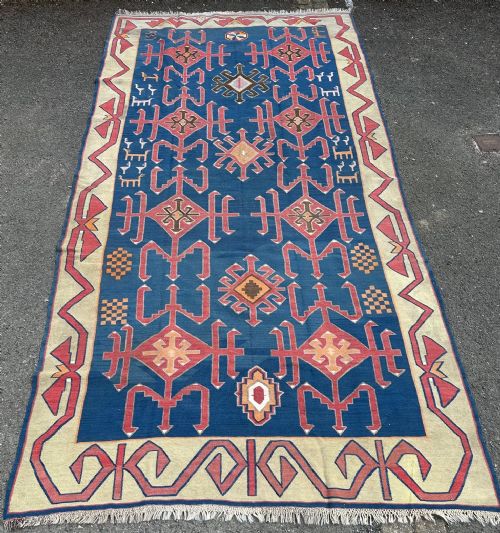


Geometric Tribal Flatweave Rug
A geometric tribal flatweave rug brings the graphic energy of nomadic weaving into a modern interior.
Geometric Tribal Flatweave Rug
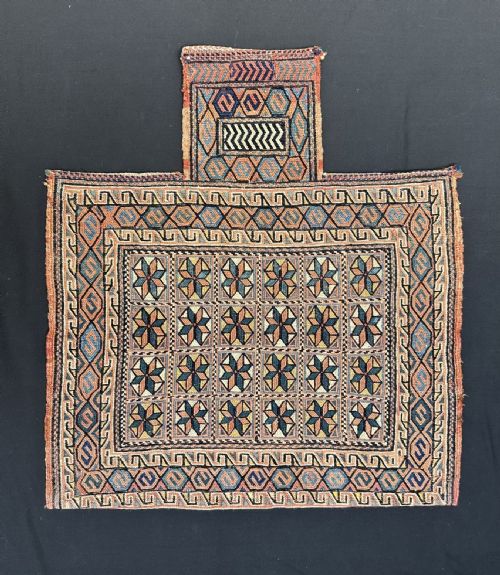
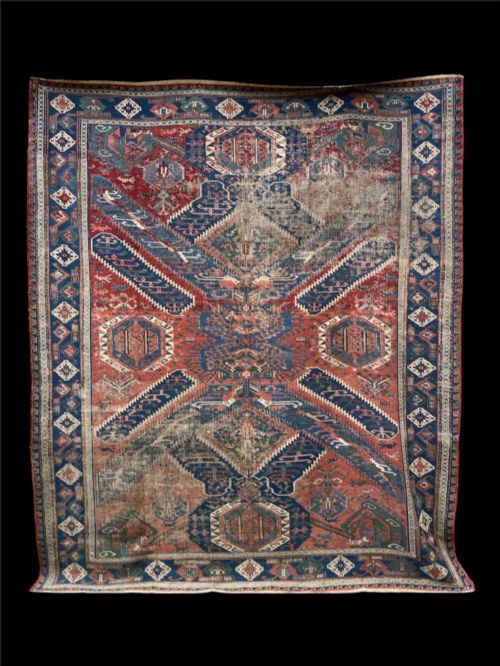
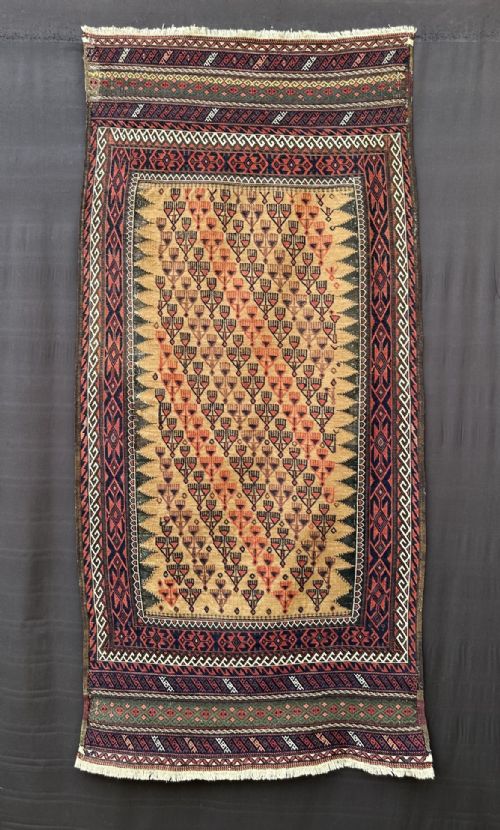
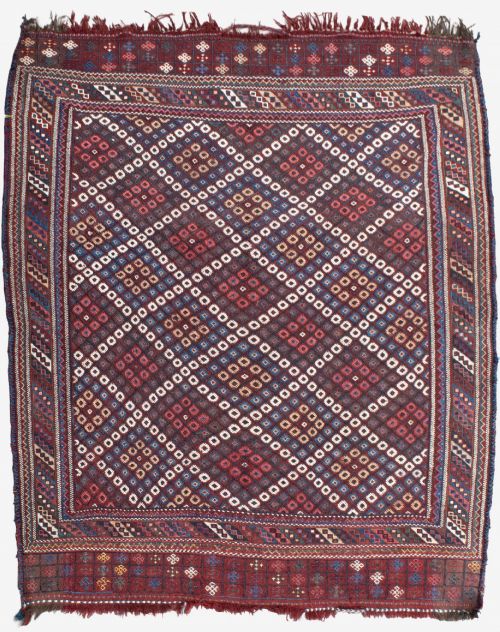
A geometric tribal flatweave rug is an unpiled textile created by nomadic and village weavers across the Caucasus, Persia, Anatolia, and Central Asia. These pieces include utilitarian items such as dining sofreh, saddle-bags, storage bags, and floor coverings woven for daily life rather than commercial exhibition.
Buyers encounter traditional formats ranging from narrow runners and square panels to room-sized carpets and smaller cushions made from repurposed fragments. The prevailing aesthetic relies on bold medallions, banded patterns, and strict geometric arrangements passed down through generations.
How they were made
The primary materials recorded in these pieces are wool and hand-spun wool, often paired with cotton foundations and natural dyes that yield softened patinas over decades of use. Certain Moroccan variants incorporate sabra fibre and cactus silk for distinct texture.
Weavers utilised flatweaving techniques, meaning no pile knots are tied around the warp threads; instead, the pattern is created by tightly packing the coloured weft threads across the warp. Methods such as the Soumac technique introduce supplementary wrap-wefts that provide raised surface detail and structural heft.
Listings incorporate nineteenth-century and early twentieth-century examples originating from Persian, Caucasian, Anatolian, and Central Asian tribal groups.
What varies in quality
Quality in a geometric tribal flatweave rug rests on the tightness of the weave and the precision of the structural execution. Finer weaves allow complex, sharply rendered geometric motifs to maintain clarity across the field.
The depth and harmony of the palette distinguish exceptional weaving, particularly where natural dyes have mellowed unevenly over time to create subtle tonal shifts. Original edge cordings, intact tribal markers, and minimal structural intervention elevate the integrity of a piece.
The Geometric Tribal Flatweave Rug Glossary
- Kilim
- A flatwoven carpet or rug produced by tightly interweaving warp and weft strands without creating a pile. This technique produces a lightweight, reversible textile with sharp geometric boundaries.
- Sofreh
- A tribal spread or cloth used traditionally for dining, kneading bread, or serving food. These flatweaves often display idiosyncratic central medallions and field patterns distinct from standard floor rugs.
- Soumak
- A brocading technique where coloured weft threads are wrapped over and under warp threads in a continuous sequence. This method results in a thick, durable textile with a textured, ribbed face.
- Mafrash
- A large rectangular storage bag or chest panel used by nomadic tribes for bedding and household goods. These pieces are typically woven in sections and later assembled into robust containers.
- Warp
- The stationary lengthwise threads stretched tightly on a loom that form the structural foundation of the textile. All weft threads and decorative elements are built upon this supporting grid.
Geometric Tribal Flatweave Rug: Frequently Asked Questions
How were tribal flatweaves used originally?
Nomadic communities utilised these flatweaves for practical domestic functions, including floor coverings, tent dividers, blankets, and storage sacks for grain or bedding. Dining cloths known as sofreh were laid directly on the ground for meals.
Many items served specific transport needs on animal backs, such as saddle-bags and vanity bags, reflecting a lifestyle where every textile had an active daily purpose.
How do I care for an antique flatweave?
Protect the textile by placing a quality non-slip underlay beneath it to prevent sliding and reduce friction against the floorboards. Vacuum gently with the suction attachment only, avoiding rotating brush bars that can catch aged wool.
Rotate the rug periodically to ensure even exposure to foot traffic and sunlight. Professional antique textile cleaning is recommended for deep maintenance rather than domestic washing.
What is the difference between a kilim and a soumak?
A kilim is constructed using a slit-tapestry weave where weft threads turn back at the boundary of each colour block, occasionally leaving small slits in the fabric. This creates a flat, identical appearance on both sides.
A soumak involves wrapping supplementary wefts around the warp threads, producing a textured, raised pattern on the face and leaving loose floating threads on the reverse.
How can I tell which region a rug comes from?
Regional attribution relies on the specific combination of colour palettes, structural wool preparation, and recurring geometric iconography. Caucasian pieces often favour crisp, primary-coloured geometric medallions, while Persian tribal rugs by groups like the Qashqai or Afshar display earthier tones and organic layouts.
Anatolian and Central Asian flatweaves introduce distinct border systems and tribal signatures that link them directly to specific nomadic confederations.