



Geometric Red Kilim
These geometric red kilim pieces are flatweave tribal textiles bringing rich cultural heritage and striking patterns into modern interiors.
Geometric Red Kilim
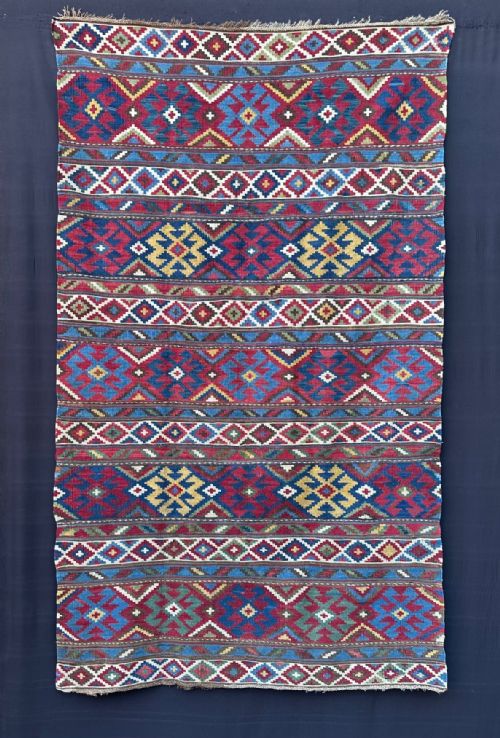
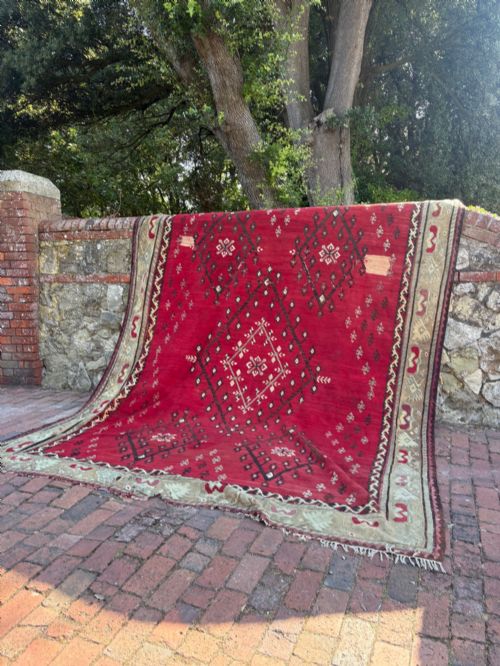
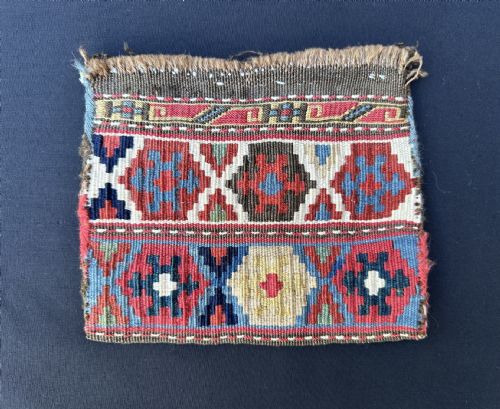
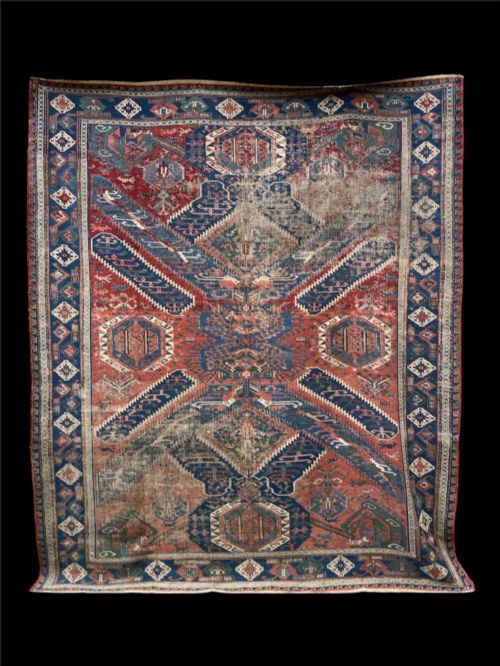
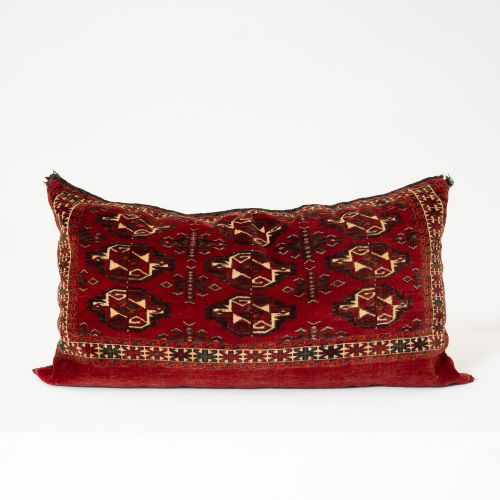
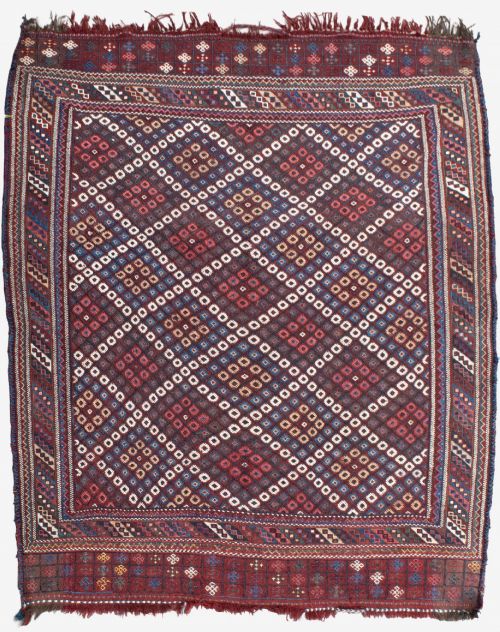
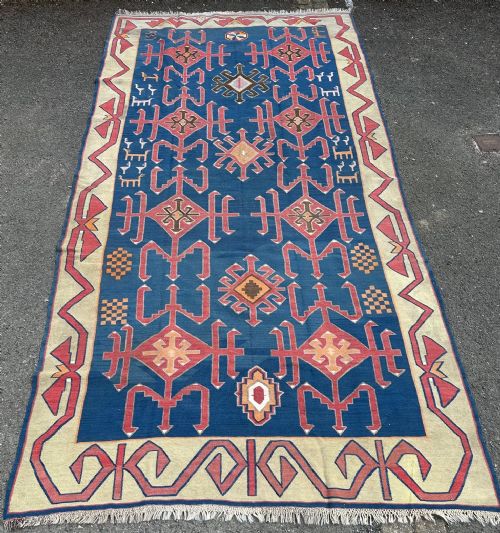
A geometric red kilim encompasses flatweave rugs, runner rugs, and smaller household textiles originating from tribal and nomadic groups across the Caucasus, Persia, Anatolia, and Central Asia. These items range from large carpets and room-sized flatweaves to smaller utilitarian objects such as bread sofreh, storage bags, and cushions.
The pieces appearing on this page date from the mid-nineteenth century through to the early decades of the twentieth century. Buyers encounter regional variations from specific groups including the Shahsevan, Qashqai, Afshar, and Uzbek weavers, each utilising distinct flatweave traditions.
While large kilim rugs and carpets form a substantial part of the selection, smaller panels, bag faces, and cushions also feature prominently. These textiles were woven for daily nomadic or village use rather than export, resulting in authentic, purposeful design.
Materials and construction methods
The construction relies primarily on hand-spun wool for both the warp and the weft threads, sometimes combined with cotton in specific regional structures. Natural dyes provide the characteristic red coloration seen across these flatweaves.
Weavers employed slit-tapery and other flatweave techniques to build sharp, angular geometric motifs without the use of pile knots. This method creates a firm, durable textile with identical patterns visible from both sides.
Listings feature wool, cotton, and natural dyes applied across nineteenth and early twentieth-century tribal rugs and cushions.
Determining quality in flatweave textiles
Quality in a geometric red kilim depends on the tightness of the weave and the precision of the geometric design execution. Tighter packing of the weft threads yields a sturdier structure that withstands floor use over generations.
The depth and nuance of the natural dye palette also separate standard examples from finer pieces. Rich, saturated red tones achieved through traditional dyeing methods contribute significantly to the visual weight and desirability of a textile.
The Geometric Red Kilim Glossary
- Kilim
- A flatwoven carpet or rug produced without a pile by tightly interweaving warp and weft strands. This technique results in a lightweight, reversible textile with distinct geometric patterns.
- Sofreh
- A utilitarian woven cloth traditionally used for spreading meals or preparing bread dough. These textiles often feature narrow formats and bold symbolic designs.
- Sumak
- A supplementary weft-wrapping technique that produces a textured surface resembling embroidery on the face of the textile. It adds structural weight and distinct patterning to Caucasian and Persian pieces.
- Warp
- The stationary vertical threads stretched across a loom before weaving begins. The weft is passed alternately over and under these foundational threads.
- Weft
- The horizontal threads passed through the warp to create the fabric and pattern. In kilims, these coloured threads are tightly packed to conceal the vertical warp.
Geometric Red Kilim: Frequently Asked Questions
What is a kilim?
A kilim is a flatwoven textile made without pile knots by interweaving horizontal and vertical threads. These pieces were traditionally produced by nomadic and village tribes for utility, floor covering, and household storage.
Unlike knotted carpets, kilims have a flat surface and are typically reversible. Their construction allows for sharp, geometric patterns that reflect the specific cultural motifs of the weaving region.
How were these textiles used?
Nomadic and village communities utilised these flatweaves for everyday practical functions rather than purely decorative display. Items served as floor rugs, eating cloths, grain sacks, and horse covers.
Smaller panels and storage bags functioned as portable containers or saddle components during seasonal migrations. Over time, these functional objects became valued for their artistic and historical merit.
How do I care for an antique flatweave?
Protecting an antique textile involves gentle handling and minimal exposure to direct sunlight, which can fade natural red dyes over time. Regular gentle vacuuming without a rotating brush helps remove embedded dust.
Using a suitable underlay prevents slipping and cushions the flatweave against hard flooring. Professional cleaning tailored to antique wool textiles ensures the longevity of the fibres.
How are regional styles identified?
Regional identification relies on observing the specific combination of geometric motifs, colour palettes, and structural techniques. Different tribal groups, such as the Qashqai or Shahsevan, maintained distinct repertoires of symbols and border designs.
Materials and weave density also offer clues to geographic origin. Comparing the handling of the wool and the specific shades of red helps narrow down the probable provenance.