







Balkan Kilim Rug
These flatwoven floor coverings deliver rich geometric patterns and soft historic dyes directly into modern interiors.
Balkan Kilim Rug
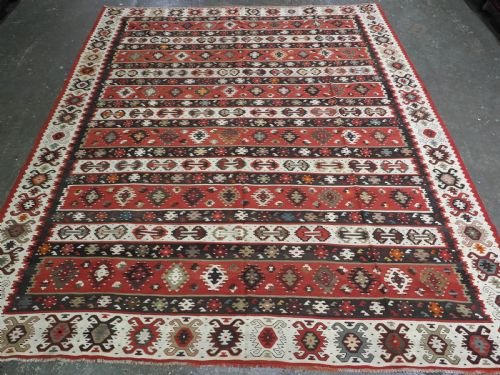
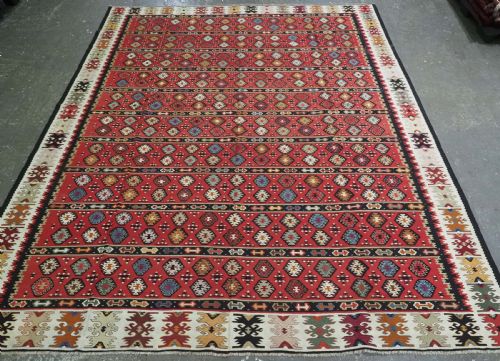
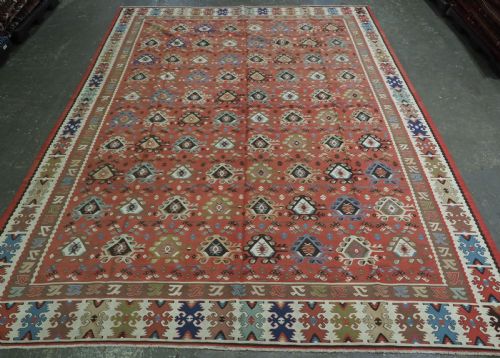
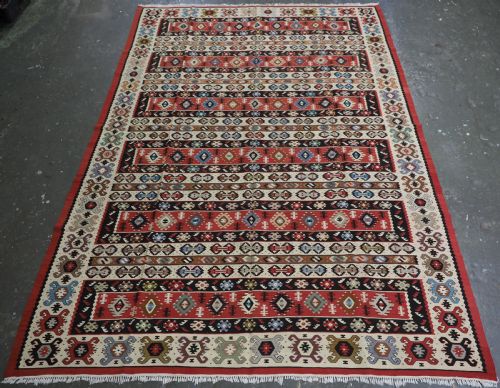
A balkan kilim rug represents a tradition of flatwoven textiles originating from southeastern Europe and the Ottoman borderlands. These pieces encompass regional expressions such as Sarkoy, Pirot, and Thracian styles, often featuring classic banded, flowering tree, or repeat medallion arrangements.
Buyers browsing this selection will frequently encounter examples dating from the late nineteenth century through to the early decades of the twentieth century. These flatweaves include substantial room-sized formats alongside smaller runner dimensions suited for varied domestic spaces.
The aesthetic identity leans heavily on folk art traditions and traditional Anatolian design influences. Makers utilised wool and cotton yarns to construct flat surfaces that lack a pile, making them practical for daily floor placement.
How they were made
Weavers constructed these textiles using traditional slit-tapisserie flatweaving techniques with wool and cotton materials. The warp threads typically consist of sturdy cotton or wool, while the visible pattern is worked in supplementary wool wefts.
Dye methods relied on natural sources to achieve the warm soft colours, pastel shades, and deep reds recorded across the surviving examples. These colour palettes matured gently over decades of exposure to light and wear.
Many historical weavers hid tiny symbolic fertility charms within the border bands of their geometric patterns.
What varies in quality
Quality separates along the complexity of the design layout and the crispness of the woven geometric transitions. Elaborate repeating medallions and scarce lattice motifs require greater skill from the weaver than simple banded arrangements.
The visual harmony of the dye lots and the preservation of the original format boundaries determine the standing of an individual piece. Examples retaining deep, well-balanced tones sit comfortably at the higher end of the spectrum.
The Balkan Kilim Rug Glossary
- Kilim
- A flatwoven textile produced without a pile by tightly interweaving warp and weft strands. This construction method creates a lightweight rug suitable for both floor placement and wall hanging.
- Sarkoy
- A specific regional designation for flatweaves associated with the Balkan and Ottoman trading networks. These pieces frequently display distinctive banded or flowering tree compositions.
- Pirot
- A well-known centre of flatweaving tradition located in the Balkans, historically celebrated for precise geometric ornamentation. Textiles from this origin often show sophisticated repeat medallion layouts.
- Warp
- The stationary vertical threads stretched onto the loom before weaving begins. In these textiles, wool and cotton form the foundational structure that holds the tension.
- Weft
- The horizontal threads passed through the warp to create the visible pattern and colour fields. These wool yarns carry the soft red and pastel tones seen in historic examples.
Balkan Kilim Rug: Frequently Asked Questions
Where were these flatweaves made?
These textiles originate from communities across the Balkan region, including areas associated with Sarkoy, Pirot, and Thracian traditions. Makers blended Ottoman and European folk art motifs into their distinctive flatwoven formats.
Production spanned from the nineteenth century into the early decades of the twentieth century. The specific origins often reflect the broader stylistic exchanges of the Ottoman Balkan territories.
How should I clean my flatweave?
Routine maintenance involves gentle shaking and light vacuuming without a rotating brush roll. This prevents dust accumulation within the tight wool and cotton weave.
Professional textile cleaning remains the safest method for addressing deeper stains or soil. Water saturation and harsh chemical detergents should be avoided to protect historic wool fibres.
Can I use these rugs on stairs?
Their flat construction allows them to adapt well to high-traffic domestic environments when paired with a quality underlay. The lack of a pile prevents the surface from crushing under heavy footsteps.
Larger room-sized formats function best as floor coverings in reception spaces and sitting areas. Runners and banded designs fit effectively into narrower transitional zones.
How do I date a piece?
Dating relies on structural clues, material analysis, and stylistic comparisons with documented folk art examples. Pieces from the eighteen-sixties and eighteen-nineties typically display different dye behaviours compared to those from nineteen-twenty.
Design motifs also offer chronological guidance, as certain lattice and repeat medallion layouts align with specific manufacturing decades. Comparing the wool quality and palette helps narrow the period of origin.