



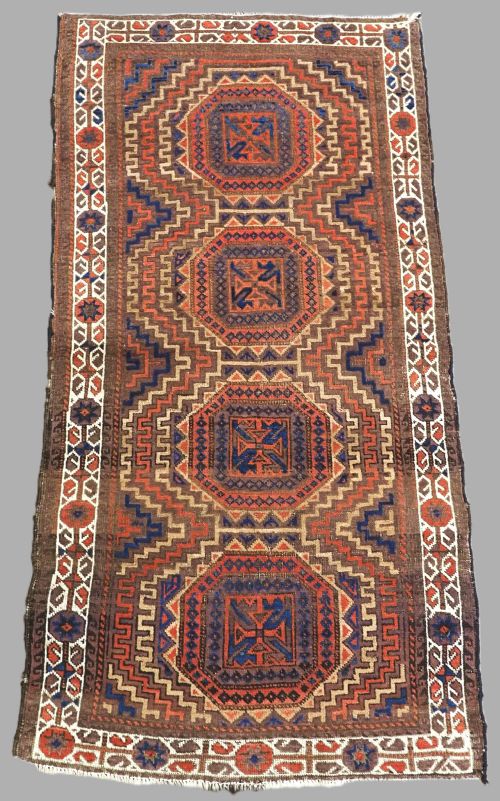
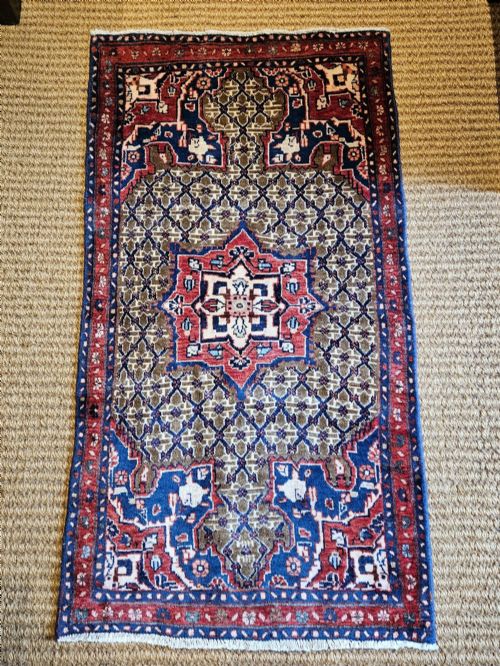
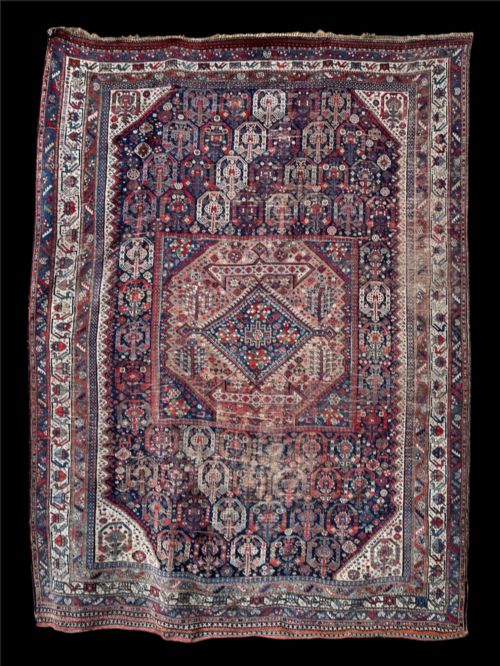
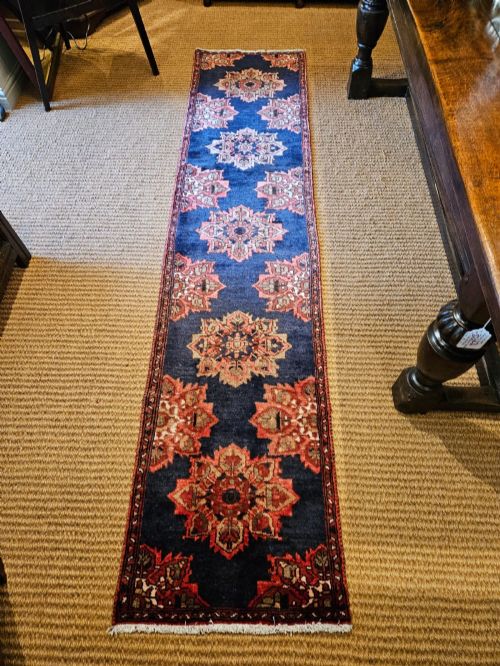
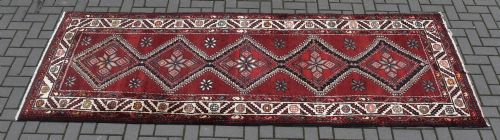

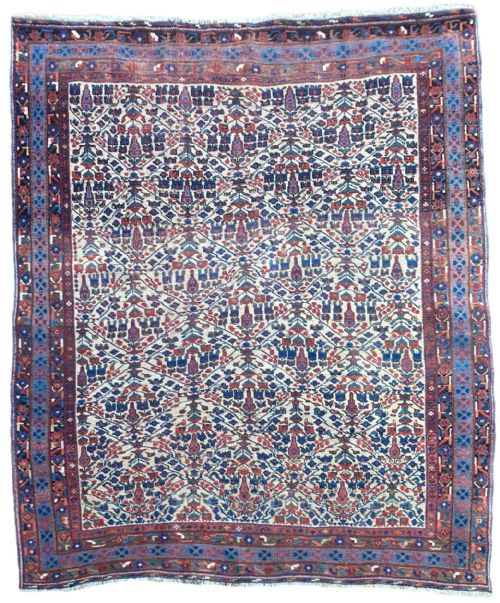
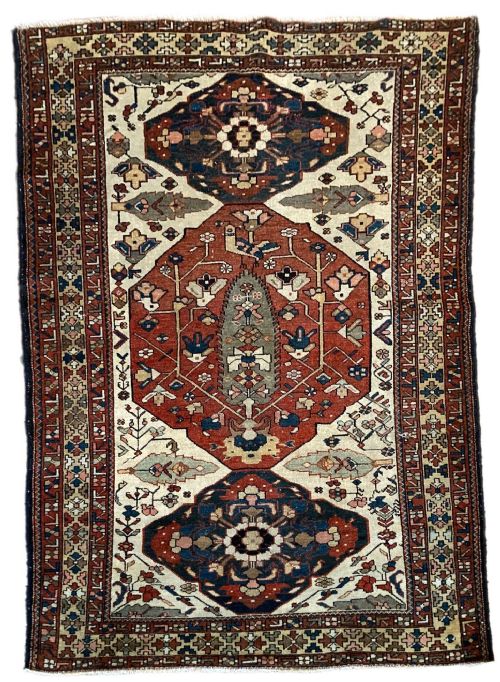

Geometric Persian Floor Runner
A geometric persian floor runner brings grounded pattern and enduring texture to a hallway, formed through traditional weaving traditions spanning from the nineteenth century into the twentieth.
Geometric Persian Floor Runner
A geometric persian floor runner provides a linear format suited to corridors and narrow spaces, drawing upon regional weaving traditions across Persia. These textiles include specific village and tribal formats designed for heavy domestic use over generations.
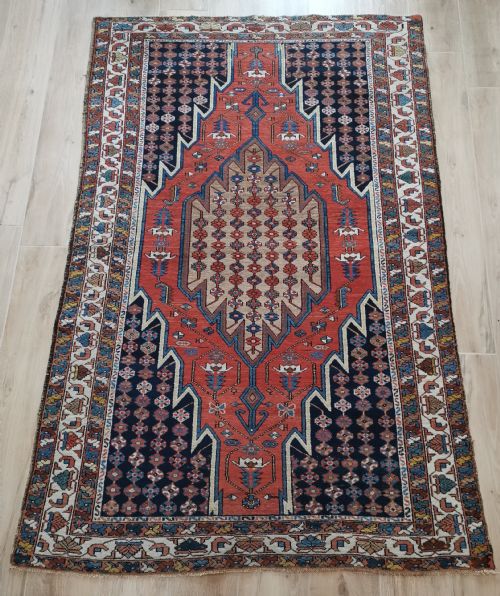
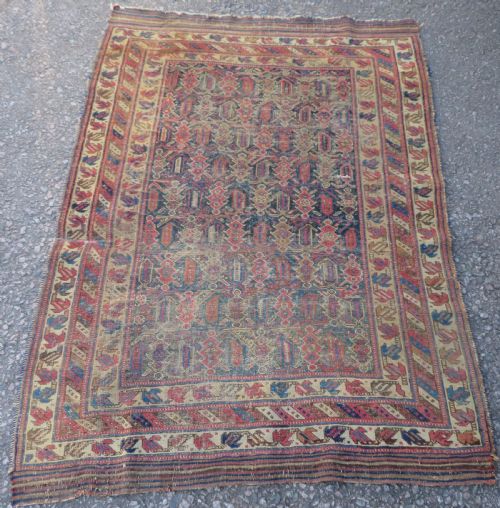
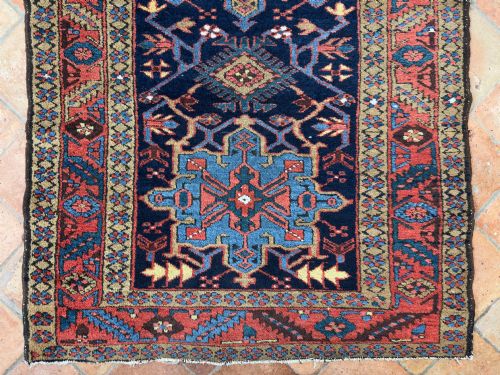
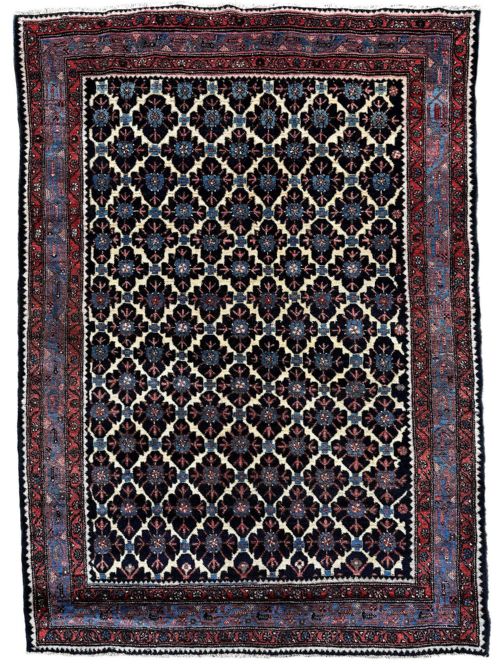
The selections on this page range from nineteenth century examples to pieces made in the 1930s, encompassing styles such as Heriz, Karaja, Hamadan, and Kurdish work. Narrow proportions appear alongside longer carpets adapted to hallway dimensions.
Tribal and village pieces dominate the selection, showing repeat motifs, medallions, and angular field patterns rather than court designs. The visual language relies on rectilinear structures passed down through weaving communities.
Distinctions in quality and execution
Quality in these runners rests upon knot density, the clarity of the rectilinear drawing, and the integrity of the wool pile. Finer knotting permits sharper geometric outlines and more complex field arrangements.
The depth and stability of natural dyes separate standard examples from superior pieces, as botanical colours develop richer patinas over decades of use. The preservation of original borders and selvedges maintains the structural integrity of the runner.
Listings span from the nineteenth century to the 1930s, utilising wool, cotton, and natural dyes across various tribal styles.
The Geometric Persian Floor Runner Glossary
- Runner
- A long, narrow carpet format traditionally utilised in hallways, corridors, and passage spaces.
- Natural Dyes
- Colourants derived from plant and insect sources such as madder and indigo, yielding rich tones that age with character.
- Wool
- The primary animal fibre used for the pile of these carpets, valued for its resilience and lanolin content.
- Medallion
- A central decorative motif placed within the field of the rug, often geometric in tribal weaving.
- Selvedge
- The finished side edges of a rug that protect the structure from fraying and unraveling.
Geometric Persian Floor Runner: Frequently Asked Questions
Where should I place a runner?
These long formats suit hallways, corridors, entryways, and narrow galley spaces where linear flooring needs both warmth and visual weight.
The narrow proportions allow the textile to anchor circulation areas without obstructing doors or furniture placement.
How do I care for an old wool runner?
Regular gentle vacuuming without a beater bar removes trapped dirt from the wool pile while protecting the antique foundation fibres.
Professional specialist cleaning maintains the natural dyes and prevents the textile from accumulating damaging grit.
What is the difference between village and tribal rugs?
Village rugs are typically woven by settled communities in specific districts like Heriz or Hamadan, often featuring structured geometric medallions.
Tribal rugs reflect nomadic or semi-nomadic traditions, displaying spontaneous layouts, earthy palettes, and ancestral symbols.
How do I date an antique runner?
Dating relies on stylistic markers, dye characteristics, structural materials, and the wear patterns visible across the wool pile.
Nineteenth-century examples often display softer vegetable dye palettes and looser hand-spun wool compared to mid-century alternatives.