




Geometric Panel Sideboard
A geometric panel sideboard brings heavy timber and disciplined moulding together, offering robust storage rooted in centuries of English cabinet-making.
Geometric Panel Sideboard
A geometric panel sideboard encompasses substantial timber furniture built for storage and display, appearing most frequently in sturdy oak forms from the seventeenth century onward. You encounter regional Welsh country pieces alongside revival items from the nineteenth and twentieth centuries that echo earlier centuries.
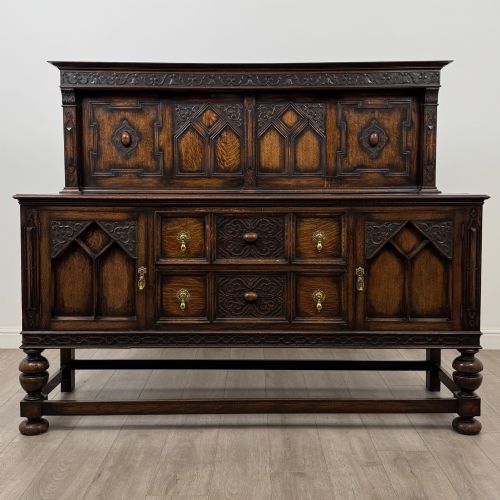
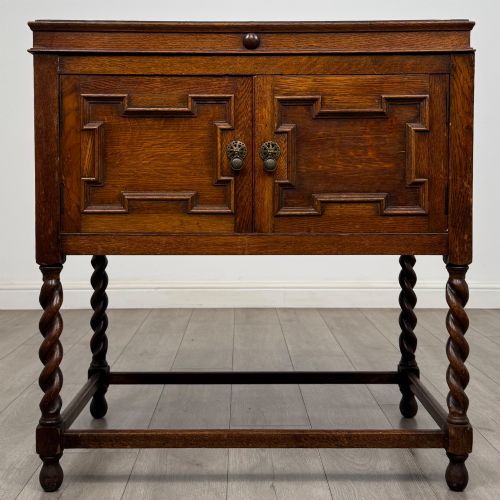
The layout typically combines a low base, cupboard doors, or stacked drawers beneath a serving surface, sometimes rising into tall dresser tops with leaded glass or open shelving. Proportions remain low and horizontal in dresser bases, while revival interpretations stretch upwards with barley-twist supports.
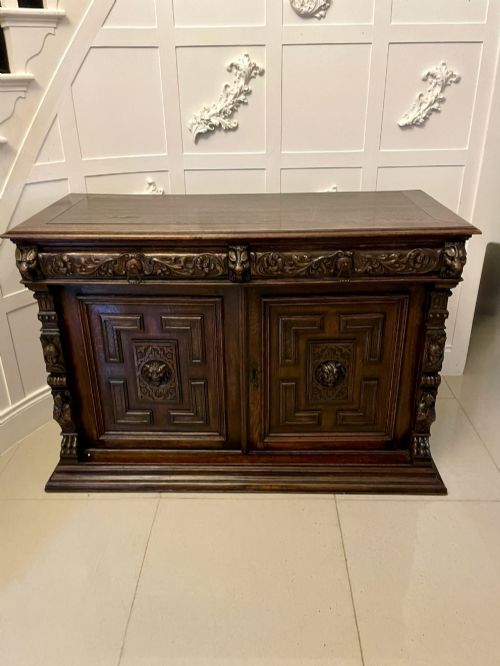
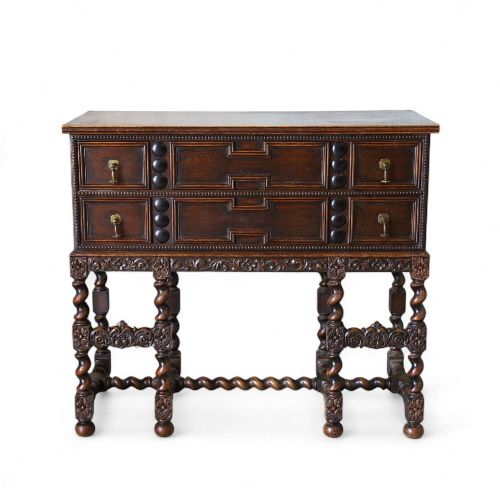
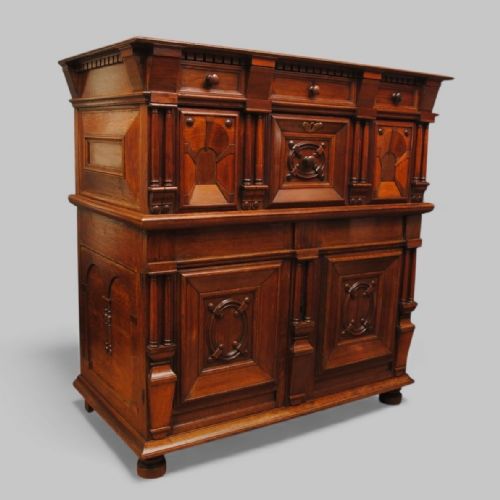
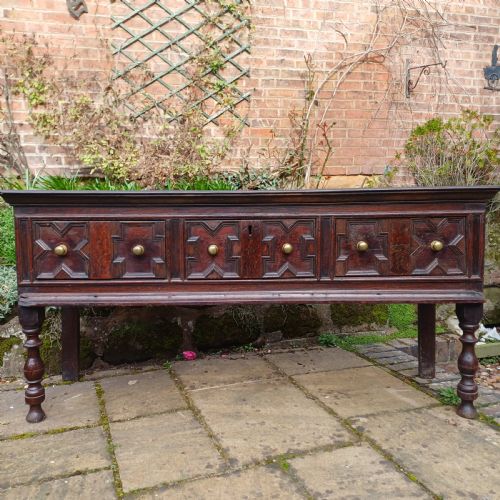
Moulding forms the defining visual feature across these listings, creating raised squares, octagons, and intersecting lines on drawer fronts and cabinet doors. This relief work gives plain timber depth through shadow and line rather than relying solely on figurative carving.
Materials and construction methods
Oak dominates the construction, selected for its strength and heavily grained surface, while fruitwood, walnut, and snakewood appear as contrasting timbers in decorative mouldings and inlaid panels. Painted finishes also occur on older pieces, preserving the surface beneath layers of historic pigment.
Joinery relies on pegged mortise and tenon joints to bear the weight of heavy timber frames, complemented by brass handles, iron hinges, and leaded glass panes in later or adapted cabinet doors. Drawer fronts utilise precision mitres and applied geometric mouldings glued and pinned to the primary board.
Listings span from the late seventeenth century through to 1930s revival pieces, demonstrating enduring demand for heavily moulded oak forms.
Distinctions in build and design
Quality reveals itself in the crispness of the mitred mouldings and the integration of secondary timbers, where finer pieces maintain strict symmetry and harmonious wood selection across every drawer front. Heavy carcase construction with tight joints distinguishes superior workshop production from looser vernacular output.
The depth of the timber patination and the integrity of the original hardware also separate standard examples from exceptional survivals, as uniform surface wear indicates genuine age and careful custodianship over generations.
The Geometric Panel Sideboard Glossary
- Dresser base
- A low wooden storage unit featuring drawers or cupboards beneath a flat top, historically used for food preparation and serving in large kitchens. It forms the foundation for many taller cabinet configurations.
- Jacobean Revival
- A nineteenth and twentieth century design movement that consciously imitates the heavy turned supports, dark oak, and geometric panelling of the early seventeenth century. This style accounts for numerous sideboards on the market today.
- Barley-twist
- A spiral turning technique applied to wooden support columns and table legs, popular in seventeenth century furniture and revived during later historicist periods. It creates a dynamic sense of movement against static rectilinear panels.
- Snakewood
- A dense, heavily mottled tropical hardwood prized for its distinctive dark figuring, utilised in small quantities for decorative inlay and contrasting details on seventeenth century drawer fronts.
- Moulded-front
- A cabinet or drawer face embellished with shaped strips of wood applied in geometric patterns to create surface relief. This technique defines the visual character of seventeenth century case furniture.
Geometric Panel Sideboard: Frequently Asked Questions
What is a geometric panel sideboard?
A geometric panel sideboard is a storage piece defined by raised wooden mouldings arranged in patterns across drawer and cabinet fronts. These designs rely on architectural symmetry and depth rather than pictorial carving.
Most examples are constructed from solid oak and date either to the seventeenth century or subsequent revival periods during the nineteenth and twentieth centuries. They function as robust storage cabinets and serving surfaces in dining areas.
How do I date an oak sideboard?
Dating relies on examining the construction methods, tool marks left on the timber, and the style of the mouldings and hardware. Seventeenth century pieces display hand-riven boards, pegged joints, and vernacular quirks absent in later revivals.
Revival pieces from the Victorian and Edwardian eras often use standardised fixings and machine-cut timber while copying earlier Jacobean or Carolean aesthetics. Comparing the timber patination and drawer construction helps clarify the true period of manufacture.
Where were these sideboards made?
These pieces originate primarily from English workshops, ranging from urban cabinet makers to rural regional makers in Wales and the shires. Local timber availability heavily influenced whether a piece was built in pure oak or incorporated fruitwood and walnut.
Regional variations appear in the proportions of dresser bases and the complexity of the geometric mouldings. Country workshops often retained traditional building methods long after city makers adopted new styles.
How should I care for antique oak?
Antique oak benefits from stable indoor humidity and protection from direct sunlight, which can dry out the timber and fade historic patination. Applying a traditional beeswax polish occasionally helps nourish the wood and maintain its protective barrier.
Avoid placing these heavy pieces near active heat sources or damp exterior walls to prevent timber movement and cracking. Gentle dusting with a dry cloth preserves the surface finish without stripping accumulated character.