


Geometric Moulded Oak Dresser
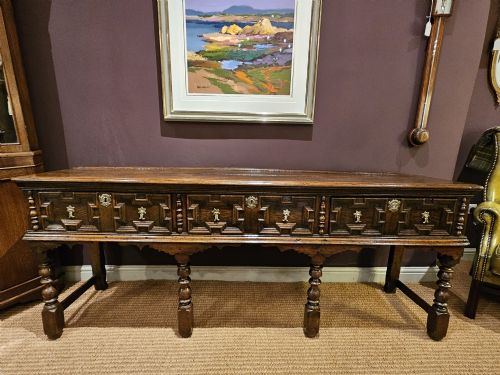
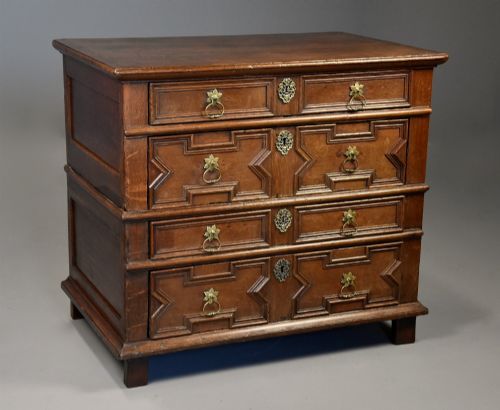
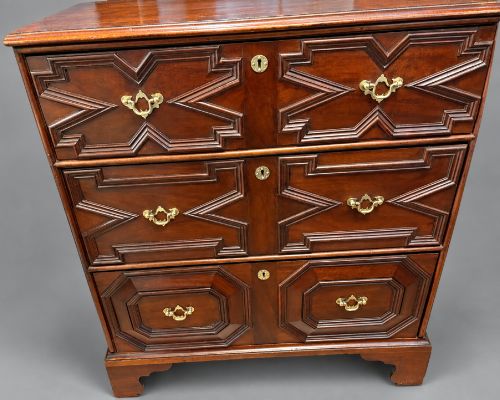
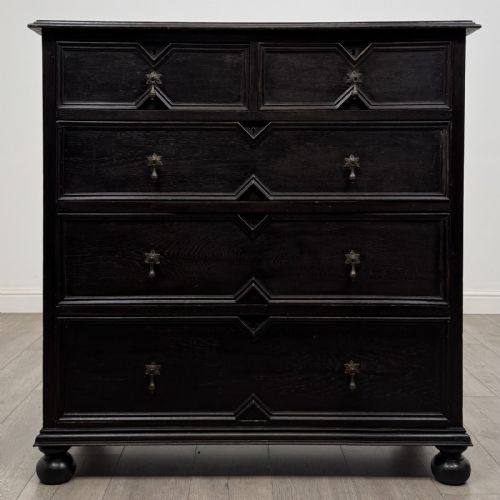
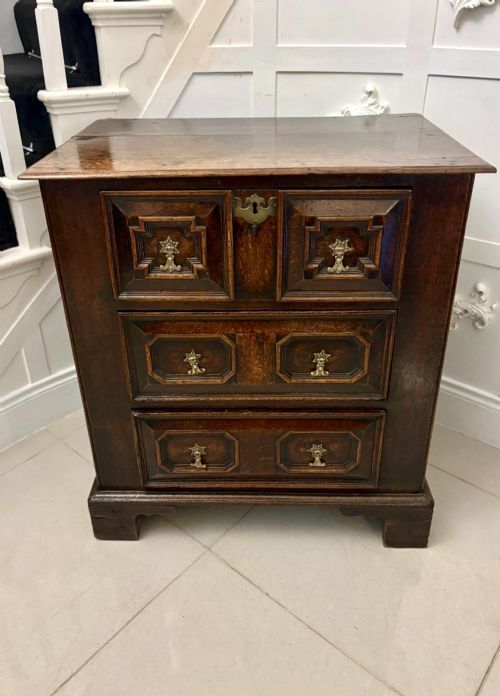
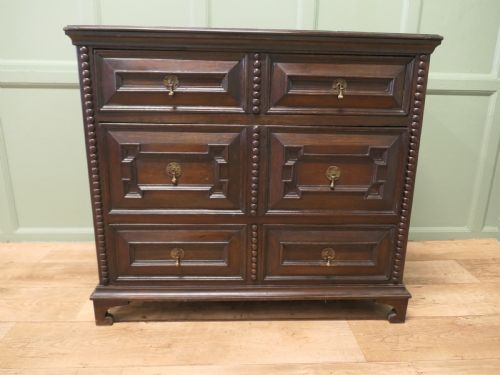
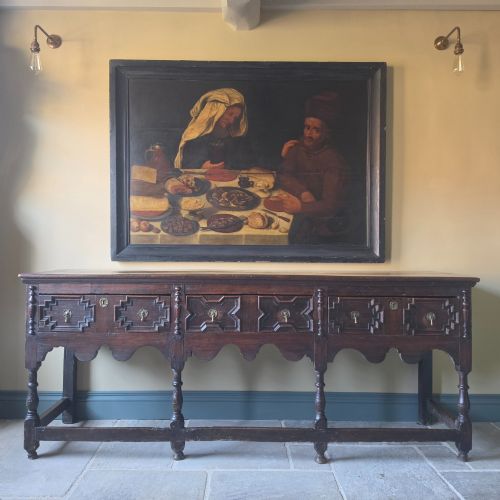
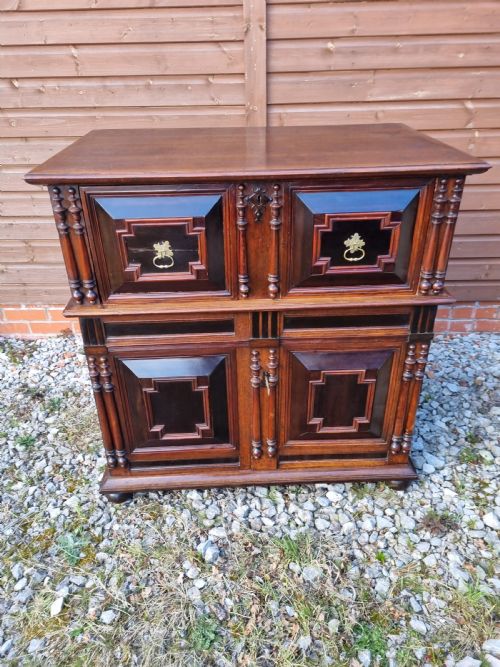
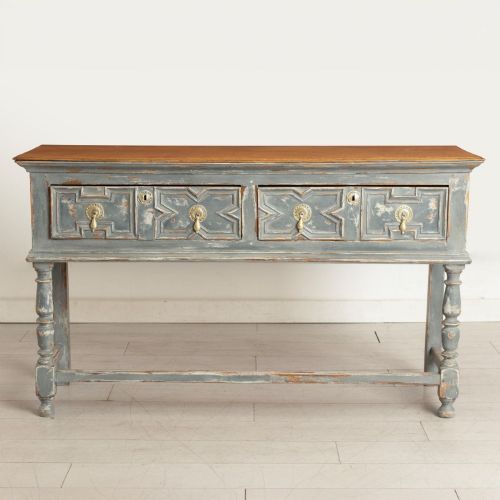
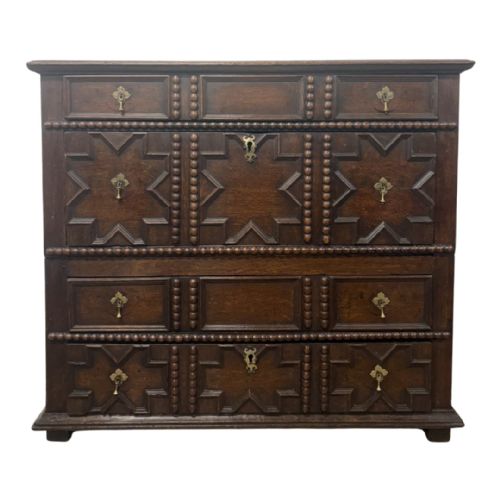
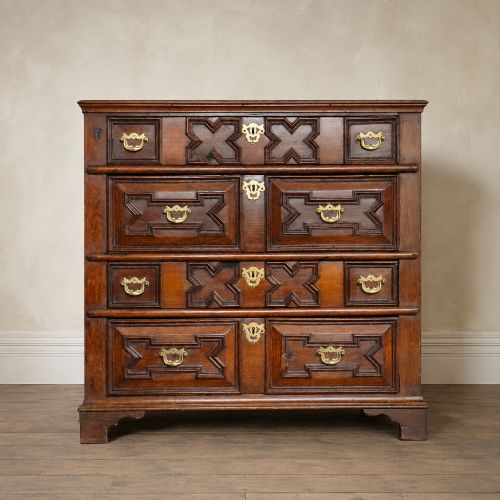
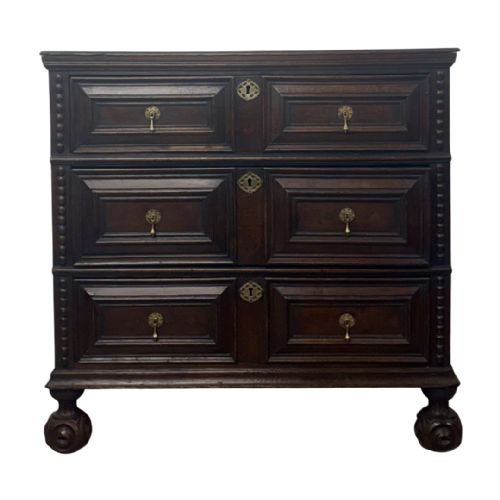
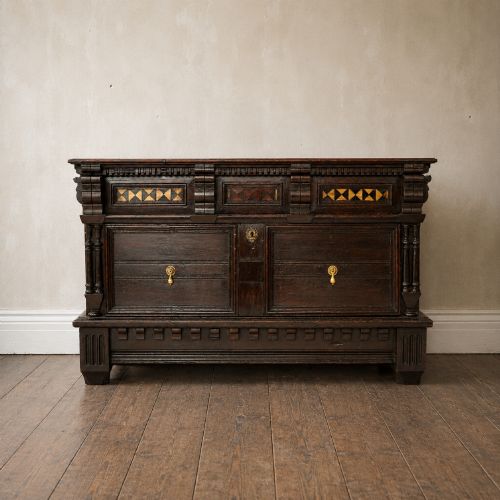
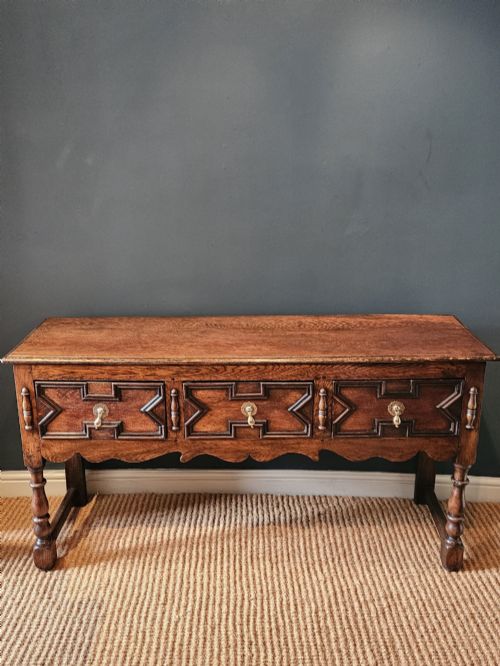
A geometric moulded oak dresser brings robust seventeenth-century character to an interior through sharply defined geometric drawer fronts and rich timber patination.
Geometric Moulded Oak Dresser
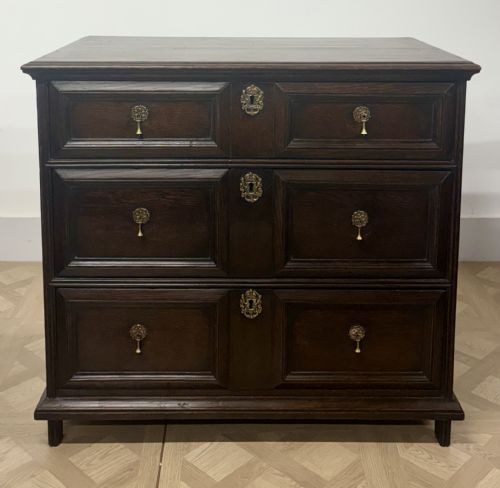
A geometric moulded oak dresser encompasses substantial timber storage furniture built with panelled carcases and applied rectilinear mouldings on the drawer fronts. These pieces span the seventeenth century, the Georgian era, and later revivals, displaying utilitarian strength combined with decorative carpentry.
The version most commonly met on this page is the low dresser base or multi-drawer chest originating in the seventeenth century, specifically from the Charles II period. These items utilise sturdy oak construction augmented by contrasting timbers and original brass hardware.
How They Were Made
Carpenters constructed these items primarily from solid oak, frequently incorporating walnut, fruitwood, ebony, and sycamore to create contrasting geometric patterns across the drawer fronts and panels. Hand-planed mouldings were glued and pinned directly onto the framing to achieve strong visual depth and shadow lines.
Joinery relied upon traditional pegged mortise and tenon frames, while secondary timbers such as deal or pine occasionally formed internal drawer linings and backboards. Brass drop handles and escutcheons completed the hardware, fastened with hand-beaten pins.
Geometric Moulded Oak Dresser Retail Price Guide 2026
Typical asking prices for geometric moulded oak dresser among the pieces listed under this phrase on Sellingantiques today, from the lower quarter to the upper quarter. They describe what is for sale here now, not the wider market.
Carpenters sliced tree branches like carrots to make oyster veneer patterns.
What Varies in Quality
Quality depends upon the crispness of the applied geometric mouldings and the degree to which original timbers remain intact across the carcase and drawer fronts. Pieces retaining their early brasses and untouched surface patination sit firmly at the upper end of the scale.
The selection of secondary woods and the precision of the mitred joints also distinguish finer examples from standard utilitarian storage. Greater refinement shows in the harmonious grain matching of the primary oak surfaces and secondary veneers.
The Geometric Moulded Oak Dresser Glossary
- Geometric moulding
- Raised wooden strips applied in interlocking rectilinear or polygonal patterns to drawer fronts and door panels. This technique defined decorative cabinetry during the seventeenth century.
- Dresser base
- A long, low sideboard fitted with drawers or cupboards beneath a solid timber top. These items served functional storage roles in early domestic interiors.
- Two-part chest
- A storage cabinet constructed in separate upper and lower sections to ease transportation. This form frequently appears in seventeenth-century joinery.
- Block front
- A cabinet facade divided vertically into three distinct sections, with the outer portions projecting forward and the centre section set back. It creates strong sculptural relief.
- Oyster veneer
- Thin circular slices cut transversely from small branches or roots to create intricate, swirling patterns across wooden surfaces. This technique appeared on high-status case furniture.
Geometric Moulded Oak Dresser: Frequently Asked Questions
What is a geometric moulded oak dresser?
A geometric moulded oak dresser is a sturdy seventeenth-century or revival storage piece defined by intersecting raised wooden mouldings on the drawer fronts. These decorative patterns create strong shadow lines across the timber.
Such items combine practical drawer space with sophisticated carpentry from the Charles II and Georgian periods. They serve as focal storage units in traditional and contemporary dining rooms or hallways.
How were these dressers used historically?
Historically, these low dressers and drawer bases provided essential storage for household textiles, table linens, and serving vessels in domestic settings. The wide wooden top surface also acted as a staging area during meals.
In larger properties, they stood in dining parlours or kitchens where heavy utility combined with display. Their solid construction allowed them to withstand daily household demands over centuries.
How do I live with one today?
Living with an early oak dresser involves placing it away from direct heat sources and sudden humidity changes to protect the timber and glue joints. Regular dusting with a soft, dry cloth preserves the natural wax finish without stripping the historical patination.
These pieces integrate smoothly into modern living spaces by offering deep drawer capacity while anchoring a room with historic texture. Their neutral timber tones complement a wide variety of interior colour schemes.
How do I tell periods apart?
Distinguishing periods relies on examining the construction methods, handle hardware, and secondary woods alongside the primary oak carcase. Seventeenth-century examples often feature pegged frames and bold geometric mouldings, while Georgian versions display lighter proportions and refined drawer linings.
Revival pieces from around nineteen-hundred mimic earlier styles but generally reveal machine-cut elements and uniform timber ageing. Comparing the backing boards and interior drawer construction clarifies the exact era of manufacture.