
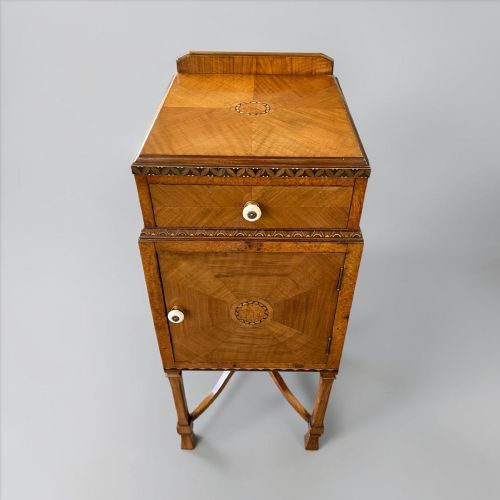
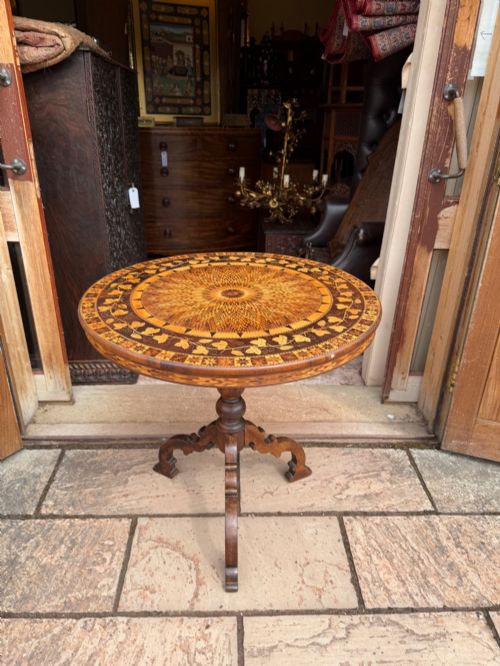
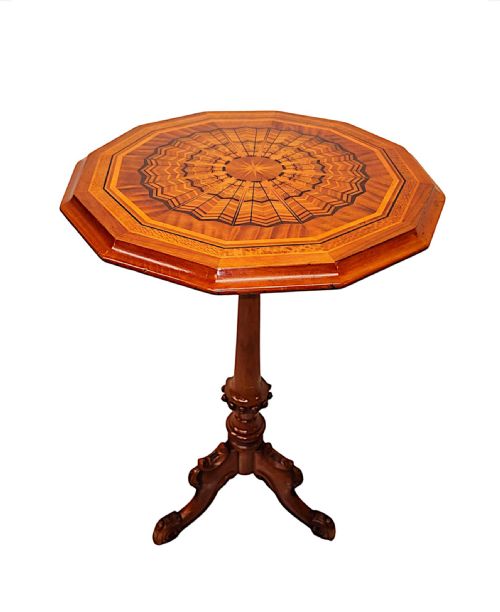
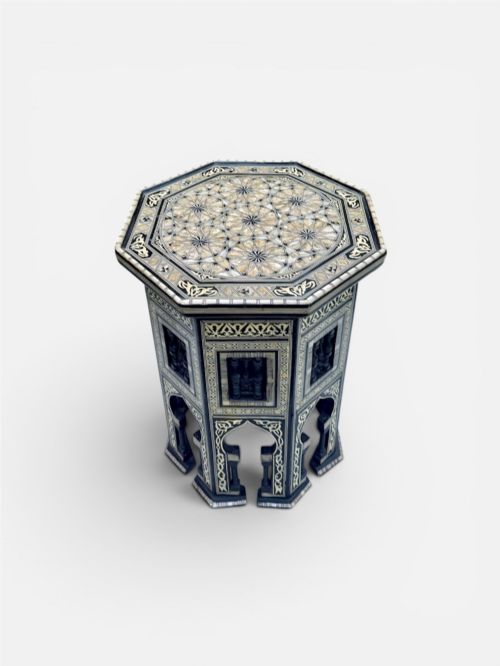

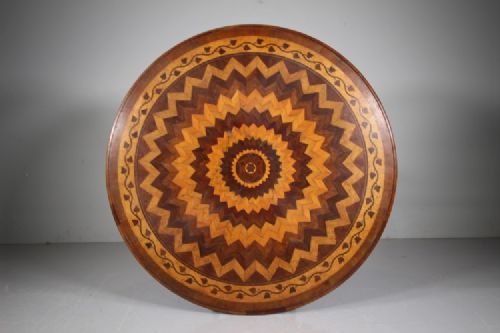


Geometric Marquetry Table
A geometric marquetry table brings together contrasting woods, bone and mother-of-pearl in intricate patterns, offering a functional surface rooted in centuries of cabinet-making skill.
Geometric Marquetry Table
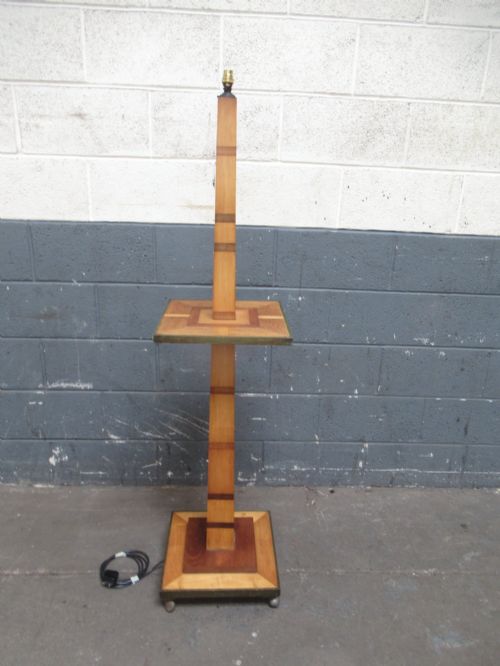
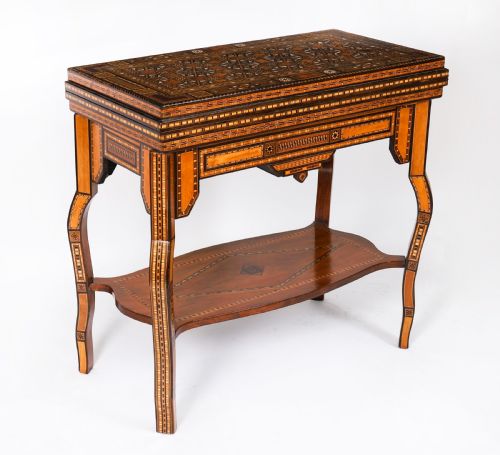
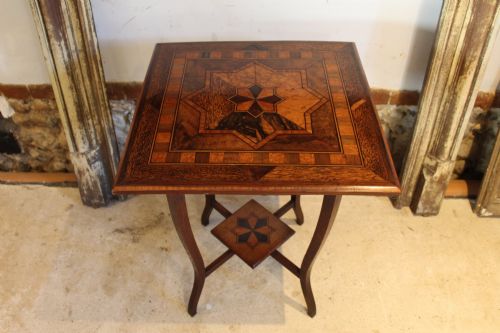
A geometric marquetry table comprises various forms designed for daily utility, spanning occasional tables, games tables, bedside tables, and centre tables. These pieces emerge predominantly from the nineteenth century, alongside examples from the eighteenth and twentieth centuries, incorporating styles such as Victorian, Art Deco, Italian Sorrento, and Moorish Revival.
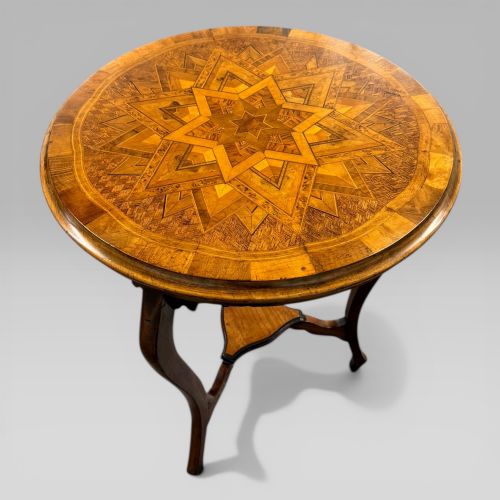
Buyers encounter surfaces adorned with precise tessellated patterns, intersecting cubes, and star motifs constructed from diverse timber species and inlaid materials. The selection includes circular pedestal tables, octagonal occasional tables, and folding card tables equipped for chess or backgammon.
Origins stretch across European workshops, British regional centres, and international destinations including New Zealand and the Middle East. Walnut, rosewood, and satinwood form the primary foundations for these geometric schemes, often supported by turned pedestals or tripod bases.
How they were made
Cabinet-makers cut thin veneers of contrasting timbers such as walnut, fruitwood, rosewood, and satinwood, assembling them into geometric compositions before applying them to a solid carcase of oak, mahogany, or walnut. Specialised saws shaped each individual piece of wood to fit tightly within the surrounding pattern.
Workers integrated supplementary materials including bone, brass, and mother-of-pearl to delineate borders and accentuate the central motifs. Surface finishing relied on hand-applied polish that highlighted the natural grain variations of the specimen woods.
Current listings feature walnut, fruitwood, rosewood, and satinwood across pieces dating from the seventeenth through to the twentieth century.
What varies in quality
The precision of the veneer joints dictates the visual clarity of the geometric design, where tight alignments separate superior execution from casual production. Master makers selected timbers with distinct tonal contrasts to ensure the patterns retained their three-dimensional impact over time.
Gillows·Anton Seuffert
The Geometric Marquetry Table Glossary
- Marquetry
- The art of applying pieces of veneer to a structure to form decorative patterns. Artisans cut various coloured woods and materials to create pictorial or geometric designs on furniture tops.
- Parquetry
- Geometric mosaic woodwork used for floors and tabletops. This technique arranges uniform shapes like squares, triangles, and lozenges into repeating geometric tessellations.
- Specimen wood
- Timbers chosen for their unique colour, grain, or rarity rather than structural utility. Makers utilised these diverse woods to achieve natural colour variation without artificial staining.
- Sorrento ware
- Woodwork decorated with micro-mosaic inlay originating from the Italian town of Sorrento. Craftsmen utilised local timbers to produce intricate geometric and architectural scenes.
- Veneer
- A thin layer of superior wood adhered to a base of common timber. This method allowed makers to display expensive grain patterns while maintaining structural stability.
Geometric Marquetry Table: Frequently Asked Questions
How do I identify a geometric marquetry table?
Examine the surface for repeating patterns composed of small, precisely fitted wooden triangles, squares, or multi-pointed stars. These designs rely on contrasting natural wood tones rather than painted decoration.
Run a hand gently across the top to feel the subtle variations where different timber species meet under the clear finish. Authentic older examples display microscopic shrinkage gaps between individual veneer pieces due to age.
Where should I place an occasional table?
These tables suit placement beside seating areas, in hallways, or as central display surfaces in reception rooms. Their decorative tops benefit from locations with indirect natural light to reveal the grain variations.
Keep them away from direct heat sources and strong sunlight to prevent the underlying veneers from drying out and lifting over time.
How were nineteenth-century games tables used?
Nineteenth-century households utilised multi-functional games tables for evening entertainment involving cards, chess, or backgammon. Many featured reversible or folding tops that concealed storage compartments for playing pieces.
During the day, owners folded the leaves down or used the closed surface for displaying ornaments, lamps, or writing letters.
How do I care for an inlaid wooden top?
Maintain the polished surface by dusting regularly with a soft, dry cloth and avoiding silicone-based sprays. Treat the timber occasionally with appropriate wax to nourish the antique finish.
Protect the veneer from moisture by using coasters under glasses and avoiding placement in damp environments that might affect the adhesive beneath the wood.