


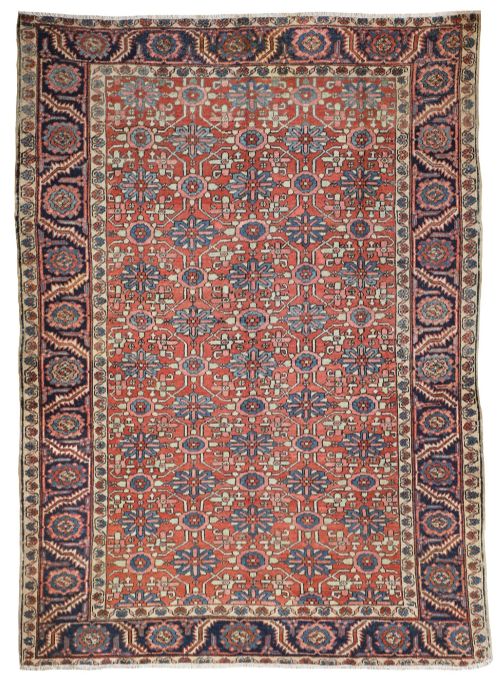
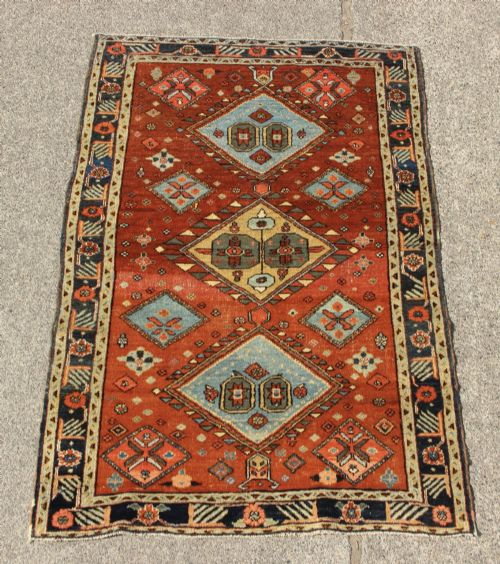
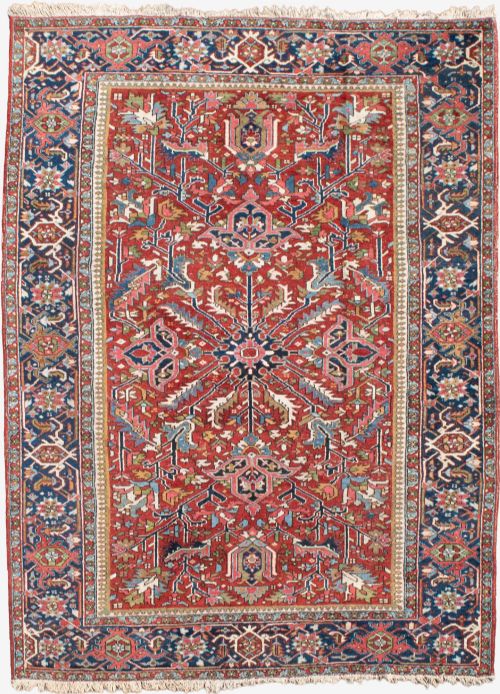
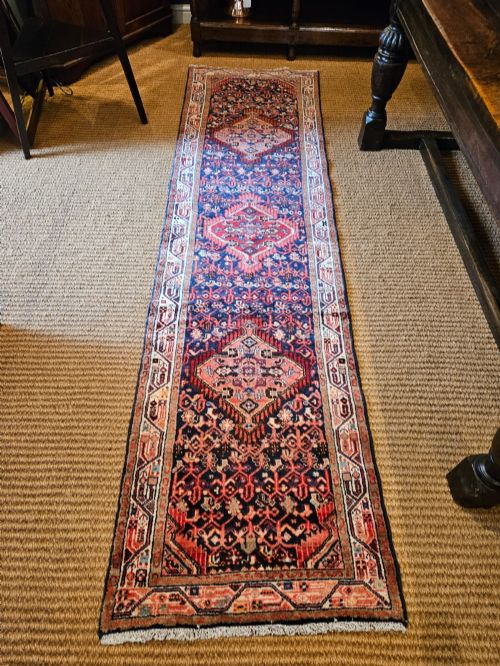


Geometric Heriz Carpet
These large-scale floor coverings bring distinct Persian craftsmanship into a room.
Geometric Heriz Carpet
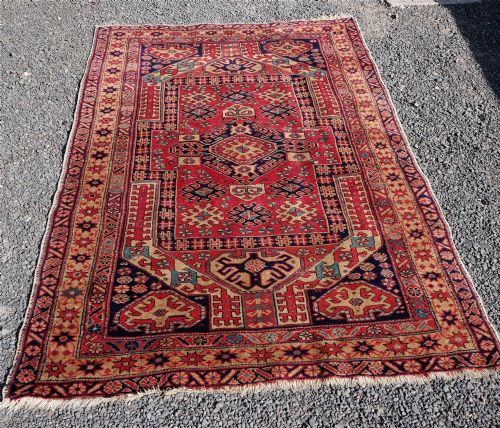
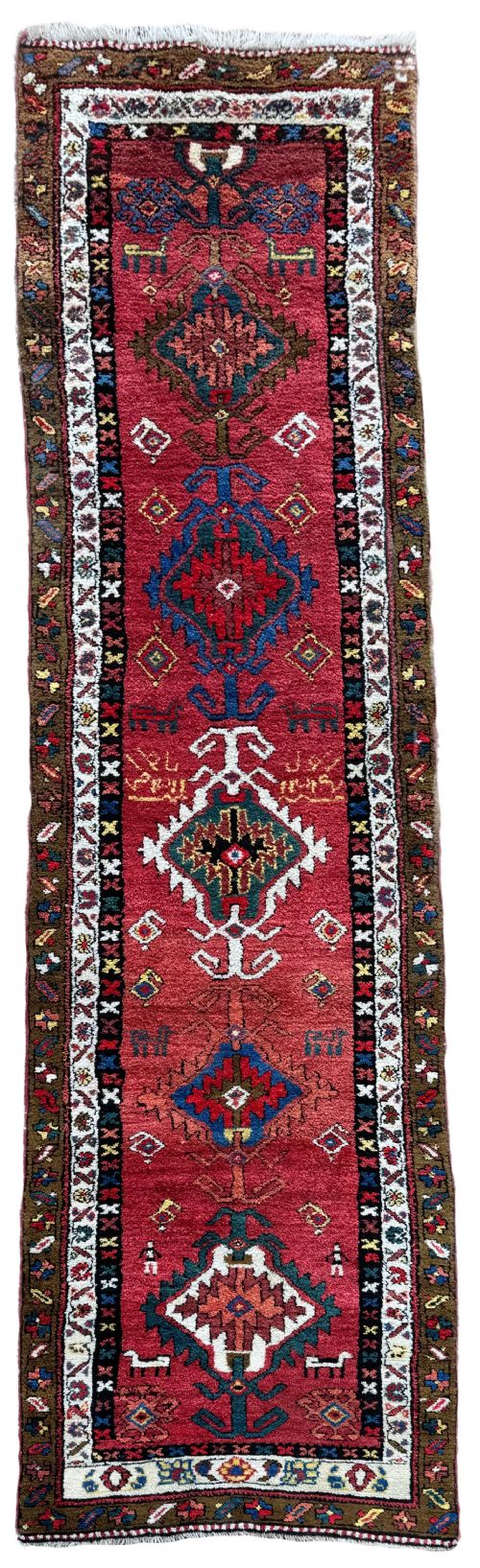
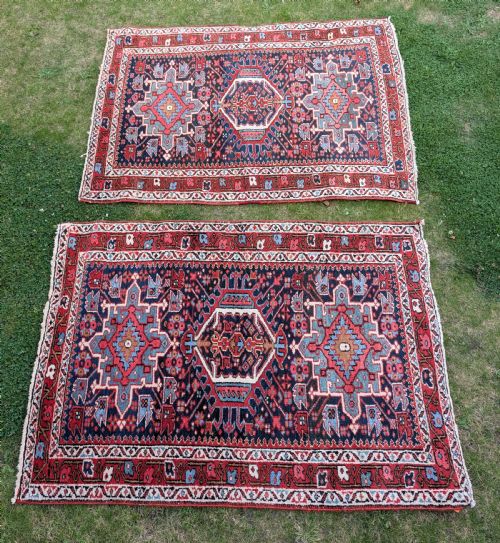
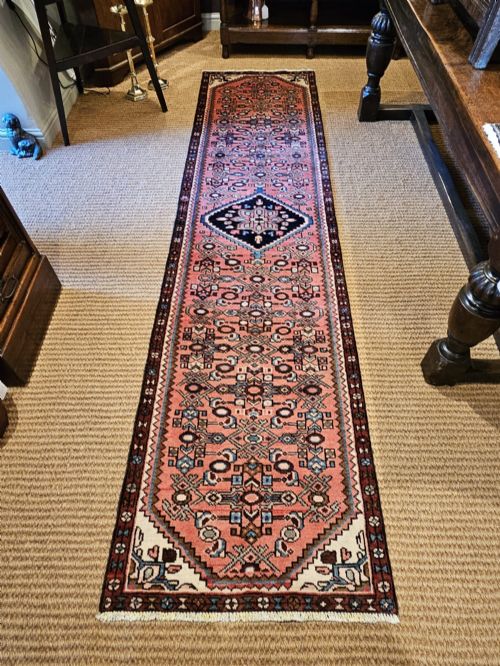
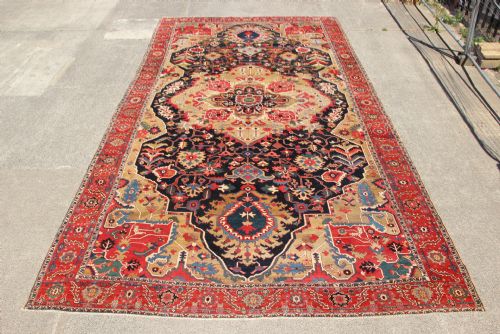
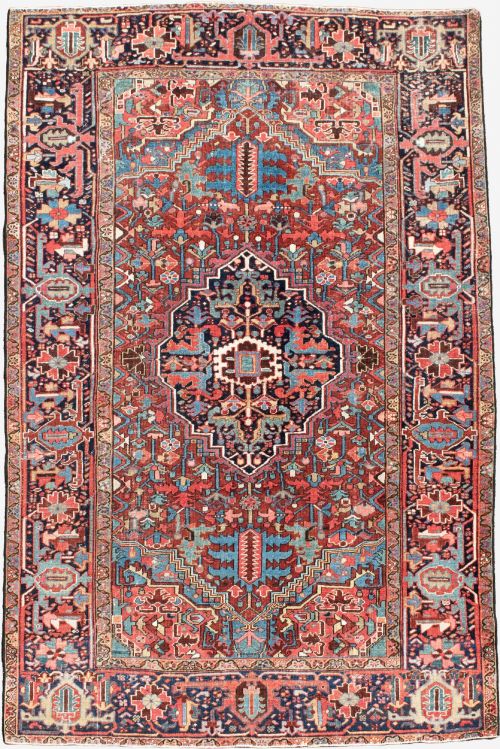
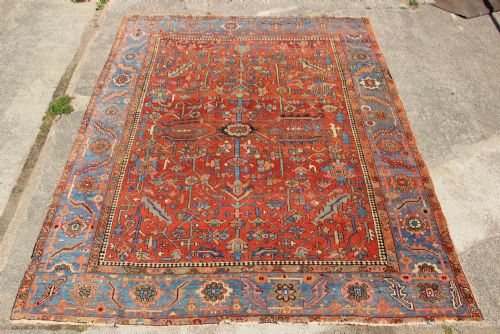
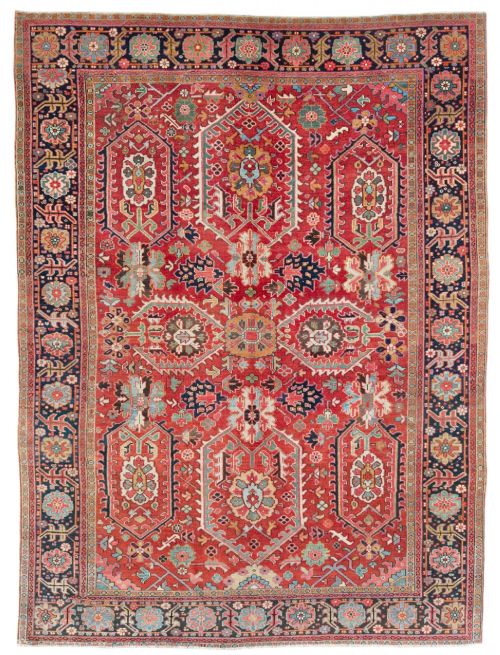
A geometric heriz carpet originates from north-west Persia and typically dates from the nineteenth or early twentieth century. Buyers seeking this phrase encounter large floor coverings, hallway runners, and smaller rugs bearing rectilinear medallion layouts.
The selections span distinct regional weaving traditions, including related pieces from Bakshaish, Karaja, and Serapi workshops. Most examples demonstrate structured geometric framing rather than curved floral patterns.
How they were made
These floor coverings utilise a durable foundation of cotton threads crossed with wool pile knotted by hand. Natural dyes provide the palette, settling into rich tones across wool fibres over decades of use.
Weavers constructed large room-sized carpets alongside narrow runners, employing sturdy knotting techniques suited to high-traffic domestic areas.
Every runner carries the distinct footprint of village weavers who worked from memory rather than drawn paper plans.
What varies in quality
The precision of the rectilinear drawing and the balance of the central medallion dictate the visual strength of the weaving. Finer knots per square inch allow for sharper geometric detail and intricate secondary borders.
The vitality of the wool and the depth of the dye saturation influence the longevity and visual impact of the piece. Well-preserved foundations maintain structural integrity under heavy foot traffic.
The Geometric Heriz Carpet Glossary
- Heriz
- A town in north-west Persia known for durable carpets featuring bold geometric designs. These pieces often anchor large rooms with strong central medallions.
- Serapi
- A sub-category of carpets from the Heriz region distinguished by spacious designs and softer colour palettes. They generally date from the nineteenth century.
- Bakshaish
- A neighbouring weaving centre producing carpets with relaxed geometric layouts and muted tones. These older pieces precede many standard Heriz productions.
- Karaja
- A village in the Heriz district producing smaller rugs and runners with distinct geometric repeat patterns. They share materials with larger regional carpets.
- Runner
- A long, narrow carpet format designed for hallways and corridors. These pieces maintain sturdy wool piles to withstand frequent walking.
Geometric Heriz Carpet: Frequently Asked Questions
How do I place a large carpet in a room?
Position the piece so that central furniture sits comfortably upon the wool surface, allowing the geometric borders to remain visible around the edges.
Ensure the room receives balanced lighting to highlight the natural dyes and varied wool tones across the field.
How do I distinguish Serapi from Heriz?
Serapi pieces generally exhibit more open, spacious geometric fields with softer dye combinations, often dating from the nineteenth century.
Standard Heriz carpets typically display denser, more robust geometric patterns with crisp lines and saturated primary colours.
Are these carpets suitable for heavy hallways?
Narrow runner formats from this region were constructed with dense wool piles specifically to handle frequent movement in corridors.
Use a breathable underlay beneath the cotton foundation to prevent shifting on wooden or stone floors.
How do I date these floor coverings?
Examine the palette, wool texture, and structural characteristics against known nineteenth and early twentieth century examples.
Natural dye variations and hand-spun wool density offer reliable indicators of age before synthetic dyes became common.