


Geometric Floral Rug
A geometric floral rug bridges structured patterns and botanical motifs, offering rich colour and pattern for a floor.
Geometric Floral Rug
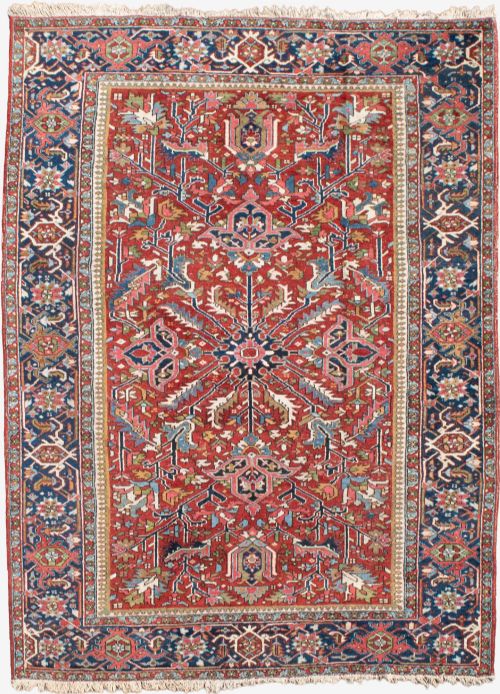
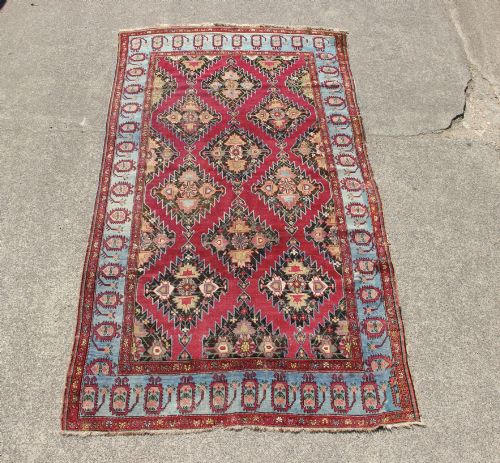
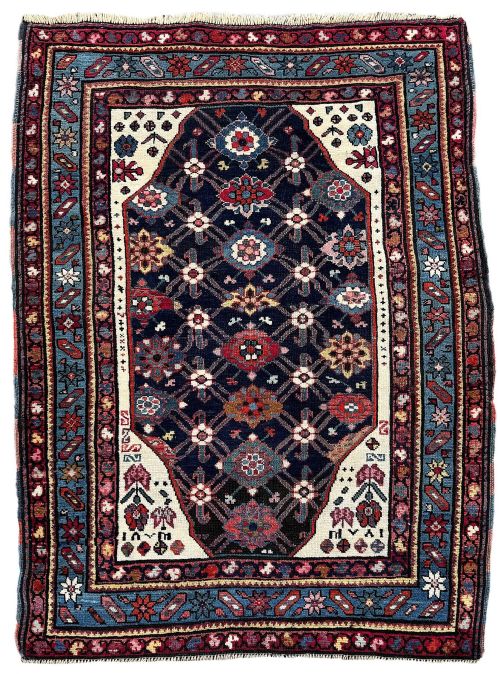
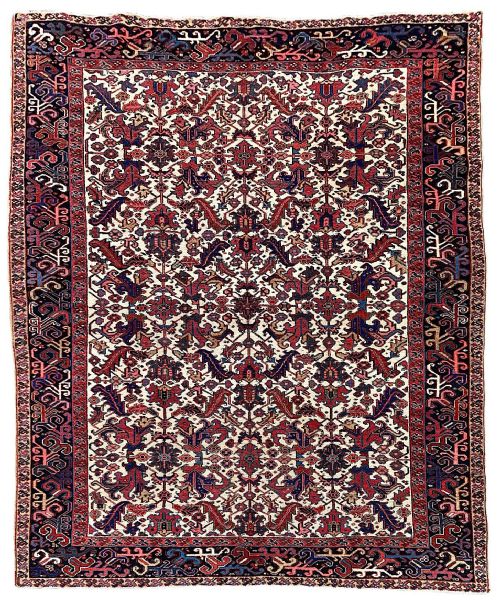
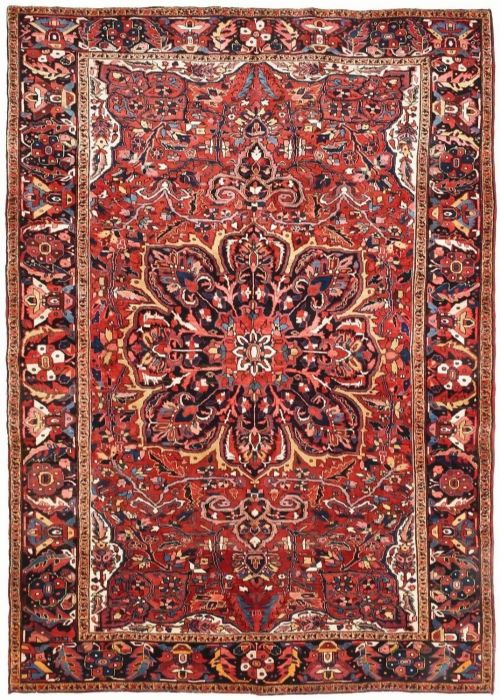
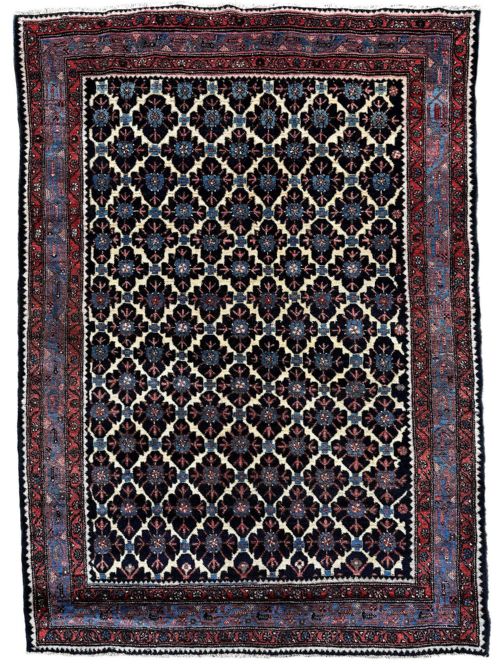
A geometric floral rug combines botanical motifs with rigid, linear arrangements across the surface. These pieces span from the late nineteenth century into the early decades of the twentieth century, originating primarily from Persian and Caucasian weaving traditions.
Buyers encounter regional forms such as Heriz carpets, Karabagh rugs, and Shirvan prayer rugs on this page. Formats range from large room-sized carpets down to narrow runners and saddle covers.
Materials and construction
These textiles rely primarily on wool for the pile, combined with cotton foundations and occasional leather elements in specific formats. Weavers utilised traditional hand-knotting and flatweave techniques appropriate to each region, from Caucasian workshops to Persian village looms.
The materials create resilient surfaces capable of withstanding decades of foot traffic while retaining the clarity of their structured floral lattice and all-over patterns.
A solitary Tibetan saddle cover from the late nineteenth century sneaks into the collection, proving that riders needed geometric florals too.
Assessing quality and finish
Quality rests in the precision of the knotting, the balance of the wool pile, and the clarity of the botanical geometry. Stronger pieces maintain structural integrity and crisp colour contrasts across the field.
The distinction between standard village production and finer workshop output lies in the density of the weave and the complexity of the regional design.
The Geometric Floral Rug Glossary
- Heriz carpet
- A durable room-sized Persian weaving known for bold medallion and geometric floral layouts. These originate from the northwest region of Persia.
- Prayer rug
- A small format textile featuring a mihrab or arch design intended for devotional use. They often display structured floral lattices.
- Karabagh rug
- A weaving from the Caucasian region characterised by distinct palette choices and geometric floral arrangements. They date frequently to the late nineteenth century.
- Runner
- A long, narrow carpet format designed for hallways and corridors. Examples on this page display repeating lattice patterns.
- Kilim
- A flatweave textile produced without a pile. These pieces rely on interlocking warp and weft threads to form geometric designs.
Geometric Floral Rug: Frequently Asked Questions
Where should I place a runner?
Runners suit narrow spaces such as hallways, landings, and corridors where standard rectangular rugs do not fit. Their elongated proportions guide movement through a home.
Ensure the dimensions leave a consistent border of exposed flooring around the edges for a balanced look.
How do I identify a prayer rug?
Prayer rugs feature an architectural arch or mihrab design at one end, which points toward Mecca during use. Their compact size set them apart from large room carpets.
They function well as decorative wall hangings or small accent pieces in compact areas.
Are these carpets suitable for heavy traffic?
Wool pile construction gives these rugs natural resilience against daily wear in active rooms. Regular rotation helps distribute foot traffic evenly across the surface.
Underlays provide additional cushioning and prevent slipping on smooth timber or stone floors.
What defines a Heriz carpet?
Heriz carpets feature sturdy wool foundations and large-scale geometric medallions combined with botanical motifs. Their robust knotting distinguishes them from finer urban Persian weaves.
These large formats anchor traditional and contemporary living spaces alike.