


Geometric Floral Carpet
A geometric floral carpet brings together structured tribal layouts and botanical motifs, offering enduring appeal for traditional interiors.
Geometric Floral Carpet
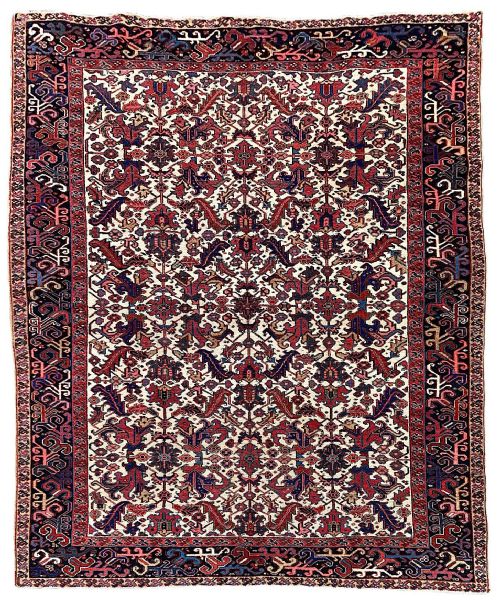
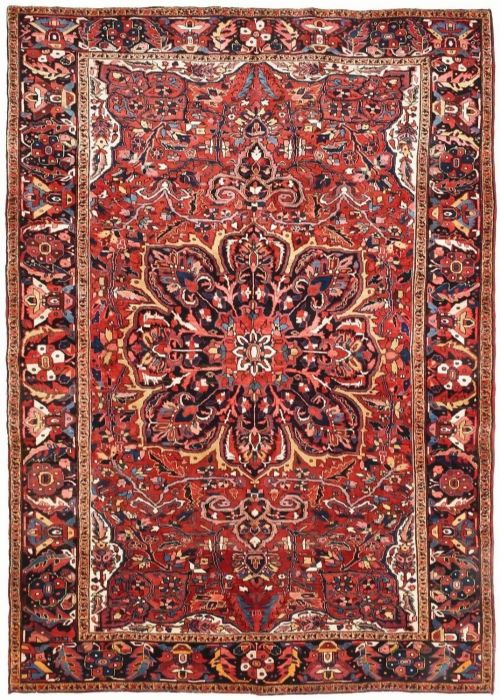
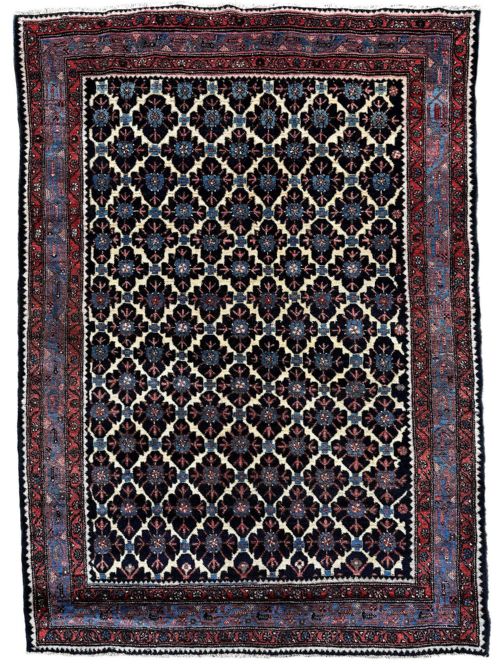
A geometric floral carpet combines angular medallions or lattice frameworks with botanical motifs, bridging strict tribal geometry and flowing natural forms. These pieces span regional traditions including Persian weaving centres and Caucasian workshops.
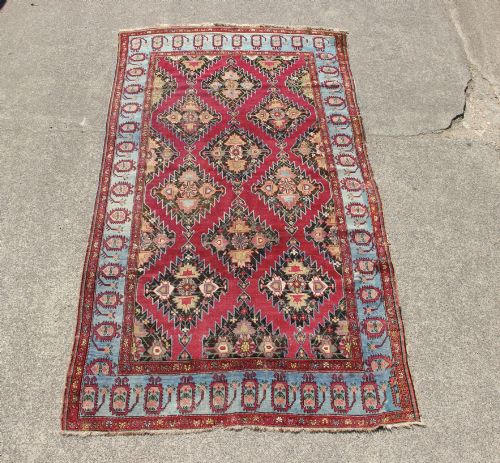
The selections available here range widely in format, from large Persian room-size carpets down to hallway runners, saddle covers and compact village rugs. Production dates stretch from the late nineteenth century through to the early twentieth century, encompassing Victorian-era tastes and traditional village outputs.
How they were made
Weavers constructed these carpets primarily using wool pile knotted onto cotton foundations, occasionally incorporating leather finishes or flatweave kilim structures. The interplay of resilient wool fibres and sturdy cotton warps provided the durability needed for heavy domestic floor use.
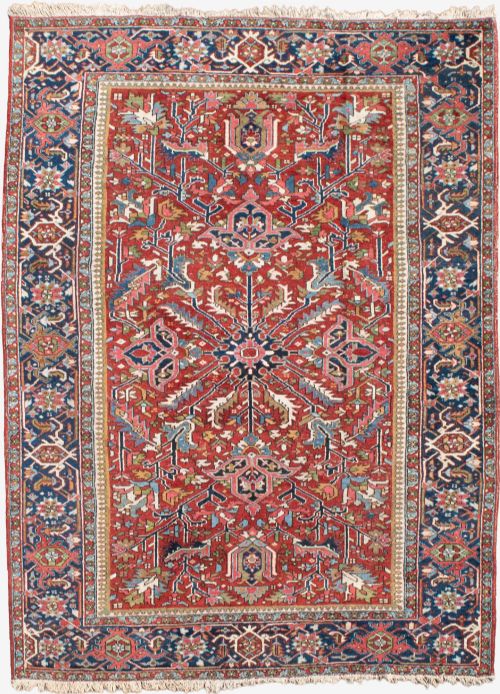
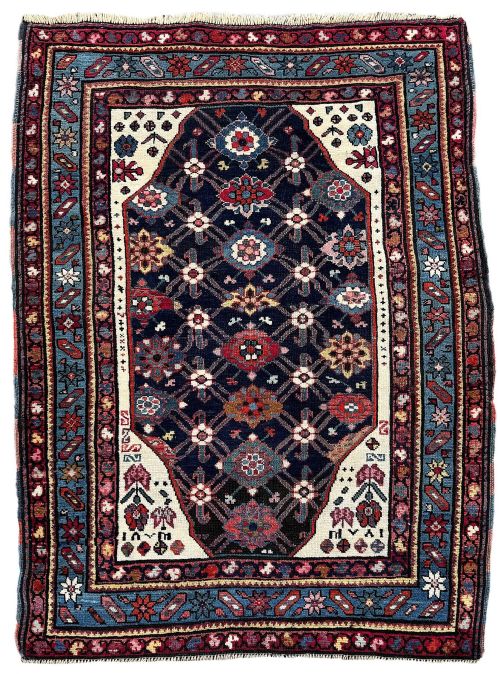
Dye recipes and knotting densities defined regional workshops, yielding distinct structures such as the robust pile found in Heriz production and the finely detailed lattice work seen in Caucasian prayer rugs.
Materials recorded across the inventory are strictly limited to wool, cotton and leather.
What varies in quality
Quality rests upon the crispness of the design execution, where precise rendering of angular motifs against botanical backgrounds indicates skilled workshop output. The handling of natural dyes creates subtle tonal shifts across the field, distinguishing superior hand-knotted examples from simpler commercial pieces.
Structural integrity also dictates worth, seen in the uniformity of the knotting, the straightness of the format, and the original preservation of the cotton foundation and wool pile.
The Geometric Floral Carpet Glossary
- Heriz
- A Persian carpet type originating from the Heris region, known for bold geometric medallions and robust wool construction. These large formats often feature strong angular lines derived from traditional village designs.
- Karabagh
- A Caucasian weaving origin famous for distinct coloration and varied patterns, including blossom motifs and tribal village compositions. Karabagh rugs typically demonstrate strong contrasts between field and border.
- Prayer rug
- A small format rug featuring a mihrab arch design at one end, traditionally used for personal prayer. Caucasian and Persian examples frequently incorporate floral lattice patterns within the field.
- Runner
- A long, narrow carpet format designed specifically for hallways and corridors. These pieces maintain repeating geometric or floral patterns scaled to fit restricted spatial dimensions.
- Kilim
- A flatweave textile produced without a raised pile, utilising interlocking warp and weft threads. Examples like the Bijar kilim offer geometric designs through this distinct weaving method.
Geometric Floral Carpet: Frequently Asked Questions
How do I identify a Heriz carpet?
A Heriz carpet typically displays a large, bold geometric centre medallion flanked by stylised corner spandrels. The wool is heavy and resilient, designed to withstand generations of floor use.
Look for distinctive angular drawing styles that translate natural botanical themes into rigid, rectilinear geometry characteristic of the region.
Where were Caucasian rugs made?
Caucasian rugs originate from the Caucasus region bridging the Black Sea and Caspian Sea, encompassing various tribal workshops and villages. Specific areas include Karabagh, Shirvan, Gendje and Dagestan.
These pieces are easily recognised by their distinctive palette, crisp geometric lattices and smaller village formats.
What is a Mina Khani design?
The Mina Khani design is a repeating all-over floral pattern consisting of daisy-like blossoms linked by curved vines. It appears frequently in Persian village and tribal rugs.
This layout creates an orderly grid of botanical elements balanced against geometric field proportions.
How should I care for an antique rug?
Vacuum antique rugs gently using suction only, avoiding rotating brush heads that can pull at the wool pile. Professional cleaning by specialists in historic textiles ensures wool fibres and natural dyes remain protected.
Keep the carpet out of direct, prolonged sunlight to prevent fading of the historic dye colours across the field.