



Geometric Floor Mat
A geometric floor mat brings woven tribal structure and rectilinear motifs straight to the ground from nineteenth and early twentieth century traditions.
Geometric Floor Mat
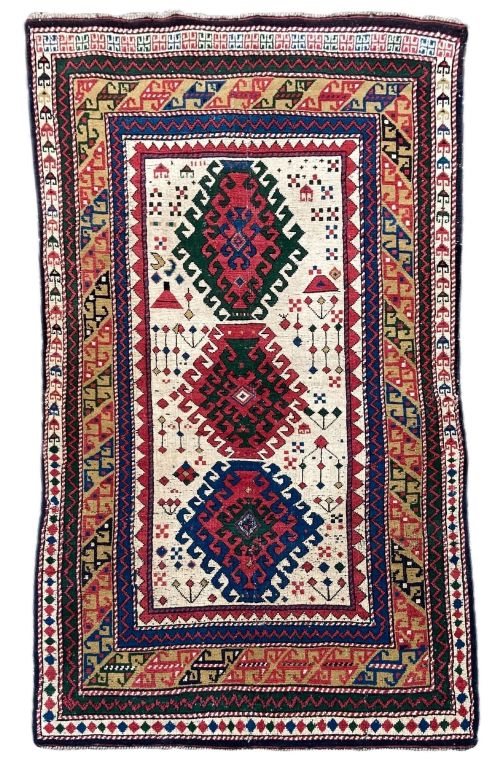
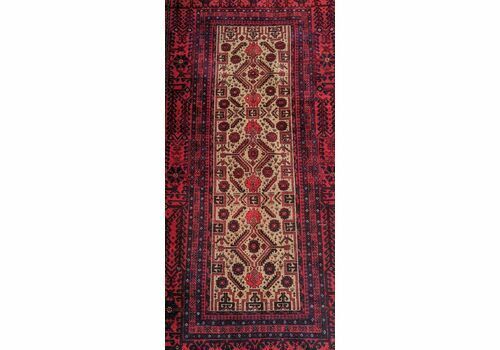
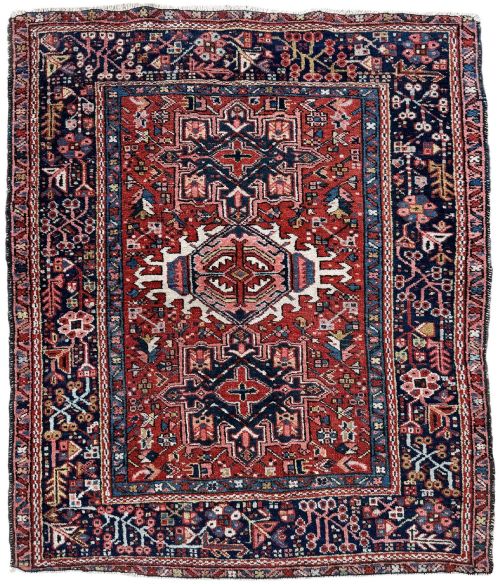
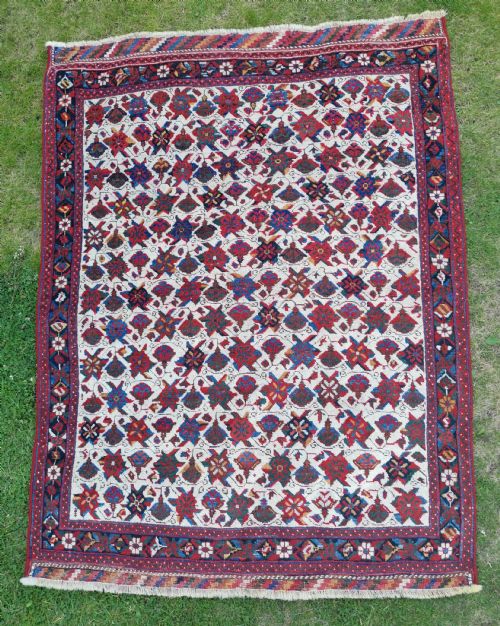
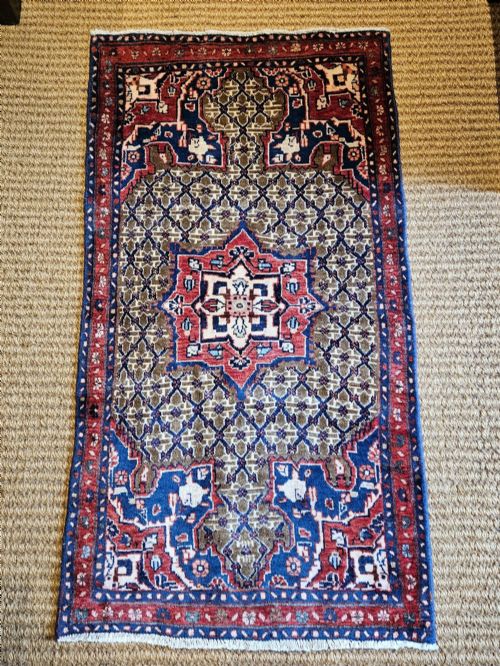
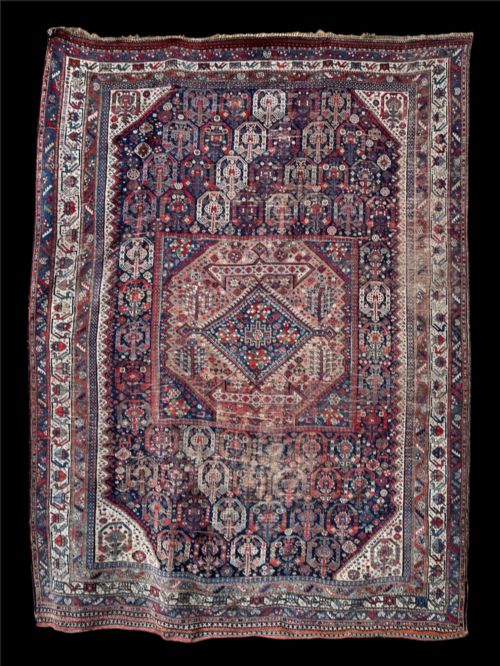
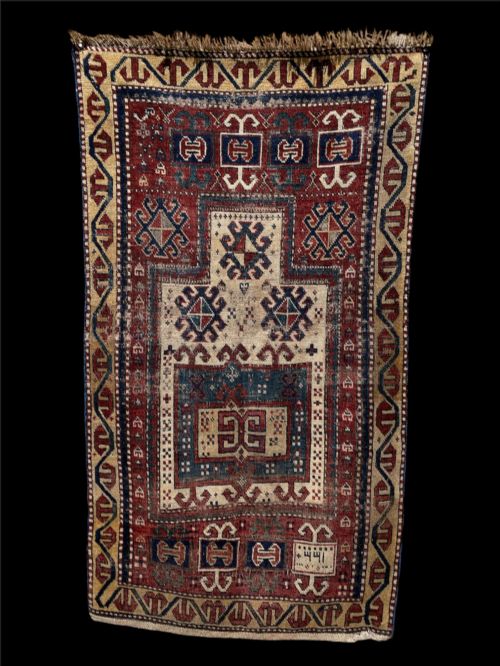
A geometric floor mat covers diverse woven formats, appearing primarily as rugs, carpets, runners, and saddlebags originating from Persian, Caucasian, Turkmen, and Afghan tribal groups. Buyers navigating this selection encounter village and nomadic weaving traditions spanning the late nineteenth and early twentieth centuries, notably represented by Heriz, Kazak, Khamseh, and Baluch pieces.
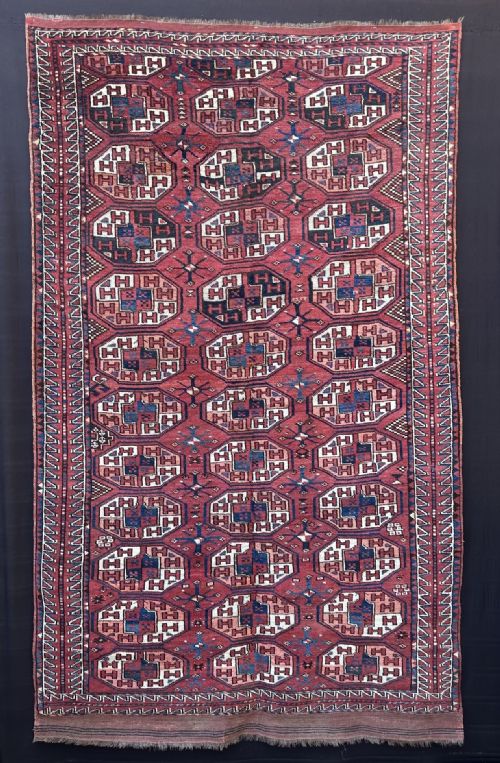
The layout typically revolves around repeated medallions, gul patterns, prayer niches, or structured lattice arrangements worked in wool. These textiles function as durable floor coverings and hearth rugs, translating regional tribal symbolism into practical domestic furnishings.
Materials and construction
Makers constructed these floor mats predominantly using wool and hand-spun wool, often dyed with natural colourants to achieve deep red, blue, and yellow grounds. The resulting pile or flatweave textiles demonstrate dense structural knotting and flat-weave soumak techniques designed to withstand heavy daily use.
Weavers in regions such as the Caucasus, Persia, and Central Asia utilised upright looms to execute intricate rectilinear motifs by hand. The combination of resilient wool fibres and traditional dyeing methods ensures the structural integrity of each surviving runner and carpet.
Peacocks and assorted animals occasionally wander across the geometric fields of Afghan Caucasian design rugs, keeping guard beneath your feet.
Assessing quality and craftsmanship
Quality separates along the precision of the geometric layout and the saturation of the natural dyes used across the wool pile. Finer examples display tightly packed knots, crisp rectilinear drawing, and balanced proportions within medallions and repeat patterns.
The handling of secondary borders and the preservation of original kilim ends also indicate higher levels of original craftsmanship. Weavings with uniform knot density and well-resolved tribal motifs reflect superior artisan skill during the weaving process.
The Geometric Floor Mat Glossary
- Gul
- A primary octagonal medallion or repeating motif frequently found in Turkmen and Central Asian carpet designs. It serves as a tribal emblem passed down through generations of weavers.
- Kazak
- A designated style of rug produced by weaving communities in the Caucasus region. These pieces are known for bold geometric medallions and saturated primary colours.
- Soumak
- A flat-weave technique where coloured weft threads wrap around the warp threads in a continuous sequence. This method creates a durable structure without a traditional cut pile.
- Prayer rug
- A small format textile featuring a central mihrab or architectural arch design. Historically, users placed these mats toward Mecca during daily prayers.
- Runner
- An elongated narrow format carpet designed specifically for hallways and corridors. This shape accommodates high-traffic residential spaces while displaying continuous repeating patterns.
Geometric Floor Mat: Frequently Asked Questions
How do I clean an antique wool rug?
Maintenance requires gentle surface vacuuming without the beater bar engaged to protect the wool pile and delicate hand-spun fibres. Professional specialist cleaning remains necessary for deep restoration.
Water exposure should stay strictly limited to prevent dye bleeding across natural colourants. Prompt attention to minor spills preserves the structural integrity of the weave.
Are these rugs suitable for high traffic areas?
The dense wool construction and tight knotting of these tribal floor coverings provide natural resilience against daily foot traffic. Placing a quality underlay beneath the textile prevents slippage and reduces friction.
Regular rotation distributes wear evenly across the surface of runners and carpets. This simple habit extends the practical lifespan of antique floor textiles in busy rooms.
How can I tell a Baluch rug from a Kazak?
Baluch weavings typically feature darker colour palettes dominated by deep browns, dark blues, and rich reds with smaller repeat octagon motifs. These pieces originate from nomadic groups spanning the borders of Iran, Afghanistan, and Turkmenistan.
Kazak rugs display brighter, contrasting primary colours with large geometric medallions and Caucasian tribal symbols. The structural weave and wool texture also differ distinctly between these regional traditions.
What is a prayer rug used for?
Traditional prayer rugs feature a distinct pointed arch or mihrab motif that indicates the intended directional orientation during use. Historical contexts linked these smaller mats directly to personal devotional practices.
Today, collectors appreciate these portable formats as decorative wall hangings or focused hearth mats. The distinctive niche design helps separate prayer formats from standard area rugs.