

Geometric Art Glass
Geometric art glass delivers sharp angles, striking symmetry, and bold colours that define the 1930 design vocabulary.
Geometric Art Glass
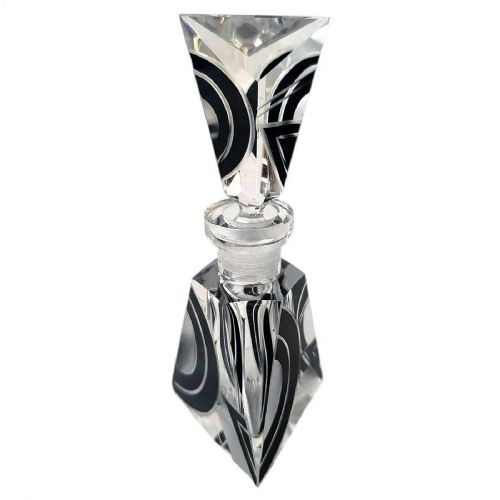
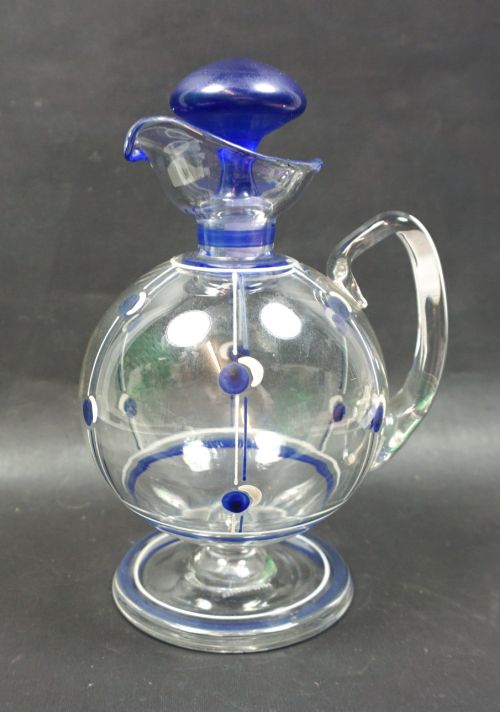
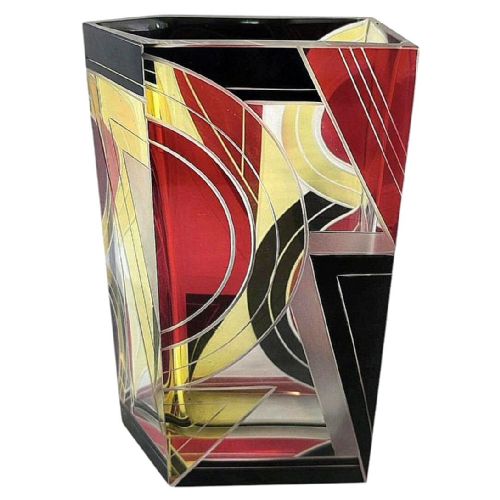
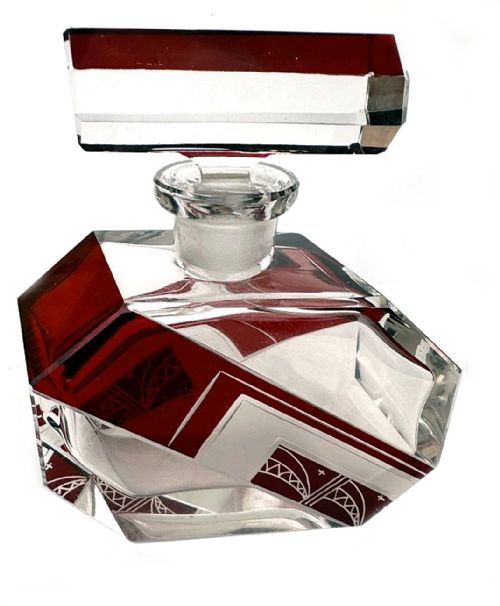
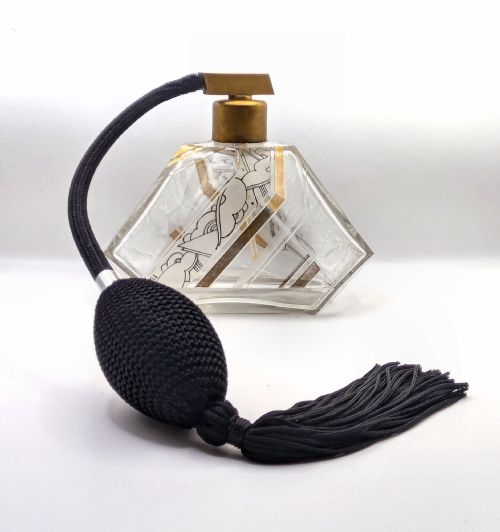
Geometric art glass encompasses vases, perfume bottles, decanter sets, and lighting from the 1930 period, showcasing the dominant Art Deco style. These objects bring linear patterns and distinct silhouettes into domestic spaces, originating predominantly from Czech and Belgian workshops.
Vases and perfume bottles form the most frequent encounters on this page, often featuring layered glass with surface etching or enamel decoration. Buyers also find larger items such as decanter sets and hanging lights sharing these sharp, architectural motifs.
How they were made
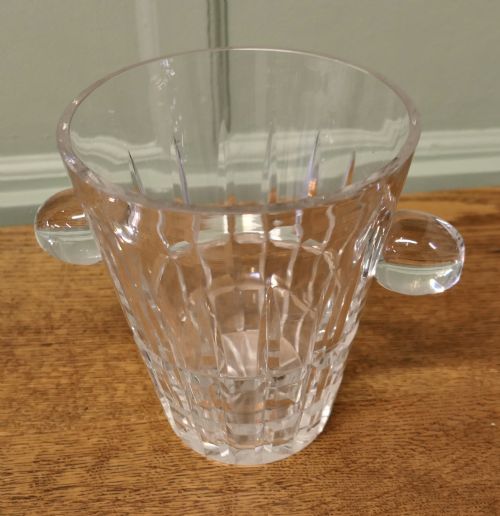
Makers utilised lead crystal, heavy glass, and overlaid colours, shaping objects through moulding, hand-cutting, and deep acid etching. Enamel decoration was frequently applied by hand to accent the sharp lines of the design.
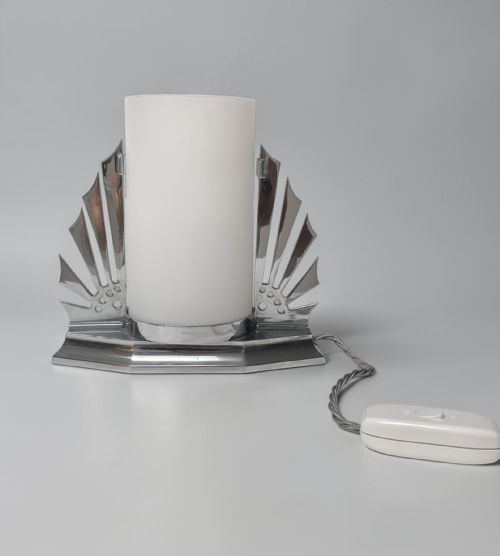
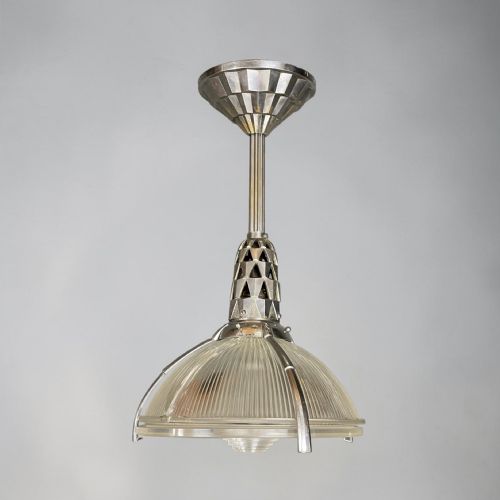
Metal mountings in chrome, brass, and copper frequently accompany the glass, particularly on perfume atomisers, pendant lights, and lamps, anchoring the angular forms with industrial materials.
A solitary soldier stands guard inside one unusual Deco wall mirror.
What varies in quality
Quality rests in the crispness of the cutting, the depth of the etching, and the precision of the enamel work on the glass body. Pieces that retain sharp facet edges and saturated, evenly distributed over-crystal colours demonstrate superior manufacturing standards.
The integration of metal hardware, such as solid brass or chrome fittings matching the glass dimensions, separates standard production items from more ambitious works by established designers.
Émile-Jacques Ruhlmann·Karl Palda·Charles Graffart·Joseph Simon·Jean Luce·Marcel Franck·William Neale
The Geometric Art Glass Glossary
- Art Deco
- A design style spanning the 1920 and 1930 periods characterised by stylised motifs, geometric shapes, and streamlined forms. It influenced everything from architecture to small glassware.
- Enamel decoration
- A fused glass-powder colouring technique applied to the surface of vessels before firing. This added vibrant colour fields alongside etched patterns.
- Over crystal
- A manufacturing method where a layer of coloured glass is fused over a clear or contrasting base layer. Cutting through the top layer reveals the contrasting colour underneath.
- Atomiser
- A spray bottle mechanism fitted to perfume flasks, typically utilising metal pump hardware and fine internal tubes. They often incorporated chrome and rubber squeeze bulbs during the 1930 period.
- Lead crystal
- Glass containing metal oxide that increases weight, clarity, and the refractive index. This material allowed makers to achieve brilliant facets when hand-cut.
Geometric Art Glass: Frequently Asked Questions
How do I identify Czech pieces?
Czech items from the 1930 period often rely on heavy lead crystal combined with contrasting enamel decorations and sharp geometric cutting.
Many of these objects take the form of perfume bottles, decanter sets, and tall vases originating from known workshops like those of Karl Palda.
Where were these glass pieces made?
The listings on this page originate primarily from European makers working during the 1930 Art Deco period.
Notable centres of production include workshops in Czechoslovakia and Belgium, alongside British makers producing complementary items.
How should I clean glass vases?
Wash glass items gently in warm water using mild soap, avoiding harsh scouring pads that can scratch the surface or damage enamel details.
Take particular care with pieces featuring metal mounts or applied enamel decoration to prevent moisture damage.
Can I use old perfume bottles?
Many vintage perfume atomisers and bottles survive with their original metal hardware intact, though internal seals may have dried out over time.
Displaying them as decorative objects on a shelf or dressing table preserves their fragile spray mechanisms.