





1930s Enamelled Glassware
These 1930s enamelled glassware pieces bring bold Art Deco geometry and vibrant colour straight to a room, offering both striking display and practical service.
1930s Enamelled Glassware
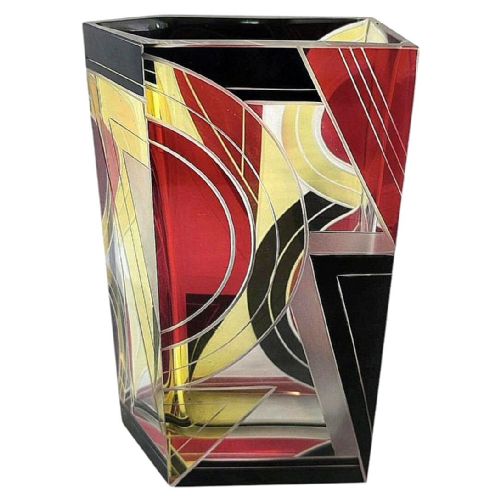
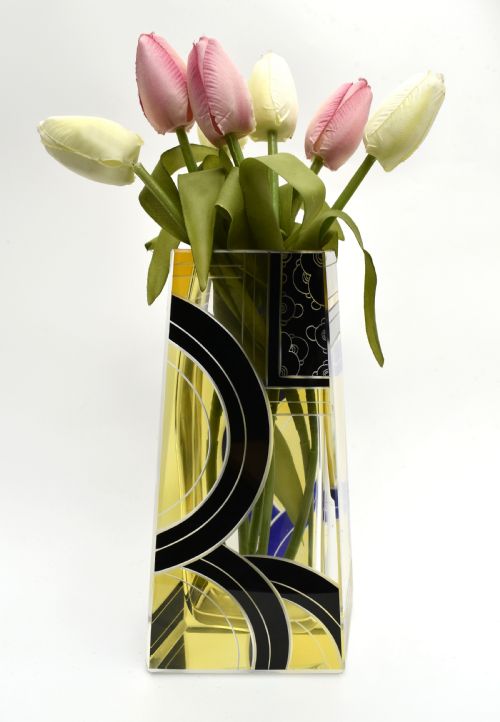
When you search for 1930s enamelled glassware, you find striking decorative objects and barware rooted firmly in the Art Deco style. The pieces on this page span forms such as tall vases, decanter sets, perfume bottles, and decorative bowls.
Vessels take geometric shapes, often rendered in green, black, or opaque glass, with crisp enamel decoration applied across the surface. Czech production heavily populates this selection, alongside hand-blown glass and lead crystal.
Items range from single display vases to complete drinks sets featuring decanters, matching glasses, and coordinating trays. These functional and decorative items capture the sharp lines and distinctive palette of the 1920s and 1930s.
How they were made
Makers utilised hand-blown glass, lead crystal, and opaque glass as the primary canvases for their work. Artisans shaped these materials into vessels before applying surface decoration.
Enamel inclusions and applied enamel pigments created sharp geometric patterns, often paired with etching on the glass body. Chrome hardware occasionally appeared on select barware and serving sets.
Production centres such as the Czech Republic drove much of this output, combining traditional glassblowing with precise enamel painting and acid etching to achieve the signature Art Deco look.
1930s Enamelled Glassware Retail Price Guide 2026
Typical asking prices for 1930s enamelled glassware among the pieces listed under this phrase on Sellingantiques today, from the lower quarter to the upper quarter. They describe what is for sale here now, not the wider market.
Listings feature periods from 1920 to 1930 alongside materials including lead crystal, hand-blown glass, enamel inclusions, and chrome.
What varies in quality
The precision and complexity of the geometric enamel work set superior pieces apart from simpler output. Crisp lines and well-preserved pigment depth show the skill applied to the glass.
The weight and clarity of the underlying glass or lead crystal also define the tier of a piece. Substantial hand-blown forms and complex etched details indicate higher atelier standards.
Karl Palda·Monart Glass
The 1930s Enamelled Glassware Glossary
- Art Deco
- A design style dominant in the 1920s and 1930s characterised by geometric shapes, streamlined forms, and bold colours. It influences the structure of nearly every vase and decanter set here.
- Enamel
- A decorative fused glass coating applied to the surface of vessels. It provides the opaque, vibrant colour blocks seen on these geometric pieces.
- Lead Crystal
- A heavy, brilliant form of glass containing lead oxide. It offers superior clarity and weight compared to standard soda-lime glass.
- Etched Glass
- Glass decorated by acid or mechanical abrasion to create frosted patterns. This technique frequently frames the enamel work on Czech vases.
- Decanter Set
- A matched grouping consisting of a serving vessel and matching drinking glasses, sometimes accompanied by a tray. They formed the centrepiece of 1930s home entertaining.
1930s Enamelled Glassware: Frequently Asked Questions
What is 1930s enamelled glassware?
These are decorative and functional glass vessels featuring painted enamel designs and geometric motifs from the interwar period.
They include items like tall vases, decanter sets, perfume bottles, and drinks sets made predominantly in the Art Deco style.
How were these glass sets used?
Decanter sets and drinks sets served spirits and cordials during social gatherings, often displayed on matching trays.
Perfume bottles and decorative bowls functioned as dressing table accessories or interior ornaments, while tall vases held floral arrangements.
How do I identify Czech pieces?
Czech production from this era typically displays sharp geometric enamelling combined with etched or opaque glass bodies.
Vases and decanter sets from this region frequently exhibit the distinct styling associated with workshops like Karl Palda.
How should I clean enamelled glass?
Enamelled surfaces require gentle hand washing in lukewarm water with mild soap to protect the applied pigments.
Harsh chemical detergents and abrasive sponges must be avoided to prevent the enamel work from wearing away over time.