
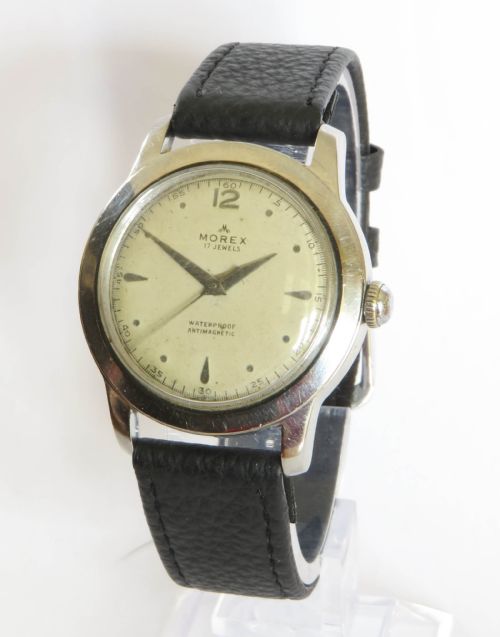
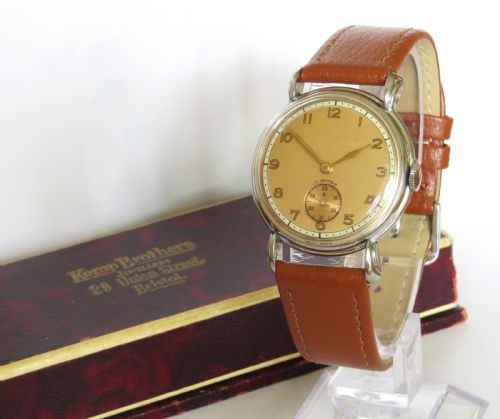
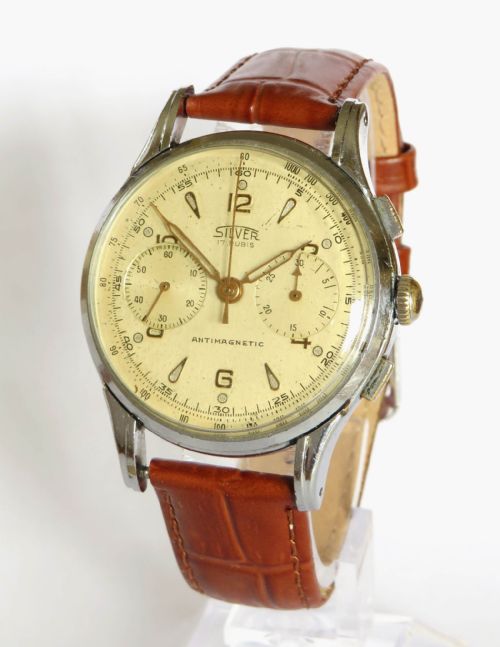
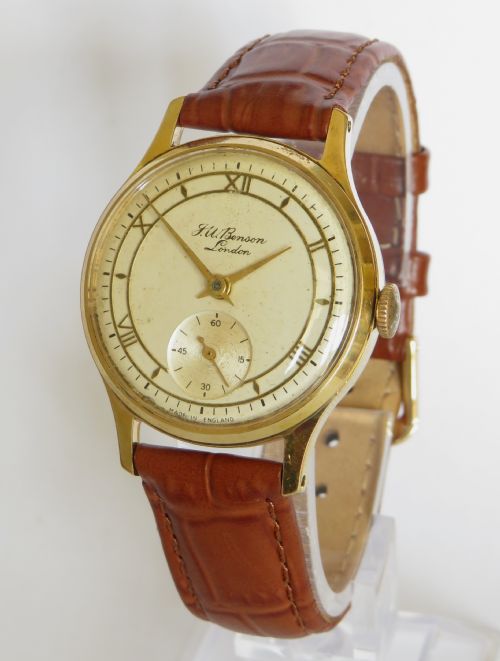
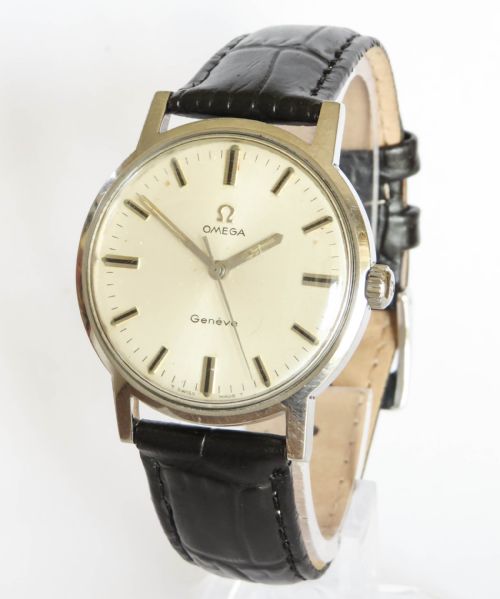
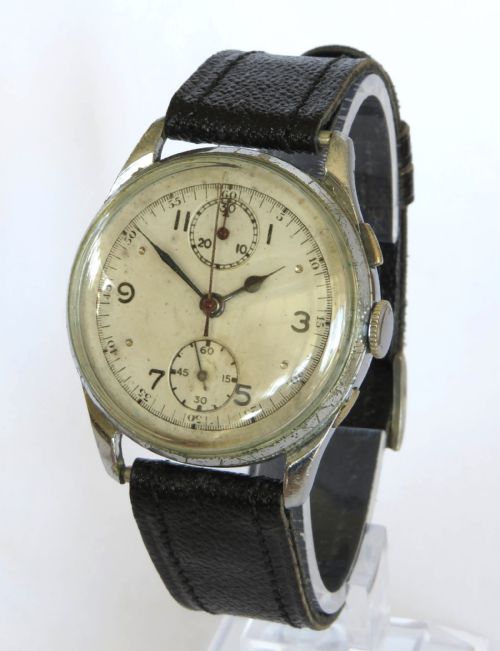

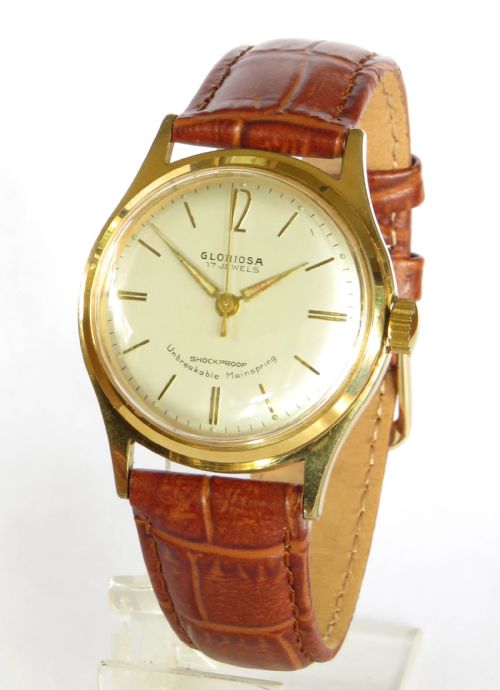
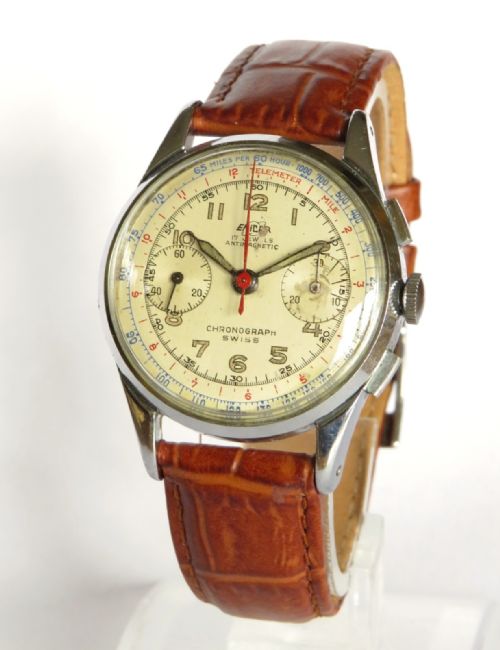
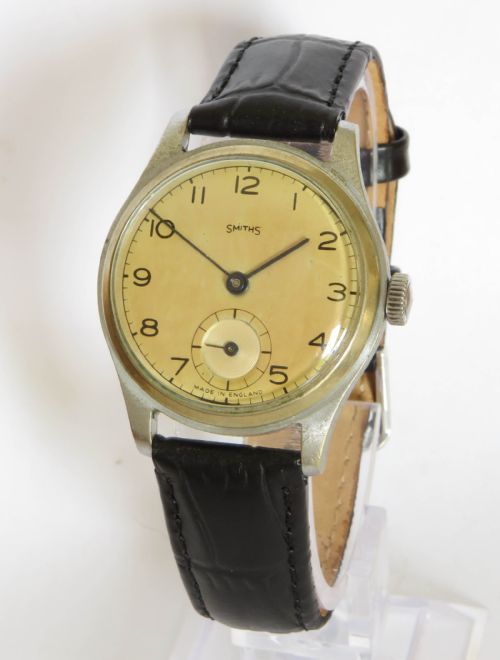
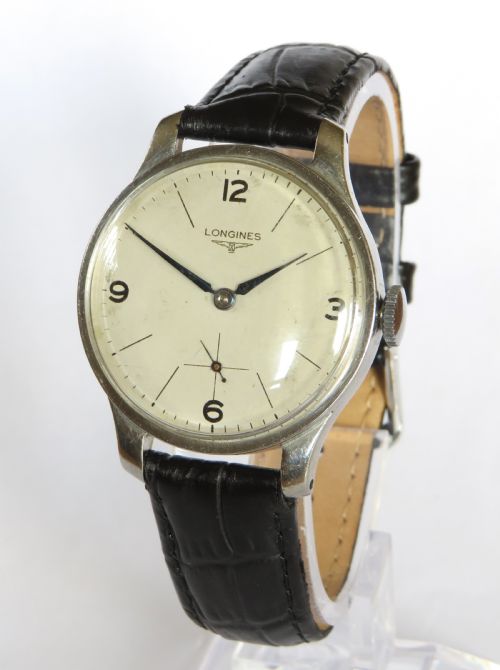
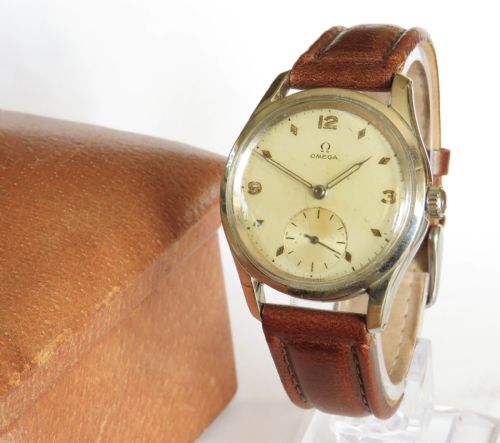
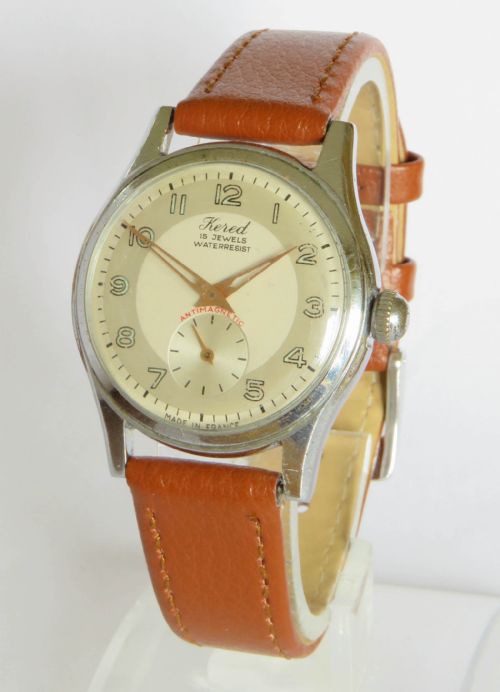
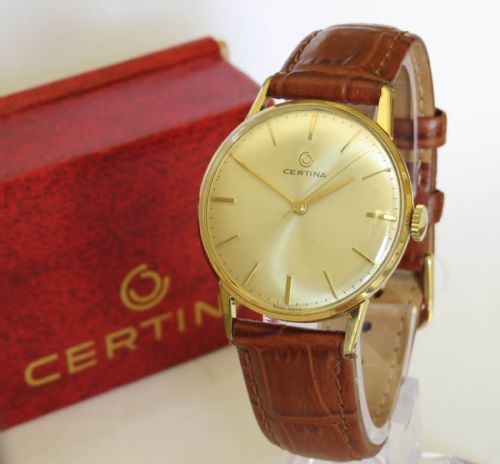


Gents Manual Wind Watch
These gents manual wind watch pieces offer mechanical timekeeping from the decades spanning the 1930s to the 1970s.
Gents Manual Wind Watch
A gents manual wind watch is a mechanical timepiece worn on the wrist, powered by hand rather than an automatic rotor or battery. When you search for this phrase, you meet wristwatches that span several decades from the 1930s through to the 1970s.
The selections on this page draw from distinct stylistic eras including Art Deco, Mid-Century Modern, and 1970s Modern designs. These pieces originate from makers and workshops in Britain, France, and Switzerland.
Most examples take the form of standard wristwatches or chronographs, housed in round or square dials. They represent a traditional approach to personal timekeeping that requires daily winding.
How they were made
Cases utilise metals such as stainless steel, chrome, gold plate, gold plated metal, and white gold fill, enclosing mechanical movements driven by mainsprings. Dials are protected by clear glass or acrylic covers.
Straps are typically fashioned from leather, completing the construction of these mechanical wristwatches. Movement assembly involves intricate internal gearing, jewel bearings, and escapements designed for manual operation.
Listings feature periods spanning from the 1930s to the 1970s, utilising stainless steel, gold plate, leather, and glass.
What varies in quality
Quality in a gents manual wind watch depends on the precision of the movement and the finish of the case materials. Finer examples feature jewelled movements from established Swiss or British makers, housed in solid or heavy gold-plated casings.
The condition of the dial and the clarity of the crystal also distinguish higher grade pieces from simpler utility models. Original boxing and documented servicing add to the integrity of a timepiece.
Morex·Antoremi·Smiths·Omega·Enicar·Longines·Certina·Girard Perregaux·Bulova·Larex
The Gents Manual Wind Watch Glossary
- Manual wind
- A mechanical watch movement powered by turning the crown by hand to tension the mainspring, rather than depending on wrist motion or a battery.
- Chronograph
- A wristwatch equipped with a stopwatch function alongside the standard time-displaying hands.
- Gold plate
- A layer of gold applied to a base metal core, giving the appearance of solid gold at a different weight and cost.
- Acrylic
- A lightweight, clear plastic material used for watch crystals before the widespread adoption of synthetic sapphire.
- Calibre
- The specific internal movement design or model designation created by a watch manufacturer.
Gents Manual Wind Watch: Frequently Asked Questions
How often should I wind my watch?
A gents manual wind watch typically requires winding once a day, preferably at the same time each morning. Turning the crown gently until resistance is felt ensures the mainspring is fully tensioned without over-tightening.
Avoid forcing the crown past the point of resistance, as this can damage the internal gearing. Regular winding keeps the movement operating at a consistent tension for accurate timekeeping.
Are these watches waterproof?
Most vintage mechanical wristwatches from the 1930s to the 1960s lack modern water resistance seals. Exposure to moisture, rain, or hand washing can allow water to enter the case and rust the movement.
It is best to remove the timepiece before swimming, bathing, or engaging in heavy manual labour. Keeping the interior dry preserves the steel components and the dial.
What is the difference between Art Deco and Mid-Century styles?
Art Deco watches, common in the 1930s, often feature geometric square cases, stylised numerals, and sharp linear details. They reflect an aesthetic focused on symmetry and industrial elegance.
Mid-Century styles, emerging from the 1940s onwards, tend towards cleaner round dials, minimalist markers, and understated case profiles. Both styles represent distinct shifts in decorative taste during the twentieth century.
Can I wear a vintage watch every day?
Many people wear these timepieces daily, provided the movement has been recently serviced and regulated. Care should be taken to protect the acrylic or glass crystal from knocks and scrapes.
Because these are mechanical items with delicate internal parts, avoiding high-impact sports or magnetic fields helps maintain their working order. Gentle daily wear allows you to enjoy the craftsmanship of the period.