

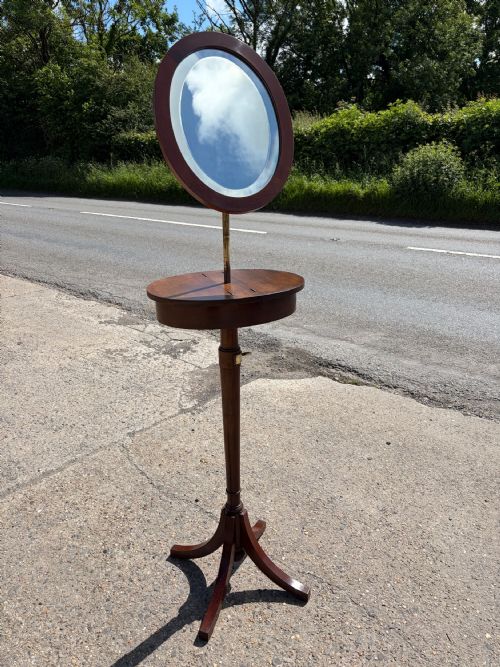


Gentleman Shaving Vanity
These gentleman shaving vanity pieces are purposeful wooden designs built for morning hygiene, bringing practical period charm and adjustable mirrors straight into modern rooms.
Gentleman Shaving Vanity
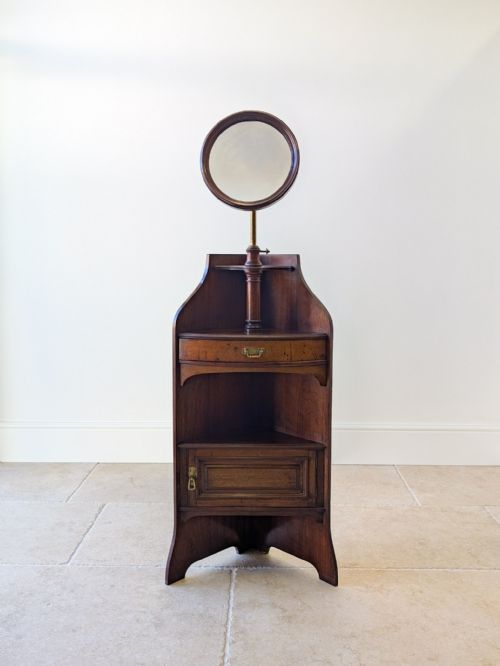
A gentleman shaving vanity combines a supportive stand with a pivoting glass mirror, designed for morning grooming routines in nineteenth and early twentieth century bedrooms. These practical items range from compact tabletop glasses to full-height standing units with telescopic shafts for height adjustment.
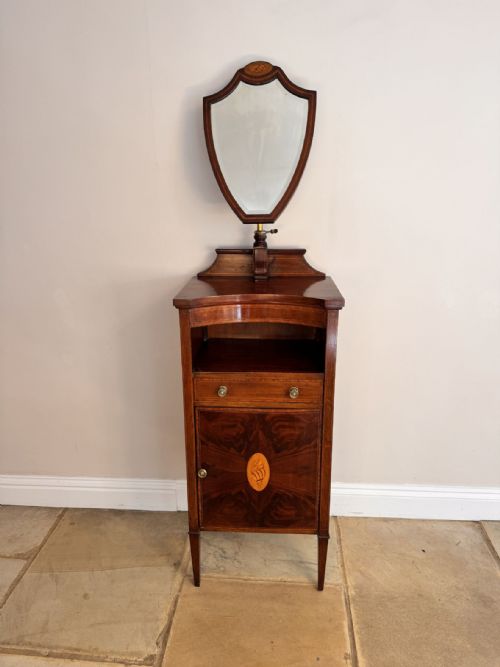
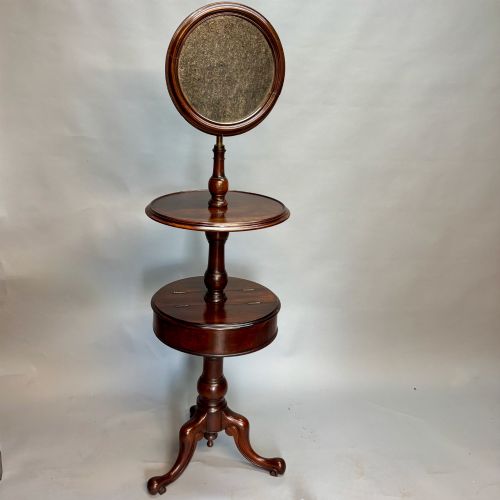
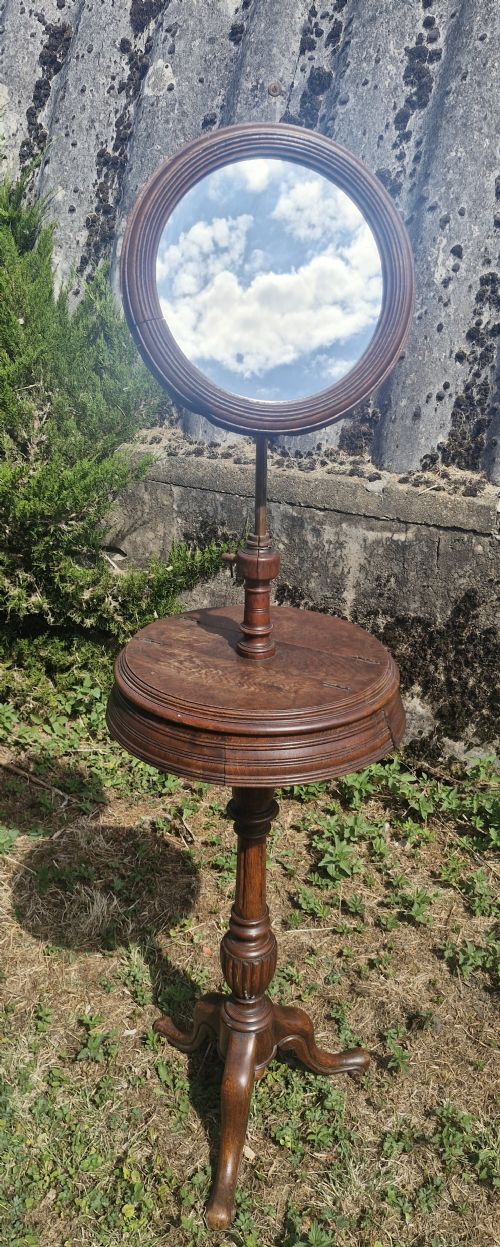
Victorian and Edwardian examples dominate the selection, built chiefly in rich timbers like mahogany, walnut and oak. Buyers encounter diverse formats including tripod bases, cabinet-supported stands and multi-purpose vanity tables.
The most common formats on this page are mahogany shaving stands featuring adjustable mechanisms and tripod or cabinet bases. They reflect the domestic habits of the period, offering dedicated spaces for daily preparation.
Materials and construction
Cabinetmakers utilised dense hardwoods such as mahogany and walnut to provide stability for the heavy glass mirrors. Brass fittings appear frequently to operate the telescopic adjustments and pivots.
Inlaid details and turned columns showcase the joinery skills of Victorian and Edwardian workshops. The combination of turned wood, adjustable brass hardware and mirror glass defines the physical construction of these pieces.
Gentleman Shaving Vanity Retail Price Guide 2026
Typical asking prices for gentleman shaving vanity among the pieces listed under this phrase on Sellingantiques today, from the lower quarter to the upper quarter. They describe what is for sale here now, not the wider market.
Victorian gentlemen required adjustable mirrors because morning light was a precious commodity before the invention of the flick switch.
Assessing quality
Quality rests upon the execution of the timber work and the integrity of the mechanical adjustments. Finer examples display carefully figured mahogany or walnut veneers alongside robust brass hardware that maintains position securely.
The sophistication of the base design separates standard utility pieces from more ambitious cabinetmaking. Tripod stability, smooth telescopic movement and refined inlay indicate higher standards of original manufacture.
James Shoolbred
The Gentleman Shaving Vanity Glossary
- Telescopic
- A shaft design allowing the mirror height to extend or lower through a sliding mechanism. This enables users to adjust the glass precisely for standing or seated use.
- Tripod base
- A three-legged support structure commonly found beneath nineteenth-century mirror stands. It provides balanced floor placement on uneven domestic flooring.
- Inlay
- The technique of embedding contrasting strips of wood into the primary surface. Edwardian and Viennese pieces utilise this to create decorative geometric borders.
- Vienna Secession
- An early twentieth-century artistic movement that influenced continental furniture design. It favoured clean lines and modern decorative restraint over ornate Victorian carving.
Gentleman Shaving Vanity: Frequently Asked Questions
How do you adjust the height?
Many examples use a telescopic brass collar and central shaft. Loosening the fitting allows the upper wooden stem to slide upward before securing it at the desired level.
Heavier standing models rely on internal friction or thumbscrews to hold the mirror frame firmly in position during daily use.
Where were these placed in the home?
These items originally stood in bedrooms, dressing rooms or private chambers where morning grooming took place. Their compact footprints suited placement near natural window light.
Today they function effectively as decorative accent pieces in modern bathrooms, dressing areas or hallways.
What is the difference between a shaving stand and a vanity table?
A shaving stand typically prioritises an adjustable mirror paired with a tall vertical shaft or small cabinet base. It was built specifically for standing personal grooming.
A vanity table provides a broader surface area with a fixed or pivoting mirror, intended for seated use and storing small accessories.
How do you date a wooden shaving stand?
Dating relies on observing the primary timber, hardware and stylistic motifs. Victorian pieces often display rich mahogany with turned columns, while Edwardian and 1910 examples introduce lighter oak or inlaid banding.
Makers' marks or specific structural joinery can also narrow down the period of manufacture.