





Garden Urn on Plinth
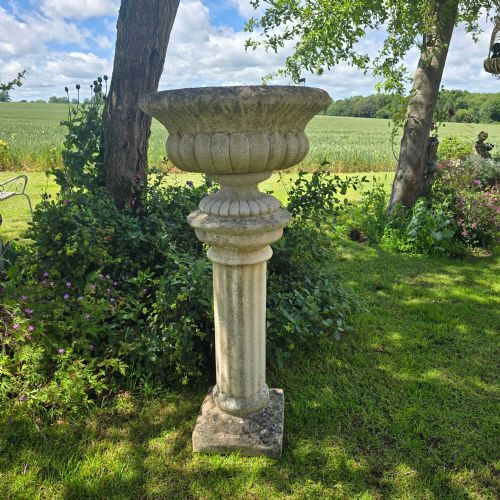
A garden urn on plinth brings architectural gravity to an open lawn, elevating plantings above the turf.
Garden Urn on Plinth
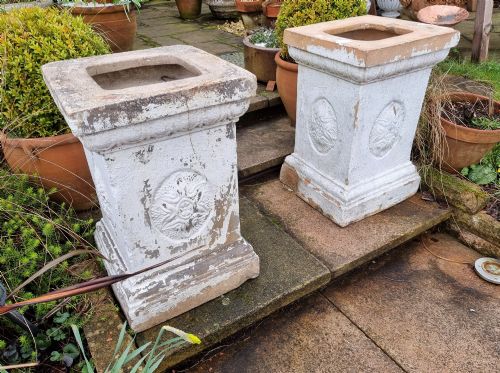
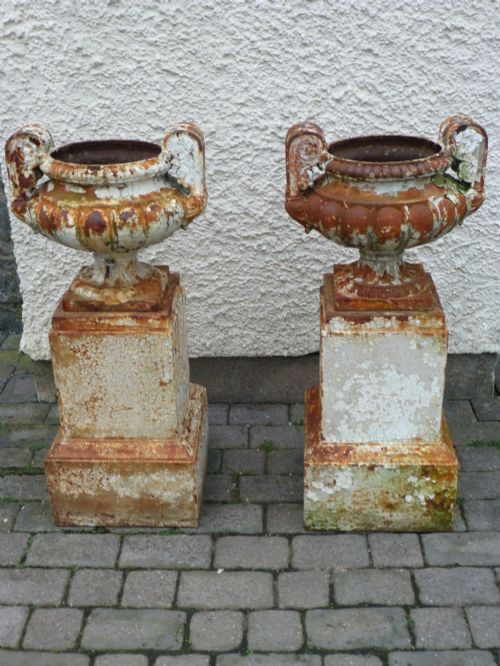
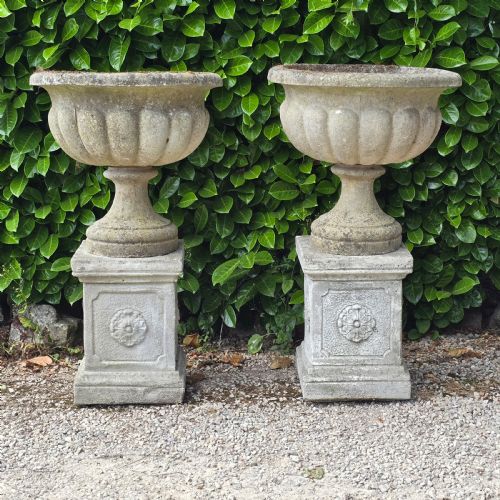
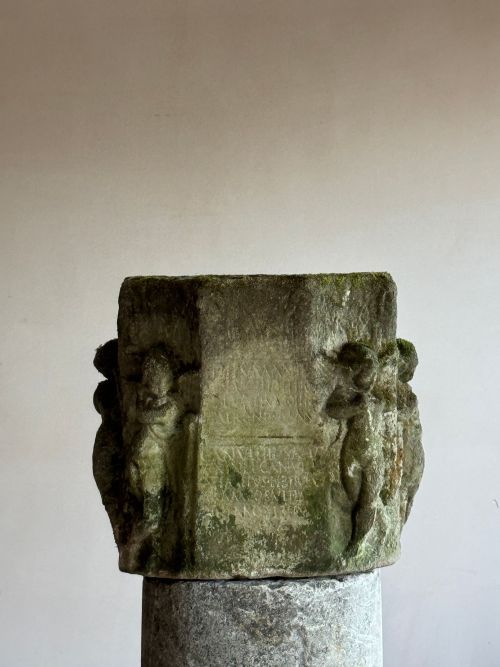
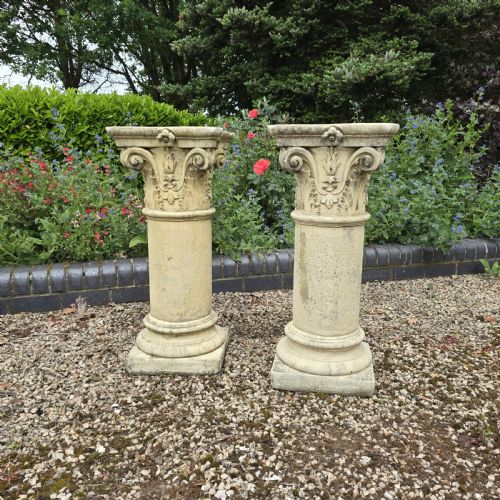
When you search for a garden urn on plinth, you encounter substantial combinations of vessels and pedestals designed for outdoor display. The pieces on this page span the Georgian, Regency, Victorian, Edwardian, and mid-twentieth-century periods, capturing centuries of classical landscaping tastes. You meet both matched pairs and individual compositions, created to anchor garden paths or terrace corners.
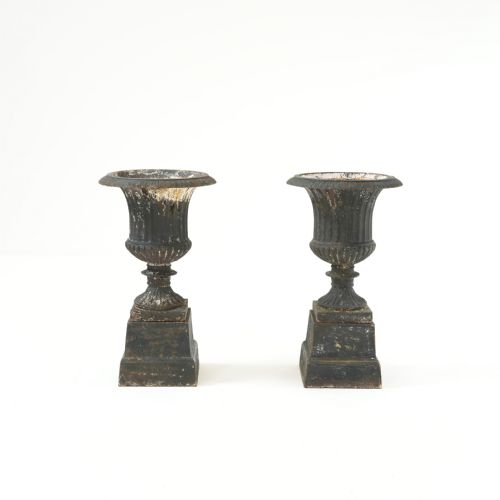
The most common version you encounter pairs a cast iron campana-shaped bowl with a matching architectural plinth or pedestal. These assemblies draw heavily on Neoclassical, Classical Revival, and Gothic Revival styles, echoing ancient forms adapted for British and European gardens. Forms range from low gadrooned vessels on compact bases to towering columns supporting deep planting bowls.
How they were made
Foundries and workshops shaped these pieces primarily from cast iron, terracotta, stoneware, and composite or reconstituted stone. Cast iron vessels emerged from moulds in industrial foundries, while stone and terracotta versions relied on carving, casting, or clay-forming techniques. Many cast iron pieces received protective layers of paint to withstand seasonal weathering.
Makers integrated decorative motifs directly into the casting or moulding process. Neoclassical urns often display crisp acanthus leaves, egg-and-dart moulding, and gadrooning. Bases and plinths were built to bear immense weight, utilising thick walls of cast metal or solid stone blocks to ensure stability on uneven ground.
What varies in quality
The distinction between ordinary and exceptional examples lies in the crispness of the cast and the integrity of the ensemble. Superior pieces retain sharp relief on classical ornament, with clean lines on acanthus foliage and moulding that do not suffer from worn or shallow casting. Original matching bases elevate the standing of an urn considerably compared to later or mismatched pairings.
Material density and weathering characteristics also divide the range. High-grade cast iron and dense stoneware age with stable, even oxidation or patination rather than structural cracking. The architectural proportion between the urn bowl and its supporting plinth determines the visual balance of the complete piece.
Dunfermline Clay Company·Falkirk Carron foundry·Andrew Handyside·Garnkirk
The Garden Urn on Plinth Glossary
- Campana urn
- A bell-shaped garden vessel with an everted rim, widely produced in cast iron and stone during the nineteenth century. This form originates from ancient Roman marble vases.
- Plinth
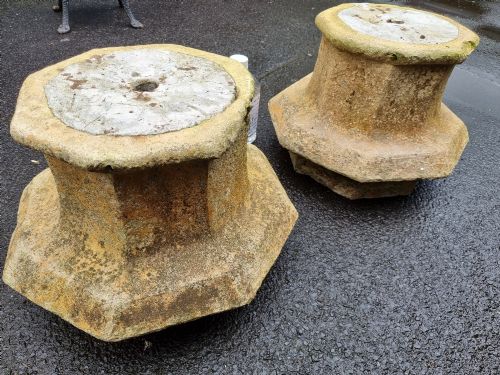
- A heavy architectural base or pedestal that elevates an urn above ground level. It provides a stable footing and frames the vessel as a focal point.
- Gadrooning
- A decorative carved or cast band of convex curves or fluting radiating outward. You find this ornament encircling the bowls of classical urns.
- Reconstituted stone
- A durable material made from crushed stone aggregate bound with cement, moulded into architectural ornaments. It mimics the appearance of natural quarried stone.
- Terracotta
- A fired, unglazed clay material used for garden vessels. Its porous nature requires careful management during freezing winter conditions.
Garden Urn on Plinth: Frequently Asked Questions
How do I secure a heavy stone plinth?
Most heavy plinths rely on their substantial mass and gravity to remain stable on level ground. Preparing a compacted stone or paved foundation prevents the base from shifting or sinking unevenly over time.
For exceptionally tall columns or windy hilltop positions, discreet mortar bedding between the plinth and the ground provides additional security.
Are these urns heavy to move?
Cast iron and stone garden pieces possess significant weight that generally requires lifting equipment or multiple people to relocate safely. The vessel and the plinth typically separate into distinct components to make transport manageable.
Care must be taken when separating old joined sections, as historical mortar or rust can bind the elements tightly together.
How do I date a cast iron garden urn?
Nineteenth-century pieces often display structural traits such as threaded bolts, rough casting seams, and foundry marks associated with specific industrial ironworks. Stylistic clues like Victorian Gothic revival detailing or Regency campana proportions also narrow down the period of manufacture.
Comparing the casting sharpness with documented foundry catalogues helps confirm whether an urn dates to the Victorian era or a later revival period.