


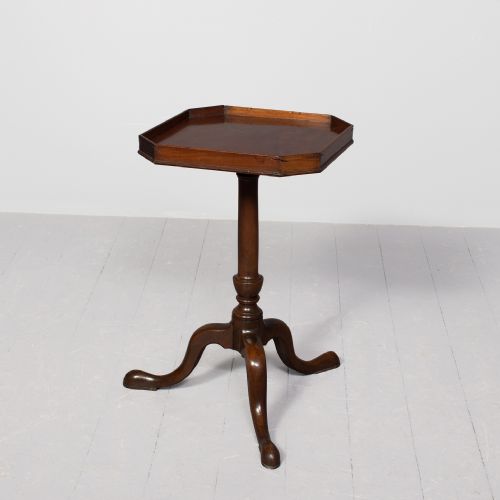


Gallery Top Wine Table
A gallery top wine table is a compact surface ringed by a raised edge, chosen for holding drinks securely while adding elegance to a room.
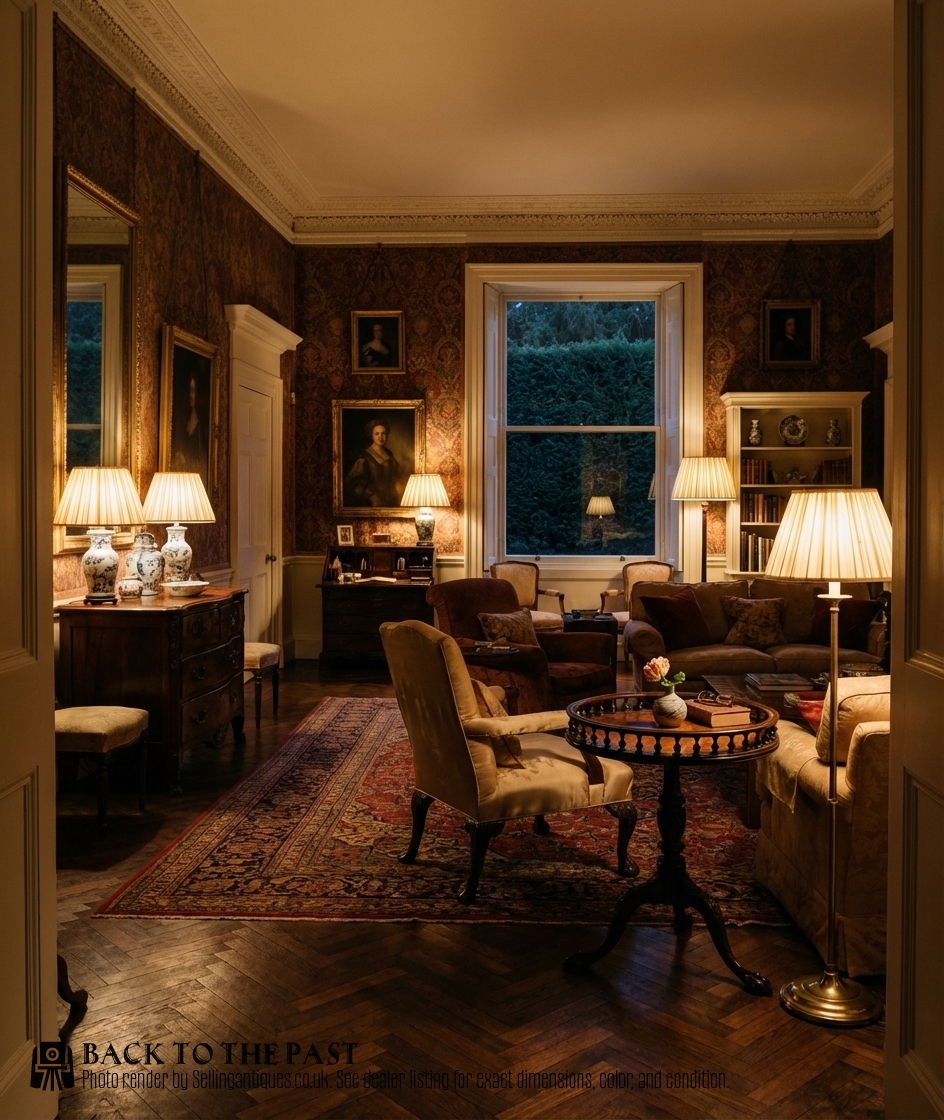
Gallery Top Wine Table
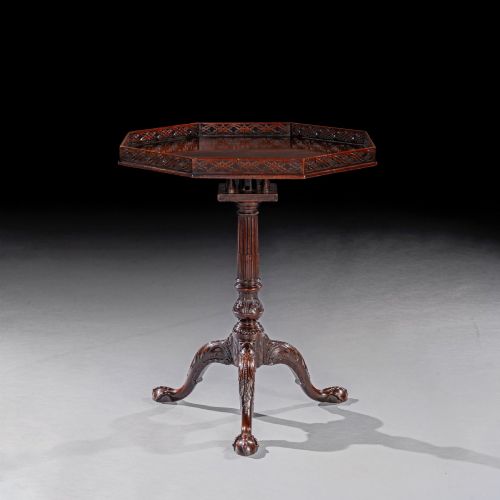
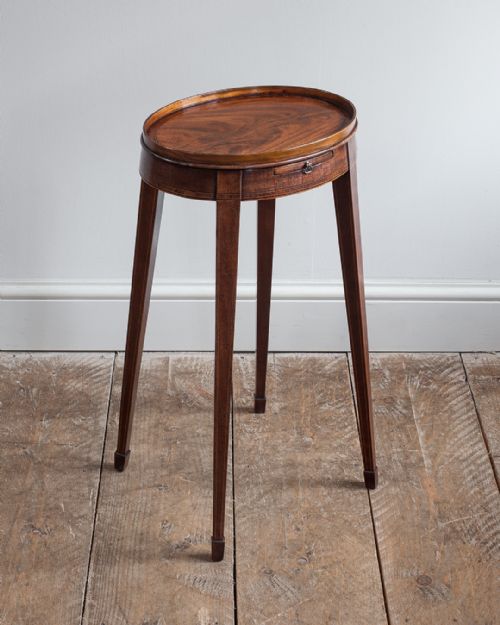
A gallery top wine table serves as a portable surface designed for holding drinks and small objects safely within a raised wooden or metal rim. When you search for a gallery top wine table, you encounter compact occasional furniture originating from the eighteenth, nineteenth, and early twentieth centuries. These pieces appear in forms such as tripod wine tables, kettle stands, urn stands, and occasional tables.
How they were made
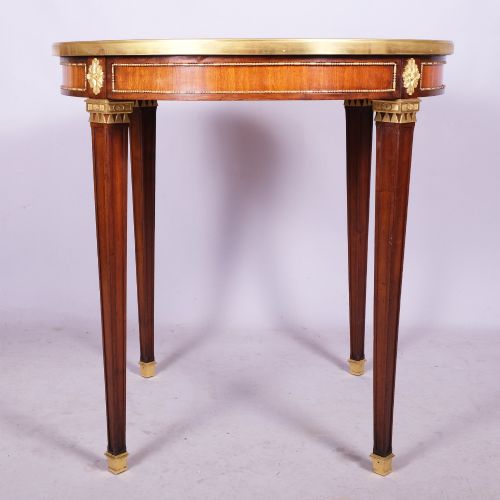
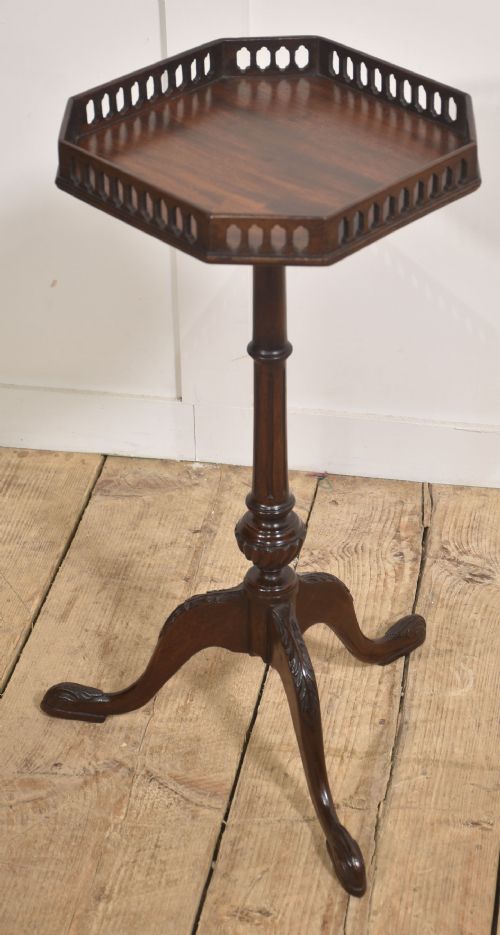
Cabinetmakers constructed these tables primarily using solid and veneered timbers such as mahogany, walnut, and rosewood, often supported on slender tripod bases. Tops were fitted with raised wooden galleries carved from the solid or constructed with delicate fretwork and pierced borders. French examples incorporated contrasting veneers like satinwood, alongside heavier mounts in gilt bronze or ormolu.
Many items utilise white marble or onyx inset into the timber frame, enclosed by a cast brass gallery fastened around the perimeter. Birdcage mechanisms allowed certain eighteenth-century octagonal tops to tilt and rotate on their columns. Inlaying and wood inlay techniques added decorative geometric or floral borders to the surfaces of later occasional tables.
Gallery Top Wine Table Retail Price Guide 2026
Typical asking prices for gallery top wine table among the pieces listed under this phrase on Sellingantiques today, from the lower quarter to the upper quarter. They describe what is for sale here now, not the wider market.
Some tables feature tilting birdcage tops, originally built so servants could tuck them flat against the wall when the wine was gone.
What varies in quality
The refinement of the gallery itself distinguishes standard production from finer work, particularly where delicate pierced wood or crisply cast brass is employed. Timber selection and the crispness of carved tripod legs, claw and ball feet, or fluted columns indicate the skill of the original workshop. Superior proportions and balanced weight distribution ensure the table remains stable despite its small footprint.
The integration of materials such as inset marble, onyx, or gilt bronze reveals the maker's attention to detail and precision in assembly. Tables featuring well-figured mahogany or intricate wood inlay demonstrate greater material investment than plain utility pieces. Original movement mechanisms, such as birdcage actions, operate smoothly on higher grade examples.
The Gallery Top Wine Table Glossary
- Gallery
- A raised rim or border surrounding the edge of a tabletop to prevent items from sliding off. This feature is constructed from carved wood, pierced fretwork, or brass.
- Tripod table
- A small freestanding table supported by a central pillar resting on three legs. This form provides stability on uneven floorboards.
- Gueridon
- A French term for a small stand or table, frequently featuring a circular top supported by a central column. These pieces often incorporate marble tops and brass galleries.
- Birdcage
- A timber framework beneath a tabletop that allows the surface to tilt and rotate. This mechanism appears on eighteenth-century tripod tables.
- Bouillotte table
- A small French occasional table with a raised gallery, traditionally used for card games. They commonly feature marble tops and candle slides.
- Kettle stand
- A small tall table designed to hold a tea kettle or urn. These surfaces match the height of tea tables and feature secure raised borders.
Gallery Top Wine Table: Frequently Asked Questions
What is a gallery top wine table?
A gallery top wine table is a small occasional table featuring a raised rim around the edge of the surface. This raised border was originally designed to prevent glassware and bottles from sliding off.
These pieces typically stand on a central pillar with three legs, making them easy to move around a drawing room or parlour.
How were wine tables used?
Wine tables served as movable surfaces placed beside seating to hold glasses, decanters, or tea equipment. Their compact size allowed servants to position them close to guests during social gatherings.
In domestic settings, they functioned flexibly as lamp tables, small display surfaces, or stands for kettles and urns.
How do I identify a Georgian style table?
Georgian and George III tables are characterised by rich mahogany timbers, tripod bases with pad or claw and ball feet, and finely pierced wooden galleries. The joinery is traditional, and the proportions are restrained and elegant.
Later Victorian and Edwardian revivals often echo these eighteenth-century forms but employ slightly different turning techniques and secondary woods.
Are French and English tables different?
French tables, often called gueridons or bouillotte tables, frequently incorporate white marble or onyx tops encircled by cast brass galleries. They often utilise gilt bronze mounts, satinwood, and walnut veneers.
English tables rely more heavily on solid mahogany or rosewood construction with carved wooden galleries and tripod pillar supports.
How do I care for a marble top?
Marble and onyx tops require gentle cleaning with a damp cloth and mild soap, avoiding acidic substances that can etch the polished stone. The wooden bases benefit from occasional waxing to nourish the timber.
Keeping the tables away from direct heat sources prevents the wood from shrinking and loosening the fitted galleries.