



Galle Cameo Glass
Galle cameo glass brings the organic forms of Art Nouveau into glass through layered, acid-etched botanical and landscape designs.
Galle Cameo Glass
When you search for galle cameo glass, you are looking at vases and boxes produced in France during the early twentieth century. These pieces belong firmly to the Art Nouveau movement, translating natural subjects into decorative glass objects.
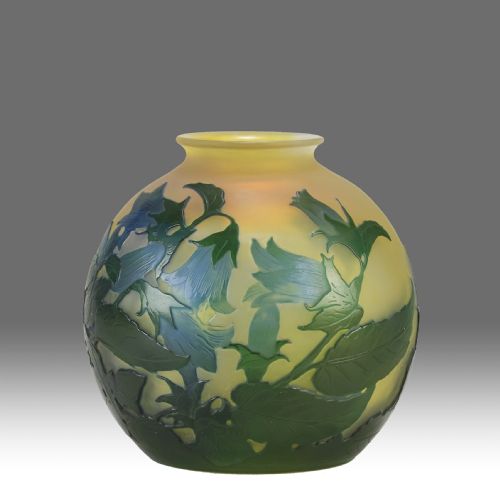
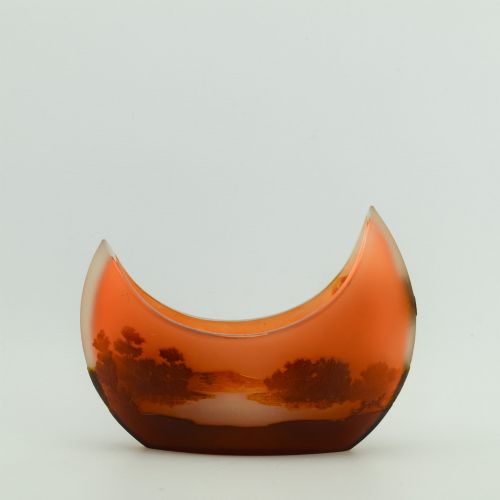
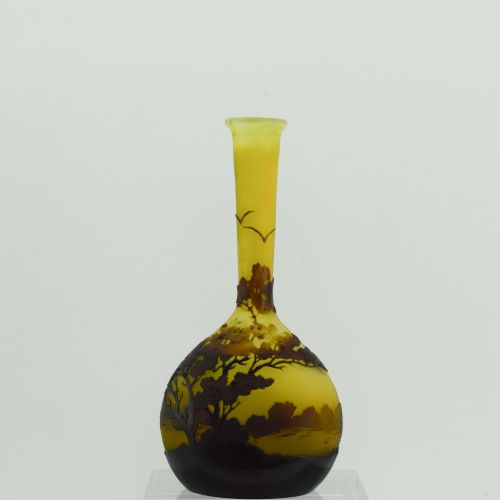
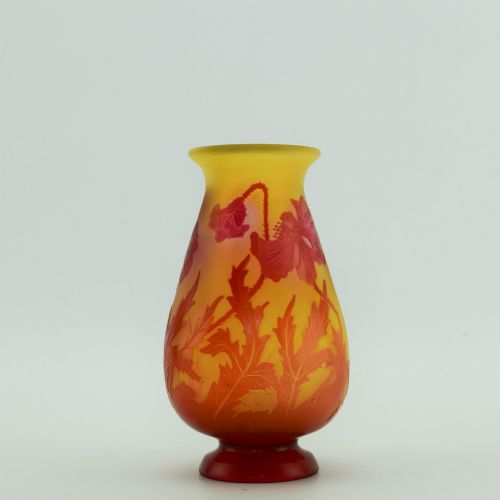
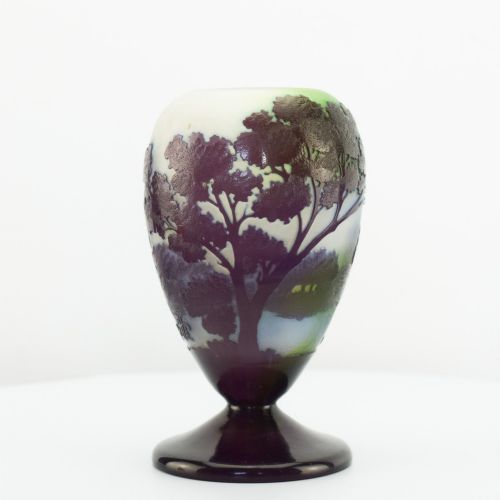
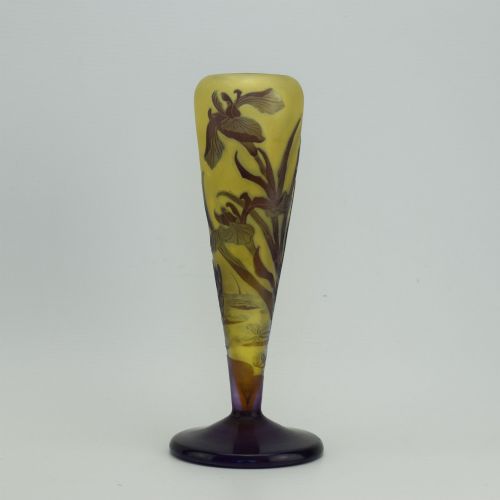
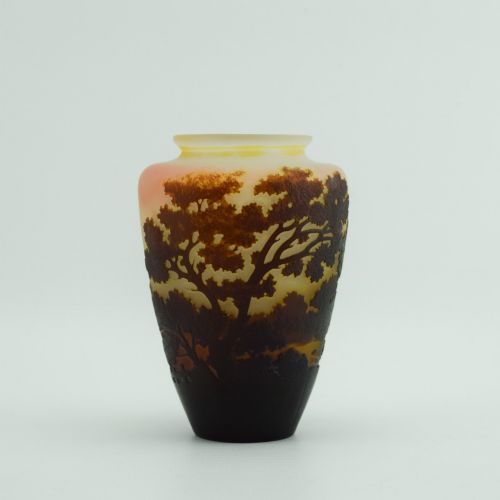
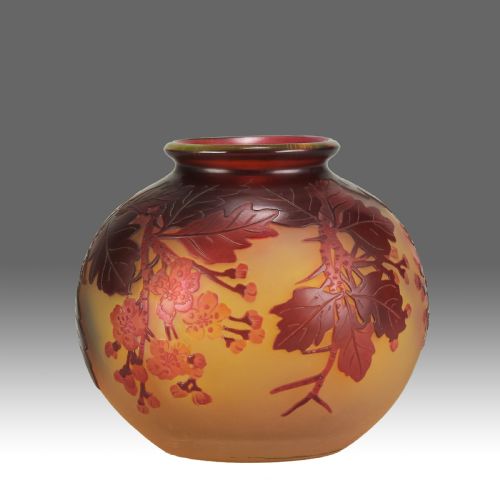
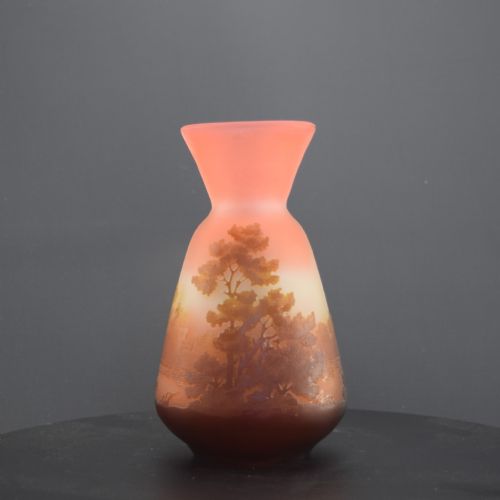
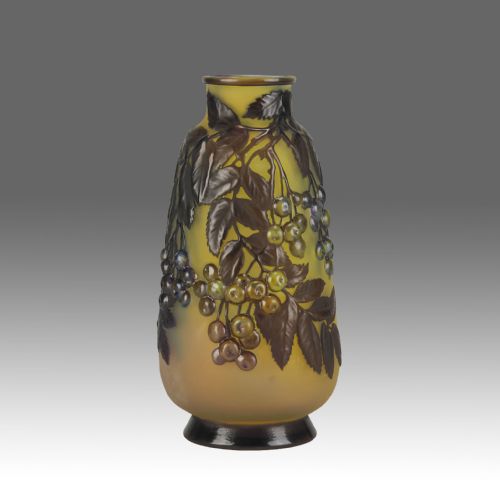
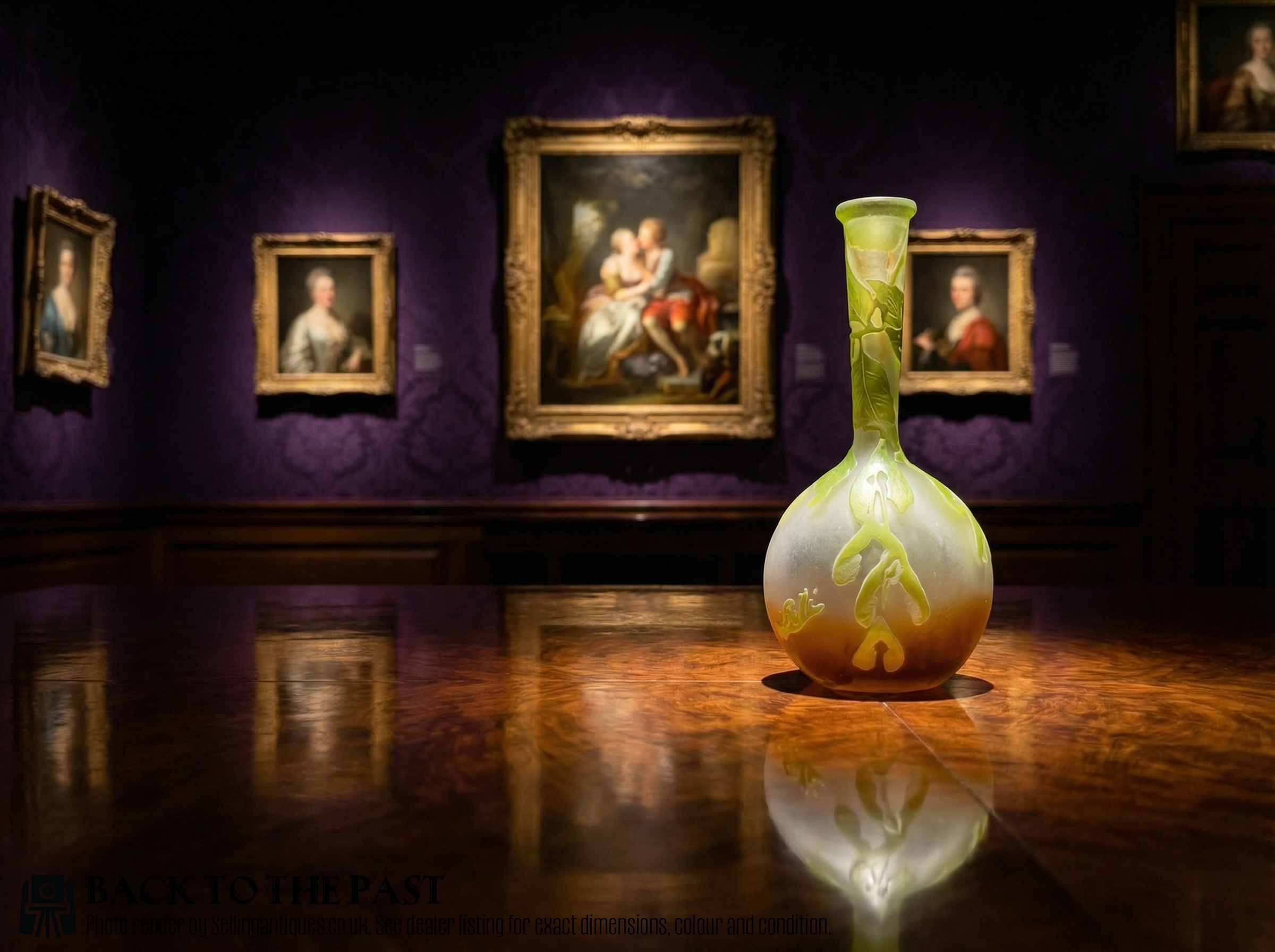
The most common forms encountered on this page are vases, ranging from small cabinet pieces to tall, slender banjo shapes and footed vessels. Botanical motifs and natural landscapes dominate the available repertoire.
The decorative vocabulary draws heavily from flora and fauna, including aquatic scenes, woodland trees, and flowering plants such as hydrangeas, irises, and clematis. Each piece utilises the natural world to structure its design.
Materials and Techniques
These pieces utilise blown glass formed in multiple layers of contrasting colours to create depth and shadow within the design. Glassmakers fused different coloured glass together while hot before shaping the vessel.
Acid-etched glass techniques allowed artisans to eat away the outer layers of glass using acid, leaving the raised cameo design standing in relief. Further refinement involved fire polishing and manual wheel-carving to sharpen details in the foliage and stems.
Listings span the periods from 1900 to 1930, utilising cameo, frosted, and blown glass.
Distinguishing Quality
The distinction between standard output and the finest examples rests on the complexity of the layering and the depth of the carving. Multi-layered coloured glass combined with detailed wheel-carving creates a greater sense of dimension than simpler two-layer etchings.
Emile Gallé
The Galle Cameo Glass Glossary
- Cameo Glass
- Glass vessels formed with multiple distinct layers where portions of the exterior layers are removed to create a raised design. This technique requires meticulous control of acid and cutting tools.
- Acid-Etched Glass
- Glass decorated by submerging the vessel in acid baths, protecting specific areas with a resist to eat away the background or upper layers. It produces soft, textured surfaces.
- Art Nouveau
- The dominant stylistic movement of the early twentieth century characterised by sinuous organic lines and botanical motifs. It rejected historic revivalism in favour of forms derived from nature.
- Fire Polished
- A finishing process where the glass surface is briefly reheated to soften sharp edges left by acid or cutting, resulting in a smooth, glossy finish.
- Banjo Vase
- A specific slender vase profile with a flattened body and elongated neck, resembling the stringed musical instrument. This form frequently supports landscape and floral designs.
Galle Cameo Glass: Frequently Asked Questions
What are galle cameo glass pieces?
These items are decorative glass vessels created in France during the early twentieth century within the Art Nouveau style. They feature layered glass designs shaped by acid-etching and carving.
Subjects focus almost exclusively on plants, flowers, and natural landscapes rendered in varied colour palettes.
How were these vases used?
Artisans designed these vessels primarily as decorative objects for domestic display rather than functional flower holders. Their intricate cameo surfaces made them centrepieces for turn-of-the-century interiors.
Some covered boxes were also produced for dressing tables alongside the standard vase forms.
How do I live with galle cameo glass?
Placing these pieces where natural light can pass through the layered glass reveals the depth of the colours and the subtlety of the etching. They require stable display surfaces away from heavy traffic.
Gentle cleaning with a soft cloth maintains the finish without risking the delicate acid-etched surfaces.
How do I date these items?
Dating relies on the stylistic markers of the early twentieth century, spanning from around nineteen hundred through the nineteen twenties. Signatures and the complexity of the glass layering provide additional context for the period of production.
Most surviving examples cluster around the nineteen hundred to nineteen twenty bracket.